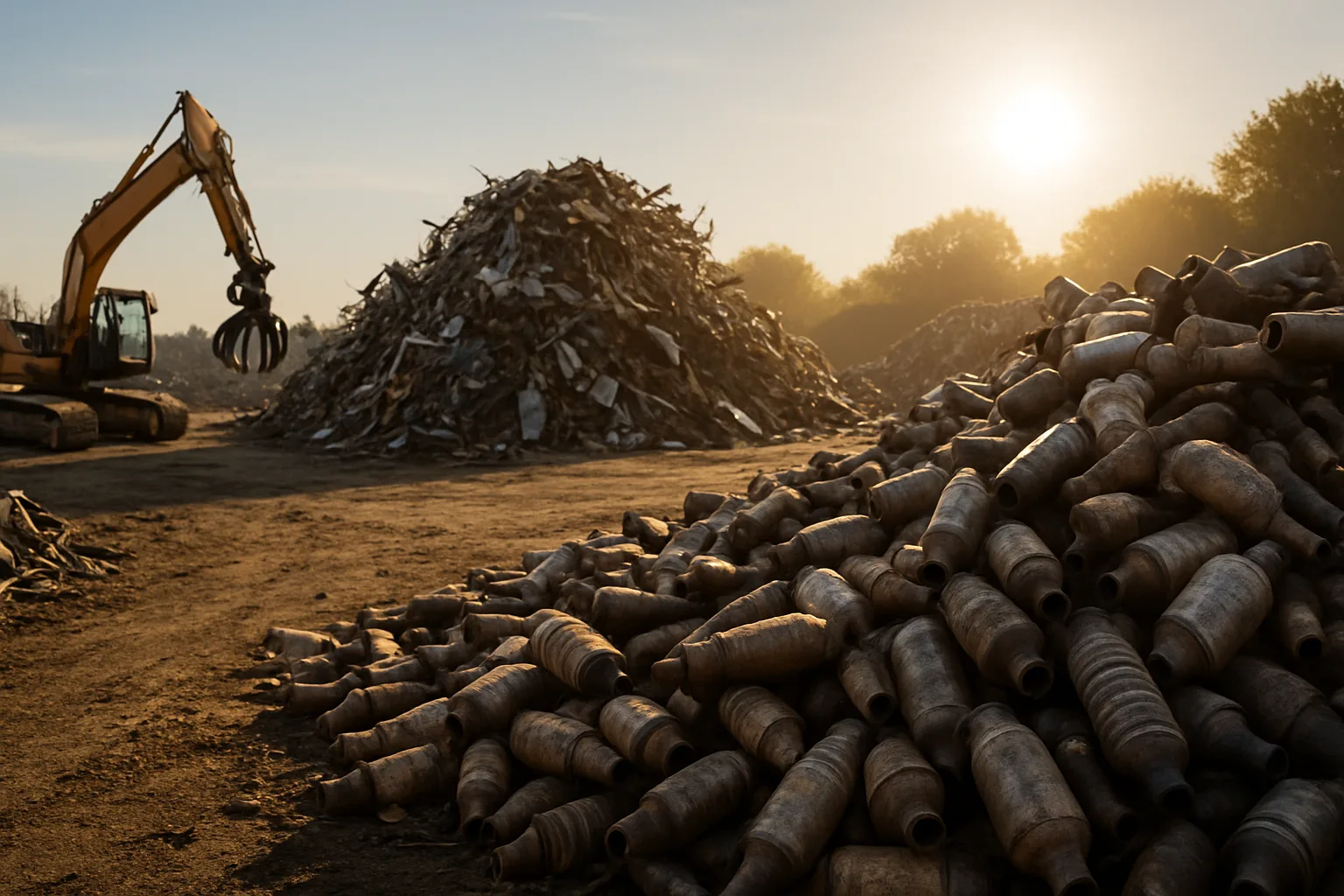
Why the Metals Inside Your Catalytic Converter Drive Scrap Value — and What That Means for Cambridge Sellers
Most people have no idea they're sitting on hundreds of dollars. The catalytic converter bolted to your exhaust system contains some of the most valuable metals on Earth — platinum, palladium, and rhodium. Understanding what's inside is the first step to making sure you're not leaving money on the table when it's time to sell.
If you're in Cambridge or anywhere across Ontario and you've got a converter to sell, scrap catalytic converter prices Cambridge can vary wildly depending on exactly what's inside — and who's buying. This article breaks down the precious metals that drive cat converter value, why prices shift the way they do, and how to make sure you're getting a fair shot at the market.
The Three Precious Metals That Determine Cat Converter Value
Catalytic converters work by forcing exhaust gases through a ceramic or metallic substrate coated with precious metals. These metals trigger chemical reactions that convert toxic gases — carbon monoxide, nitrogen oxides, hydrocarbons — into less harmful compounds. The metals that make this possible are platinum, palladium, and rhodium. Together, they're often called the PGMs: platinum group metals.
Each metal plays a different role in the catalytic process, and each trades on global commodity markets at its own price. That's why two converters sitting side by side can have dramatically different scrap values. The composition of the substrate coating — and the total weight of PGMs inside — is what buyers are actually paying for.
- Platinum (Pt): Handles the oxidation of carbon monoxide and unburned hydrocarbons. Common in diesel vehicle converters. Platinum has historically been a high-value metal, though it trades below palladium at current levels.
- Palladium (Pd): Primarily used in gasoline engine converters. Palladium has seen significant price swings over recent years and often commands a premium over platinum in today's market.
- Rhodium (Rh): The rarest of the three. Rhodium handles nitrogen oxide reduction and is present in smaller quantities — but it regularly trades at multiples of gold. Even a few grams of rhodium inside a converter adds serious value.
The actual PGM content in a single converter typically ranges from one to seven grams in total, depending on the vehicle make, model, engine type, and model year. That might not sound like much — but when one of those grams is rhodium, the math changes fast.
Why Scrap Catalytic Converter Prices in Cambridge Fluctuate
Scrap cat converter value doesn't come from a fixed price list. It's tied directly to live commodity markets for platinum, palladium, and rhodium — markets that move every trading day. Global supply from mining operations in South Africa and Russia, industrial demand from auto manufacturers, and macro financial factors all push these prices up and down.
For sellers in Cambridge and across Ontario, that means the quote you get today may look different from the one you get next week. This isn't anyone being dishonest — it's just how commodity-backed scrap pricing works. The buyer has to account for current PGM spot prices, assay results after processing, and their own margin.
A few factors that influence what a specific converter is worth on any given day:
- Current PGM spot prices — platinum, palladium, and rhodium all trade independently
- Vehicle make and model — some OEMs load converters with more PGMs than others
- Converter condition — damaged or cracked substrates lose PGM material
- OEM vs. aftermarket — original equipment converters carry more precious metal than cheap replacements
- Single unit vs. bulk lot — selling a load of converters can shift your leverage significantly
This is exactly why guessing your cat converter value based on a neighbour's experience — or an old forum post — rarely works. The number that matters is the one tied to today's market, on your specific unit.
How Much Is My Catalytic Converter Worth for Scrap in 2026?
This is the question everyone wants a clean answer to — and the honest truth is that it depends. Common passenger vehicle converters typically land in a range that spans from under a hundred dollars to several hundred, while high-demand units from certain truck and SUV applications can push well above that. Exotic or rare applications — think older diesel performance vehicles or certain Japanese imports — have historically produced outlier values driven by high rhodium content.
What determines where your unit lands in that range comes back to the PGMs. A standard three-way catalytic converter from a mid-2010s sedan will carry a different PGM load than a large-displacement truck converter from the same era. VIN lookup tools and serial number identification — features built into platforms like the SMASH Recycling auction platform — help buyers identify exactly what they're bidding on, which leads to more accurate valuations and better price discovery for sellers.
Don't rely on generic "cat converter price charts" that haven't been updated recently. Metal prices move. The only reliable way to know how much is my catalytic converter worth for scrap right now is to get a current quote from buyers actively working the market today.
Disclaimer: Catalytic converter scrap prices fluctuate daily with commodity markets. Always check current Canadian catalytic converter prices before selling.
Platinum, Palladium, and Rhodium: A Closer Look at What Buyers Are Paying For
Let's get specific about the PGM breakdown, because understanding what buyers actually assay for helps you understand why some converters are worth far more than others.
Rhodium deserves special attention. It's the rarest naturally occurring element used in automotive applications. Global mine supply is severely limited — the majority comes as a byproduct of platinum and palladium mining, primarily in South Africa. Auto manufacturers use it specifically because nothing else reduces nitrogen oxides as effectively. Even at concentrations of a fraction of a gram per converter, rhodium contributes meaningfully to the scrap value calculation when spot prices are elevated.
Palladium has been the dominant PGM in gasoline engine converters for years. Stricter emissions regulations globally — including increasingly stringent standards that affected North American production — pushed automakers to load more palladium into converters starting in the late 2010s. That trend hasn't reversed. Newer vehicles often carry more palladium than older models, which matters when you're evaluating a late-model salvage unit.
Platinum is most common in diesel applications. It's also used in some gasoline converters alongside palladium. Platinum has historically been a prestige metal — jewellery, investment bars — but its industrial role in emissions control is substantial. Diesel trucks, buses, and older European vehicles often yield higher platinum content per converter.
Buyers who specialize in catalytic converter buyers Ontario-side purchasing know this breakdown cold. They're pricing against assay data, not guesswork. As a seller, your best defence is documentation, accurate identification, and access to multiple buyers — not a single cold call to whoever answers first.
How SMASH Helps Cambridge Sellers Get Market-Rate Value for Their Converters
Here's where the process matters as much as the product. Knowing your converter has rhodium in it doesn't help you if you're selling to one buyer with no competition. The old way — one phone call, one quote, take it or leave it — gives all the leverage to the buyer. You have no idea if that number reflects the actual market.
SMASH changes that equation. As a scrap metal auction platform, SMASH brings vetted buyers into competition for your inventory — whether that's a single high-value cat, a mixed load of cores, or a pallet of sorted non-ferrous units. Photo documentation, serial tracking, and inventory tools mean buyers can evaluate your material accurately and bid with confidence. More confident buyers place stronger bids. That's how competition helps reveal the market.
For sellers in Cambridge and across Ontario — auto recyclers, repair shops sitting on accumulated cores, individual sellers with a converter from a recent repair — platforms like SMASH remove the guesswork and the single-buyer power dynamic. No subscription fees. SMASH only wins when you win.
If you're ready to find out what your converters are actually worth in today's market, get the best catalytic converter price in Canada with a free quote and stop guessing.
Cambridge sellers looking for local context on the scrap process can also explore Cambridge scrap metal services to understand what's available in the region and how the process works from pickup to payment.
Getting the Best Sell Catalytic Converter Price: What to Do Before You Sell
Whether you've got one converter or a truckload, a few steps before you sell make a real difference in what you walk away with.
- Identify the unit accurately. Note the vehicle year, make, model, and engine size. If you have the OEM serial number stamped on the converter body, write it down. This information directly affects how buyers value the material.
- Document condition honestly. Is the substrate intact? Has it been rattled around or cracked? Honest photo documentation protects you and gives buyers the confidence to bid higher, not lower.
- Check current PGM prices. You don't need to become a commodities trader. But knowing roughly where platinum, palladium, and rhodium are trading helps you evaluate whether a quote is reasonable. You can read Canadian catalytic converter pricing guides to stay informed on market conditions.
- Get more than one quote. A single quote is not a market. Two quotes is a start. A live auction with multiple vetted buyers is a market. Know the difference.
- Don't sell aftermarket as OEM. Aftermarket replacement converters contain far less PGM material than factory units. Misrepresenting what you're selling damages your credibility with buyers and kills future deals.
These steps aren't complicated, but most casual sellers skip them. That's the gap between getting a fair price and leaving money in someone else's pocket.
Frequently Asked Questions
Q: What precious metals are inside a catalytic converter?
Catalytic converters contain platinum, palladium, and rhodium — collectively called platinum group metals (PGMs). These metals coat the internal substrate and trigger chemical reactions that reduce harmful emissions. The exact mix and quantity varies by vehicle make, model, and engine type.
Q: How much are scrap catalytic converter prices in Cambridge right now?
Scrap catalytic converter prices in Cambridge fluctuate with live PGM commodity markets and depend heavily on the specific unit. Common passenger vehicle converters can range from under $100 to several hundred dollars or more for high-demand units. For an accurate current quote, check with active buyers or use a platform like SMASH that connects you with competitive bids.
Q: Why does my cat converter have different value than my neighbour's?
Different vehicles use different amounts of platinum, palladium, and rhodium in their converters. A truck converter often carries more PGM material than a small sedan's unit. Condition, OEM vs. aftermarket construction, and current spot prices all factor into the final scrap value.
Q: Where can I find catalytic converter buyers in Ontario?
Reputable catalytic converter buyers in Ontario include specialized scrap recyclers, auto salvage operations, and auction platforms like SMASH that connect sellers with vetted buyers across North America. Getting multiple bids is always better than settling for a single quote from one local buyer.
Q: Does it matter if my catalytic converter is damaged?
Yes. A cracked or severely damaged substrate loses PGM material, which directly reduces scrap value. Buyers will account for damage in their bids. That said, even a damaged OEM converter from a high-PGM application is often worth more than an intact aftermarket unit — so always identify what you have before assuming it's low value.
If you've got converters sitting in your yard, shop, or garage in Cambridge or anywhere across Ontario, don't guess at the number. The PGMs inside have real market value — and you deserve a real market price. Get a free quote and get the best catalytic converter price in Canada today.
Stay current on PGM markets and scrap metal pricing trends — follow SMASH on LinkedIn for industry updates, market insights, and scrap metal news from across North America.