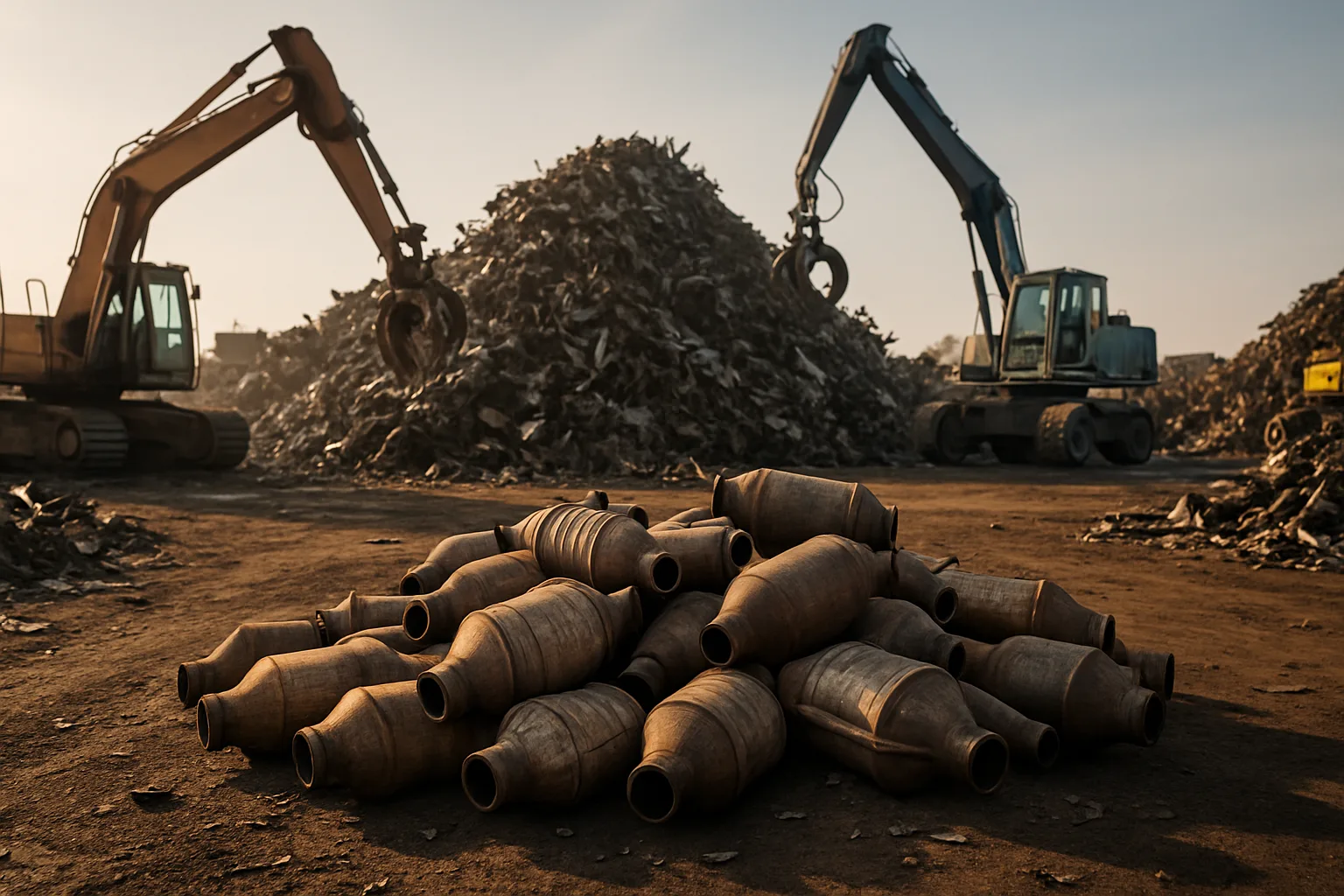
Most sellers leave serious money on the table because they don't understand how catalytic converter grading works. One converter might fetch $15. Another off the same vehicle line could be worth over $400. The difference isn't luck — it's grade, metal content, and whether you're selling to the right buyer.
If you're sitting on a pile of cats and trying to make sense of catalytic converter prices today, this guide breaks down exactly how grading works, what drives value, and how to stop guessing your price.
Why Catalytic Converter Grading Exists
Not all catalytic converters are created equal. Under that steel shell sits a ceramic or metallic substrate coated with platinum group metals (PGMs) — platinum, palladium, and rhodium. The concentration of those metals determines the converter's scrap value. A grader's job is to identify which unit you have and match it to known PGM loadings.
Grading systems exist because the secondary market for PGMs is sophisticated. Refiners and processors buy converters in volume, assay them, and recover those metals. They pay based on what they expect to extract. If you're selling without understanding the grade, you're negotiating blind — and buyers know it.
There are thousands of different converter part numbers in circulation. Grading databases cross-reference serial numbers, OEM part numbers, and physical appearance to assign a tier. That tier sets the price range a buyer will offer.
The Grading Tiers: From High-Grade to Scrap
Grading varies by buyer and region, but the industry broadly sorts converters into tiers based on PGM content and recoverable value. Here's how those tiers typically break down:
- High-grade / premium cats: These are the most valuable units. Think late-model foreign nameplates — certain Toyota, Honda, and European vehicles. High PGM loading, clean substrate, no damage. These consistently command top dollar on the market.
- Mid-grade domestic: Common North American V6 and V8 converters. Solid value, high volume. Many pickups, SUVs, and sedans fall here. Price varies with the PGM market.
- Low-grade / commodity: High-volume, lower-content units. Think economy cars and some older domestic vehicles. Lower per-unit value but worth selling in bulk.
- Pre-cats / small cats: The smaller secondary converter positioned before the main unit. Lower substrate volume means lower metal content. Buyers often price these separately.
- DPF / diesel particulate filters: Different chemistry, different market. These are graded separately from standard gasoline converters. Platinum-heavy, but with a distinct buyer pool.
- Aftermarket / direct-fit replacements: Little to no PGM content. Essentially scrap steel value only. If you're selling a converter and getting offered almost nothing, it might be aftermarket.
Knowing which tier your unit falls into is the single most important factor in getting a fair price. Misidentification — whether intentional or not — is where sellers consistently lose money.
What Drives Catalytic Converter Prices Today in Canada
The PGM market moves fast. Rhodium, palladium, and platinum are traded commodities, and their spot prices shift with global supply, automotive manufacturing demand, and macroeconomic factors. Catalytic converter scrap prices in Canada track those spot prices — with a lag and a margin baked in for processing and refining.
As of mid-2026, the PGM market has seen meaningful volatility. The ongoing push for hybrid and EV adoption has created some demand softness for palladium (used heavily in gasoline catalysts), while rhodium prices remain sensitive to South African mining output. Platinum has shown resilience, in part because of growing interest in hydrogen fuel cell applications. None of these prices are static — which is exactly why checking current Canadian catalytic converter prices before you sell matters.
Several additional factors shape what you'll actually receive for your cats in Canada:
- Volume: A single converter gets you one price. A pallet of sorted, identified units gets you a better one. Buyers move faster and pay more when lots are organized.
- Condition: Cracked substrates, melted cores, or gutted converters pay less — or nothing. Intact substrate is the asset.
- Documentation: Serial numbers, photos, and part identification build buyer confidence. Buyers on platforms that require documentation tend to compete harder.
- Exchange rate: PGMs are priced in USD globally. CAD/USD fluctuations directly affect what Canadian sellers see in their final payout.
How Buyers Use Serial Numbers and VINs to Grade Your Cats
Every OEM catalytic converter has a serial number or stamped identifier on the shell. Experienced buyers use those numbers to pull up known assay data — actual lab results from processing thousands of identical units. That data tells them the expected PGM recovery per unit with reasonable precision.
VIN lookups add another layer. If you know the year, make, and model of the vehicle a converter came off, a buyer can cross-reference likely converter types even without a readable serial. This matters when you're processing end-of-life vehicles and need to sort a mixed load quickly.
SMASH uses serial tracking and photo documentation as part of its platform. When you submit a load with proper documentation, you're not asking buyers to guess — you're giving them the data they need to bid confidently. That's how you create real competition on your lot. Platforms like Canada's B2B scrap recycling marketplace bring vetted buyers into that process, so you're not relying on a single call to a single contact.
For sellers in Moncton and across New Brunswick, this matters practically. The regional buyer pool in Atlantic Canada is smaller than in Toronto or Montreal. Without a platform that reaches buyers nationally, you're negotiating at a geographic disadvantage. Competition is how you close that gap.
Selling Catalytic Converters in Moncton: What Local Sellers Need to Know
Moncton sits at the hub of Atlantic Canada's transportation network, which means vehicles move through here — and so does the scrap that comes off them. Auto shops, dismantlers, and private sellers in the region are all sitting on converter inventory at different scales. The challenge isn't finding a buyer. It's finding the right buyer at the right price.
Local buyers in Moncton will offer a price. That price reflects their costs, their margin, and their read of the market. It doesn't necessarily reflect what buyers in larger markets would pay for the same unit. That spread — between what a local buyer offers and what competitive bidding might produce — is real money. More buyers means better price discovery. That's not a slogan, it's how markets work.
If you're looking to Moncton scrap metal services that connect you to a broader buyer network, that's exactly what a competitive auction platform addresses. Documented inventory, vetted buyers, and transparent bidding change the dynamic for sellers regardless of where they're located.
New Brunswick's scrap market also has a seasonal pattern — vehicle cycling tends to peak in spring and late fall. If you're holding inventory, understanding when buyer demand runs hot can improve your outcome. Timing a sale around that demand curve, rather than selling under pressure, is a strategy worth considering.
Getting the Best Catalytic Converter Price: Stop Guessing, Start Documenting
The sellers who consistently get strong prices for their cats do a few things right. They identify their units properly. They document condition with photos. They don't sell mixed, unlabelled loads for a flat rate. And they use platforms and networks that create real buyer competition.
Here's a practical checklist before you sell:
- Identify each unit — read the serial number off the shell, or pull the VIN of the donor vehicle.
- Photograph condition — both ends of the substrate, visible shell markings, any damage.
- Sort by grade — don't mix high-grade foreign cats with commodity domestic units in a single pile.
- Check the PGM market — know where platinum, palladium, and rhodium are trading before you commit to a price.
- Get multiple offers — one buyer quoting you a price is not a market. It's one opinion.
SMASH supports this process directly. The platform's inventory tool, VIN lookup, and photo documentation features are built for exactly this workflow. When buyers on the platform bid on a documented, sorted load, they're competing on real data — and that competition surfaces better pricing than a cold call to a single yard ever will. If you want to get the best catalytic converter price in Canada, the process matters as much as the platform.
Prices shift. Grades matter. Documentation wins. If you're selling cats in Moncton or anywhere across New Brunswick, the time you spend identifying and documenting your load is the highest-return activity you can do before hitting send on a quote request. To read Canadian catalytic converter pricing guides and stay current on what's moving the market, bookmark this resource and check back regularly.
Ready to stop guessing and start selling with real data behind you? Get the best Canadian price for your catalytic converter — get a free quote at best-catalytic-converter-price.ca. Bring your serial numbers, bring your photos, and let the market do the work.
Disclaimer: Catalytic converter prices fluctuate with PGM spot markets. Always check current rates before finalizing any sale.
Frequently Asked Questions
Q: How do I find out what grade my catalytic converter is?
The most reliable way is to read the serial number stamped on the converter shell and cross-reference it with a buyer's grading database. If the serial is worn off, the vehicle's VIN can help identify likely converter types by year, make, and model. Platforms like SMASH support VIN lookup and serial tracking to help with this process.
Q: What are catalytic converter prices today in Canada?
Canadian catalytic converter prices track global PGM spot prices for platinum, palladium, and rhodium, adjusted for the CAD/USD exchange rate and processing margins. Prices vary significantly by grade and converter type. Check current Canadian catalytic converter prices for up-to-date information, and note that prices can shift week to week with the commodity markets.
Q: What is the best way to sell catalytic converters in Moncton?
Document your inventory with serial numbers and photos, sort by grade, and get offers from more than one buyer. Local buyers in Moncton offer convenience, but competitive auction platforms that reach buyers nationally can help surface better pricing — especially for higher-grade or larger-volume lots.
Q: Why does one catalytic converter pay so much more than another?
The value difference comes down to PGM content — the concentration of platinum, palladium, and rhodium in the substrate. A high-grade foreign nameplate converter may carry several times the recoverable metal of a low-grade domestic unit. Grade identification is the most important step before any sale.
Q: Are aftermarket catalytic converters worth anything as scrap?
Aftermarket and direct-fit replacement converters typically contain little to no PGMs and are valued close to steel scrap prices. If a buyer is offering almost nothing for a converter, it may be aftermarket rather than OEM. Identifying this before you sell saves you from comparing the wrong price benchmarks.
Follow SMASH on LinkedIn for scrap metal market insights, PGM updates, and industry news across North America.