OEM vs. Aftermarket Catalytic Converters: Why the Scrap Value Gap Is Bigger Than You Think
Pull two catalytic converters off the shelf — one OEM, one aftermarket — and they might look nearly identical. Same shape, same heat shields, same inlet diameter. But hand them to a scrap buyer and you'll get quotes that are sometimes hundreds of dollars apart. If you've ever wondered why your catalytic converter quote felt low, or why a neighbor got paid significantly more for a converter off a similar vehicle, the OEM vs. aftermarket distinction is likely the answer. Understanding OEM catalytic converter value isn't just trivia — it's money in your pocket.
This week's roundup breaks down exactly why these two categories diverge so sharply in scrap value, what buyers are actually paying for, and how sellers in Saskatoon and across Saskatchewan can make sure they're getting a fair price instead of leaving cash on the table.
What Makes an OEM Catalytic Converter Worth More at the Scrap Yard
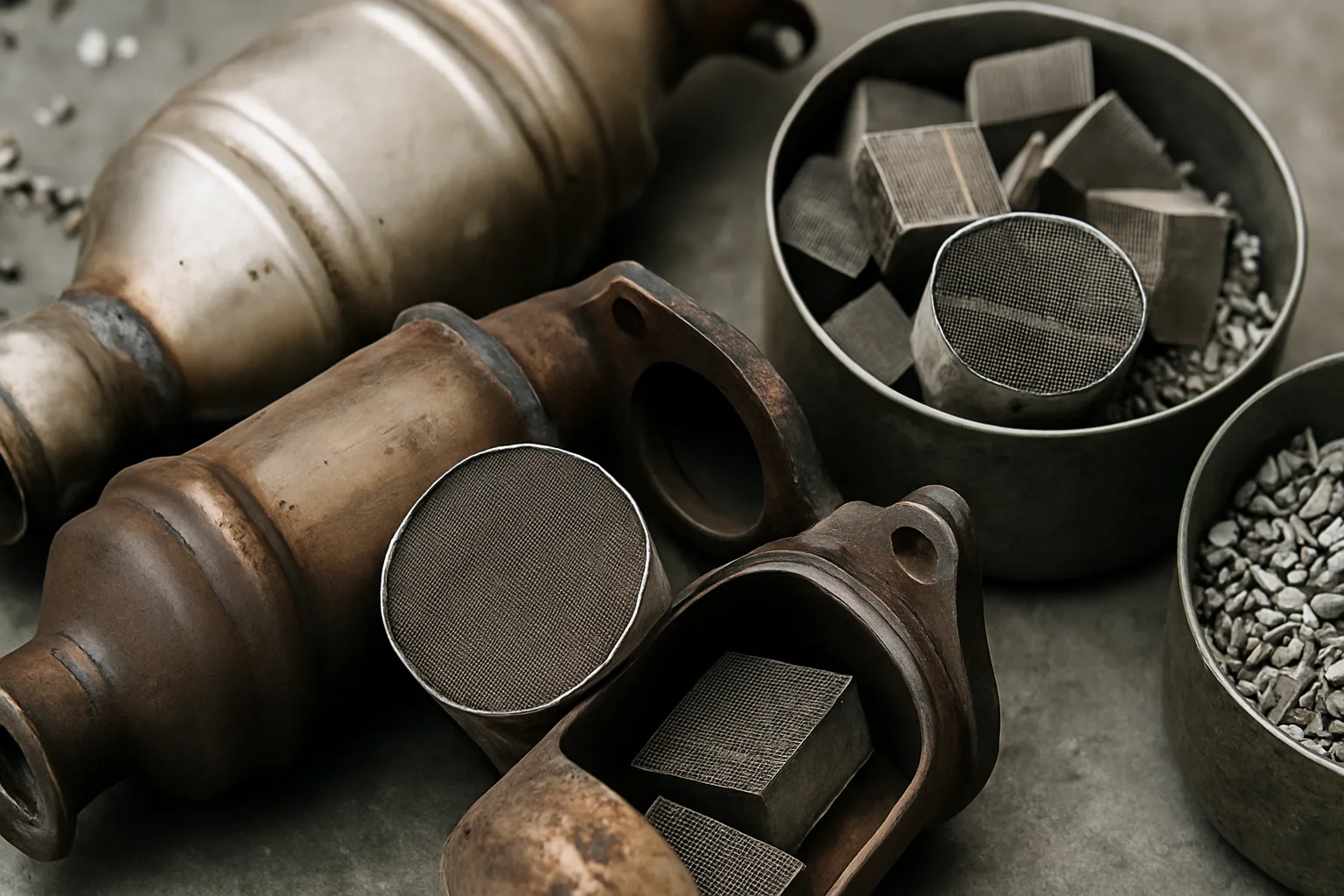
OEM stands for Original Equipment Manufacturer. These are the converters installed at the factory — built to the exact emissions specifications of the vehicle they came on. That matters enormously in scrap, because the value isn't in the steel shell. It's in the precious metals loaded into the ceramic substrate inside.
OEM converters are engineered to meet strict emissions standards, which means they carry a specific loading of platinum, palladium, and rhodium — the three metals that make catalytic converters valuable as scrap. Manufacturers don't guess at these loadings. They're precise, tested, and documented. A reputable scrap buyer can reference assay databases, vehicle VINs, and known converter part numbers to estimate the PGM (platinum group metals) content with reasonable accuracy before they ever cut the unit open.
That predictability is what commands a premium. When a buyer knows what's inside, they can bid confidently. When they're unsure, they bid low to protect themselves.
Why Aftermarket Converters Carry a Fraction of the OEM Scrap Value
Aftermarket catalytic converters are a different story. They're built to pass emissions tests — not to maximize PGM loading. Manufacturers use the minimum amount of precious metal necessary to make the converter functional and road-legal. That's not a knock on the product; it's just a different engineering priority. A shop replacing a converter wants to keep repair costs down. A scrap buyer wants precious metal density. Those goals don't align.
The result? Aftermarket units often contain significantly less platinum, palladium, and rhodium than their OEM equivalents. Depending on the unit, the difference can be dramatic. Some aftermarket converters carry PGM loadings so low that they're worth only a fraction of what a comparable OEM unit brings. In markets where rhodium alone has traded at prices that make even small quantities significant, that loading gap translates directly to dollar value.
Here's what this means practically for sellers:
- An OEM converter off a late-model truck or SUV can carry meaningful scrap value
- A replacement aftermarket unit on the same vehicle may be worth a fraction of that
- Two converters that look identical externally can have completely different precious metal content
- Age, mileage, and heat damage all affect how much recoverable PGM remains
This is why experienced scrap buyers ask for part numbers, VINs, and photos — not to slow the process down, but because the serial number on the converter often tells them more than the physical appearance ever could. Platforms like SMASH have built tools specifically to support this kind of documentation at scale.
Catalytic Converter Prices Today: What's Driving the Market in Mid-2026
Precious metal markets don't sit still, and catalytic converter prices today reflect that volatility. Platinum, palladium, and rhodium each trade independently on global commodity markets. When one moves significantly, converter values shift — sometimes within days. Rhodium in particular has a history of dramatic price swings that ripple directly through scrap converter values.
As of mid-2026, the market remains active but nuanced. The continued pressure on internal combustion vehicles from electrification policy hasn't eliminated demand for converter scrap — quite the opposite. The finite supply of recoverable catalytic converters is part of what keeps the recycling market competitive. Smelters and refiners still need PGMs, and secondary recovery from scrap remains a critical supply source.
For sellers in Saskatoon and across Saskatchewan, the practical implication is this: the converter sitting in your yard right now has a value tied to a global market. Getting the right price means connecting with buyers who are paying to current spot rates — not buyers who set a flat price weeks ago and haven't updated it. That's exactly the kind of price discovery that competitive auction formats are built to deliver.
Disclaimer: Catalytic converter prices fluctuate based on precious metal spot prices and market conditions. Always check current Canadian catalytic converter prices before accepting any offer.
How Scrap Metal Inventory Management Affects What You Actually Get Paid
Here's a problem that costs sellers money and most of them don't even know it's happening. When converters move through a yard without proper documentation — no photos, no part numbers, no VIN tracking — buyers have no choice but to assume the worst. They can't verify OEM origin. They can't confirm the unit hasn't been hollowed out. They can't reference assay data. So they discount the offer to cover their uncertainty.
Good scrap metal inventory management flips that dynamic. When you can show a buyer a clear photo of the converter, a readable part number or serial, and the vehicle it came off, you're giving them the confidence to pay a better price. You're reducing their risk, which directly increases your return.
This is one of the core reasons platforms like SMASH were built the way they were. The inventory tools inside SMASH support photo documentation, VIN lookup, and serial tracking — the exact information that separates a well-documented load from a mystery pile. Documented inventory gives buyers more confidence, and more buyer confidence means better price discovery. That's not a slogan; it's how auctions work.
For auto shops in Saskatoon accumulating cores over time, or for individual sellers with a handful of converters pulled from insurance write-offs, this documentation habit is the single most actionable thing you can do before listing.
Finding Real Catalytic Converter Buyers Near You — and Why Local Isn't Always Best
Searching for catalytic converter buyers near me prices is a natural starting point. But limiting yourself to whoever is physically closest can cost you. A single local buyer has no competition. They set the price and you can take it or leave it. In a market where converter values are tied to global PGM prices, that one-buyer dynamic rarely works in your favor.
The smarter move is to access a network of vetted buyers who are actively competing for your load. That competition is what reveals the actual market price — not what one buyer decided to pay this week. This is exactly what the SMASH scrap metal auction format is designed to do: put your inventory in front of multiple qualified buyers and let the bidding reflect real demand.
If you're in Saskatoon, you don't need to limit your converter sale to the buyers within driving distance. A well-documented load listed on a competitive platform reaches buyers across the region and beyond. The get the best catalytic converter price in Canada approach isn't about geography — it's about competition. You can also explore Saskatoon scrap metal services to find local pickup and processing options that connect to that broader buyer network.
There are no subscription fees on SMASH. You only pay when a deal closes — which means SMASH only wins when you do. That alignment matters. For more on how the process works, read Canadian catalytic converter pricing guides that walk through documentation, pricing, and what to expect from a competitive sale.
How to Use a Catalytic Converter Value Calculator — and Its Limits
Searching how much is my catalytic converter worth calculator returns a range of tools online. Some are genuinely useful for getting a ballpark — they pull known PGM loadings by converter type and apply current spot prices to give you a rough estimate. That estimate is a starting point, not a final number.
The gap between a calculator estimate and an actual offer comes down to a few factors:
- OEM vs. aftermarket status — a calculator may not distinguish accurately if you don't know which you have
- Condition and mileage — high-heat environments and long service life deplete recoverable PGMs
- Processing costs and refinery margins — buyers factor in their downstream costs, which vary by volume and relationship
- Spot price timing — PGM markets move daily; a calculator using yesterday's price may already be off
The most reliable way to know what your converter is actually worth in the current Canadian market is to get it in front of multiple qualified buyers at the same time. That's the core value proposition behind a platform built for competitive price discovery. Sell your scrap metal on SMASH Recycling to access that kind of buyer competition without the guesswork.
Whether you're an auto shop in Saskatchewan with a growing pile of cores, or an individual in Saskatoon who pulled a converter off a trade-in, the process is the same: document it well, know whether it's OEM or aftermarket, and get it in front of real buyers who are competing for it.
The converter in your yard has a real market value. Getting close to that number means using the right tools and the right platform. If you're ready to find out what yours is actually worth, get a free quote and get the best catalytic converter price in Canada — so you're making decisions based on real market data, not a single buyer's word.
Frequently Asked Questions
Q: How do I know if my catalytic converter is OEM or aftermarket?
Check the part number stamped or welded onto the converter body. OEM units typically carry the vehicle manufacturer's part number or a supplier code traceable to the original build. Aftermarket units often have generic part numbers from brands like Walker, Magnaflow, or Eastern Catalyst. If you have the vehicle VIN, a scrap buyer with the right database can often confirm OEM status from there.
Q: Why is the scrap value of my aftermarket catalytic converter so low?
Aftermarket converters are engineered to meet emissions requirements at the lowest possible manufacturing cost — which means lower precious metal loading. Since platinum, palladium, and rhodium are what drive scrap value, lower PGM content means a lower offer. This isn't a scam; it's just the chemistry. An OEM unit from the same vehicle will almost always return more at the scrap yard.
Q: What's a fair price for a catalytic converter in Saskatoon right now?
Catalytic converter prices in Saskatoon — like everywhere in Canada — vary based on the make, model, year, OEM vs. aftermarket status, and current precious metal spot prices. There's no single fair price because the market moves daily. The best way to know what your converter is worth right now is to get competing offers from vetted buyers rather than accepting the first quote you receive.
Q: Does the condition of my catalytic converter affect its scrap value?
Yes, significantly. Heat damage, cracked substrates, and extensive mileage all reduce the amount of recoverable platinum, palladium, and rhodium in the unit. A converter that's been running on a hard-driven vehicle for 250,000 km will typically yield less than the same unit with 80,000 km on it. Good photo documentation helps buyers assess condition accurately — which usually results in a fairer, more confident offer.
Q: How does the SMASH auction platform work for selling catalytic converters in Saskatchewan?
SMASH connects sellers with a network of vetted buyers through a competitive auction format. You document your inventory — photos, part numbers, VIN where available — and list it on the platform. Multiple buyers compete, which helps reveal the actual market price rather than a single buyer's floor price. There are no subscription fees; SMASH earns when the deal closes, so the incentive is aligned with getting you the best result possible.
Follow SMASH on LinkedIn for weekly scrap metal market updates, PGM price movement, and catalytic converter industry insights across Canada.