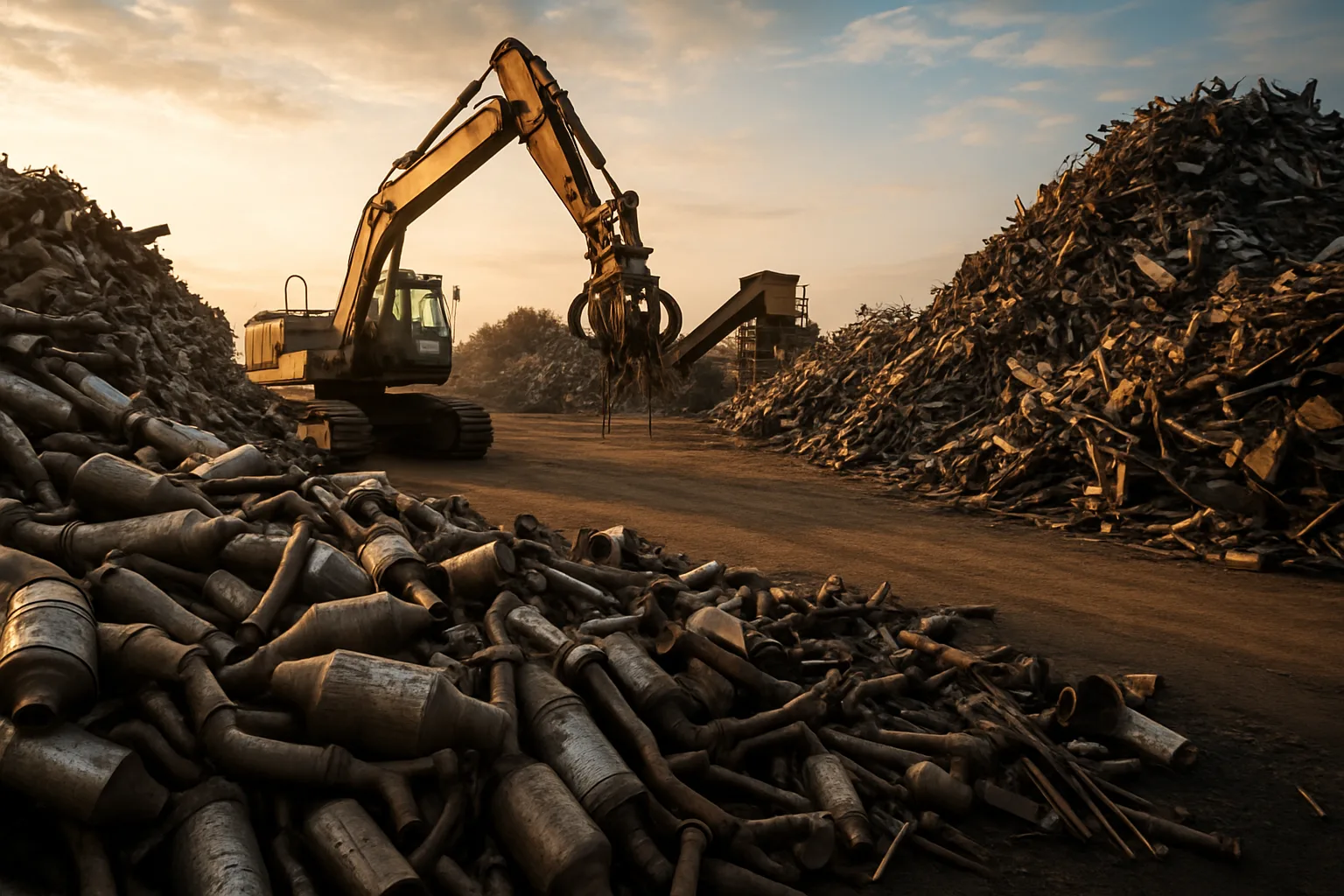
Why Recycling Catalytic Converters the Right Way Actually Matters (And Pays)
Most people selling a scrap catalytic converter are focused on one thing: the payout. That's fair. Platinum, palladium, and rhodium are serious money. But here's what doesn't get talked about enough — how your cat gets recycled matters just as much as what you get paid for it. Improper recycling wastes precious metals, damages the environment, and ultimately suppresses the market for everyone trying to sell catalytic converters online.
This article breaks down the real environmental stakes behind catalytic converter recycling, what happens to the platinum group metals (PGMs) inside, and why choosing the right buyer — not just the fastest one — makes a difference for your wallet and the planet. Whether you're an auto shop clearing out old stock, a scrap collector in Burnaby, or someone who just pulled a converter off a trade-in, this is worth reading before you move your next load.
What's Actually Inside a Catalytic Converter — And Why It's Dangerous to Waste
Inside every catalytic converter is a ceramic or metallic substrate coated with platinum group metals: platinum, palladium, and rhodium. These aren't just valuable — they're genuinely rare. Global PGM supply is tight. Most of the world's platinum and palladium comes from just two countries (South Africa and Russia), and the mining process is energy-intensive, water-heavy, and environmentally destructive.
When a cat gets processed correctly, those PGMs are extracted and re-enter the supply chain. That recovered material goes back into new catalytic converters, industrial applications, and electronics. When a converter ends up in a landfill, gets smelted improperly, or gets bought by a low-tier processor cutting corners, those metals are either lost or recovered at a fraction of their actual yield — a waste of finite resources that took enormous environmental cost to mine in the first place.
- Platinum: Used in diesel catalytic converters and fuel cells. Extremely limited annual global supply.
- Palladium: Dominant in gasoline converters. Demand has exceeded mine supply in recent years.
- Rhodium: The rarest of the three. Powerful emissions reducer — also the most volatile in price.
- The substrate itself: The ceramic or metallic carrier must also be handled properly to avoid particulate contamination.
The point isn't just environmental guilt — it's that PGM recovery rates vary significantly between processors. A legitimate, well-equipped refinery recovers far more usable metal per unit than a cut-rate operation. Better recovery rates support stronger payouts for sellers. The environment and your payout are on the same side here.
The Real Environmental Cost of Cutting Corners in Catalytic Converter Recycling
Improper handling of catalytic converters creates real, measurable environmental harm. The ceramic substrate inside converters contains fine particulates. If crushed or handled carelessly without proper containment, those particles become airborne — a genuine air quality issue, especially in dense urban areas like Burnaby or Vancouver where scrap operations run near residential zones.
Beyond particulates, the smelting and refining process for PGMs involves strong acids and high-temperature processes. Done right, those are contained and neutralized. Done wrong — or done offshore by buyers who face minimal regulatory oversight — they create toxic waste streams. British Columbia has some of the stricter environmental compliance requirements in Canada for scrap processors, but not every buyer your cat ends up with operates under those same standards once material moves down the chain.
There's also the issue of what happens when converters are stolen and fenced through informal channels. Stolen cats often bypass licensed recyclers entirely, getting processed through operations with no accountability for environmental handling. When you sell catalytic converters online through a vetted, transparent platform, you're also keeping material out of that gray market entirely — a genuine environmental and ethical benefit.
5 Reasons Selling Through a Transparent Platform Supports Better Recycling Outcomes
Not all buyers are equal. The gap between a serious, licensed refinery-connected buyer and an unvetted local operator is real — in both payout and environmental accountability. Here's why choosing the right channel matters when you decide to get the best catalytic converter price in Canada.
-
Vetted buyers are licensed processors.
Platforms like SMASH only work with vetted buyers. That vetting process filters out operators who cut corners on both price and compliance. You're not just getting competition on price — you're getting buyers who have to meet a standard to be in the room. -
Photo documentation and serial tracking reduce fraud and gray-market flow.
When your inventory is documented — photos, serial numbers, VIN lookups where applicable — it creates a paper trail. That paper trail is exactly what responsible recycling chains depend on. Platforms that support scrap metal inventory management tools aren't just helping you stay organized; they're supporting traceability across the entire chain. -
Competition drives volume to better processors.
When multiple vetted buyers bid on your load, the buyers offering the best recovery rates can offer the best prices. Low-yield processors can't compete at the top of the market. Over time, transparent auction-style pricing rewards operators doing the job right. -
Auction transparency discourages undervaluation.
When you take a single phone quote for your cats, you have no way to verify if it reflects the actual platinum price today. When multiple buyers bid, the market speaks. That's not just better for your bottom line — it keeps the recycling economy honest. -
Documented loads support refinery accountability.
When a load of cats arrives at a refinery with complete documentation — quantity, make, model, photos — refineries can track assay results back to specific lots. That feedback loop improves recovery rates and strengthens the supply chain over time.
If you're managing regular volume — an auto shop, a scrap yard, a parts operation — building these habits into your workflow pays off. You can read Canadian catalytic converter pricing guides to understand how to document and value your inventory before you list it.
What Burnaby and British Columbia Sellers Should Know About Responsible Cat Recycling
Burnaby sits at the center of one of Canada's most active scrap metal markets. The Lower Mainland generates significant volumes of end-of-life vehicles and auto parts, and the competition among buyers in this region is real. That's good news for sellers — but it also means the market is noisy. Not every buyer quoting aggressively in the Burnaby area is operating to the same environmental or compliance standard.
British Columbia's environmental regulations around scrap processing are among the more demanding in Canada. Extended Producer Responsibility (EPR) frameworks, hazardous waste handling requirements, and municipal bylaws all shape how responsible operators work. Choosing a buyer who operates within that framework — rather than one who ships material offshore to avoid it — makes a tangible difference.
For sellers comparing options between platforms, local operations like brown's aluminum & catalytic converter scrap yard and national platforms like SMASH serve different parts of the market. Local yards offer convenience and relationships. National platforms with vetted buyer networks offer price competition and documented transaction trails. For high-value loads of cats — particularly those heavy in palladium or rhodium — the price discovery advantage of a competitive auction can be significant. To check current Canadian catalytic converter prices before committing to a buyer, get a benchmark first.
If you're also comparing options across provinces — for example, if you're a buyer or collector moving loads between British Columbia and Alberta — it's worth noting that options to sell catalytic converter Calgary buyers also exist through platforms operating nationally. SMASH connects sellers to vetted buyers across North America, so geography doesn't have to limit your market.
How to Prepare Your Catalytic Converters for Responsible, Maximum-Value Recycling
Getting the best price and supporting proper recycling aren't in conflict — they reinforce each other. Here's what to do before your next load moves:
- Photograph every unit. Top, bottom, and the substrate opening. Buyers price more confidently when they can see condition clearly.
- Record the vehicle make, model, and year where you know it. VIN lookup tools can help identify high-value units in a mixed load.
- Separate your grades. Don't mix domestic cats, foreign cats, and aftermarket units in one pile. Each category carries different PGM content and therefore different value. Keeping them sorted means more accurate pricing and better recovery tracking.
- Don't torch or cut converters before selling. Damaged substrates lose material and raise red flags with serious buyers. Leave them intact.
- Know your count and approximate weight. Basic inventory discipline makes the transaction faster and the documentation cleaner.
- Use a platform that supports documentation. When you get competitive bids for your scrap in Canada through SMASH, your inventory documentation is built into the process — not an afterthought.
None of this takes long. A few minutes of prep work on a load of catalytic converters protects the value of your material, supports responsible recycling downstream, and makes you a seller that vetted buyers want to work with consistently.
Frequently Asked Questions
Q: Why does it matter who I sell my catalytic converters to if I get paid the same?
The buyer you choose affects what happens to the platinum, palladium, and rhodium inside your cats. Processors with poor recovery rates extract less usable metal, which means more waste and lower returns to the supply chain. Over time, lower recovery rates also mean less competition at the top of the market — which can suppress prices. The buyer matters for both environmental and economic reasons.
Q: Can I sell catalytic converters online in Canada without physically meeting a buyer?
Yes. Platforms like SMASH allow you to list your catalytic converters, receive competitive bids from vetted buyers, and arrange logistics — all without a face-to-face negotiation. Documentation tools make the remote transaction process transparent and traceable. For sellers in Burnaby or elsewhere in British Columbia, this opens up the national buyer market rather than limiting you to local options.
Q: How does the platinum price today affect what I get paid for my cats?
PGM spot prices — platinum, palladium, and rhodium — are a major input into catalytic converter valuations. Buyers price loads based on estimated PGM content and current market rates. When palladium or rhodium prices are elevated, high-PGM units like foreign cats command strong premiums. Checking current market benchmarks before listing helps you evaluate offers with context. Disclaimer: Prices fluctuate daily. Always verify current rates before selling.
Q: Is it worth selling a single catalytic converter online, or only larger loads?
Single units can absolutely be worth selling online, especially if it's a high-value foreign cat or a unit from a luxury or hybrid vehicle. The economics of shipping a single unit need to be factored in, but for higher-value converters, the price premium from competitive bidding can outweigh local convenience. For mixed loads or bulk inventory, the case for a competitive platform is even stronger.
Q: What makes catalytic converter recycling environmentally important compared to other scrap metal?
Catalytic converters contain platinum group metals that are among the most energy-intensive materials on earth to mine. Recovering PGMs through recycling uses a fraction of the energy and water of primary mining, and it reduces demand for new extraction in ecologically sensitive areas. Proper handling also prevents particulate contamination from ceramic substrates and keeps material out of informal, unregulated channels.
Recycling your catalytic converters responsibly doesn't mean leaving money on the table — it means putting your material into a system that recovers the most value and does the least damage. If you're ready to find out what your cats are actually worth in today's Canadian market, get the best catalytic converter price in Canada with a free quote at best-catalytic-converter-price.ca.
Stay current on PGM markets and scrap metal pricing by following SMASH on LinkedIn — regular updates on industry trends, market movements, and what's driving cat values across Canada.