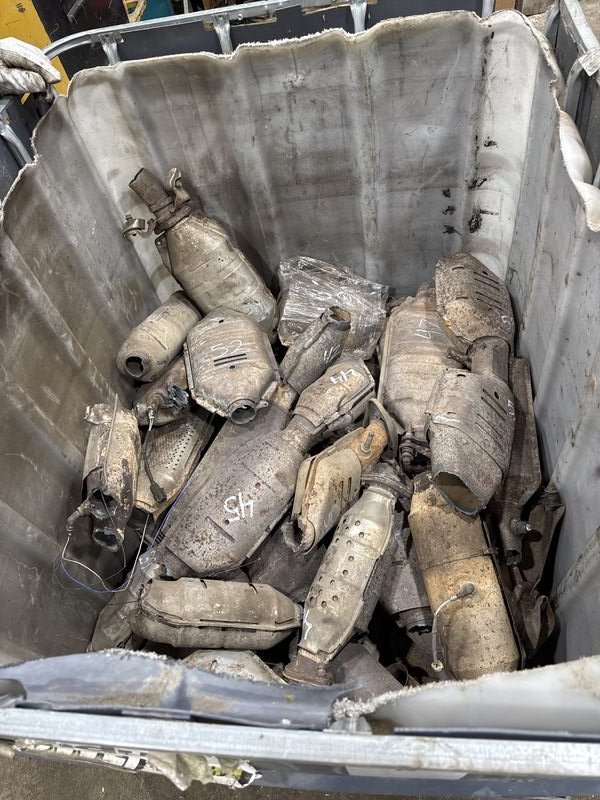
Most people selling a used catalytic converter have no idea what's actually inside it. That's exactly why so many of them leave serious money on the table. The metals packed into that ceramic honeycomb aren't just valuable — they're among the most expensive raw materials on the planet, ounce for ounce more precious than gold.
If you're looking at catalytic converter recycling Sherbrooke and want to understand why prices vary so wildly between buyers, start here. Understanding what's inside your cat is the first step to knowing what it's actually worth — and avoiding a lowball offer.
The Three Precious Metals That Drive Catalytic Converter Value
Every catalytic converter contains a washcoat — a chemical layer applied to the ceramic or metallic substrate inside the unit. That washcoat holds three platinum group metals (PGMs): platinum, palladium, and rhodium. These aren't present in large quantities. We're talking fractions of a gram per unit. But even tiny fractions of these metals add up fast when market prices are high.
Here's a quick breakdown of what each metal does and why it matters to recyclers:
- Platinum (Pt): The oldest of the three PGMs used in catalytic converters. Platinum handles oxidation reactions, converting carbon monoxide and unburned hydrocarbons into carbon dioxide and water. It's more commonly found in diesel converter units.
- Palladium (Pd): Palladium dominates modern gasoline converters. It handles hydrocarbons at lower temperatures than platinum and has become the most expensive of the three PGMs over recent years. Demand from gasoline and hybrid vehicle production keeps palladium values elevated.
- Rhodium (Rh): Rhodium is the rarest and historically the most volatile in price. It handles nitrogen oxide (NOx) reduction — converting toxic emissions into nitrogen and oxygen. Even tiny amounts of rhodium in a converter can represent a significant portion of its scrap value.
The actual loading of each metal varies by vehicle make, engine type, and emissions standard the converter was built to meet. A converter pulled from a large V8 truck will typically carry different PGM loadings than one from a compact sedan. That's why identical-looking cats can fetch very different prices at the recycling stage — and why proper identification matters before you sell.
Why PGM Prices Are So Volatile — and What That Means in 2026
Precious metal markets move constantly. Supply shocks from mining regions in South Africa and Russia, shifts in automotive manufacturing volumes, and demand from the hydrogen fuel cell sector all push PGM prices in different directions throughout the year. That volatility flows directly into the price you're offered for your scrap converter.
In 2026, the catalytic converter recycling market continues to reflect tight PGM supply conditions. Mining output hasn't expanded at the pace needed to offset growing demand, particularly as hydrogen fuel cell technology competes with automotive applications for the same platinum supply. For sellers in Quebec and across Canada, this makes timing and market access two of the biggest factors in how much cash you actually walk away with.
Selling to a single local buyer with no competition? You're getting their number on that day, with no way to verify if it reflects the actual market. That's the problem that platforms like SMASH were built to solve. Canada's B2B scrap recycling marketplace connects sellers with vetted buyers who compete for material — which is how real price discovery actually works.
How Buyers Calculate Catalytic Converter Value Before Making an Offer
Professional buyers don't guess. They use a combination of serial number databases, XRF assay equipment, and current PGM spot prices to calculate what a converter is worth before they bid. When you're trying to figure out how much is your catalytic converter worth, a calculator or database lookup gives you a starting point — but the actual value depends on live metal prices and the verified PGM content of your specific unit.
Here's the general process recyclers use:
- Identification: The converter is identified by serial number, OEM number, or vehicle application. This cross-references known PGM loadings for that unit type.
- Assay or database lookup: Either XRF scanning or a trusted PGM database gives an estimated precious metal content per unit.
- Spot price calculation: Current platinum, palladium, and rhodium spot prices are applied to the metal content estimate.
- Processing margin: The buyer applies their processing costs, margin, and risk tolerance to arrive at a purchase offer.
The gap between step 3 and step 4 is exactly where sellers lose money when they deal with a single buyer and no competition. More buyers bidding on the same material means that gap gets squeezed — which is better for you.
If you want to check current Canadian catalytic converter prices before you commit to a sale, you're already thinking the right way. Knowing the baseline protects you from accepting an offer that doesn't reflect real market conditions.
Catalytic Converter Recycling in Sherbrooke — What Local Sellers Need to Know
Sherbrooke sits in the Eastern Townships of Quebec, and it's a region with real industrial and automotive activity. Auto shops, salvage yards, and fleet operators throughout Sherbrooke accumulate cats on a regular basis — from routine maintenance, end-of-life vehicles, and fleet turnover. If you're sitting on a pile of units and wondering what they're worth, the answer depends heavily on how you bring them to market.
Selling locally in Sherbrooke through a single buyer is convenient, but convenience usually costs you. When one buyer knows you have nowhere else to go, the offer reflects that. The better move is to document your inventory properly — serial numbers, photos, weights — and access buyers beyond your immediate geography. That's what sell catalytic converters online actually means in practice: reaching a competitive buyer pool, not just posting on a local classifieds board.
Platforms built for this market give you access to vetted buyers across Canada who are actively competing for PGM-bearing material. For sellers in Sherbrooke looking to sell catalytic converters Quebec-wide or beyond, that's a meaningful difference in outcome. You can also explore Sherbrooke scrap metal services for local guidance on how to get started with your converter inventory.
Quebec sellers should also be aware that proper documentation matters increasingly in this space. Regulations around catalytic converter transactions have tightened across North America in recent years, with more provinces and states requiring seller identification, vehicle records, or proof of ownership. Being organized — with photos, serial numbers, and proper packing documentation — isn't just good practice. It makes your material easier for legitimate buyers to bid on confidently.
How to Get the Best Price When You Sell Catalytic Converters Online
Whether you're an individual with one converter or a shop with a drum full of cats, the principle is the same: competition between buyers is the only reliable way to ensure you're seeing real market value. One buyer, one price, one phone call — that's the old way. It doesn't work in your favor.
Here's what actually moves the needle when you're trying to sell catalytic converter for cash at the best available price:
- Document everything. Serial numbers, photos from multiple angles, weight per unit where possible. Buyers bid higher when they have confidence in what they're buying.
- Don't sell in a rush. Distressed sellers accept lower offers. If you can hold material for a few days while bids come in, you're better positioned.
- Understand the difference between whole cats and de-canned material. Some buyers want intact units; others want de-canned substrate. Know which market you're targeting.
- Use platforms with vetted buyers. Random buyers with no accountability don't have the same incentive to bid competitively as buyers operating in a structured marketplace.
- Check current PGM spot prices. You don't need to be a metals trader, but knowing whether palladium is up or down this week gives you context for the offers you receive.
SMASH brings this competitive dynamic to the scrap converter market. Sellers who document their loads properly and put them in front of multiple vetted buyers are doing what any smart seller should do — creating competition. That's not complicated. It's just how markets work. Read Canadian catalytic converter pricing guides to sharpen your understanding before your next sale.
The Bottom Line on Precious Metals and Your Converter's Worth
Platinum, palladium, and rhodium are the reason your old catalytic converter isn't trash — it's a recoverable asset. The exact value depends on the specific unit, current PGM spot prices, and how many buyers you're actually competing against each other for your material.
Sellers in Sherbrooke and across Quebec who take the time to document their inventory and access a competitive buyer network consistently do better than those who sell to the first number they hear. That's not a promise — it's just how markets work when you give them a chance to function properly.
If you're ready to stop guessing and start selling with real price discovery, get the best catalytic converter price in Canada through a platform that puts vetted buyers to work for you. It costs nothing to find out what your material is actually worth.
Disclaimer: Catalytic converter prices fluctuate based on live platinum, palladium, and rhodium spot markets. Always check current rates before finalizing any sale.
Frequently Asked Questions
Q: How much precious metal is actually inside a catalytic converter?
The amount varies significantly by vehicle type and emissions standard, but most converters contain between 3 and 7 grams of combined platinum group metals. That small amount of platinum, palladium, and rhodium is what drives the scrap value — even fractional grams matter when PGM prices are elevated.
Q: Where can I do catalytic converter recycling in Sherbrooke?
Sherbrooke has local scrap buyers who handle catalytic converters, but local options alone may not give you access to competitive pricing. Using an online platform with vetted buyers across Quebec and Canada means your material is seen by more buyers — which creates the competition that drives better offers. Explore Sherbrooke scrap metal services for local-specific guidance.
Q: Is rhodium really more valuable than gold?
Historically, yes — rhodium has traded at multiples of gold's price during supply squeezes, though it's also extremely volatile. Even small amounts of rhodium in a converter can contribute meaningfully to its scrap value, which is why PGM prices matter so much to the final offer you receive.
Q: Can I sell catalytic converters online from Quebec?
Yes. Platforms built for the Canadian scrap market allow sellers in Quebec — including Sherbrooke — to document their inventory and reach vetted buyers across the country. Proper documentation (serial numbers, photos, weights) is key to attracting strong bids from buyers who can't inspect the material in person.
Q: How do I know if a catalytic converter buyer is giving me a fair price?
Check current PGM spot prices before any sale, and never accept the first number from a single buyer without comparison. A legitimate buyer should be able to explain how they calculated their offer based on metal content and current market rates. If they can't — or won't — that's a signal to seek other bids.
Stay current on scrap metal market trends and PGM pricing by following SMASH on LinkedIn: follow SMASH on LinkedIn for industry updates, market insights, and catalytic converter pricing news relevant to Canadian sellers.
```