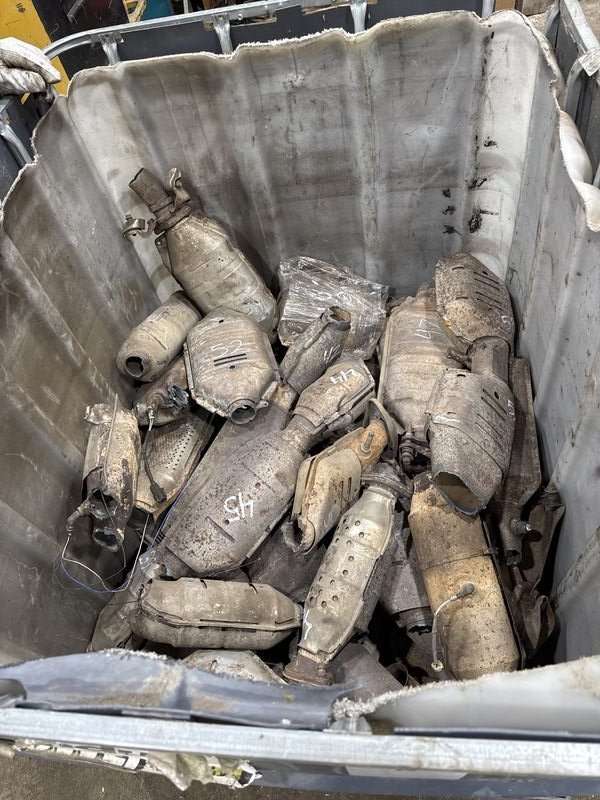
One seller in Brampton got lowballed by 60% on a load of cats — not because the market was soft, but because the buyer knew she didn't have a number to compare against. That's not a pricing disagreement. That's a scam hiding in plain sight.
The catalytic converter recycling market moves serious money. The platinum, palladium, and rhodium locked inside a single cat can be worth anywhere from $50 to well over $500 depending on the unit. When that kind of value is on the table, the bad actors show up. And in Ontario, sellers — from individual car owners to auto shops moving dozens of cores — are getting burned in ways they don't even recognize as fraud.
This article breaks down the most common scams targeting people trying to find a reliable catalytic converter buyer in Brampton and across Ontario. More importantly, it tells you exactly how to protect yourself.
Why the Catalytic Converter Market Attracts Scammers
Most sellers don't know what their converter is actually worth. That information gap is exactly what predatory buyers exploit. The PGM content — platinum, palladium, and rhodium — inside a catalytic converter varies dramatically by vehicle make, model, year, and even production run. Without a way to look up your specific unit, you're negotiating blind.
Add in the fact that buyers often quote prices verbally, over the phone, with no written confirmation — and you've got a market built for manipulation. There's no posted price board at most scrap yards. The number you get depends entirely on who picks up the phone and how much they think they can get away with.
That's why tools that give sellers real data matter. If you want to get the best catalytic converter price in Canada, you need a baseline before you walk into any buyer's yard.
The Most Common Scams Targeting Catalytic Converter Sellers in Ontario
These aren't hypothetical. They happen daily at yards and informal buying operations across Ontario, including right here in Brampton.
1. The Bait-and-Switch Quote
A buyer quotes you a strong price over the phone. You drive across town with your cats. When you arrive, they "test" the unit, make a face, and suddenly the price drops 30–40%. They'll blame the assay, the market, or a mysterious grading system they never explained upfront. By the time you're standing at the counter, you feel pressure to take the deal rather than haul the load somewhere else.
The fix: get any quote in writing — even a text message — before you make the trip. If a buyer refuses to confirm their price in writing, that tells you everything.
2. Fake "Assay" Results
Some buyers claim to run an on-site assay or XRF scan and then show you results that conveniently justify a low offer. The problem? There's no way for the average seller to verify those results. A real assay takes time and lab processing. Instant "results" shown on a screen should be treated skeptically unless you have an independent way to check.
Reputable buyers with legitimate testing processes will explain their methodology clearly. They won't just flash a number at you.
3. Grading Shell Games
Catalytic converters get graded — domestic, foreign, small foreign, large foreign, pre-cat, flow-through, and so on. Legitimate grading affects price. But some buyers misgrade units on purpose, dropping a mid-grade domestic into a low-grade foreign category to shave dollars off every single unit. If you're moving a load of 20 or 30 cats, that adds up fast.
Know your units before you sell. If you're moving volume, photograph every converter, note the vehicle it came from, and read Canadian catalytic converter pricing guides so you understand how grading actually works.
4. The "Market Dropped Today" Excuse
Palladium and rhodium prices do fluctuate — that's real. But some buyers weaponize that volatility to justify lowball offers regardless of what the market is actually doing. They'll tell you rhodium is down 20% today when it isn't, betting you have no way to check scrap metal prices today before accepting the deal.
Always check current PGM spot prices before any transaction. Rhodium, palladium, and platinum prices are publicly available. If a buyer's offer doesn't track with current market data, ask them to explain the math. A legitimate buyer will.
5. Informal "Cash" Buyers With No Paper Trail
Brampton and the surrounding Ontario market has seen growth in informal cash buyers operating out of parking lots, private properties, and back-of-house setups. Some of these buyers are legitimate. Many are not. The risk isn't just getting a bad price — it's selling to an operation that won't give you documentation, won't track serial numbers, and may be moving stolen material through their supply chain.
If you're ever questioned about a transaction by law enforcement, you need a paper trail. Selling to an unlicensed buyer with no invoice, no ID check, and no documentation puts you in a bad position even if you did nothing wrong.
How to Know If a Catalytic Converter Buyer Is Legitimate
Not every informal buyer is a scammer, and not every scrap yard is above board. Here's what separates a trustworthy buyer from a predatory one.
- They give written quotes — confirmed by text, email, or printed slip before the transaction.
- They explain their grading system — and can tell you which category your unit falls into and why.
- They track serial numbers and vehicle data — this protects both parties and is a sign of a professional operation.
- They provide documentation — a purchase receipt, invoice, or BOL for every transaction.
- They're licensed — operating under a scrap dealer license or registered recycling operation in Ontario.
- Their price moves with the market — not against it whenever it's convenient for them.
If a buyer checks all those boxes, you're probably in good hands. If they hesitate on any of them, trust that hesitation.
Using Competition to Protect Yourself — The SMASH Approach
The single most effective protection against scams is price competition. When multiple vetted buyers are bidding on your material, no single buyer can lowball you without losing the deal. The market sets the price, not one person on the other side of a counter.
That's exactly what platforms like SMASH are built for. Instead of calling one yard and hoping for a fair number, you put your load in front of multiple vetted buyers and let competition do the work. More buyers means better price discovery. Documented inventory — with photos, serial numbers, and vehicle data — gives buyers more confidence, which means stronger bids.
For sellers in Brampton and across Ontario moving regular volume — whether that's an auto shop pulling cats weekly or a collector building up a load — this approach changes the math entirely. You're not guessing at the scrap catalytic converter price. You're watching buyers compete for your material in real time.
To get competitive bids for your scrap in Canada, SMASH gives you a structured, transparent process that's the opposite of a parking lot cash deal with no paper trail.
Protecting Yourself Before the Sale: Practical Steps
Whether you're selling a single cat off your own vehicle or moving a load from your shop, these steps reduce your exposure to fraud significantly.
- Know your unit. Look up the year, make, and model. Use a reliable how much is my catalytic converter worth calculator free tool to get a baseline before any conversation with a buyer.
- Check current market data. PGM spot prices are public. Know where rhodium, palladium, and platinum are trading before you sell.
- Document everything. Photograph your converters. Note the VIN if you have it. Keep a record of what you're selling.
- Get multiple quotes. One quote is a guess. Two or three quotes start to show you what the market actually looks like.
- Demand a paper trail. If a buyer won't give you a receipt, find a different buyer.
- Use vetted platforms. SMASH connects sellers with verified buyers, which removes a significant layer of risk from the process.
None of these steps are complicated. They just require you to slow down and treat the transaction like the real money it represents. A load of cats has value. Protect it like it does.
What to Do If You Think You've Been Scammed
If you believe a buyer misrepresented their price, falsified grades, or otherwise defrauded you, document everything you have and contact the Ontario Ministry of Public and Business Service Delivery's consumer protection office. Unlicensed scrap dealers operating in Ontario can also be reported to local bylaw enforcement.
For future transactions, shift to a platform that creates a clear audit trail. When buyers know their bids are documented and competitive, the incentive to manipulate disappears. Check current Canadian catalytic converter prices so you walk into every future sale with real numbers in hand.
The scrap catalytic converter price you deserve is the one the market will actually pay — not the one a single buyer decides to offer when no one is watching. Getting there means working with buyers and platforms that have skin in the game when you win. That's a very different relationship than a cold call to a yard that's never heard your name before.
If you're in Brampton or anywhere across Ontario and you're tired of wondering whether you got a fair price, it's time to change how you sell. Get the best Canadian price for your catalytic converter — get a free quote at best-catalytic-converter-price.ca.
Disclaimer: Catalytic converter prices fluctuate with PGM spot markets. Always verify current rates before any transaction.
Frequently Asked Questions
Q: How do I find a trustworthy catalytic converter buyer in Brampton?
Look for licensed buyers who provide written quotes, explain their grading process, and issue proper documentation for every transaction. Using a platform like SMASH, which connects sellers with vetted buyers, adds another layer of protection against bad actors.
Q: What are the signs that a catalytic converter buyer is scamming me?
Red flags include prices that drop significantly after you arrive, refusal to put quotes in writing, no documentation or receipt, and explanations for low prices that don't match current PGM spot prices. If a buyer can't explain their grading system clearly, walk away.
Q: How do I know what my catalytic converter is worth before I sell in Ontario?
Look up your vehicle's year, make, and model, and use a free catalytic converter value tool to get a market-based baseline. Cross-reference that against current rhodium, palladium, and platinum spot prices before you contact any buyer.
Q: Is catalytic converter recycling in Brampton regulated?
Yes. Scrap dealers in Ontario operate under provincial regulations, including record-keeping and licensing requirements. Selling to an unlicensed or undocumented buyer increases your legal and financial risk, even if you're the seller, not the buyer.
Q: Why should I get multiple quotes instead of selling to the first buyer I find?
A single quote gives one buyer complete pricing power. Multiple quotes create competition, which drives prices toward actual market value. Platforms like SMASH are built specifically to create that competition — more buyers bidding on your material means better price discovery and less room for manipulation.
Stay ahead of the scrap metal market — follow SMASH on LinkedIn for industry updates, PGM market insights, and catalytic converter pricing news across Canada.
```