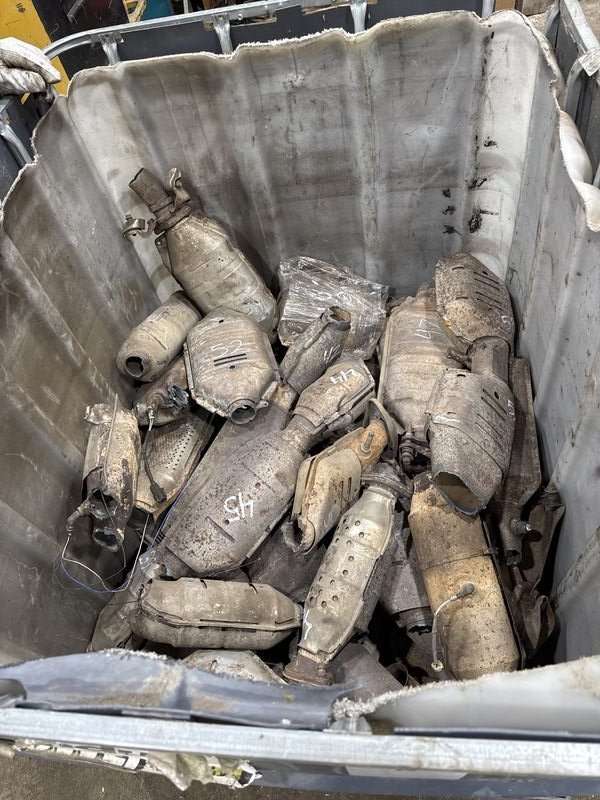
Most auto shops leave serious money on the table when selling scrap catalytic converters. Not because they're careless — because they're busy. You're running a shop, managing staff, handling repairs. Sorting and selling cats isn't your main job. But if you're moving bulk volume, even a modest improvement in your process can mean a significant jump in what you actually get paid.
This guide is for shops in Surrey and across British Columbia that want to stop guessing and start selling smarter. Whether you're sitting on a dozen converters or a few hundred, these tips will help you get more out of every load.
Why Bulk Selling Is Different — And Why It Matters for Auto Shops
Selling one cat is simple. Selling fifty is a different game. Bulk volume gives you leverage — but only if you know how to use it. Most shops hand their converters to whichever buyer calls first or whoever already handles their scrap steel. That's convenient, but it's not strategic.
When you sell in bulk, buyers are bidding on a package. They factor in the mix of units, the documentation quality, and how easy you are to deal with. Shops that come prepared — with photos, serial numbers, and a rough sense of what they have — consistently get better offers than shops that hand over a pile of unsorted cats and ask "what'll you give me?"
- Bulk loads attract more serious buyers
- Documented inventory builds buyer confidence
- Volume gives you negotiating power — if you use it
- Mixing high-value and low-value units matters less when buyers see the full picture
The best catalytic converter price in Surrey doesn't go to the shop with the most cats. It goes to the shop that sells with the most information.
Tip 1: Document Everything Before You Sell
This is the single biggest thing most shops skip — and it costs them. Every catalytic converter has a serial number, a make/model origin, and a rough PGM (platinum, palladium, rhodium) profile based on where it came from. Buyers use that data to determine what your load is actually worth. When you don't provide it, they guess low to protect themselves.
Take photos of each unit. Record the serial number or OEM number if visible. Note the vehicle it came off of — year, make, model. If you're using a VIN lookup tool, even better. Platforms like SMASH include serial tracking and photo documentation built right into the listing process, which takes the guesswork out of it for both sides.
- Photograph each converter — top, bottom, and end caps
- Record serial or stamped numbers where visible
- Log the source vehicle if known (year, make, model)
- Group units by type: aftermarket, OEM, diesel, small foreign
- Flag any damaged, cracked, or de-canned units separately
Buyers who can see exactly what they're bidding on will bid more aggressively. That's not a theory — it's how competitive price discovery works. You can get the best catalytic converter price in Canada when you give buyers the data they need to make a confident offer.
Tip 2: Understand What Drives Cat Values — Especially Rhodium
Platinum, palladium, and rhodium are the three metals that make a catalytic converter valuable. Each one trades on a global commodity market, and their prices shift — sometimes dramatically — week to week. If you're selling bulk volume without tracking these metals, you're flying blind.
Rhodium price today is especially worth watching. Rhodium is the most volatile of the three PGMs and can represent a significant share of a converter's value depending on the vehicle type. A spike or drop in rhodium directly affects what your load is worth. Shops that pay attention to PGM movement time their bulk sales better and walk away with more money.
Here's a basic breakdown of what affects value per unit:
- Vehicle origin: Foreign (Japanese/European) converters typically carry more PGM content than domestic units
- Converter age: Pre-2010 units from higher-end vehicles often command more
- Physical condition: Cracked substrates, de-canned shells, and rattled-out cores are worth far less
- OEM vs. aftermarket: Aftermarket units are lower value — buyers know this and price accordingly
- Current PGM spot prices: Platinum, palladium, and rhodium move the market
You don't need to be a commodities trader. But checking where the market sits before you sell a large load is basic due diligence. You can check current Canadian catalytic converter prices to get a sense of where things stand before you list.
Tip 3: Stop Relying on One Buyer — Use Competition to Your Advantage
This is where most auto shops leave real money behind. If you have a standing relationship with one buyer, that's comfortable. But comfortable isn't always profitable. A single buyer sets the price. You can push back, but without competing offers, you're negotiating in the dark.
The old model — one call, one offer, take it or leave it — doesn't work when you're moving bulk volume. You need buyers competing against each other. That's exactly what SMASH scrap metal auction is built for. Instead of one price from one buyer, you get multiple vetted buyers placing competing bids on your load. More competition means better price discovery. It's that simple.
Shops in Surrey have access to buyers across British Columbia and beyond through auction-based platforms. That regional reach matters. A buyer in the Lower Mainland might not be the highest bidder — someone further afield, or a processor in another province, might pay more for your specific mix of units. You only find that out when multiple buyers are in the room.
The compare scrap metal bids from Canadian buyers approach removes the guesswork. Instead of hoping your current buyer is being fair, you see the market in real time.
Tip 4: Sort and Grade Your Load Before Listing
Dumping a mixed pile of converters on a buyer — high-value OEM units mixed with rattled-out aftermarket shells — forces the buyer to average everything down. They're not going to sort it for you. They'll price the whole load conservatively to account for the unknowns.
Taking an hour to sort your inventory before listing pays off. Separate your load by category, and if possible, list higher-value units separately from low-grade material. Buyers who specialize in premium foreign cats will pay more for a clean lot of those units than they would for a mixed pile where they have to guess the ratio.
Basic sorting categories for auto shops:
- High-grade foreign: Honda, Toyota, BMW, Mercedes — typically higher PGM content
- Domestic OEM: GM, Ford, Chrysler — solid mid-range value
- Small foreign / small domestic: Lower PGM content, still sellable
- Aftermarket: Price accordingly — these are worth significantly less
- Damaged / de-canned: Sell separately and transparently — don't mix into a premium load
If you want to understand value by unit type, a catalytic converter price list by number can help you benchmark your inventory before you go to market. Knowing roughly what you have helps you evaluate offers intelligently instead of just accepting the first number you hear.
Tip 5: Treat Your Scrap Cats Like a Line Item — Not an Afterthought
For a high-volume auto shop, scrap catalytic converters aren't pocket change. They're a revenue stream. Shops that treat them that way — tracking inventory, timing sales to market conditions, using competitive platforms — consistently outperform shops that just hand off whatever accumulates in the corner of the shop.
Build a simple process. Every cat that comes off a vehicle gets logged. Photos taken. Vehicle noted. Once you hit a threshold that makes sense for your volume (whether that's 20 units or 200), you go to market properly instead of just calling whoever picks up. That discipline, applied consistently, adds up.
For shops across British Columbia doing this at volume, scrap metal recycling Canada-wide platforms give you access to a national buyer pool rather than just whoever's local. Local buyers are fine. But a national auction means the buyer who values your specific mix the most — regardless of where they're based — can find your listing and bid on it.
You can read Canadian catalytic converter pricing guides to stay current on what's driving values across different converter types and market conditions.
Tip 6: Know the Paperwork Before You Move a Load
Bulk scrap sales come with administrative requirements that matter. Proper bills of lading, packing lists, and documentation trails aren't just bureaucratic formalities — they protect you if a transaction is ever questioned. In British Columbia, scrap metal dealers operate under provincial regulations that require documentation of material sources, particularly for high-value metals.
When you use a platform like SMASH, documentation is built into the process. Auto-invoicing, packing lists, and transaction records are generated automatically. That means less manual paperwork for your shop and a clean audit trail if you ever need it. For Surrey scrap metal services, working with platforms that handle this correctly from the start saves headaches later.
Don't let paperwork be the reason you avoid selling bulk. Get the process right once, and it runs smoothly every time after that.
If you're running an auto shop in Surrey or anywhere across British Columbia and you want to stop leaving money on the table with your scrap catalytic converters, the process doesn't have to be complicated. Document your inventory, sort your load, track PGM prices, and use competition to your advantage. When you're ready to move a bulk load, getting a quote through best-catalytic-converter-price.ca is a straightforward way to see what your inventory is actually worth in today's market — no obligation, no guesswork.
Frequently Asked Questions
Q: What's the best way for an auto shop to sell scrap catalytic converters in bulk in Surrey?
The most effective approach is to document your inventory with photos and serial numbers, sort units by grade, and sell through a competitive auction platform rather than accepting a single offer from one buyer. More buyers competing for your load typically results in better price discovery. Platforms like SMASH are built specifically for this type of bulk scrap sale.
Q: How does rhodium price affect what I get for my scrap catalytic converters?
Rhodium is one of three precious metals (along with platinum and palladium) found inside catalytic converters. It's highly volatile and can represent a meaningful portion of a converter's total value. When rhodium price today is elevated, the same unit is worth more than it would be during a low period. Timing large bulk sales around PGM market conditions can make a real difference in your return.
Q: Does it matter if my catalytic converters are aftermarket vs. OEM when selling in bulk?
Yes — significantly. OEM (original equipment manufacturer) converters contain more platinum group metals than aftermarket replacements, which are designed to meet emissions standards rather than maximize PGM content. Mixing them without disclosure frustrates buyers and typically results in the entire load being priced at the lower end. Sort them separately and price accordingly for better results.
Q: How many converters should I accumulate before selling as a bulk lot?
There's no hard rule, but most shops find that lots of 20 units or more start to attract more serious buyer attention on auction platforms. Smaller lots can still sell, but larger volumes give you more leverage and make the documentation effort worthwhile. If you're processing significant vehicle volume in Surrey, monthly or bi-monthly bulk sales tend to work well.
Q: Is scrap metal recycling in Canada regulated differently by province?
Yes. Each province has its own scrap metal dealer regulations. In British Columbia, dealers are required to maintain records of material sources and sellers, particularly for high-value materials like catalytic converters. Working with a platform that generates automatic documentation — including invoices and packing lists — helps ensure your shop stays compliant without extra administrative burden.
Stay current on scrap metal market trends and PGM price movements — follow SMASH on LinkedIn for industry updates and catalytic converter market insights that matter to Canadian shops and collectors.