From Your Scrap Yard to the Smelter: How Catalytic Converter Assaying Actually Works
Most sellers focus on one number: platinum price today. But very few understand how that number gets calculated — or why two buyers can quote wildly different prices for the exact same cat. The answer lies in assaying and smelting, and understanding the process can make you a smarter seller.
Whether you're an auto shop in Fredericton sitting on a pile of spent converters, or a private collector trying to figure out how much is my catalytic converter worth scrap by reg, this breakdown gives you the knowledge buyers don't necessarily want you to have.
What's Actually Inside a Catalytic Converter?
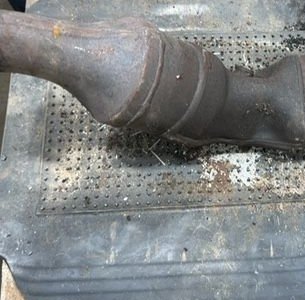
Strip away the steel shell and you'll find a ceramic or metallic substrate coated with platinum group metals — specifically platinum, palladium, and rhodium. These three metals do the actual emissions-conversion work inside the converter. They're also what makes your scrap cat valuable.
The concentrations vary significantly depending on the vehicle make, model, engine size, and year of manufacture. A diesel particulate filter from a European SUV will carry a very different PGM load than a small-engine domestic sedan from the early 2000s. That's why experienced catalytic converter buyers in New Brunswick — and across North America — sort and grade units before quoting prices. Grade matters. Condition matters. And the assay result is what ultimately settles the value.
- Platinum (Pt): Used heavily in diesel converters. Price-sensitive and volatile.
- Palladium (Pd): Dominant in gasoline converters. Has seen significant price swings over the past several years.
- Rhodium (Rh): Present in smaller quantities but commands the highest price per troy ounce by a wide margin.
None of these metals are visible to the naked eye. You can't look at a substrate and tell how much PGM loading it carries. That's precisely why assaying exists.
The Assaying Process: How Buyers Determine What Your Cat Is Worth
Assaying is the chemical and analytical process used to measure the exact concentration of PGMs in a catalytic converter substrate. Here's how it works, step by step:
- Collection and sorting: Converters are sorted by type — foil, ceramic, large GM, small foreign, diesel, and so on. Sorting affects how they're processed and priced. If you want to get the best catalytic converter price in Canada, having units properly identified before you sell is a real advantage.
- Decanning: The steel shell is cut away to extract the substrate. The shell itself has scrap steel value, but the substrate is what the buyer wants.
- Crushing and milling: The ceramic or metallic substrate is broken down into a fine, homogeneous powder. This step is critical — the entire assay sample depends on uniform mixing of the material.
- Sampling: A representative sample is drawn from the milled powder. This is where disputes can arise. Reputable processors use rigorous sampling protocols to ensure accuracy. Poor sampling skews results — sometimes not in your favour.
- Chemical analysis: The sample undergoes fire assay, ICP-OES (inductively coupled plasma optical emission spectrometry), or a combination of both. These methods detect and quantify platinum, palladium, and rhodium at parts-per-million (ppm) levels.
- Settlement calculation: The assay result, combined with live PGM spot prices and the agreed payable percentage, produces the final settlement figure. That number is what you actually get paid.
This is a legitimate, science-based process — but it's also one where sellers who don't understand it can end up on the wrong side of a payable percentage or a sampling dispute. Know what you're agreeing to before you ship.
Smelting: Where the Metals Are Recovered
After assaying confirms the PGM content, the bulk material goes to a smelter for metal recovery. Smelting is the high-temperature process that separates the platinum, palladium, and rhodium from the ceramic or metallic substrate carrier.
The substrate material is fed into a furnace along with flux and a collector metal — typically copper or iron — which attracts and captures the PGMs as the material melts. The molten mixture is then processed through a series of refining steps to isolate each metal individually. End-to-end, this process can take weeks. That's why most cat buyers pay based on assay results rather than waiting for full smelter recovery.
Large-volume processors — the kind that aggregate material from hundreds of catalytic converter buyers near me open now across North America — run smelter campaigns on a regular cycle. Smaller lots typically get blended into larger batches, which is another reason why proper lot documentation matters. You want your material accounted for accurately, not lost in someone else's batch.
For sellers in Fredericton and across New Brunswick, most material ultimately moves through major North American processing facilities before smelting. Understanding that chain — and who's handling your material at each step — is part of being a smart seller.
Why the Platinum Price Today Affects Your Settlement — But Isn't the Whole Story
A lot of sellers check the platinum price today and assume that's the number driving their payout. It matters — but it's one variable among several. Your actual settlement depends on:
- Live PGM spot prices at time of settlement (platinum, palladium, AND rhodium)
- Assay results — the actual ppm of each metal recovered from your lot
- Payable percentage — the portion of recovered metal the processor passes on to you (typically 70–90% depending on the agreement)
- Processing fees — decanning, milling, assay, and smelter charges
- Lot size — larger, cleaner lots typically command better terms
- Unit grading and sorting accuracy — misidentified units reduce your return
This is why a catalytic converter auction model can be a smarter approach for sellers with volume. Instead of accepting one buyer's terms and trusting their assay results, competition between vetted buyers creates price discovery. More eyes on your material means more accountability — and typically better returns.
Platforms like Canada's B2B scrap recycling marketplace SMASH are built around exactly this principle. Bring competition to your load, and let the market tell you what your cats are actually worth — not just what one buyer is willing to offer.
How to Use This Knowledge Before You Sell in Fredericton
If you're moving catalytic converters through Fredericton scrap metal services, here's how to put this knowledge to work before your next transaction:
- Document your units. Photos, VINs, and serial numbers matter. A buyer who can identify your material accurately is more likely to quote fairly — and you have recourse if the assay comes back low.
- Know your grades. Large foreign, small foreign, large GM, foil, diesel — these categories exist because PGM content varies dramatically. Don't let a buyer lump your high-grade units in with low-grade scrap.
- Ask about the assay process. How is the sample drawn? What method is used for analysis? Is a third-party umpire assay available if you dispute results?
- Understand the payable percentage before you agree to anything. An 85% payable at a lower spot price can outperform a 75% payable at a higher spot price depending on timing and assay results.
- Get competing quotes. One buyer, one quote is the old way. It's also the surest way to leave money on the table.
You can also read Canadian catalytic converter pricing guides to stay current on market conditions, understand what drives PGM prices, and benchmark your expectations before you pick up the phone.
SMASH makes the competitive bidding process straightforward for volume sellers — vetted buyers, documented inventory, and full transparency on what you're getting paid and why. That's not how the old model worked. It's how the better one does.
When you're ready to sell, check current Canadian catalytic converter prices and get a quote that reflects what your material is actually worth. Don't guess. Don't take the first number. Know the process, document your load, and let competition do its job.
Disclaimer: PGM prices fluctuate daily based on global market conditions. Always check current spot prices before finalizing any catalytic converter transaction. The information in this article reflects general industry practice as of September 2026.
Frequently Asked Questions
Q: How does the platinum price today affect what I get paid for my scrap catalytic converter in Canada?
Platinum spot price is one of three key PGM prices (alongside palladium and rhodium) that feed into your settlement calculation. The final payout also depends on your assay results, the payable percentage agreed with your buyer, and any applicable processing fees. Checking the platinum price today gives you a benchmark, but it's not the only number that matters.
Q: How do I find reliable catalytic converter buyers near me open now in Fredericton?
Start with documented, reputable buyers who can explain their assay process clearly. In Fredericton and across New Brunswick, your best move is to get multiple competing quotes rather than accepting the first offer. Platforms like SMASH connect sellers with vetted buyers across North America, which means you're not limited to whoever's closest.
Q: How much is my catalytic converter worth scrap by reg number in Canada?
Your registration number or VIN helps identify the exact make, model, and engine of the vehicle the cat came from — which points to an expected PGM loading grade. Prices vary widely: a high-grade foreign unit can be worth significantly more than a low-grade domestic unit. Use VIN-based lookups as a starting point, then get an actual quote based on your specific units.
Q: What is a catalytic converter auction and is it worth it for smaller sellers?
A catalytic converter auction puts your lot in front of multiple vetted buyers simultaneously, creating competition that can help reveal the true market value of your material. It's particularly useful for sellers with volume — auto shops, scrap yards, and collectors — rather than a single unit. The transparency of an auction format means you see what buyers are actually willing to pay, not just what one buyer offers.
Q: How long does the assay and settlement process take for catalytic converters?
It depends on the processor and the lot size, but most sellers can expect the full assay-to-settlement cycle to take anywhere from two to four weeks after material is received. Some buyers offer upfront pricing to avoid the wait, which can be worth considering depending on your cash flow needs and your confidence in the upfront quote.
Ready to stop guessing what your cats are worth? Get the best Canadian price for your catalytic converter — get a free quote at best-catalytic-converter-price.ca and find out what competition actually does for your bottom line.
Follow SMASH on LinkedIn for ongoing scrap metal market insights, PGM price updates, and industry news that helps you sell smarter.