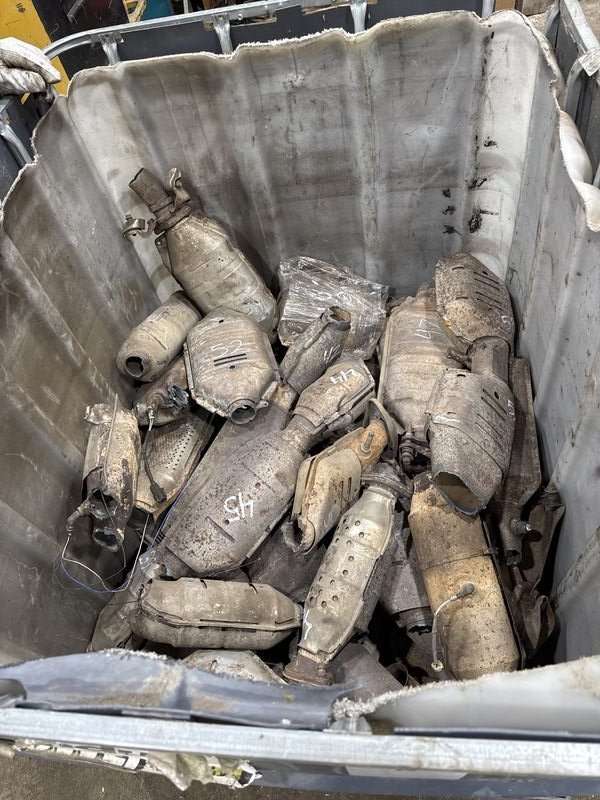
Catalytic Converter Theft Is Poisoning the Legitimate Recycling Market — Here's What You Need to Know
The rhodium price today sits at levels that make a single catalytic converter worth more than most people realize. That's not a secret anymore — and that's exactly the problem. Theft rings across North America figured this out years ago, and the ripple effects have landed squarely on legitimate recyclers, auto shops, and scrap collectors who are just trying to do things the right way.
If you're in Sydney, Nova Scotia, trying to sell a stack of scrap cats from a legitimate source — a shop teardown, an end-of-life vehicle, a fleet turnover — you're operating in a market that's been made harder by criminals you've never met. Understanding how catalytic converter theft warps the market helps you protect your prices, your reputation, and your business.
Why Rhodium, Platinum, and Palladium Make Catalytic Converters a Target
Catalytic converters contain three precious group metals (PGMs): platinum, palladium, and rhodium. The rhodium price today is the one that makes people's eyes go wide — rhodium has historically traded at multiples above gold, and while prices fluctuate significantly, even modest rhodium content in a single converter adds real dollar value to what looks like a piece of automotive exhaust hardware.
The PGM content varies dramatically by vehicle. An OEM catalytic converter from a late-model truck or SUV can contain significantly more platinum group metals than one from a compact economy car. That's why thieves don't grab randomly — they target specific vehicles. Toyota Priuses, Ford F-Series trucks, and Honda Elements are among the most frequently targeted in Canada. The converter is off in under two minutes with a battery-powered saw. It disappears into a grey or black market pipeline, leaving the vehicle owner stranded and the legitimate recycling market flooded with product that can't be traced, documented, or legally processed without risk.
- Platinum — aids oxidation reactions inside the converter; present in most OEM units
- Palladium — handles hydrocarbons; often the highest-value metal by weight in modern converters
- Rhodium — reduces nitrogen oxides; rare, volatile in price, and disproportionately valuable per gram
These metals are why a single catalytic converter can be worth anywhere from a modest sum to several hundred dollars, depending on make, model, year, and current spot prices. Always check current rates before selling — PGM prices move daily.
How Theft Directly Hurts Legitimate Sellers in Nova Scotia
When theft volumes spike, the downstream effects hit honest sellers hard. Buyers tighten their purchase requirements. Processors demand more documentation. Some buyers in Nova Scotia exit the market entirely rather than risk taking in stolen material. That means fewer buyers competing for your legitimate inventory — and fewer buyers means weaker price discovery.
This is where the old way of selling scrap falls apart even faster. One buyer, one phone call, a take-it-or-leave-it price. When that buyer is already spooked by theft-related liability, they're quoting low. You have no leverage and no visibility into what the market is actually willing to pay. For shops and collectors in Sydney trying to move a legitimate load of cats, this is a real and frustrating problem.
The theft crisis has also pushed regulators to act. Across Canada, provinces have introduced or tightened secondhand dealer regulations that require recyclers to collect seller identification, document VINs or serial numbers, and hold material for waiting periods before processing. These rules are designed to catch stolen goods — but the administrative burden falls on everyone, including the legitimate seller who's just trying to get paid.
OEM Catalytic Converter Value: Why Documentation Is Now Currency
The single most important thing a legitimate seller can do right now is document everything. OEM catalytic converter value is real — but accessing that value in a tightened market requires proof that the material is clean.
What does that mean in practice? If you're an auto shop in Sydney, Nova Scotia, that means keeping records of the vehicles the cats came from. VIN numbers, customer names, repair orders. If you're a scrap collector buying end-of-life vehicles, it means documenting purchases properly — bills of sale, seller ID, vehicle ownership records.
Here's what documentation does for you when you go to sell:
- It confirms you're a legitimate seller, which gives buyers confidence to compete more aggressively for your material.
- It reduces the risk premium buyers price into their offers when they can't verify provenance.
- It protects you legally if questions ever arise about the source of material.
- It speeds up transactions — less back-and-forth, less hesitation.
Platforms like SMASH are built around this reality. Serial tracking, photo documentation, and structured inventory tools aren't just nice features — they're the infrastructure that makes a documented load worth more than an undocumented one in a competitive auction. When buyers can see a clean, documented listing, they bid with more confidence. More confidence means more competition. More competition means better price discovery for the seller.
To get the best catalytic converter price in Canada, documentation isn't optional — it's your leverage.
How to Sell Catalytic Converters the Right Way in 2026
The market has shifted. Selling scrap cats in 2026 isn't the same as it was five years ago. The buyers who remain active are more selective, more documentation-conscious, and more likely to pay better prices for material they can trust. That's actually good news if you're doing things right.
Here's a practical framework for getting the best price on legitimate scrap catalytic converters:
Step 1: Identify What You Have
Not all cats are worth the same. OEM converters from higher-end vehicles or trucks typically carry more PGM content. Use a VIN lookup tool or a platform with converter identification features to understand what you're holding before you quote anyone a price. Selling blind is how you leave money on the table.
Step 2: Document Before You Move Anything
Photograph every unit. Record serial numbers where visible. Match cats to the vehicles they came from wherever possible. This isn't just compliance — it's price protection. You can read Canadian catalytic converter pricing guides to better understand how documentation affects your sale value.
Step 3: Sell Through a Competitive Format
Single-buyer phone quotes are how you get one buyer's opinion of your price. Competitive auctions are how you find out what the market actually thinks. Platforms that let you sell scrap metal online through a vetted buyer network — like smashrecycling.ca — remove the guesswork and let competition do the work. More buyers bidding on your documented load means better outcomes than a single low-ball call.
Step 4: Understand the Regulatory Environment
Nova Scotia, like other Canadian provinces, has tightened rules around secondhand metal dealers. Know your local requirements. Keep your records. Some municipalities near Sydney have active enforcement, so compliance protects you from delays that cost money.
Step 5: Check Current Prices Before Every Transaction
The rhodium price today may be very different from last month. PGM markets are volatile. Always check current Canadian catalytic converter prices before agreeing to any sale. Timing matters.
What the Theft Problem Means for the Future of the Cat Market
Catalytic converter theft isn't going away quickly. The economics that drive it — high PGM values, fast execution, grey market pipelines — are still in place. But the response from legitimate market participants is making the ecosystem more structured, more documented, and in some ways more professional.
Buyers who specialize in legitimate, documented cats are building real businesses around verified supply chains. Platforms that support serialized inventory, photo documentation, and auction-format price discovery are becoming standard tools rather than novelties. For sellers in places like Sydney who operate with integrity, that shift is an opportunity. The more the market rewards documentation, the more your clean, well-recorded inventory is worth relative to a cash-grab that can't be verified.
SMASH was designed for this exact environment. No subscription fees. Vetted buyers. Auction format that lets competition reveal the market. Auto-invoicing that keeps your paperwork clean. It's not built for grey market sellers — it's built for people running legitimate operations who are tired of being punished by a market that theft made worse.
If you're sitting on a legitimate load of scrap cats in Nova Scotia and you're still calling the same one buyer you've always called, you're leaving real money on the table. The market has moved. Your approach should too.
Ready to find out what your cats are actually worth? Get the best Canadian price for your catalytic converter — get a free quote at best-catalytic-converter-price.ca and let competition work in your favour.
Frequently Asked Questions
Q: What is the rhodium price today and why does it matter for my catalytic converter?
Rhodium is one of three precious group metals found inside catalytic converters, alongside platinum and palladium. The rhodium price today fluctuates based on global supply and industrial demand — it can move significantly week to week. Because rhodium is the rarest of the three PGMs, even a small amount inside a converter adds meaningful value. Always check current spot prices before selling your cats.
Q: How does catalytic converter theft affect the price I get for my legitimate scrap cats in Nova Scotia?
Theft increases risk perception among buyers, which can cause them to reduce their offers or exit the market entirely. Fewer active buyers means less competition for your material and weaker price discovery. Proper documentation — VINs, photos, records — helps you stand apart as a legitimate seller and gives buyers more confidence to bid competitively.
Q: Can I sell catalytic converters online from Sydney, Nova Scotia?
Yes. Platforms like SMASH allow you to list documented scrap catalytic converters and reach a vetted network of buyers across North America. This is especially useful in Sydney, where local buyer options may be limited. Selling online through a competitive auction format often produces better price discovery than a single local quote. Make sure your material is properly documented before listing.
Q: What is the difference in value between an OEM catalytic converter and an aftermarket one?
OEM catalytic converters generally contain higher concentrations of platinum group metals than aftermarket alternatives, making them more valuable to scrap buyers. The precise difference depends on the vehicle make, model, and year. When selling, clearly identify whether your cats are OEM units — it affects what buyers are willing to pay.
Q: Do I need special paperwork to sell scrap catalytic converters in Nova Scotia?
Nova Scotia has regulations governing secondhand metal dealers, and requirements around seller identification and documentation have increased in recent years in response to theft. If you're an auto shop or scrap collector, maintain records linking your cats to source vehicles — repair orders, bills of sale, or VINs. This protects you legally and typically improves the prices you can access from legitimate buyers.
Follow SMASH on LinkedIn for industry updates, scrap metal market insights, and news from the North American recycling market.