Why the Same Catalytic Converter Can Be Worth $8 or $800 — and How to Tell the Difference
Most people selling a scrap catalytic converter don't know what they actually have. They pull a cat off a vehicle, call a local buyer, and take whatever number gets offered. That's the old way. And in a market driven by platinum, palladium, and rhodium — metals that swing hard and fast — guessing is expensive. If you're looking for the best catalytic converter price in Trois-Rivières, understanding how grading and pricing tiers work is the first step to getting paid fairly.
This week's market recap breaks down how converters get classified, what makes one cat worth ten times another, and how competitive platforms are changing the game for sellers across Quebec and beyond.
What Catalytic Converter Grading Actually Means
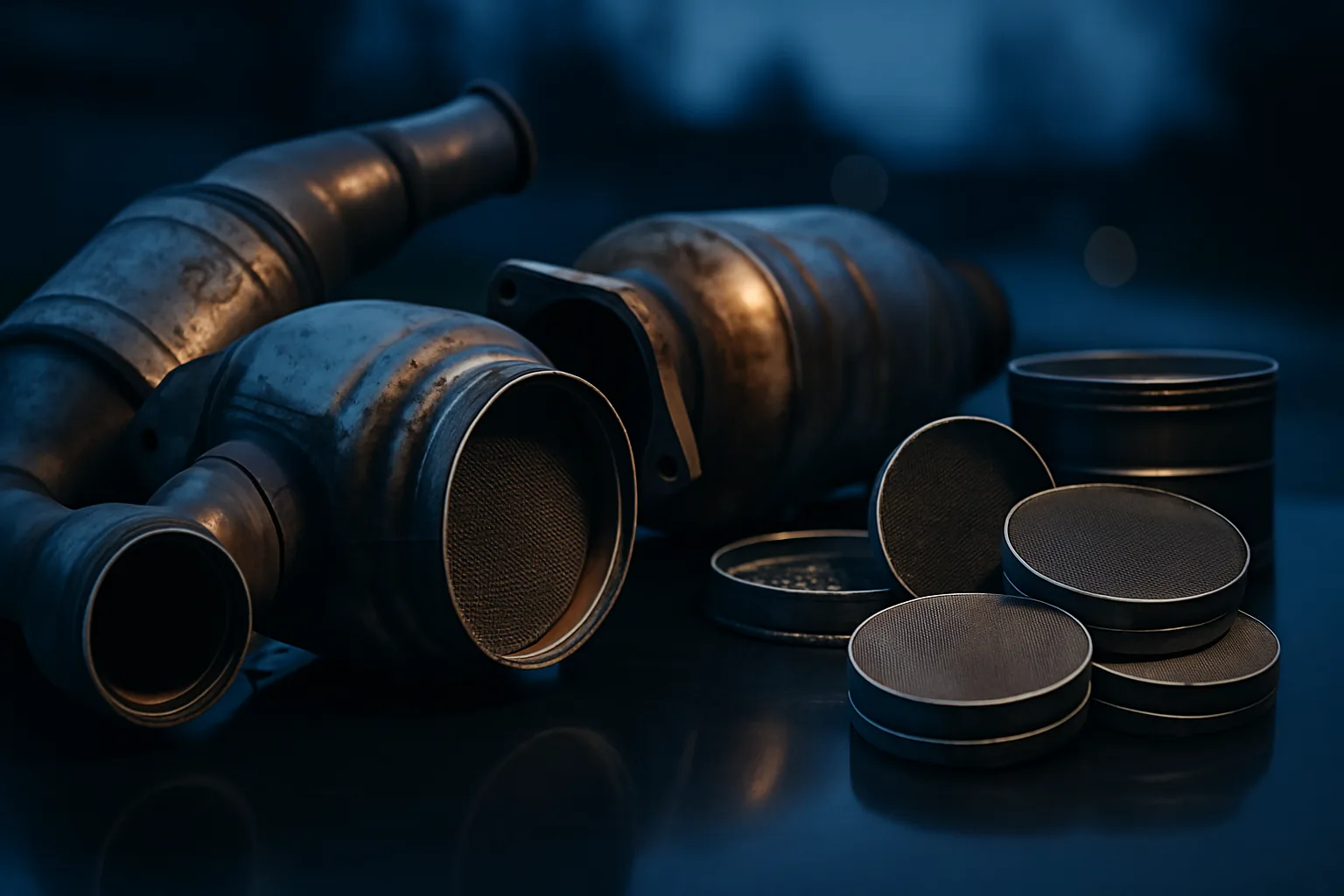
Grading isn't arbitrary. Every converter contains a ceramic or metallic substrate coated with platinum group metals (PGMs) — platinum, palladium, and rhodium. The grade reflects how much recoverable PGM content is inside, based on the converter's make, model, and engine application. A high-grade domestic converter from a full-size truck carries significantly more PGM loading than a small foreign unit from a compact car.
Buyers and processors typically sort converters into four broad tiers:
- High-grade (domestic): Large substrate converters from North American trucks, SUVs, and performance vehicles. These carry the heaviest PGM loading and command the highest prices.
- Mid-grade (foreign): Standard converters from imported passenger vehicles. Solid value, but typically lower PGM density than domestic units.
- Low-grade / small foreign: Compact, lower-loaded units. Still worth selling — just priced accordingly.
- Aftermarket / direct-fit: Replacement converters installed after the OEM unit fails. These often contain very little PGM material and are graded accordingly. Some are nearly worthless to a processor.
There's also a specialty category — diesel particulate filters (DPFs) and pre-cats — that follow their own pricing logic. DPFs from diesel trucks and buses can carry significant platinum content. Don't lump them in with standard gasoline cats without verifying the type first.
The Three Metals Driving Your Cat's Value: Platinum, Palladium, and Rhodium
You can't understand catalytic converter pricing without understanding what's inside them. The ceramic washcoat is loaded with a precise mixture of platinum, palladium, and rhodium — each with its own market price that shifts daily based on global supply and demand.
Platinum has historically been the anchor metal in converter processing. Palladium surged to extreme levels in the early 2020s as gasoline engine demand outpaced supply from South Africa and Russia, then corrected significantly. Rhodium is the wildcard — historically the most volatile of the three, with price swings that can be dramatic in either direction. The rhodium price today is a number every serious cat seller should check before finalizing any deal.
Here's why this matters for grading: processors don't just weigh your converter. They run assays to determine the actual recoverable ounces of each metal per unit. The grade assigned to your cat is essentially a proxy for that PGM yield. A "high-grade domestic" rating means a processor expects significantly more recoverable platinum, palladium, and rhodium than from a "small foreign" unit. The spread between tiers can be substantial — which is exactly why getting multiple bids matters.
For a real-time snapshot of where PGM markets sit, read Canadian catalytic converter pricing guides that track current metal movements and their impact on scrap cat values across the country.
The Scrap Metal Market This Week: What Sellers in Trois-Rivières Should Know
PGM markets remain active heading into late summer 2026. Supply-side dynamics out of South Africa and geopolitical considerations around Russian palladium continue to create price uncertainty, making it more important than ever to sell into a competitive, transparent market rather than accepting a single offered price.
For sellers in Trois-Rivières and across Quebec, the local buyer landscape matters. Some regional buyers price conservatively to protect their margin. That's not a criticism — it's just business. But it means a seller who only calls one buyer is almost certainly leaving money on the table. Scrap metal prices today are determined by global PGM spot values, but what you actually receive depends heavily on how many buyers are competing for your material.
A few things worth tracking this week if you're sitting on converter inventory:
- Rhodium has shown volatility — confirm today's spot before you commit to a price.
- Palladium pricing remains softer than its peak years, but still contributes meaningful value in mid and high-grade units.
- Platinum has held more steadily — particularly relevant for diesel-heavy inventory and pre-cats.
- Currency movement between CAD and USD affects processor payouts for Canadian sellers — a stronger USD means better recovery on Canadian-priced material.
This is exactly the kind of market environment where platforms like the SMASH Recycling auction platform provide real value. When metal prices are moving, getting multiple bids simultaneously gives you a real-time market signal — not just one buyer's opinion of what your cats are worth.
How SMASH Turns Converter Grading Into Competitive Advantage
Here's the old way: you pull a load of cats, take photos, call two or three buyers you know, and go with whoever quotes highest. That process can take days. And you never really know if you found the actual market — or just the market within your contact list.
The SMASH model flips that. When you list a load through SMASH, vetted buyers across the network bid competitively on your inventory. That competition is what creates price discovery. It's not a promise of higher prices — it's a transparent mechanism that lets the market tell you what your material is actually worth right now.
For sellers in Trois-Rivières moving regular converter volume — whether you're running an auto recycling operation, a garage, or aggregating material for resale — this kind of structured process matters. Documented inventory with photos, serial tracking where applicable, and clear grade assignments give buyers the confidence to bid aggressively. A blurry photo and a vague description of "mixed cats" does not.
SMASH also handles auto-invoicing, so the paperwork doesn't pile up. For Quebec operations managing GST/QST on material sales, that documentation isn't optional — it's compliance. The platform supports that from the start, which is something a handshake deal over the phone simply can't replicate.
To get the best catalytic converter price in Canada, the process starts with knowing what you have, documenting it properly, and selling into a competitive market rather than a single conversation.
How to Maximize Your Payout: A Practical Grading Checklist
Whether you're selling one converter or a pallet of mixed inventory, the steps to maximize your return are consistent. Don't skip any of these.
- Identify the converter type before you sell. Is it OEM or aftermarket? Gasoline or diesel? A DPF or a standard three-way cat? Each category has a different value floor.
- Look up the serial number. Most converters have a serial stamped on the body or on an attached tag. This serial maps directly to the vehicle application and the grade assigned by major processors. Don't sell blind.
- Document condition. Cracked substrates, missing baffles, or melted cores reduce recoverable yield and will affect your grade. Know what you have before a buyer tells you it's low-grade — and questions why.
- Photograph from multiple angles. Top, bottom, serial number visible. Buyers bid higher when they can see exactly what they're getting. Ambiguity costs you.
- Check current PGM prices. Rhodium and palladium in particular. If metal prices have moved significantly in the past week, your mental reference point from last month may be wrong in either direction.
- Get more than one offer. This is non-negotiable. One offer is not a market — it's one person's number. Competition reveals the real value.
Sellers who follow this process consistently — especially those running volume through Trois-Rivières and the broader Quebec corridor — report a much clearer understanding of where their material sits in the market. That knowledge compounds over time. You start recognizing high-grade units on sight. You stop selling mixed loads when sorting them would increase your return. You make better decisions because you have better information.
To check current Canadian catalytic converter prices before your next sale, start with a clear understanding of your converter grades — then let competition do the rest.
The catalytic converter market rewards sellers who know what they have and sell it the right way. Grading isn't complicated once you understand the logic — PGM content drives value, documentation drives buyer confidence, and competition drives price discovery. If you're in Trois-Rivières or anywhere across Quebec with converter inventory sitting in a bin, the worst move is a single phone call to a single buyer. The best move is to get informed, get documented, and get into a competitive market. That's what best-catalytic-converter-price.ca and platforms like SMASH are built for. Get a free quote — no subscription, no guessing, no leaving money in someone else's pocket.
Disclaimer: Catalytic converter prices fluctuate based on daily platinum, palladium, and rhodium spot prices. All values referenced in this article are general in nature. Always verify current rates before finalizing any sale.
Frequently Asked Questions
Q: How do I find the best catalytic converter price in Trois-Rivières?
Start by identifying your converter's grade — OEM or aftermarket, gasoline or diesel, large domestic or small foreign. Then document it with photos and serial numbers, check current PGM spot prices, and get multiple offers. Platforms that create competitive bidding give you real price discovery rather than a single buyer's opinion.
Q: Does the rhodium price today affect what I'll get for my scrap catalytic converter?
Yes, directly. Rhodium is one of three platinum group metals recovered during converter processing, and it's historically the most volatile. On days when rhodium is up, high-grade domestics are worth more. When it drops sharply, that loss flows through to your payout. Always check current PGM prices before committing to a sale price.
Q: What's the difference between a high-grade and low-grade catalytic converter?
The difference is PGM loading — how much recoverable platinum, palladium, and rhodium is in the substrate. High-grade domestic units from large North American trucks and SUVs carry the most. Small foreign converters and aftermarket replacements carry significantly less, sometimes very little. The price spread between tiers can be large, which is why correct identification matters.
Q: Can I sell catalytic converters through a SMASH scrap metal auction?
Yes. SMASH connects sellers with vetted buyers through a competitive auction format. You document your inventory, list it on the platform, and buyers bid. More competition means better price discovery. There are no subscription fees — SMASH only wins when you do.
Q: Is there a scrap catalytic converter price list I can reference in Canada?
Price lists exist and are useful as a starting reference, but they shift constantly with PGM markets. A price list from two weeks ago may be meaningfully different from today's market. Use a current price guide as a baseline, check live rhodium and palladium spot prices, and always validate with real buyer offers before selling.
Stay current on scrap metal market movements and catalytic converter pricing trends — follow SMASH on LinkedIn for weekly industry updates and insights from inside the recycling market.