From Dashboard Warning Light to Precious Metal Recovery: What Happens to Your Catalytic Converter?
Most people never think about their catalytic converter until the check engine light comes on — or until a mechanic hands them a repair estimate that makes their stomach drop. But here's what fewer people know: that converter sitting on your failed vehicle, your parked project car, or your shop floor is worth real money. Inside that steel shell is a mixture of platinum, palladium, and rhodium — precious metals that refineries actively compete to recover. If you're in Halifax or anywhere across Nova Scotia, understanding that lifecycle puts you in a better position to get paid fairly when it's time to sell.
This is the full story — from the factory floor to the smelter — and why knowing it makes you a smarter seller.
How a Catalytic Converter Is Built (and Why That Matters for Scrap Value)
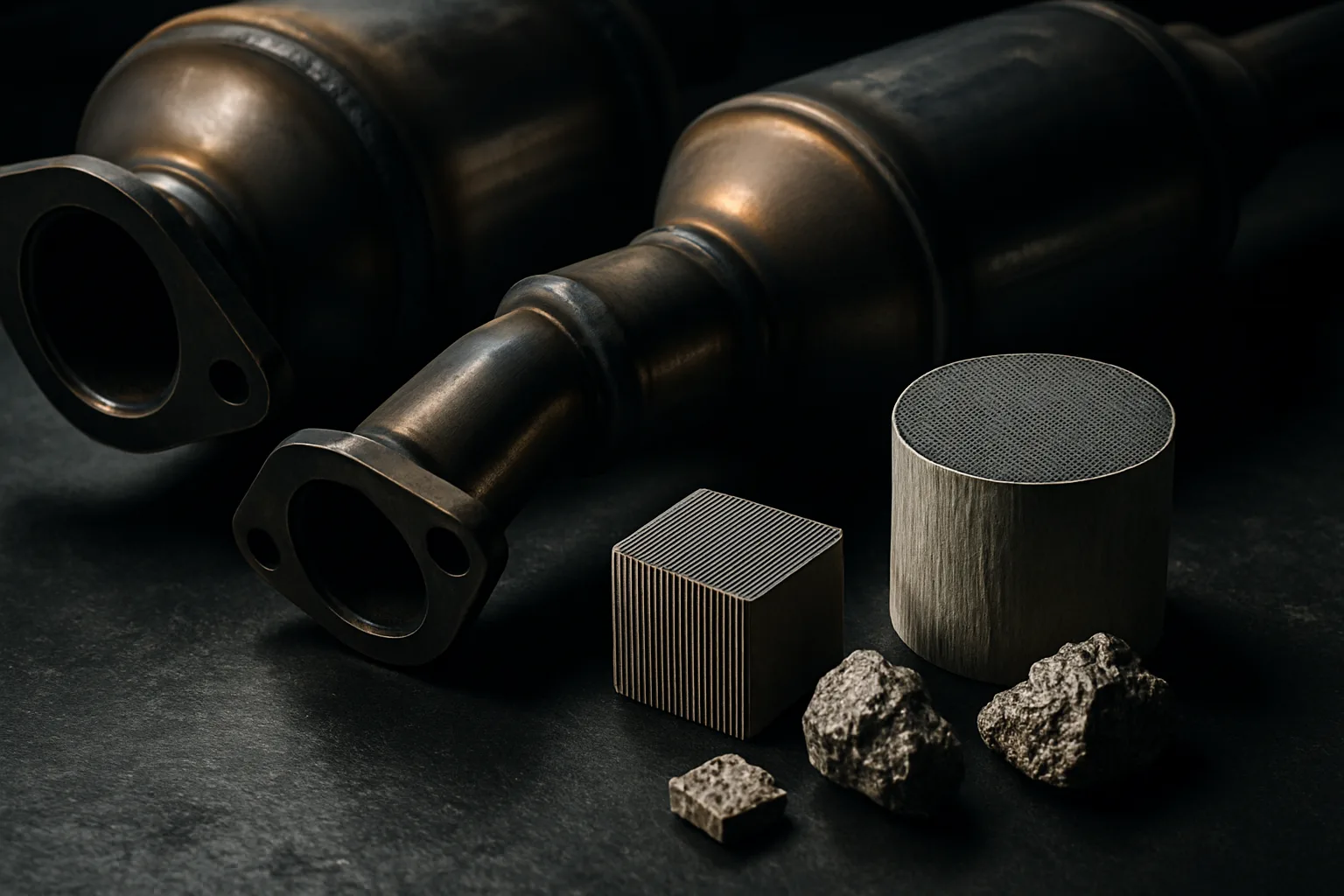
A catalytic converter's job is to clean exhaust gases before they leave your vehicle. It does this through a chemical reaction powered by precious metals — primarily platinum (Pt), palladium (Pd), and rhodium (Rh) — coated onto a ceramic or metallic substrate called a monolith. The monolith is housed inside a steel shell and surrounded by a ceramic mat for insulation and vibration protection.
The precious metal content is what drives catalytic converter scrap metal price at the point of recycling. The specific loading — meaning how many grams of each PGM (platinum group metal) are present — varies significantly by vehicle make, model, engine size, and converter type. A large diesel aftertreatment system from a commercial truck contains far more recoverable metal than a small domestic passenger car unit. This is why no two converters are worth exactly the same, and why generic price lists rarely give you the full picture.
- Platinum: Used in diesel converters primarily; strong industrial demand keeps it relevant
- Palladium: Dominant in gasoline converters; prices have been highly volatile in recent years
- Rhodium: Present in smaller quantities but historically commands extreme premiums — it's one of the most expensive metals on earth by weight
Understanding this composition helps you ask better questions when you approach a catalytic converter buyer in Halifax or elsewhere. A buyer who can't explain what's in your converter probably isn't the right buyer.
The End-of-Life Stage: When Converters Leave Vehicles
Catalytic converters reach the end of their useful life in a few different ways. The most common: a vehicle is written off, reaches the end of its road life, or needs a converter replacement that costs more than the car is worth. In all of these cases, the used converter either stays with the scrapped vehicle or gets pulled before the car goes to the crusher.
In Nova Scotia and across Canada, auto wreckers, repair shops, and private sellers generate a steady stream of used converters. Some come off vehicles that have logged 300,000 kilometres and have spent converters with reduced efficiency. Others come off newer vehicles that were totalled in accidents, with converters that are still in excellent condition and carry high PGM values. Age and mileage matter, but they don't tell the whole story — a low-mileage converter from a high-value vehicle can outperform a high-mileage unit from a base model in scrap value.
This is where the seller's knowledge becomes a direct financial advantage. Before you hand over a converter for a flat cash offer, it's worth understanding what you actually have. Platforms that offer catalytic converter recycling Halifax sellers access to verified buyers and transparent pricing can help close that information gap significantly.
How Scrap Converters Are Graded and Processed
Once a converter leaves a vehicle, it enters a supply chain that eventually leads to a precious metal refinery. But there are several steps in between — and each step involves someone making a judgment call about value.
Here's how the process typically unfolds:
- Initial grading: A buyer identifies the converter using the serial number, OEM part number, or physical characteristics. This is matched against a database to estimate PGM content.
- Lot assembly: Individual converters are grouped into lots — often by type, grade, or origin — for efficient processing.
- Decanning: The steel shell is removed (either mechanically or manually) to expose the ceramic or metallic substrate inside.
- Crushing and milling: The substrate is crushed into a fine powder to ensure uniform sampling.
- Assay sampling: Samples are sent to an accredited lab for chemical analysis to determine the exact PGM content of the batch.
- Smelting and refining: The precious metals are extracted, refined to high purity, and re-enter the commodities market — often going directly back into new converter manufacturing.
The critical moment for sellers is step one. The grade assigned at that stage heavily influences the offer you receive. A misidentified converter — or one sold to a buyer using outdated reference data — can cost you real money. This is why working with informed buyers matters, whether you're selling a single unit or a pallet of cats from your shop.
For scrap metal recycling Canada-wide, the grading systems vary by buyer and processor. Some use proprietary databases, others use industry-standard references, and the most transparent buyers will walk you through the identification process with you rather than just handing you a number.
What Determines Your Catalytic Converter's Value in Canada Right Now
PGM prices are set on global commodity markets and move daily. Rhodium, palladium, and platinum prices fluctuate based on automotive production demand, mining output (primarily from South Africa and Russia), industrial usage, and investor activity. This means the cat converter value you see quoted today may be different next week.
Beyond the spot market, several other factors directly affect what a Canadian seller receives:
- Converter identification accuracy: The more precisely your converter is identified, the more accurate the offer
- Buyer competition: A single-buyer negotiation always favours the buyer — competition changes that dynamic
- Market timing: Selling into rising PGM markets means better returns; the reverse is also true
- Volume: Shops and collectors selling larger lots typically have more negotiating leverage than individual sellers
- Condition and completeness: Intact converters with serial numbers intact are easier to grade accurately
One thing worth noting: you may come across references to a catalytic converter price list from other markets — including offshore pricing structures not relevant to Canada. Canadian prices follow Canadian market conditions, Canadian dollar valuations, and the specific buyer network operating here. Always verify you're getting a Canadian-market quote, especially if you're in Halifax or elsewhere in the Atlantic provinces where buyer access can be more limited than in major urban centres.
To get the best catalytic converter price in Canada, you need access to buyers who are actively competing for your material — not just the one buyer who answered the phone first.
How SMASH Connects Halifax Sellers to Real Buyer Competition
The traditional way to sell a catalytic converter in Halifax goes like this: call a local yard, get a number, take it or leave it. Maybe you call a second buyer. Maybe their number is different, maybe it isn't. You have no real way of knowing if either number is fair, and the buyer knows that.
SMASH Recycling — where verified buyers bid on your metal — changes that dynamic entirely. Instead of one phone call to one buyer, your material gets in front of vetted buyers who compete against each other. That competition is what drives price discovery. It's not a guarantee of any specific outcome, but more buyers bidding on the same material means the market reveals what your cats are actually worth — not what one buyer felt like offering on a Tuesday afternoon.
For Halifax sellers specifically, this matters. Atlantic Canada doesn't always have the same density of active buyers as larger markets. Platforms like SMASH extend your reach beyond your immediate geography, connecting Nova Scotia sellers to a North American buyer network without requiring you to cold-call processors across the country yourself. You can also read Canadian catalytic converter pricing guides to sharpen your understanding of the market before you sell.
Whether you're an auto shop with a regular stream of pulled cats, a collector with a pallet of mixed units, or an individual with one converter from a junked car, the process of connecting to real buyer competition is the same — and the information gap that used to cost sellers money gets a lot smaller.
If you're looking for Halifax scrap metal services that go beyond a single-buyer transaction, the auction model is worth understanding before your next sale.
Closing the Loop: Precious Metals Go Back Into New Converters
Here's the part of the lifecycle most sellers never see: the platinum, palladium, and rhodium recovered from your scrap converter doesn't disappear. It gets refined to high purity and re-enters the manufacturing supply chain. Automakers actively source recycled PGMs to meet both cost and sustainability targets. Your scrapped Honda or Ford converter could have its metals reborn in a brand-new vehicle three months later.
This circular economy is why the catalytic converter recycling market exists at scale. Global demand for PGMs — driven by automotive production, hydrogen fuel cell development, and industrial applications — continues to create real, sustained demand for recovered material. That demand is what makes your converter worth selling carefully rather than just dumping it at the first number you hear.
The seller who understands the lifecycle — what's inside their converter, how it gets processed, and what drives price — is the seller who walks away with a fair return. If you want to check current Canadian catalytic converter prices and understand what your material is actually worth in today's market, start there before you agree to any offer.
Getting the best Canadian price for your catalytic converter starts with a free quote at best-catalytic-converter-price.ca — it costs nothing to find out what your cats are worth, and knowing is always better than guessing.
Disclaimer: Catalytic converter prices fluctuate with global PGM commodity markets. All price references are general in nature. Check current rates before selling.
Frequently Asked Questions
Q: How do I find a reliable catalytic converter buyer in Halifax?
Look for buyers who can identify your converter by serial number or OEM code and explain their pricing basis. A buyer who quotes a flat price for everything without identifying what you have is a red flag. Platforms like SMASH connect Halifax sellers to vetted buyers who compete for your material, which helps ensure you're seeing a real market price rather than a single buyer's best guess.
Q: What affects the scrap price of a catalytic converter in Nova Scotia?
The main factors are the converter's precious metal content (platinum, palladium, rhodium), current global PGM spot prices, how accurately the unit is identified, and how many buyers are competing for it. Nova Scotia sellers who access a wider buyer network typically have more pricing leverage than those relying on a single local yard.
Q: How long does it take to get paid for a scrap catalytic converter in Halifax?
Timelines vary by buyer and process. Direct cash sales to local yards are often same-day. Selling through a platform with competitive bidding may take a few additional days to complete the process but can result in better price discovery. Confirm payment terms with any buyer before you commit.
Q: Is catalytic converter theft a factor I should know about when selling in Canada?
Yes. Canadian scrap dealers and processors are increasingly required to document converter purchases — including seller identification and vehicle information — as a theft deterrent measure. Be prepared to provide documentation when selling. Legitimate buyers will ask for it. If a buyer doesn't ask, that's worth questioning.
Q: Why does my catalytic converter price differ from quotes I see online for other countries?
Converter prices are market-specific. References to a catalytic converter price list from Australia, the U.S., or other markets reflect different buyer networks, currencies, and local demand conditions. In Canada, prices are quoted in CAD and reflect the Canadian buyer market. Always get a Canada-specific quote — ideally from multiple buyers — before you sell.
Follow SMASH on LinkedIn for industry updates, PGM market insights, and scrap metal pricing news across North America.