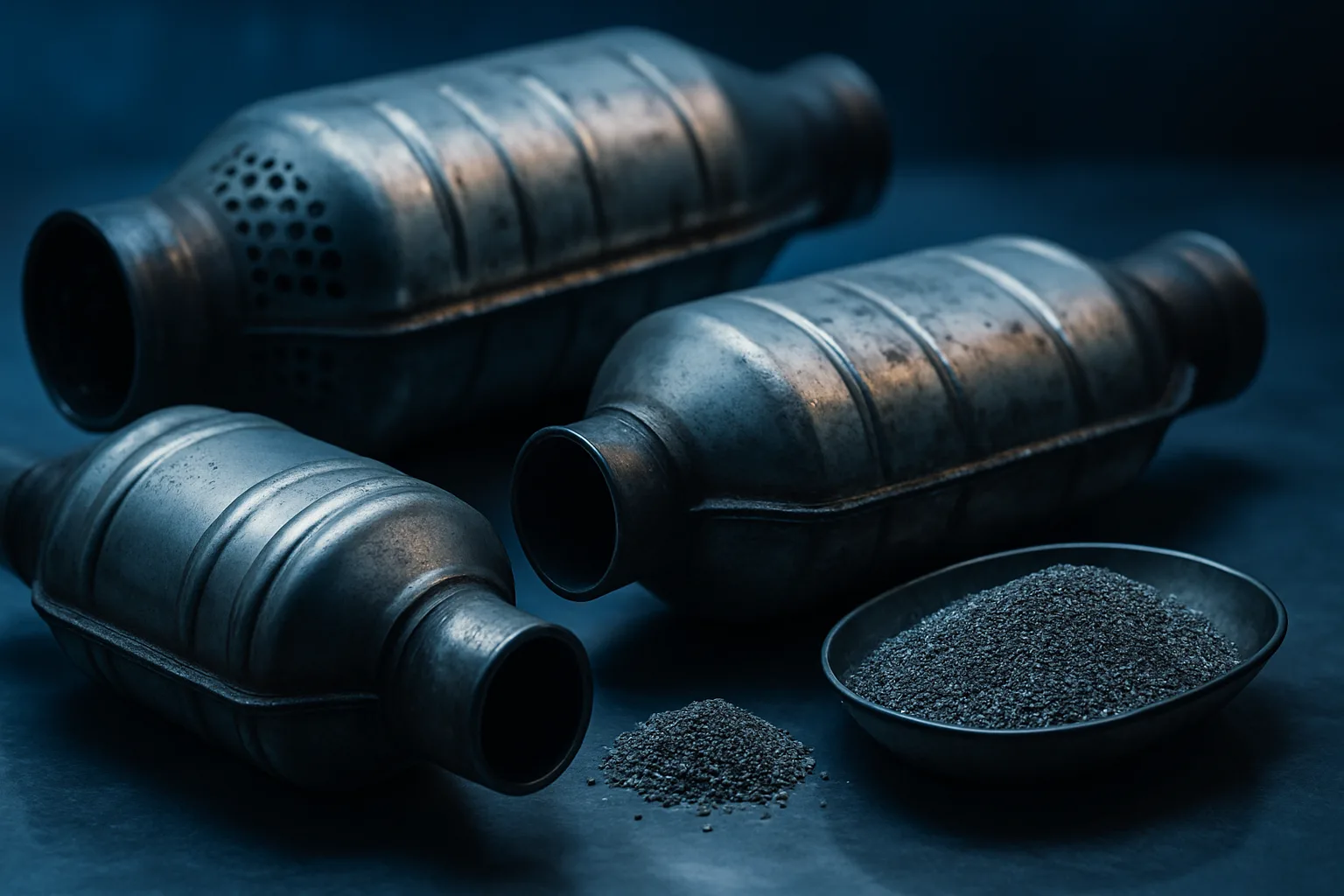
Most auto shops in Burnaby sitting on a pile of spent catalytic converters are leaving money on the table. Not because the cats aren't valuable — they absolutely are. But because the process of selling them is broken. One call to one buyer, a number gets thrown at you, and you either take it or chase down another number. That's not price discovery. That's guessing. If your shop pulls even a handful of cats per week, the difference between a smart bulk strategy and a lazy single-buyer approach adds up fast.
This guide is for shop owners and service managers who want to stop guessing and start selling smarter. Catalytic converter recycling in Burnaby has become more competitive — and more transparent — than it was even a few years ago. The buyers are out there. The market is real. You just need the right approach to access it.
---Why Bulk Selling Changes the Math on Scrap Catalytic Converters
A single catalytic converter has value because of what's inside it: platinum, palladium, and rhodium — the platinum group metals (PGMs) that make the exhaust system work. When you sell one cat at a time, you're negotiating from weakness. When you sell a lot of 10, 20, or 50 units, the math shifts. Buyers pay more attention. The load is worth their time to evaluate seriously. And when multiple buyers are competing for your inventory, you see what the market actually thinks your cats are worth.
Bulk selling also gives you leverage on logistics. A buyer who wants your entire month's accumulation will often handle pickup, provide packing lists, and move faster than someone picking up one or two pieces. For a busy shop in Burnaby, that time savings is real money.
- More units = more negotiating power — buyers don't walk away from a full pallet.
- Logistics become simpler — one pickup, one BOL, one invoice cycle.
- Documentation is easier to manage — photo and serial tracking per lot, not per individual piece.
- Price discovery is more accurate — larger loads attract serious buyers with real offers.
If your shop isn't accumulating cats before selling, start now. Set a threshold — say, 15 to 20 units — and hold until you hit it. The price improvement typically justifies the wait.
---Know What You Have Before You Sell
Not all catalytic converters are created equal. A direct-fit OEM cat from a late-model European vehicle carries a very different PGM loading than an aftermarket universal unit from a 2009 compact. If you're selling in bulk without sorting or documenting, you're giving buyers room to average down your entire lot based on the weakest units in the pile. That costs you money.
Before you reach out to buyers, spend time on basic inventory hygiene:
- VIN lookup — if you know the vehicle the cat came from, use a VIN lookup tool to confirm year, make, and model. This helps buyers price units accurately instead of defaulting to a conservative estimate.
- Serial number tracking — most OEM cats have serial numbers or part numbers. Record them. Buyers trust documented inventory more than mystery boxes.
- Photo documentation — photograph each unit, including the substrate opening (the honeycomb end). Condition matters. Broken or melted substrates affect value.
- Sort by type — separate domestic from import, large from small, OEM from aftermarket. Grouped by type, your lot is easier to price and easier to sell.
Platforms like smashrecycling.ca support serial tracking and photo documentation built right into the listing process. That structure forces you to do the documentation work — and that work pays off in buyer confidence and stronger offers. To get the best catalytic converter price in Canada, documentation is one of the most practical steps you can take before listing.
---How to Sell Catalytic Converters Online as a Burnaby Auto Shop
Selling locally has its limits. The number of buyers in any given city — even a metro area like Burnaby — is finite. If you're calling the same two or three recyclers every time, you're not seeing the full market. The shift to sell catalytic converters online has opened up real competition between buyers across British Columbia and beyond, and that competition is what drives better prices.
Here's what a smart online selling process looks like for an auto shop:
- List your lot with full documentation — units, types, condition, photos, serials.
- Let multiple buyers bid — competition reveals the market. One buyer gives you one opinion. Ten buyers give you the truth.
- Review offers with context — platforms that show you how bids compare to market rates help you make informed decisions, not just gut-feel ones.
- Close the sale with auto-invoicing — less admin, fewer errors, faster payment cycles.
SMASH operates exactly this way. It's an auction-format platform built for scrap sellers — yards, shops, collectors — who are tired of guessing their price. No subscription fees. SMASH only wins when you win. For a Burnaby shop looking to sell catalytic converters in British Columbia beyond the usual handful of local contacts, it's a practical upgrade over the phone-call-and-hope approach.
You can read Canadian catalytic converter pricing guides to better understand how PGM values shift with market conditions — knowing the basics makes you a better seller when buyers come to the table.
---Understanding PGM Values: Platinum, Palladium, and Rhodium
The value of your scrap catalytic converters ties directly to the spot prices of platinum, palladium, and rhodium — the three core platinum group metals embedded in the catalyst substrate. These prices move with global commodity markets. A shift of even a few percent in rhodium spot price can meaningfully change what a load of cats is worth. That's why selling at the right time, with the right documentation, to the right buyer pool matters.
Rhodium is typically the most volatile of the three. It has swung dramatically over multi-year cycles and continues to be sensitive to automotive production trends and emissions regulation shifts. Palladium is the most commonly used PGM in gasoline converters. Platinum appears more frequently in diesel applications. If your shop services a mix of vehicle types — trucks, European sedans, older domestic fleet vehicles — your cats likely carry a mix of all three metals.
A few practical points for shops managing PGM exposure:
- Don't hold cats indefinitely hoping for a price spike. Markets move in both directions. Accumulate to a practical lot size, then sell.
- Track spot prices loosely. You don't need to be a commodities trader, but knowing whether palladium is up or down this month gives you context for evaluating offers.
- Separate high-value units. Large-format OEM cats from trucks and SUVs carry significantly more PGM loading than small import units. Don't let them get averaged into a low-value lot.
Understanding these dynamics is part of what it means to check current Canadian catalytic converter prices before you sell — context makes you a smarter negotiator.
Disclaimer: PGM spot prices fluctuate daily. Always verify current market rates before accepting an offer. Prices referenced in this article are for educational context only and do not represent current buy prices.
---Documentation, Compliance, and Protecting Your Shop
British Columbia has specific regulations around the sale of scrap auto parts, including catalytic converters. In recent years, provincial and municipal rules have tightened around record-keeping for secondary metal dealers — and for good reason. Catalytic converter theft remains a real issue across Metro Vancouver, including Burnaby. Legitimate shops need to protect themselves by keeping clean records that separate lawfully removed parts from suspicious inventory.
Every cat your shop removes should have a traceable origin: the vehicle it came from, the RO (repair order) number, the date of removal, and the customer or fleet file associated with it. That paperwork protects you if questions arise — and it also strengthens your position as a seller. Documented inventory commands more trust from buyers. Undocumented lots get priced with risk baked in — and that risk comes off your cheque.
- Keep repair order records linked to removed parts.
- Use VIN-based tracking wherever possible.
- Store cats securely on-site — theft from shops is not uncommon.
- Work only with vetted, licensed buyers — platforms like SMASH vet their buyers so you're not handing inventory to unknown parties.
For a shop in Burnaby selling scrap catalytic converters in Canada, the combination of clean records and a transparent selling platform is the best risk management you can do short of a formal audit trail system.
---Getting the Best Price for Catalytic Converters: The Practical Checklist
You've got the cats. You've done the documentation. Now it's time to sell. Here's the condensed version of what separates shops that maximize their returns from shops that leave money behind:
- Accumulate before selling. Hold to a minimum lot size. Don't sell one or two cats at a time unless you absolutely need the cash flow.
- Document everything. VINs, serials, photos, condition notes. This is what turns a mystery box into a priced asset.
- Sort your inventory. Group by type and origin. Keep OEM units separate from aftermarket.
- Put your lot in front of multiple buyers. One buyer gives you one price. Competition gives you market value.
- Use a platform with auto-invoicing. Less admin time means more time running your shop.
- Track PGM spot prices loosely. Timing your sale isn't everything, but context helps.
- Work only with vetted buyers. Protect your shop legally and financially.
If you're a Burnaby auto shop ready to stop leaving money on the table, the starting point is simple: get your inventory documented, get it in front of competitive buyers, and let the market tell you what it's worth. That's what catalytic converter recycling in Burnaby looks like when it's done right.
When you're ready to move your next lot, get a free quote and get the best catalytic converter price in Canada — no subscription, no guesswork, just real competition for your inventory.
---Frequently Asked Questions
Q: How many catalytic converters should I accumulate before selling as a bulk lot in Burnaby?
Most buyers start paying serious attention at 10 to 15 units minimum. For the best price discovery through a competitive process, 20 or more units is a stronger position. The exact threshold depends on the types of cats you're accumulating — high-value OEM units from trucks and SUVs may justify smaller lots.
Q: What information do I need to document before selling my catalytic converters in British Columbia?
At minimum: the vehicle VIN the cat came from, the part or serial number on the converter, the condition (intact substrate vs. damaged), and a photo of each unit. Repair order records linking the part to a customer vehicle are also important for compliance with British Columbia secondary metal dealer rules.
Q: Is it better to sell catalytic converters online or to a local Burnaby recycler?
Local recyclers are convenient, but they represent a limited buyer pool. Selling online through a platform with multiple vetted buyers — like SMASH — puts your inventory in front of real competition. More buyers bidding means better price discovery, which typically results in stronger offers than a single local quote.
Q: What metals inside a catalytic converter determine its scrap value?
The three platinum group metals — platinum, palladium, and rhodium — determine converter value. Their concentrations vary significantly by vehicle make, model, year, and whether the converter is OEM or aftermarket. Rhodium tends to be the highest-value metal per gram, though its price is also the most volatile.
Q: How does an auto shop verify it's getting a fair price for scrap catalytic converters in Canada?
The most reliable method is competitive bidding — putting your documented lot in front of multiple buyers and comparing offers. Tracking PGM spot prices gives you a rough baseline for context. Platforms like SMASH are built around this model: vetted buyers, auction format, transparent results. No single-buyer phone call gives you that kind of data.
---Stay current on scrap metal market trends and PGM pricing shifts — follow SMASH on LinkedIn for industry updates and catalytic converter market insights that actually apply to what you're selling.