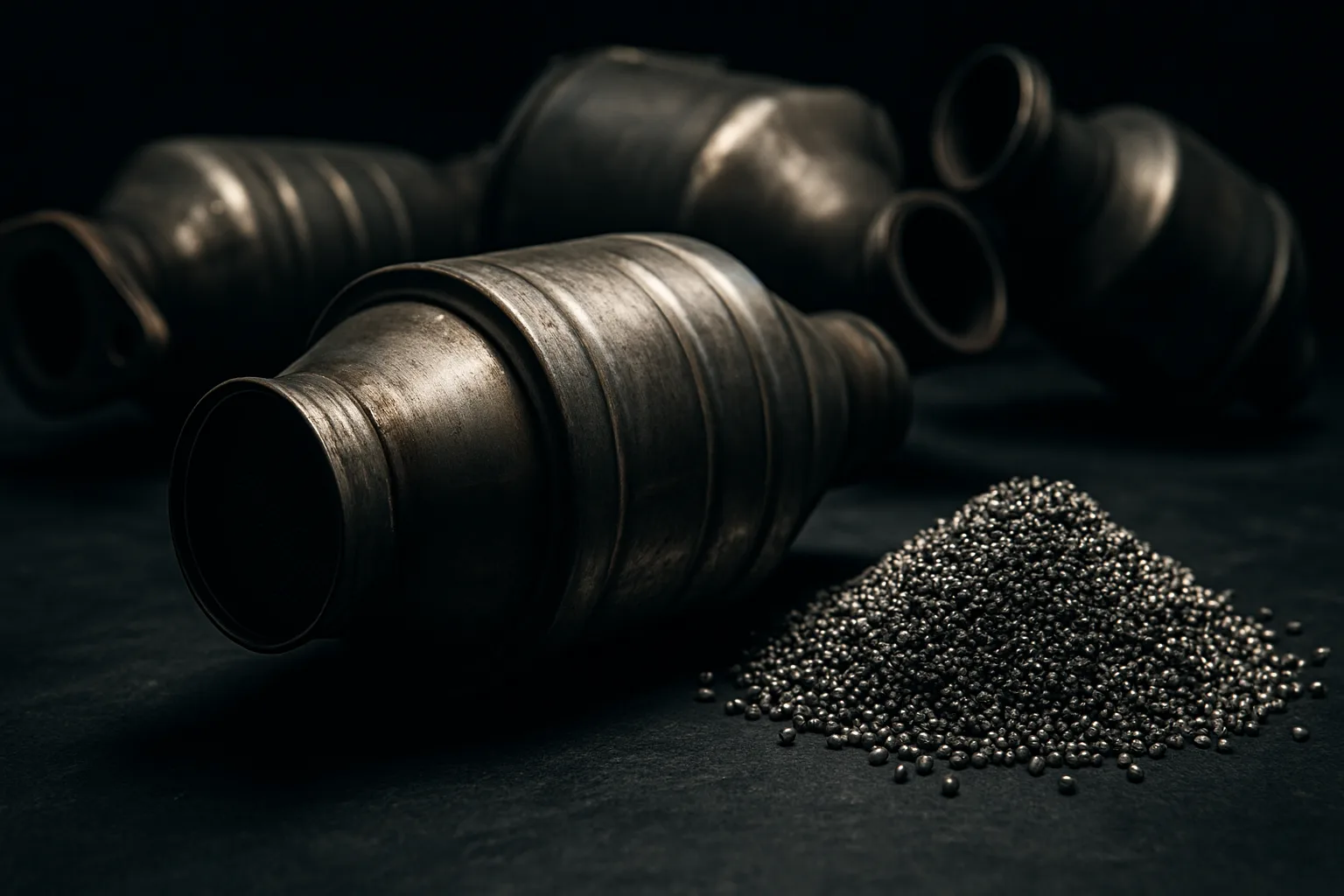
Most people selling a scrap catalytic converter leave money on the table before anyone even looks at it. Not because the cat isn't valuable — it might be worth a lot. But because a blurry photo, a missing serial number, or a shot taken in a dark garage gives the buyer almost nothing to work with. When a buyer can't confirm what they're looking at, they price for risk. That means a lower offer for you.
If you're trying to get accurate cat converter prices in Winnipeg — or anywhere across Canada — the photos you submit with your quote request matter more than most sellers realize. This guide walks you through exactly how to photograph your catalytic converter so you get a real number, not a lowball guess.
Why Photos Determine Your Catalytic Converter Scrap Value
A catalytic converter isn't just a chunk of metal. Inside that steel shell is a ceramic or metalite substrate coated with platinum, palladium, and rhodium — the precious metals that actually drive the price. Buyers need to identify the specific unit to estimate how much of those metals it contains. That identification happens through the serial number, OEM stampings, and the physical condition of the converter itself.
When you submit a vague photo — converter on its side, serial obscured by grease, no scale reference — a buyer has two options: pass on the quote entirely, or make a conservative estimate that protects their margin. Neither is good for you. Clear documentation gives buyers the confidence to price accurately. Platforms like smashrecycling.ca are built around exactly this principle — documented inventory creates better price discovery. The more a buyer can confirm, the less they hedge.
- Blurry or dark photos = conservative (lower) offers
- Missing serial number = buyer can't cross-reference substrate data
- Damaged substrate shown clearly = honest pricing, no surprises at drop-off
- Clean, well-lit documentation = buyer confidence = better quote accuracy
What Equipment You Actually Need
You don't need a DSLR camera or a photo studio. Your phone is fine — as long as you use it correctly. Most modern smartphones shoot more than enough detail to capture serial numbers, physical condition, and pipe configuration. The issue isn't the equipment. It's the setup.
Here's what you need before you start:
- Your smartphone — clean the lens with a soft cloth before you start. Dust and smudges kill sharpness.
- A flat, clean surface — a piece of cardboard on a workbench, a concrete floor, a pallet. Just something stable that lets you position the cat in multiple orientations.
- Good light — natural daylight is best. If you're indoors, set up near a large window or use two work lights angled from either side to eliminate shadows.
- A wire brush or rag — wipe down the serial number area before shooting. A serial buried in road grime might as well not exist in a photo.
- A tape measure or ruler — useful for showing overall length, helps buyers cross-reference unit dimensions when the serial is worn.
That's it. No special gear. Just preparation.
The Six Shots That Get You an Accurate Quote
Think of photographing a catalytic converter the way a mechanic thinks about a diagnostic. You're documenting the unit from every angle that matters. Six specific shots cover everything a buyer needs to assess catalytic converter scrap value accurately.
Shot 1: Full Overview, Both Sides
Lay the converter on a flat surface. Shoot one photo from the top — showing the full length of the unit, both inlet and outlet pipes, and the body of the converter. Then flip it and shoot the underside. These establish the unit type (pre-cat, main cat, diesel DPF) and the overall condition of the shell. Don't crop. Get the whole unit in frame.
Shot 2: Serial Number Close-Up
This is the most important photo you'll take. The serial number is stamped or cast directly onto the converter body, usually near one of the pipe ends. Clean the area with a wire brush or rag. Get your phone lens as close as the camera will focus sharply — for most phones, that's 10 to 15 centimetres. Make sure the stamp is lit from the side, not straight-on — side lighting creates shadow in the stamp grooves, which is actually what makes the numbers readable. Take two or three shots and pick the sharpest one.
Shot 3: Both Pipe Ends (Inlet and Outlet)
Shoot straight into both the inlet and outlet openings. Buyers want to see the substrate — the honeycomb ceramic material inside. This tells them whether the substrate is intact, cracked, or blown out. A blown or rattled converter is worth less. Showing this upfront means no surprises at drop-off and a more accurate initial quote. Don't hide damage. An honest photo now saves an argument later.
Shot 4: Any Secondary Stampings or OEM Markings
Some units have additional part numbers, OEM codes, or heat shields with identifiers. If you see any stamped or cast markings beyond the main serial, photograph them. This is especially useful for aftermarket converters or units where the main serial is worn down — a secondary marking can help a buyer cross-reference the unit when the primary ID is unclear.
Shot 5: Overall Condition of the Shell
Dents, cracks, rust, or evidence of a cut job — photograph it all. If the converter was cut off rather than unbolted, show where it was cut. Shell damage matters less than substrate condition, but buyers factor it into their handling costs. A converter with a mangled shell takes more work to process. Show what you've got.
Shot 6: Group Shot (If You're Selling Multiple Units)
Selling a batch of cats? Lay them all out in a single photo — serials facing up where possible — so the buyer gets an overview of the lot. Then photograph each unit individually using shots 1–5 above. A group shot first gives context to the individual photos and makes it easier to match photos to units when the buyer is reviewing your submission.
Common Mistakes That Kill Your Quote
These are the errors that consistently result in lowball offers or no offer at all. Most sellers make at least one of them without realizing it affects their price.
- Shooting in a dark garage without extra light. Phone cameras compensate in low light by boosting ISO, which creates noise. Noise obscures serial numbers. Move to natural light or add work lights.
- Photographing the serial through grease or grime. Take two minutes with a wire brush. You can't read a stamped number through a layer of road dirt — and neither can a buyer.
- Shooting at an angle when you need a straight-on shot. Serial number photos should be taken with the lens directly above the stamp, not from the side. Parallax distortion makes numbers hard to read.
- Only submitting one photo. A single overview shot gives a buyer almost nothing to work with. Six shots takes ten minutes. That ten minutes is likely worth real money when you get the best catalytic converter price in Canada.
- Including unrelated items in the frame. Keep the converter isolated in your shots. Other parts, tools, or clutter in the background are distracting and can make it harder for a buyer to assess what they're actually looking at.
How SMASH Uses Your Photos to Drive Competition
When you submit documented photos through SMASH, you're not sending them to one buyer who will give you whatever price they feel like. You're putting your inventory in front of multiple vetted buyers who can actually see what they're bidding on. That's how competition works — and competition is what reveals the real market price for your load.
Yards and collectors across Manitoba, Alberta, and Saskatchewan use SMASH to move catalytic converters because the process is transparent. Your serial number photos get cross-referenced against substrate data. Your condition shots let buyers price accurately instead of conservatively. Auto-invoicing handles the paperwork. The whole system is built around documentation — which is exactly why your photos matter so much at the start of the process.
Whether you're an auto shop in Winnipeg sitting on a stack of cats from the past few months, or an independent collector building a load before you move it, good documentation is what separates a real quote from a rough estimate. You can also read Canadian catalytic converter pricing guides to better understand what drives value before you submit.
For local sellers, Winnipeg scrap metal services through best-catalytic-converter-price.ca connect you directly with buyers who know the Manitoba market — and who can quote your cats accurately when your documentation is solid.
A Note on Prices: What to Know Before You Submit
Catalytic converter scrap value is driven almost entirely by the spot prices of platinum, palladium, and rhodium — three precious metals that shift constantly based on global commodity markets. A cat that was worth a certain amount last month may be worth more or less today. That's not speculation; it's how the market works.
This is why getting a quote through a competitive platform matters more than calling a single buyer and accepting whatever number they give you. When multiple buyers are looking at the same well-documented unit, the quote you receive reflects the actual market — not just what one buyer decides to offer that morning. To check current Canadian catalytic converter prices before you submit, use best-catalytic-converter-price.ca as your starting reference point.
Disclaimer: Catalytic converter prices fluctuate based on platinum, palladium, and rhodium spot prices. Always verify current rates before selling.
When you're ready to move your cats — whether you're in Winnipeg, Calgary, or anywhere across Canada — the process starts with solid photos. Take the time to document your units properly, submit through a platform that puts your inventory in front of real competition, and let the market tell you what your converters are actually worth. Get the best Canadian price for your catalytic converter by starting with a free quote at best-catalytic-converter-price.ca.
Frequently Asked Questions
Q: How many photos do I need to submit for an accurate cat converter quote in Winnipeg?
Aim for at least five to six photos per unit: a full overview, a close-up of the serial number, shots of both pipe openings (showing the substrate), any secondary markings, and overall shell condition. The more clearly documented your converter is, the more accurately a buyer can price it. Skimping on photos almost always results in a more conservative offer.
Q: What if the serial number on my catalytic converter is worn or unreadable?
Photograph it anyway — use side lighting to maximize contrast in whatever stamping remains. Also photograph both pipe end openings so buyers can see the substrate type and condition. If the unit has any secondary OEM markings or heat shield identifiers, photograph those too. Buyers can sometimes cross-reference units using dimensions, pipe configuration, and substrate appearance when the primary serial is gone.
Q: Does the condition of the catalytic converter affect how much I get paid?
Yes, but substrate condition matters far more than shell condition. A dented or rusty shell doesn't dramatically reduce value. A cracked, blown-out, or rattled substrate — where the precious metal-coated ceramic is damaged — does reduce value because there's less recoverable platinum, palladium, and rhodium. Show both honestly in your photos. Accurate documentation means no surprises at drop-off and a quote you can actually rely on.
Q: Can I get cat converter prices in Winnipeg without driving anywhere first?
Yes. Platforms like SMASH let you submit photos and documentation online and receive quotes from vetted buyers without leaving your yard or shop. You only need to arrange transport once you've accepted an offer. For Winnipeg-area sellers, this saves time and eliminates the guesswork of cold-calling individual buyers one at a time.
Q: Do scrap metal prices today affect what I get for my catalytic converter?
Directly, yes. Catalytic converter scrap value is pegged to live spot prices for platinum, palladium, and rhodium — the precious metals inside the substrate. When those commodity prices move, cat converter prices move with them. Always check current rates before submitting a quote request, and be aware that a quote you receive today may differ from one you receive in two weeks if markets shift.
Stay current on scrap metal market trends and catalytic converter pricing — follow SMASH on LinkedIn at linkedin.com/company/scrap-metal-auction-sales-hub for industry updates and insights.