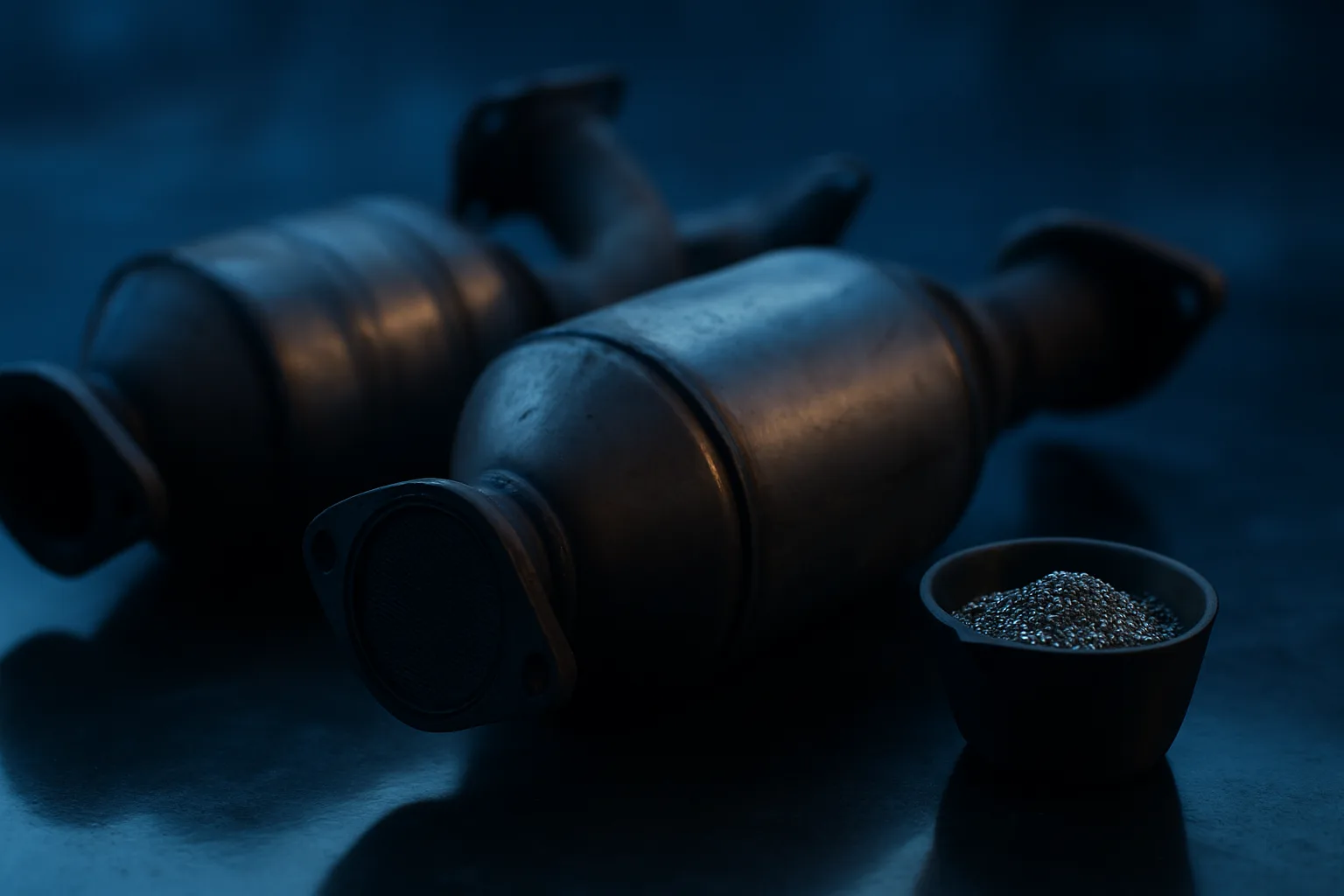
Most people selling a scrap catalytic converter have no idea what it's actually worth — and that gap costs them real money. Understanding how catalytic converter grading and pricing tiers work is the single biggest thing you can do to stop leaving cash on the table.
If you're in Regina or anywhere across Saskatchewan, the same converters sitting in your yard could fetch very different prices depending on who you sell to and how well you understand the grading system. This guide breaks it down without the runaround.
What Catalytic Converter Grading Actually Means
Every scrap catalytic converter isn't treated the same. Buyers — whether they're local scrap yards or processors — sort cats into pricing tiers based on precious metal content. The three metals that matter are platinum, palladium, and rhodium (PGMs — platinum group metals). The concentration of these metals inside the converter's substrate determines which tier it falls into and, ultimately, what it's worth.
Grades typically range from high-grade (dense PGM content, often from newer or performance vehicles) to mid-grade and low-grade (older vehicles, smaller engines, or diesel units with lower loading). Some converters get classified as "aftermarket" or "biscuit" units, which carry the lowest values because they contain significantly less precious metal than original equipment manufacturer (OEM) parts.
- High-grade cats: Found in newer domestic trucks, SUVs, and higher-displacement vehicles. These carry the best pricing.
- Mid-grade cats: Common domestic cars, older model SUVs. Solid value, but below high-grade.
- Low-grade / foreign cats: Smaller imports, older vehicles, lower PGM loading.
- Aftermarket / biscuit cats: Replacement converters, not OEM. Significantly lower precious metal content — lowest pricing tier.
- Diesel cats / DPFs: Diesel particulate filters. Traded separately — different metals, different valuation logic.
- Foil cats: Thin metallic substrate. Valued differently from ceramic substrate converters.
Knowing which category your converter falls into before you walk into a catalytic converter scrap yard near me search — or before you take a phone call offer — gives you real negotiating leverage. Without that knowledge, you're guessing. Buyers aren't.
Why Rhodium Price Today Changes Everything
Platinum and palladium get a lot of attention, but rhodium is often the wildcard that drives the biggest price swings in catalytic converter values. Rhodium is one of the rarest metals on earth. It's used in three-way catalytic converters to reduce nitrogen oxides, and there's no substitute for it at scale. When rhodium price today spikes, high-grade converter values follow quickly. When it drops, pricing across the board feels it.
As of 2026, PGM markets continue to respond to global auto production trends, EV adoption rates, and mining output out of South Africa — which dominates world rhodium supply. Palladium has also seen continued pressure as automakers shift powertrain strategies. These aren't small fluctuations. The spread between a strong rhodium market and a weak one can meaningfully change what your high-grade cats are worth on any given week.
This is exactly why timing and market awareness matter. If you're sitting on a collection of converters — whether you're an auto shop, a collector, or a yard operator in Saskatchewan — holding for the right moment and selling to a competitive buyer pool isn't a small decision. It's the difference between a good sale and a great one. Platforms like SMASH exist precisely to expose your load to that competitive buyer pool rather than locking you into one offer on one phone call.
Disclaimer: Precious metal prices fluctuate daily. Always check current market rates before selling. The values discussed here are general in nature and not a guarantee of any specific payout.
How Grading Affects the Price You Actually Receive
Here's where sellers in Regina and across Canada often get burned: the grade a buyer assigns your converter directly determines your payout — and not every buyer grades the same way. One yard might call a converter mid-grade. Another yard, using the same serial number lookup, calls it high-grade. That discrepancy shows up in your cheque.
Transparent grading depends on a few things:
- Serial number / part number identification: OEM converters carry identifiable part numbers. A buyer who cross-references these against a current database can price accurately. A buyer who eyeballs it and guesses is not your friend.
- Photo documentation: For remote or auction-based sales, clear photos of the converter body, substrate condition, and any stamps help buyers bid confidently. Better documentation = better bids.
- Substrate condition: Melted, cracked, or rattling substrate (loose from impact or overheating) reduces recoverable PGM content. Buyers discount accordingly. Don't hide damage — disclose it.
- Weight and density: Heavier ceramic substrate generally signals higher PGM loading. Buyers factor this in, especially for uncoded or unmarked units.
If you want to get the best catalytic converter price in Canada, the starting point is making sure whoever is buying your cats is actually identifying them correctly — not just eyeballing and lowballing. That accountability comes from competition and documentation, not from trust alone.
The Saskatchewan Market: What Regina Sellers Need to Know
Regina has a working scrap metal recycling infrastructure, but like most mid-sized Canadian markets, the number of buyers actively competing for catalytic converters is limited at the local level. That's not a knock on the city — it's just arithmetic. Fewer buyers means less price pressure, which typically means lower offers for sellers who don't look beyond their immediate geography.
Saskatchewan sellers have an advantage that many don't use: you don't have to sell locally. Scrap metal recycling Canada-wide platforms connect your inventory to buyers across the country, including the large-volume processors who pay top-tier prices for high-grade cats. Regina scrap metal services connected to national networks can unlock pricing that a single local yard call simply won't surface.
Here's what that looks like in practice for a Regina seller:
- You collect a mix of 20 cats — high-grade domestics, a few mid-grade foreign units, and some aftermarket biscuits.
- Local yard call: one price per unit, take it or leave it, no itemized breakdown by grade.
- National auction platform with vetted buyers: itemized by grade, documented with photos and serial lookups, competitive bids from multiple buyers. You see the spread. You make an informed decision.
The second path takes a bit more organization upfront. It's worth it. To check current Canadian catalytic converter prices before you commit to any offer is just good business, whether you're a first-time seller or a seasoned collector.
Using SMASH to Get Real Competition on Your Cats
SMASH is a B2B scrap metal auction platform built for exactly this problem. The old model — one buyer, one phone call, one number that you either accept or don't — doesn't serve sellers. It serves buyers. SMASH flips that dynamic by running competitive auctions with vetted buyers, giving your inventory real market exposure instead of a single offer from whoever picks up the phone.
For catalytic converter loads, the platform supports the kind of documentation that drives better bids: photo uploads, serial number tracking, and itemized inventory listings. Buyers bid with more confidence when they can see what they're buying. More confident buyers tend to bid higher. That's not a guarantee — it's how markets work. More buyers means better price discovery.
There are no subscription fees. SMASH only wins when you win. For anyone in Regina or across Saskatchewan looking to move a serious volume of cats — auto shops clearing shop inventory, collectors with mixed loads, or yards looking for overflow buyers — the SMASH scrap metal auction format is worth understanding. You can read Canadian catalytic converter pricing guides to build your baseline knowledge before you list a single unit.
If you've ever Googled how much is my catalytic converter worth by reg free or searched for a catalytic converter scrap yard near me and come back frustrated by vague answers, the issue usually isn't the search — it's that single-buyer pricing doesn't reward sellers. Competition does.
Steps to Maximize Your Catalytic Converter Value Before You Sell
Before you move any cats, run through this checklist. It takes less time than you think and it directly affects your payout.
- Identify what you have. Pull part numbers or serial numbers from the converter body. Cross-reference against a current pricing database or ask a buyer to identify by serial. Don't guess the grade.
- Document the condition. Take clear photos. Both ends of the converter, the body, and any stamps or markings. If there's visible damage to the substrate, photograph it and disclose it.
- Separate your grades. Don't lump everything together. High-grade units grouped with aftermarket biscuits average down your overall payout. Sort them. Sell them separately if volumes allow.
- Check the market before you sell. Rhodium and palladium prices move. If you're not in a rush, watching the market for a few weeks before a large sale can change your outcome.
- Get more than one offer. Whether that's through a competitive auction or by calling multiple yards, a single offer is never the market rate. It's one buyer's number. The market rate is what multiple buyers will actually pay.
- Use a platform built for this. Platforms like find the best price for your scrap in Canada — SMASH connects your documented inventory to vetted buyers who compete for it. That process is how you surface the real value of your load.
Whether you're clearing a shop in Regina, managing a collector's haul across Saskatchewan, or just sitting on a handful of cats from a recent teardown — the process above gives you a defensible number before you commit to any deal. If the offer you receive doesn't hold up to that preparation, walk away and find a better buyer. They exist.
Ready to stop guessing what your cats are worth? Get the best Canadian price for your catalytic converter — get a free quote at best-catalytic-converter-price.ca. It costs nothing to find out what the market will actually pay.
Frequently Asked Questions
Q: How do I find out what grade my catalytic converter is?
Look for a serial number, part number, or OEM stamp on the converter body. Many buyers and platforms can identify your converter's grade and approximate value using that number. If there's no marking, buyers will assess by weight, substrate type, and vehicle application. Knowing your grade before you sell prevents you from accepting a low-grade price on a high-grade unit.
Q: What is the best catalytic converter price I can get in Regina?
Pricing varies based on PGM market rates, converter grade, and buyer competition. The best price in Regina — or anywhere in Saskatchewan — typically comes from exposing your inventory to multiple buyers rather than accepting the first local offer. Use a platform with competitive bidding, or get at least two or three quotes before committing. Always check current market rates before selling, as prices fluctuate.
Q: Does rhodium price affect what my catalytic converter is worth?
Yes, significantly. Rhodium is one of the three precious metals recovered from catalytic converters, and it's one of the most volatile by price. When rhodium markets are strong, high-grade converter values rise. When rhodium is down, the whole pricing tier structure shifts. Track current rhodium, palladium, and platinum spot prices before making a large sale.
Q: Are aftermarket catalytic converters worth anything as scrap?
Yes, but considerably less than OEM units. Aftermarket converters — sometimes called biscuit cats — contain much lower concentrations of platinum, palladium, and rhodium than original equipment converters. They're still recyclable and still have value, but don't expect high-grade pricing. Sort them separately from your OEM cats to protect the value of your better units.
Q: How do I know if I'm getting a fair price for my catalytic converter in Saskatchewan?
A fair price is one that reflects current PGM market rates and your converter's actual grade. The clearest way to validate an offer is to get competing bids. If one buyer's number is significantly lower than others, that gap tells you something. Platforms like SMASH create that competition automatically, connecting your documented inventory to vetted buyers who bid against each other — not against you.
Stay current on scrap metal market trends and catalytic converter pricing: follow SMASH on LinkedIn for industry updates, market insights, and pricing news across Canada.