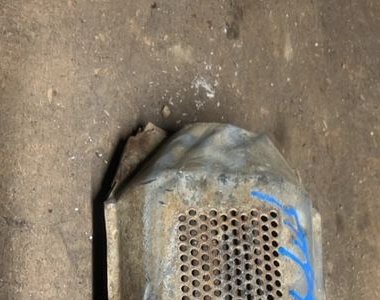
Most people selling scrap catalytic converters leave money on the table — not because they got a bad deal, but because they sent a bad photo. A blurry shot, a mud-covered converter, or a missing serial number can drop your quote before negotiations even start. If you want to sell catalytic converters online and get a real, defensible number, your photos are doing more work than you think.
Buyers pricing your cat aren't guessing. They're matching serial numbers to assay data, cross-referencing platinum, palladium, and rhodium content, and verifying condition against market benchmarks. Give them poor documentation, and they'll price in the risk — which comes straight out of your pocket.
This guide walks you through exactly how to photograph a catalytic converter for an accurate online quote. It doesn't matter if you're an auto shop in Scarborough clearing out a month of pulled cats, or an individual seller with a single unit from a weekend project. Better photos mean better quotes. Full stop.
Why Your Photos Directly Affect Your Catalytic Converter Price in Canada
When a buyer prices a catalytic converter remotely, they're working with whatever you send them. The cat converter value is driven by three precious metals — platinum, palladium, and rhodium — locked inside the ceramic or metallic substrate. They can't hold your unit, shake it, or weigh it on their own scale. Every judgment call they make is based on your documentation.
Sloppy photos create uncertainty. Uncertainty creates lowball offers. Buyers who can't confirm the serial number, can't verify the substrate is intact, and can't identify the grade of the converter will price conservatively. That's not a negotiation tactic — it's risk management on their end.
On the flip side, clean, complete photos signal that you know what you're doing. They invite competitive bidding. Platforms built around a B2B scrap metal marketplace model — like SMASH — use photo documentation as a core part of the listing process precisely because documented inventory attracts more confident buyers, and more confident buyers make better offers.
The catalytic converter price Canada sellers receive can vary significantly based on documentation quality, even for the same unit. Don't let a two-minute photo job cost you real money.
The Five Shots Every Cat Converter Listing Needs
You don't need a professional camera. Your phone is fine. What you need is a consistent, methodical approach. For every converter you're trying to sell catalytic converters online, capture these five angles before you submit anything.
- Serial Number Shot — This is the most important photo you'll take. The serial number (also called the part number or code) is stamped, etched, or printed on the body of the converter. It's how buyers identify the exact unit and pull the corresponding assay data for platinum, palladium, and rhodium content. Get your phone within 15–20 cm. Make sure the number is in focus, fully visible, and not obstructed by dirt or shadows. If you can't read it clearly on your screen, your buyer can't read it either.
- Full Body Shot — Side Profile — Step back and get the entire converter in frame. Both inlet and outlet pipes should be visible. This shot confirms the physical condition of the shell, shows whether the unit is whole or damaged, and gives context for size and type.
- Both End Openings — Photograph both the inlet and outlet openings straight-on. Buyers need to see the substrate condition. A blown-out, cracked, or rattling substrate dramatically changes the value. This shot proves the honeycomb is intact and the unit hasn't been compromised.
- Top and Bottom Profile — Flip the converter and shoot both the top and bottom. Dents, welds, cracks, or previous repairs affect how buyers classify the unit. Hidden damage discovered after a deal closes kills trust and future business.
- Reference Shot with Visible Scale — Place a ruler, tape measure, or even a standard tool beside the converter. Size helps buyers estimate substrate volume, which feeds into value calculations. If you're listing multiple units, a shot with all converters laid out side by side also helps buyers cross-reference.
If you're processing a full load of scrap catalytic converter Canada-style volume — dozens or hundreds of units — apply this same five-shot approach to every unique serial number. Group shots help, but they don't replace individual documentation.
How to Prep Your Converter Before You Shoot
Dirty converters are misidentified converters. Before you pick up your phone, spend two minutes on basic prep. You're not detailing it — you're making it readable.
- Wire brush the serial number area. Road grime, rust scale, and carbon buildup accumulate directly over the stamp. A quick brush clears enough to get a legible photo. If the number still isn't readable after brushing, try a damp rag or a small amount of brake cleaner on a cloth.
- Remove attached hardware. Extra pipes, brackets, flanges, and heat shields that aren't part of the catalytic unit itself can obscure identifying features. Remove what you can before shooting.
- Dry the unit. Wet metal creates glare. If you just pulled the converter, let it dry before shooting. A wet shell makes it hard to photograph markings cleanly.
- Shoot in natural light. Get outside or near a large window. Avoid shooting with a single overhead work light — it creates harsh shadows directly over serial numbers and openings. Overcast daylight is actually ideal.
- Stabilize your shot. Rest your phone against something or use both hands. Blurry serial numbers are the single most common reason quotes get delayed or lowballed. If your phone has a grid feature, use it to align the shot properly.
Shops in Scarborough moving high volumes can build a simple photo station — a flat surface outdoors or near a bay door, with a piece of clean plywood or cardboard as a neutral background. It takes ten minutes to set up and pays back on every load you process.
What Buyers Look For Beyond the Serial Number
The serial number unlocks database pricing for platinum, palladium, and rhodium content. But experienced buyers — especially on a B2B scrap metal marketplace — are also reading your photos for condition cues that adjust that baseline price.
Here's what they're looking for:
- Substrate integrity. Is the ceramic or metallic honeycomb intact? A rattled-out or cracked substrate means the precious metal content is compromised. Buyers price this down, sometimes significantly.
- Shell damage. Major dents or cracks can indicate impact damage that may have affected the internal substrate even if it's not immediately visible.
- Aftermarket units. Some converters are aftermarket replacements with lower precious metal content than OEM units. Certain visual cues tip buyers off — your photos help them identify this correctly rather than assume it.
- Foil-type vs. ceramic substrate. The internal structure affects value. Good end-opening shots help buyers make this call without having to cut the unit open.
- Pipe cuts and preparation. How the converter was removed affects value. Clean cuts are preferred. Long pipe stubs add weight but not value — some buyers will discount for this.
Buyers referencing the platinum price today (along with palladium and rhodium spot prices) are doing live math against assay data and condition assessments. Your photos feed that calculation. The cleaner your documentation, the more confident their offer.
To get the best catalytic converter price in Canada, you need buyers who trust what they're bidding on. Trust starts with documentation.
Selling Online vs. Walking Into a Local Buyer — What the Photos Change
If you walk into a local scrapyard, the buyer physically handles your converter. They can feel the weight, shake it for substrate rattle, and read the serial number themselves. You don't need photos for that — but you also only get one buyer and one price.
When you sell catalytic converters online, you trade that single-buyer interaction for access to multiple vetted buyers competing for your load. That competition is where better price discovery happens. But it only works if buyers trust the listing. That trust comes from photos.
Sellers across Ontario — including auto shops and recyclers in Scarborough — are increasingly choosing the online route for exactly this reason. A load that gets one offer at a walk-in counter might attract three or four offers when it's properly documented and listed through a competitive platform.
SMASH is built around this model. Vetted buyers. Competitive auction format. Photo documentation built into the listing process. No subscription fees — SMASH only earns when the seller does. If you want to read Canadian catalytic converter pricing guides and understand how platform-based selling compares to traditional methods, the blog is worth your time.
And if you're processing volume and want to understand what competitive bids actually look like for your material, you can get competitive bids for your scrap in Canada through SMASH directly.
Building a Repeatable Photo Process for High-Volume Sellers
If you're an auto shop, a dismantler, or a collector pulling converters regularly, ad-hoc photos are a time drain. Build a repeatable system and you'll spend less time on documentation while getting better results.
Here's a simple process for shops in Scarborough and across Ontario processing converters at volume:
- Designate a photo station. A fixed spot with consistent lighting means you're not hunting for the right angle every time. Natural light near a bay door or a simple LED ring light both work.
- Keep a wire brush and cleaning rag at the station. Fifteen seconds of prep before each photo saves minutes of trying to enhance unreadable images later.
- Use a naming convention for your files. Serial number + date is simple and effective. Makes it easy to match photos to listings and invoices.
- Photograph before you sort or stack. Once converters are in a pile, individual documentation becomes much harder. Build the photo step into your intake process.
- Review every serial number photo before moving on. If you can't read it clearly on your phone screen, retake it immediately. Don't discover it's unreadable when you're submitting a quote request.
Platforms like SMASH support serial tracking and photo documentation as part of their inventory tool — which means your photos aren't just for quotes, they're part of a documented chain of custody that supports BOLs, packing lists, and auto-invoicing downstream.
If you want to check current Canadian catalytic converter prices and understand how your material fits into today's market, that's a smart starting point before you list anything.
Frequently Asked Questions
Q: Can I sell catalytic converters online from Scarborough without a business account?
Yes. Individual sellers can list catalytic converters through online platforms and quote services. You don't need a registered business to get a quote, though some buyers on B2B platforms prefer working with established sellers. Either way, proper photo documentation improves your quote regardless of your seller status.
Q: How does the platinum price today affect my catalytic converter quote?
Platinum, palladium, and rhodium spot prices are updated daily and directly influence what buyers will pay for your converter. When precious metal prices are high, your cat is worth more — but condition and serial number identification still determine how close to market rate you actually get. Always check current market conditions before listing.
Q: What if the serial number on my catalytic converter is worn off or unreadable?
This does happen, especially on older or heavily corroded units. In these cases, buyers rely more heavily on physical dimensions, substrate type, and end-opening photos to estimate value. Some buyers use VIN-based lookup tools to cross-reference the vehicle the converter came from. Your price may be less precise, but you can still get a quote — just provide as much detail as possible.
Q: How many photos do I need to sell a catalytic converter online?
A minimum of five photos per unit covers the essentials: serial number close-up, full side profile, both end openings, top and bottom shell, and a reference scale shot. For volume sellers listing multiple converters, individual serial number shots for each unique unit are non-negotiable — group shots alone aren't sufficient for accurate pricing.
Q: Are there catalytic converter buyers near me open now in Scarborough, Ontario?
Local scrapyards in Scarborough and across Ontario do buy catalytic converters, but hours and current buy prices vary. Online platforms give you an alternative — you can submit photos and get quotes outside of business hours, and compare multiple offers rather than accepting whatever a single local buyer offers that day.
Taking five minutes to document your converter properly before you list is one of the highest-return habits you can build as a scrapper or shop owner. The platinum, palladium, and rhodium inside your cat have real value — don't let poor photos obscure it. If you're ready to find out what your converters are actually worth in today's Canadian market, get a free quote at best-catalytic-converter-price.ca and see what competitive, documented selling looks like.
Follow SMASH on LinkedIn for ongoing scrap metal market insights, catalytic converter pricing trends, and industry updates that help you sell smarter.
Disclaimer: Catalytic converter prices fluctuate based on daily platinum, palladium, and rhodium spot prices. Always check current rates before finalizing any sale.