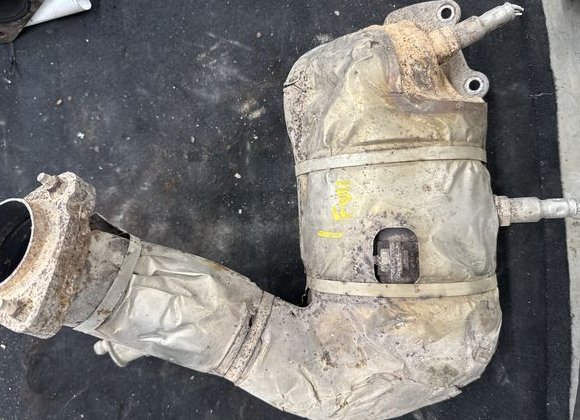
Most people selling a scrap catalytic converter have no idea what's inside it — or why the price swings so dramatically from one week to the next. That's not an accident. The catalytic converter market is driven by three precious metals — platinum, palladium, and rhodium — whose spot prices move daily on global commodity exchanges. If you're in Longueuil or anywhere else in Quebec, understanding the full lifecycle of a catalytic converter helps you sell smarter, not just faster.
This is a market report, not a feel-good explainer. We'll walk through what actually happens to a catalytic converter from the moment it leaves your vehicle to the moment those metals get recovered — and where you can lose money if you're not paying attention. Catalytic converter recycling Longueuil sellers face the same market forces as anyone in Toronto or Houston. The difference is whether you show up prepared.
What's Actually Inside a Catalytic Converter
The value in a catalytic converter isn't in the steel shell. It's in the ceramic or metallic substrate inside — a honeycomb structure coated with a washcoat containing platinum group metals (PGMs): platinum, palladium, and rhodium. These metals act as catalysts, converting harmful exhaust gases into less harmful compounds. That's the chemistry. The economics are what matter here.
Rhodium is the heavy hitter. It's also the most volatile. At any given time, rhodium can trade at multiples of gold's price — or crash hard depending on auto production forecasts and recycling supply. Palladium is used heavily in gasoline engines. Platinum shows up more in diesel applications. The ratio and total loading of these metals varies significantly by vehicle make, model, engine size, and year of manufacture.
- Platinum (Pt): Common in diesel cats and older gasoline vehicles
- Palladium (Pd): Dominant in modern gasoline engine converters
- Rhodium (Rh): Present in smaller quantities but historically the highest value per gram
- Substrate type: Ceramic (most common) vs. foil/metallic (less common, found in performance or older European vehicles)
The actual PGM content per unit is measured in troy ounces or grams and varies enormously. A small economy car converter might carry a fraction of a gram of combined PGMs. A large diesel truck converter or a high-performance vehicle unit can carry several grams. This is why the phrase "catalytic converter price" without more context is almost meaningless — you need to know what you have.
The Lifecycle: From Exhaust System to Smelter
Understanding where your converter fits in the supply chain tells you a lot about where value gets captured — and where it leaks away from the seller.
Step 1 — Removal. The converter comes off the vehicle, either during a full end-of-life vehicle (ELV) process at a salvage yard or during a repair where a faulty unit is replaced. At this point, the unit is either a full-bodied OEM converter or a deconned (decanned) unit with the substrate removed from the shell.
Step 2 — Initial grading and identification. This is where knowledge pays. Experienced buyers use serial numbers, OEM part numbers, and physical characteristics to identify the converter and estimate its PGM content. VIN lookup tools and serial tracking — features built into platforms like SMASH — make this step faster and more accurate. Sellers who skip this step are flying blind.
Step 3 — Sorting and lot assembly. Converters are sorted by grade. Common domestic (CD), foreign domestic (FD), large foreign (LF), exotic, and aftermarket grades each carry different values. High-grade units from certain Japanese, European, or North American manufacturers carry significantly more value than generic aftermarket replacements, which often contain little to no PGMs.
Step 4 — Shipping to a processor. Once a sufficient quantity is assembled, the lot ships to a processor — typically a large-scale industrial operation with the equipment to decan, crush, sample, and smelt the substrate. Processors operate at scale, which means individual sellers rarely deal with them directly. This is where intermediaries — buyers, brokers, and auction platforms — come in.
Step 5 — Processing and assaying. The substrate is crushed into a fine powder (the "black mass"), which is then smelted. A representative sample is assayed to determine precise PGM content. The assay result drives the final settlement value.
Step 6 — Metal recovery and refining. The smelted material moves to a refinery where platinum, palladium, and rhodium are separated and refined to commercial purity. These refined metals re-enter global supply chains — going into new autocatalysts, electronics, or industrial applications.
Every hand the converter passes through between your yard and the refinery takes a cut. The fewer intermediaries, the more of that value stays with you. That's the argument for using a competitive auction format rather than a single-buyer phone call.
Why Catalytic Converter Prices in Canada Fluctuate — And What That Means Right Now
If you're trying to get the best catalytic converter price in Canada, timing and market awareness matter. PGM prices are denominated in USD and trade on international commodity exchanges. That means the CAD/USD exchange rate directly impacts what a Canadian seller receives — even if the buyer is quoting in Canadian dollars.
In 2026, the catalytic converter recycling market continues to reflect broader pressures on the PGM complex. Automakers have been reducing PGM loading per unit as catalytic technology improves and electric vehicle adoption increases in certain segments. This has put structural pressure on long-term PGM demand from new vehicle production. At the same time, recycling supply has grown as older high-loading vehicles reach end-of-life. The result is a market that rewards sellers who understand grades and timing — not just those who sell volume.
For sellers in Longueuil and across Quebec, the practical takeaway is this: don't assume your quote from one buyer reflects market value. A single buyer has no incentive to overpay. Competition does. Platforms like SMASH create that competition by connecting sellers with multiple vetted buyers simultaneously — which is how price discovery actually works.
To check current Canadian catalytic converter prices before you sell, get multiple quotes and understand the grade of what you have. Selling a large foreign or exotic unit as a generic domestic because you didn't check the serial number is a costly mistake.
Disclaimer: Catalytic converter prices fluctuate daily based on PGM spot prices and CAD/USD exchange rates. Always check current rates before committing to a sale.
How to Sell Catalytic Converters Online in Canada — The Smart Way
The option to sell catalytic converters online has fundamentally changed how informed sellers operate. Five years ago, most sellers in Quebec worked with whoever answered the phone locally. Today, vetted national and cross-border buyers compete for the same loads through digital platforms. That shift benefits sellers — if they use the right tools.
Here's what a smart online sale process looks like for a Quebec seller:
- Document every unit. Photo documentation and serial number capture are non-negotiable. Good photos show the unit from multiple angles; serial tracking ties each unit to a known value range. Buyers offer better prices on documented loads because the risk is lower.
- Identify your grades. Use a converter lookup tool to identify OEM part numbers and estimated PGM content before you list. Don't guess.
- Get competitive quotes. A single quote is not a market price. List your lot on a platform that brings multiple vetted buyers to the table.
- Understand your settlement terms. Are you selling on a per-unit basis or a lot basis? Is settlement based on a fixed quote or an assay return? Both have their place — know which you're agreeing to.
- Handle paperwork properly. In Quebec, proper documentation matters. GST/HST considerations apply to commercial transactions. Make sure your buyer handles invoicing correctly.
SMASH supports this entire workflow — from inventory documentation and serial tracking to connecting sellers with vetted buyers and handling auto-invoicing. No subscription fees. The platform wins when the seller wins. For anyone in Longueuil or broader Quebec looking to find the best price for your scrap in Canada, that alignment of incentives matters.
Want to go deeper on Canadian market pricing? Read Canadian catalytic converter pricing guides to understand how grades, lot size, and timing affect your return.
What Separates a Good Price From a Great One
Most sellers focus on price per unit. Experienced sellers focus on net return after all costs — including shipping, sorting time, and the risk of misidentified units. The gap between a mediocre sale and a strong one often comes down to preparation, not luck.
A few things that consistently drive stronger returns:
- Lot size and consistency: Larger, well-sorted lots attract more serious buyers. Mixing high-grade and low-grade units without transparency reduces buyer confidence and compresses offers.
- Photo documentation: Buyers paying top dollar want to see what they're bidding on. Clear photos of the serial number, substrate condition, and overall unit reduce buyer risk — and that reduced risk shows up in the offer price.
- Timing relative to PGM markets: Rhodium in particular can swing dramatically. Selling into a rising market versus a declining one can represent a meaningful difference in your return. You don't need to be a commodities trader — you just need to not be completely blind to the market.
- Buyer competition: This is the single biggest lever most sellers ignore. One buyer, one price. Multiple vetted buyers, competitive price. The math is simple.
The old way — one phone call, one buyer, one price take it or leave it — doesn't serve sellers. The Longueuil seller sitting on a mixed lot of foreign domestics and large foreign units deserves to know what the market will actually pay. That requires competition, not convenience.
Frequently Asked Questions
Q: How do I find catalytic converter buyers near me open now in Longueuil?
Local scrap yards in Longueuil and the broader Montreal region do buy catalytic converters, but local availability doesn't mean local is your best price. Online platforms like SMASH let you access vetted buyers across Canada without leaving your shop. For immediate cash needs, local yards are an option — for maximum value, get competitive quotes first.
Q: What affects the value of a scrap catalytic converter in Quebec?
The primary factors are the type and quantity of platinum group metals (platinum, palladium, rhodium) in the substrate, the vehicle make and model, whether the unit is OEM or aftermarket, and current PGM spot prices. The CAD/USD exchange rate also affects your Canadian dollar return since PGMs trade in USD. Always check current rates before selling.
Q: Is it worth selling catalytic converters online rather than to a local buyer in Quebec?
For most sellers with documented lots, yes. Selling catalytic converters online through a vetted auction platform brings multiple buyers to your lot simultaneously, which drives better price discovery than a single local quote. Local buyers serve a purpose for small volumes or urgent cash needs, but for regular volume sellers, online competition typically produces stronger returns.
Q: How does catalytic converter recycling in Longueuil connect to the global PGM market?
Directly. Every catalytic converter sold in Longueuil ultimately feeds into a processing and refining supply chain that recovers platinum, palladium, and rhodium for global industrial use. The price you receive is tied to what those metals trade for on international commodity exchanges — which is why prices change daily and why understanding the market matters even at the local level.
Q: What's the difference between an OEM and aftermarket catalytic converter for scrap value?
Significant. OEM (original equipment manufacturer) converters are designed to meet strict emissions standards and typically contain meaningful quantities of PGMs. Most aftermarket replacement converters use lower PGM loadings to keep costs down — some contain very little recoverable metal. Selling an aftermarket unit at OEM grades is a mistake buyers will correct quickly. Always identify what you have before pricing it.
The metals inside your catalytic converter are worth real money — but only if you sell with the right information and the right buyers at the table. Whether you're an auto shop in Longueuil clearing out cores or a collector working through a mixed lot, preparation and competition are the two things that move your return in the right direction. Get the best Canadian price for your catalytic converter — get a free quote at best-catalytic-converter-price.ca and find out what your lot is actually worth in today's market.
Stay current on PGM markets and scrap metal pricing by following SMASH on LinkedIn — practical market updates and industry insights posted regularly.
```