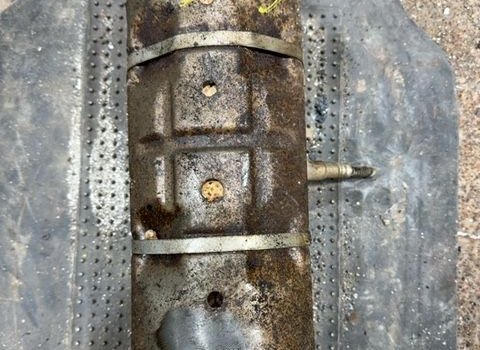
Why the Platinum Price Today Changes What Your Catalytic Converter Is Actually Worth
Most people selling a scrap catalytic converter think in one category: valuable or not valuable. That's leaving real money on the table. The difference between a grade-one cat and a low-grade unit can be hundreds of dollars — and if you don't understand the grading system, you'll never know which one you're holding. With the platinum price today remaining a major driver of converter values in October 2026, understanding how buyers grade and price cats is the single most useful thing you can do before your next sale.
This isn't abstract. Whether you're an auto shop sitting on a bin of mixed converters in Scarborough, a collector pulling units off salvage vehicles across Ontario, or an individual who just had their catalytic converter replaced, the grading tier your unit lands in determines your payout. Let's break it down.
---What Catalytic Converter Grading Actually Means
Grading is how buyers categorize converters based on their platinum group metal (PGM) content — specifically platinum, palladium, and rhodium. These three metals are the reason your old converter has value at all. They act as the catalysts inside the ceramic or metallic substrate, breaking down harmful exhaust emissions. When a converter is scrapped, those metals are recovered through a smelting and refining process called platinum group metals recycling.
The amount of PGMs in a converter varies enormously by vehicle make, model, year, and engine size. A unit from a late-model luxury vehicle might carry significantly more palladium than a base-model compact. That variation is why grading exists — it's the industry's way of sorting cats into price brackets that reflect actual recoverable metal content.
Common grading tiers used across the North American market include:
- Grade 1 / High-Grade: Highest PGM content. Typically from newer vehicles, larger engines, or specific OEM manufacturers known for dense substrate loading. These command the best prices.
- Grade 2 / Mid-Grade: Moderate PGM content. Common across a wide range of domestic and imported vehicles. Solid value, volume-dependent.
- Grade 3 / Low-Grade or Domestic: Lower recoverable PGM content. Still worth selling — just priced accordingly.
- Foreign / Import Grade: Some buyers use this as a separate tier for converters from non-domestic vehicles with distinct substrate characteristics.
- Aftermarket / Bead: Converters filled with bead-style substrate rather than the honeycomb ceramic. Generally the lowest-value tier because PGM loading is minimal.
- Foil / Exotic: Metallic substrate converters often from European performance vehicles. Higher recoverable content, priced separately.
- Direct-Fit / OEM-Specific: Some buyers track specific OEM part numbers for units known to carry exceptional PGM loads.
The grading system isn't standardized across every buyer in the industry — which is exactly why selling to a single buyer without shopping your load is a risk. One buyer's "domestic grade" might be another's mid-grade. That discrepancy translates directly to your payout.
---How the Platinum Price Today (and Palladium and Rhodium) Drive Your Payout
The platinum price today is only one-third of the equation. Catalytic converters contain all three platinum group metals — platinum, palladium, and rhodium — in varying ratios depending on the vehicle. Your payout is essentially a weighted calculation based on how much of each metal is in your specific unit, multiplied by their current market prices.
Rhodium is historically the most volatile of the three. It has swung from extreme highs to dramatic lows within single calendar years. Palladium has followed its own cycle, particularly sensitive to automotive production volumes and emission regulation changes. Platinum trades on its own fundamentals, including industrial demand and investment flows.
In October 2026, all three markets remain active and price-sensitive. That means the value of your converter today may not be the same value next month. This is why timing matters — and why locking in a quoted price quickly, once you have it, is in your interest.
For anyone holding a meaningful volume of converters — a bin of 20, 50, or 100 units — the spread between a fair market price and a lowball offer at the gate compounds fast. If you're in Scarborough or anywhere across Ontario and you've been calling the same buyer for years without comparing, you almost certainly don't know what your cats are actually worth on today's market.
To check current Canadian catalytic converter prices before you sell, use a platform that reflects live PGM market conditions — not a static price sheet updated quarterly.
---What Gets Your Converter Graded Higher (or Lower)
Beyond just vehicle make and model, several physical factors affect how a buyer grades your converter and what price tier it lands in. Understanding these can help you handle, store, and present your inventory in ways that support a stronger grade — or at least avoid getting docked unnecessarily.
Substrate condition matters. A cracked or shattered ceramic substrate means lost PGM content. Converters that have been dropped, crushed, or exposed to impacts lose value because some of the recoverable material is gone. Handle your cats carefully — they're fragile inside.
Intact housing vs. cut or torched units. Many buyers pay less for converters that have been cut off the vehicle with a torch versus those removed cleanly with the pipe sections. Excessive torch cutting near the substrate can damage it. Some buyers require a minimum pipe length on each end.
Other factors that affect grading and price include:
- Whether the unit is plugged (blocked substrate) from engine failure — often significantly devalued
- The presence of the OEM serial number or part number, which allows accurate identification
- Weight — heavier units often (though not always) indicate denser substrates
- Loose or rattling substrate — indicates internal damage and reduced PGM recovery
- Aftermarket replacement status — some converters look OEM but are lower-grade aftermarket units
If you're reading Canadian catalytic converter pricing guides to learn more, look specifically for guides that explain how serial number identification works — it's one of the most reliable ways to ensure you're getting the correct grade for your unit.
---Why a Scrap Metal Auction Platform Changes the Math for Sellers
Here's the structural problem with the traditional approach: you call one buyer, they give you a number, and you either take it or walk. You have no way of knowing if that number reflects the actual market. You don't know what the buyer's margin is. You don't know if a competing buyer would have paid 15% more.
That's where a scrap metal auction platform like SMASH changes the dynamic entirely. Instead of one buyer setting the price, multiple vetted buyers compete for your load. That competition is what drives price discovery. It's not a trick — it's just basic market mechanics applied to scrap catalytic converters.
SMASH operates as a transparent, documented auction environment. Sellers photograph their inventory, document their units — including serial numbers where available — and list them for vetted buyers to bid on. The documentation process itself helps: buyers have more confidence when they can see exactly what they're bidding on, which typically supports stronger bids.
For sellers in Scarborough and across Ontario running meaningful volumes of cats, this approach replaces the guesswork with actual market data. You're not calling in a favour. You're running a competitive process. There's no subscription fee — SMASH only earns when you do. The SMASH Recycling auction platform is built specifically for this: connecting scrap sellers with a network of buyers who are actively competing for inventory.
If you've been selling cats the old way — single buyer, single call, single number — it's worth understanding what you might be missing.
---Practical Steps to Get the Best Price for Your Catalytic Converters in Canada
Whether you're clearing out one unit or a full load, the process matters as much as the product. Here's what actually moves the needle when you're trying to get the best catalytic converter price in Canada:
- Identify your units before you sell. Look up serial numbers. Know whether you have OEM or aftermarket converters. Don't let a buyer sort that out for you — it's their job to pay less if they can.
- Document condition honestly. Cracked substrates, torch cuts, rattle — note it. Buyers who receive accurate documentation bid more confidently, and that helps you.
- Track PGM prices before listing. Check where platinum, palladium, and rhodium are trading. If rhodium just dropped 20%, that affects your payout on certain grades. Timing matters.
- Get multiple bids. This is non-negotiable if you're selling volume. A single quote is not a market price. It's one data point.
- Use a platform that supports competitive bidding. SMASH was built for exactly this. Upload your load, let buyers compete, understand what the market actually says your cats are worth.
- Move quickly once you have a price. PGM markets move daily. A strong quote today may be weaker tomorrow if rhodium or palladium shifts. Lock in when the number works.
Auto shops in Scarborough, Ontario running a steady stream of converter replacements have a consistent inventory advantage. The key is building a process that extracts full market value from that inventory — not just offloading it to whoever answers the phone first.
If you're ready to stop guessing and start competing, get a free quote at best-catalytic-converter-price.ca. It takes a few minutes and gives you a real baseline for what your cats are worth in today's Canadian market.
---Frequently Asked Questions
Q: How does the platinum price today affect what I get paid for my catalytic converter?
The platinum price today is one of three key inputs — alongside palladium and rhodium — used to calculate your converter's value. Buyers apply current PGM spot prices to the estimated recoverable content in your specific unit. When platinum rises, units with higher platinum content pay out more. When it falls, payouts adjust accordingly. Checking current prices before you sell gives you context for evaluating any offer you receive.
Q: Where can I find a reliable catalytic converter buyer in Scarborough?
Rather than limiting yourself to a single local buyer in Scarborough, consider listing your converters through a competitive platform like SMASH, where multiple vetted buyers bid on your load. This approach often surfaces better pricing than a single local quote, because buyers are competing rather than setting the price unilaterally. You can still arrange local pickup or shipping depending on your volume.
Q: What's the difference between OEM and aftermarket catalytic converters for scrap value?
OEM (original equipment manufacturer) converters typically carry higher PGM loadings than aftermarket replacements, which are engineered to meet emissions standards at lower cost. Aftermarket units — especially bead-type converters — often fall into lower pricing tiers. If you're selling a mix of OEM and aftermarket units, identifying them separately before listing ensures each gets the correct grade and payout.
Q: Does it matter if my catalytic converter substrate is cracked or rattling?
Yes — significantly. A cracked or shattered substrate means some of the recoverable platinum group metals are lost or dispersed. Buyers will grade these units lower or offer a flat low-tier price. A rattling substrate indicates internal damage that reduces recoverable content. Handling converters carefully after removal protects their value until you're ready to sell.
Q: Is it worth selling catalytic converters online instead of to a local scrap yard in Ontario?
For most sellers with meaningful volume, yes. Local scrap yards in Ontario set their own prices based on their margins, not necessarily on live PGM markets. Selling through an online auction platform like SMASH introduces competition among multiple buyers, which supports better price discovery. For single units, the comparison is closer — but for any regular volume, the competitive process typically produces stronger results.
---Disclaimer: Catalytic converter prices fluctuate daily based on platinum, palladium, and rhodium spot markets. All pricing information in this article is general in nature. Always check current rates before selling.
Stay current on scrap metal market trends and PGM pricing movements — follow SMASH on LinkedIn for weekly industry updates and catalytic converter market insights.