Most sellers leave money on the table before they send a single message. Not because they picked the wrong buyer. Because they sent the wrong photos. If you're trying to get accurate catalytic converter prices today, the quality of your documentation is the difference between a ballpark guess and a real number you can act on.
This isn't a complicated process. But there's a right way and a wrong way to photograph a cat for an online quote — and most people do it the wrong way the first time. Whether you're an auto shop in Oshawa sitting on a bin of cores, or someone pulling a single unit off a beater in the driveway, the same rules apply.
Good photos mean faster quotes. Faster quotes mean faster money. Here's how to do it properly.
Why Photo Quality Directly Affects Your Catalytic Converter Price in Canada
When a buyer can't identify your unit, they don't give you a high number. They protect themselves. They'll quote low or ask you to ship it first — and now you've lost leverage. The buyer who can clearly see the serial number, the substrate condition, and the size of the unit can bid with confidence. That confidence shows up in the offer.
Platforms like SMASH Recycling — where verified buyers bid on your metal are built around this principle. Verified buyers competing against each other for your load need accurate information to bid aggressively. Blurry photos and missing serial numbers create uncertainty. Uncertainty kills competition. And without competition, you don't have price discovery — you have one person's best guess.
In Ontario specifically, where scrap volumes are high and buyers are active, sellers who come in with clean documentation consistently get faster turnaround and stronger offers. That's not a coincidence.
The Five Shots Every Catalytic Converter Listing Needs
You don't need professional lighting or a DSLR. You need a steady hand, decent light, and a phone that can focus. Here are the five photos that matter:
- The serial number shot. This is the most important photo you'll take. The serial number (stamped or printed on the converter body or attached shield) is how buyers identify the exact unit and look up its PGM content — platinum, palladium, and rhodium. Get within six inches. Make sure the numbers are sharp and fully in frame. No shadows, no angle distortion.
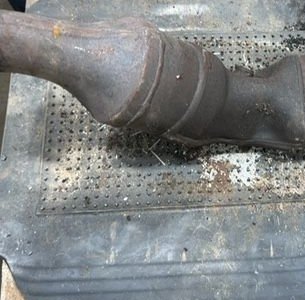
- The full body shot — both sides. Lay the converter flat or hang it. Shoot from directly above or directly in front. This shows overall size, shape, and whether it's a standard, large, or foreign unit. Two photos: one per side. Don't skip the second side.
- The end-pipe shot (substrate visible). Look down through the inlet or outlet pipe. Can you see the substrate (the honeycomb structure inside)? Photograph it. Buyers want to see if the substrate is intact, partially cracked, or rattling loose. A clean substrate is worth more. Let them see it.
- Condition close-up. If there's visible damage — dents, rust, torch cuts, welded repairs — photograph it clearly. Don't hide it. Buyers will catch it anyway, and surprises at the point of sale will cost you more than the damage itself.
- The batch or load overview (for multiple units). If you're selling more than one cat, take a wide shot of all units laid out together. Number them on a piece of tape or paper if you can. This helps buyers understand scale and organize their bids per unit.
That's it. Five to seven photos maximum, taken properly, will get you a real number. Trying to describe a converter in text while sending one blurry overhead shot is the old way. It doesn't work anymore — not if you want the best catalytic converter price in Canada.
Lighting, Angle, and Focus — The Technical Basics That Matter
Natural light is your best tool. Take photos outside on a cloudy day or in the shade — direct sunlight creates harsh shadows that wash out stamped serial numbers. If you're working inside, position the converter near an open bay door or under fluorescent shop lighting. Avoid flash directly on the unit. It reflects off metal and blurs the details you need most.
Angle matters more than most people realize. Serial numbers that are stamped into metal need to be photographed slightly off-direct-angle so the stamping reads as shadow contrast — not flat. Hold your phone about 15 to 20 degrees off perpendicular and check the preview before you commit to the shot. If the numbers look washed out, adjust your angle until the contrast comes back.
Focus manually if your phone allows it. Tap on the serial number in your camera app. Let the camera lock focus before you shoot. Motion blur is the number one reason quotes come back slow or vague — the buyer literally cannot read the number and has to ask you to reshoot.
How This Workflow Plays Out on a Scrap Metal Auction Platform
Here's the practical version of what good documentation looks like in action. Imagine an auto shop in Oshawa accumulates 18 spent catalytic converters over the course of a month. Mixed units — some domestic, some foreign, a couple of large-body diesel cats. In the past, the shop manager calls one buyer, reads off a rough description, and takes whatever number comes back. No competition. No data.
Now the same shop photos all 18 units following the process above. Serial numbers sharp, both-side body shots, substrate condition documented, full batch overview. That documentation goes onto a scrap metal auction platform where multiple vetted buyers can see exactly what's being offered. Each buyer knows the unit. Each buyer can look up the PGM content for those specific serial numbers. They're not guessing — they're bidding on data.
That's the environment where real price discovery happens. SMASH is built to create exactly that dynamic. Sellers who put in the effort to document properly get buyers who put in the effort to bid properly. The connection between photo quality and final offer is direct.
For Oshawa yards and shops wanting to understand local demand, it also helps to connect with Oshawa scrap metal services that understand the Ontario market and can guide you through the process.
Common Mistakes That Hurt Your Quote — and How to Avoid Them
Even experienced sellers make these errors. Here's what to watch for:
- Photographing through a bin. Don't. Pull each unit out individually. Buyers won't quote on a pile they can't sort visually.
- Cutting the serial off before you quote. Some converters have the serial number on the heat shield, not the body. If you've already removed the shield, you may have destroyed the most valuable piece of documentation on the unit.
- Sending screenshots of photos. Screenshots degrade image quality. Send original files directly from your camera roll.
- Assuming the buyer knows the make/model. Always include the vehicle year, make, and model if you know it — especially for OEM converters still in the housing. This gives buyers a second data point beyond the serial number and can only help your offer.
- Skipping the substrate check. A rattling substrate (you'll hear it if you shake the unit) means the honeycomb inside is broken down. That affects value. Document it honestly. Buyers factor this in regardless — it's better to price it correctly upfront than renegotiate after the fact.
If you want to read Canadian catalytic converter pricing guides that go deeper on how condition affects PGM recovery value, there's solid reference material available to help you understand what buyers are actually evaluating.
Checking Catalytic Converter Prices Today Before You List
Photo documentation is only half of the equation. The other half is timing. Platinum, palladium, and rhodium prices shift constantly — sometimes dramatically over short windows. What a unit was worth three weeks ago may not be what it's worth today. Before you submit photos and request a quote, it's worth understanding where the market sits.
Rhodium in particular has a history of extreme volatility. Palladium has softened over recent years but still represents a significant portion of value in gasoline engine converters. Platinum tends to be more stable but is dominant in diesel applications. Understanding which metals are in your specific units — which goes back to identifying serial numbers correctly — tells you which market moves affect you most.
To check current Canadian catalytic converter prices before you list, use resources that reflect the current spot market, not cached or outdated data. Market-aware sellers time their listings when PGM prices are trending up and use competitive auction formats to capture the top of the range.
Disclaimer: Catalytic converter prices fluctuate daily based on PGM spot prices and market conditions. Always verify current rates before accepting any offer.
If you're ready to stop leaving money on the table — whether you're clearing a single cat from a repair job or moving a full bin of cores from your Oshawa shop — the process starts with your phone and five good photos. Do that right, and platforms like SMASH do the rest. Get the best Canadian price for your catalytic converter by starting with a free quote at best-catalytic-converter-price.ca — it costs nothing to find out what your units are actually worth in today's market.
Frequently Asked Questions
Q: How do I find the serial number on my catalytic converter?
The serial number is usually stamped directly on the converter body or printed on an attached heat shield. On OEM converters, it may also appear on the exhaust pipe housing near the inlet flange. If you're having trouble locating it, check both sides of the unit and the top surface near the mid-body seam. Good lighting and a clean rag to wipe the surface often reveal numbers that aren't immediately visible.
Q: What affects catalytic converter prices today in Canada?
The three main factors are the current spot prices for platinum, palladium, and rhodium — the precious metals recovered during recycling — plus the condition of the substrate inside the unit and the specific make and model the converter came from. Foreign and large-body units typically contain higher PGM concentrations than standard domestic cats. Market conditions in October 2026 continue to reflect global PGM supply dynamics, so prices can shift week to week.
Q: Can I get a quote for catalytic converters in Oshawa without shipping them out?
Yes. Accurate photos and serial numbers allow most reputable buyers to provide a firm or near-firm quote before you move anything. If the buyer requires you to ship the unit before quoting, that's a red flag — it removes your negotiating position. Start with documentation-based quotes through a platform like SMASH to keep your options open.
Q: How many catalytic converters do I need to sell at once to get a good price?
There's no hard minimum. Single units can absolutely receive competitive quotes, especially if they're high-value foreign or diesel cats. That said, lots of five or more units tend to attract more active bidding because buyers can justify the logistics more easily. If you're an Ontario shop accumulating cores regularly, batching monthly can improve your results.
Q: Is it safe to sell catalytic converters online in Canada?
Yes, when you use a platform that vets its buyers and provides transaction documentation. Unverified buyers found through classifieds or cold calls carry more risk — for both price and payment security. Using a structured auction environment with documented buyers and auto-invoicing protects you on both ends of the transaction.
Stay current on scrap metal market trends and catalytic converter pricing in Canada — follow SMASH on LinkedIn at linkedin.com/company/scrap-metal-auction-sales-hub for industry updates and market insights.
```