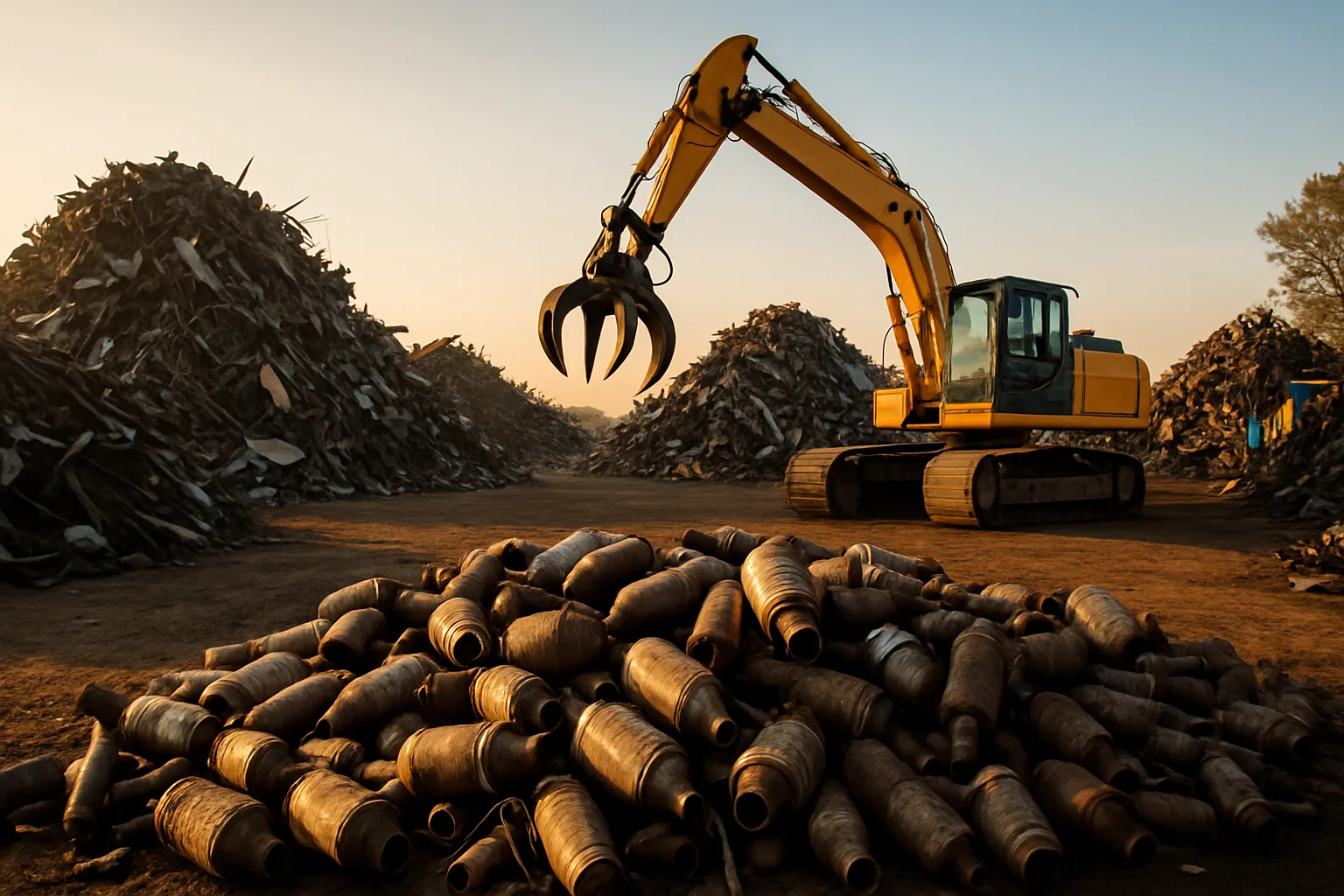
Why Proper Catalytic Converter Recycling Matters More Than You Think
Most people treat a dead catalytic converter like any other piece of scrap — toss it in a pile and figure it out later. But a catalytic converter isn't just scrap metal. It contains some of the rarest, most environmentally critical materials on the planet: platinum, palladium, and rhodium. How you dispose of it matters — for your wallet and for the environment.
The catalytic converter scrap value you're leaving on the table when you skip proper recycling isn't trivial. These precious group metals (PGMs) are finite. Mining them from the earth is destructive, expensive, and carbon-intensive. Recovering them from spent converters is the cleaner alternative — and it pays better than most people realize.
If you're in Chilliwack or anywhere across British Columbia sitting on a stack of cats, this guide breaks down why recycling them properly is the right call — and how to make sure you get paid fairly for doing it.
What's Actually Inside a Catalytic Converter — and Why It's Valuable
A catalytic converter does one job: convert harmful exhaust gases into less toxic emissions before they leave the tailpipe. The chemical reaction that makes this possible happens inside a ceramic or metalite substrate coated with PGMs. These metals act as catalysts — triggering reactions without being consumed.
That substrate holds small but meaningful quantities of:
- Platinum — used in diesel converters, stable and valuable
- Palladium — dominant in gasoline converters, highly reactive, price-sensitive
- Rhodium — the rarest, the most volatile in price, and often the most valuable by weight
When you send a converter through a legitimate recycling channel, a processor assay-tests the substrate and pays out based on recovered PGM content. That's real money tied to real commodities. The palladium price today and rhodium market directly affect what your load is worth — which is exactly why you want a buyer who's pricing against live metal markets, not offering you a flat rate that benefits them.
Improperly disposing of a cat — crushing it into mixed shred, landfilling it, or selling to a buyer who doesn't properly process it — means those metals don't get recovered. They're lost. That's an environmental waste problem as much as it is a financial one.
The Environmental Case for Recycling Catalytic Converters in British Columbia
British Columbia has some of the strongest environmental regulations in Canada. Improper disposal of catalytic converters — or selling to buyers who don't route them to proper smelters — puts you in murky legal territory and contributes to resource loss the industry can't afford.
Here's the reality of PGM mining: extracting one troy ounce of platinum from ore requires processing several tons of rock. The energy cost, land disruption, and water use are significant. When those same metals are recovered from a spent catalytic converter substrate through a controlled smelting and assay process, the environmental footprint is a fraction of primary mining.
Recycling one load of cats properly:
- Keeps PGMs in the supply chain without new mining
- Reduces industrial waste from improper disposal
- Ensures toxic ceramic dust from damaged substrates is handled safely
- Supports closed-loop metal supply chains that global manufacturers increasingly require
For auto shops, scrap collectors, and dismantlers in Chilliwack, proper recycling isn't just a feel-good choice. It's the responsible business practice — and it often pays better too when you're working with a transparent buyer who quotes against actual market values.
Want to understand how platforms are changing this? You can read Canadian catalytic converter pricing guides that break down how the pricing process actually works and what to look for in a legitimate buyer.
Catalytic Converter Scrap Value: Why Transparency Matters
Here's where the environmental and financial arguments converge. If you're getting a flat, low-ball offer from a single buyer with no explanation of how they arrived at that number, two things are likely happening: you're getting underpaid, and your material may not be getting properly processed.
Legitimate catalytic converter recycling involves:
- Identification — matching the converter to its application by serial number or physical characteristics
- Grading — assessing the substrate condition (aftermarket vs. OEM, damaged vs. intact)
- Assay — lab testing to confirm exact PGM content
- Smelting — recovering the metals in a controlled, regulated environment
- Payout — paying the seller based on recovered value, not a guess
When a buyer skips steps or keeps the process opaque, they capture more margin by paying you less. You never know what your catalytic converter scrap value actually was. That information gap is exactly what platforms like SMASH are built to close.
SMASH puts your load in front of vetted buyers who compete for it. Competition surfaces real market prices. If your cats are worth more because palladium is running high or rhodium spiked, a competitive auction reflects that — a single buyer's flat rate doesn't.
If you want to find the best price for your scrap in Canada, competitive pricing and documented inventory are the tools that get you there.
Sell Catalytic Converters Online: What the Process Looks Like in 2026
The days of calling one yard, accepting their number, and loading up your truck are fading. In 2026, sellers across British Columbia — from Chilliwack to Prince George — are using online platforms to document their inventory, get multiple bids, and sell with confidence.
Here's what a proper online sale process looks like:
- Photo documentation — clear images of the converter face and shell help buyers identify type and condition
- Serial number lookup — many platforms including SMASH use serial tracking to identify converters accurately before bidding begins
- Multiple vetted buyers — instead of one call, your load goes to multiple qualified buyers simultaneously
- Competitive bidding — buyers compete, which drives pricing toward actual market value
- Auto-invoicing — paperwork is handled digitally, reducing errors and delays
This process is better for the environment too. When buyers know exactly what they're bidding on — substrate type, converter origin, condition — they route material more accurately to the right processors. Guessing leads to misrouting. Misrouting leads to lower recovery rates.
If you're ready to sell catalytic converters online and want to understand what your load is actually worth, starting with documented inventory and a competitive process is the right move. You can also get the best catalytic converter price in Canada by making sure more than one buyer sees your material.
Chilliwack Sellers: How to Get Paid Fairly for Your Catalytic Converters
Chilliwack sits in the Fraser Valley — close enough to the Lower Mainland market that you have real buyer access, but far enough that local options can sometimes be limited or slow to reflect current PGM pricing. That geographic reality makes online selling especially useful for Chilliwack-area scrap collectors, auto shops, and recyclers.
If you're sitting on a mixed load of cats — OEM Honda converters, aftermarket units, diesel cats, or high-value domestic cores — the variation in value between them is significant. An OEM Honda or Toyota unit can be worth multiples of a cheap aftermarket replacement. Selling them as a mixed lot without identification means you're averaging down your best pieces.
A few practical steps for Chilliwack sellers:
- Sort your load by type where possible — OEM vs. aftermarket, domestic vs. import
- Photograph each converter showing the serial number and face
- Use a platform with serial number lookup to understand what you have before you sell
- Get at least two or three competing offers — don't accept the first number
- Check current market conditions — PGM prices move, and your timing matters
For Chilliwack and the wider British Columbia market, SMASH connects you to vetted buyers who price against live commodity data. No subscription fees. No guessing. If your load sells, SMASH earns — which means their incentive is aligned with getting you the right price.
Ready to check current Canadian catalytic converter prices and see what a competitive process looks like? Start there.
Disclaimer: Catalytic converter prices fluctuate based on PGM spot markets including platinum, palladium, and rhodium. Always check current rates before making a selling decision. Prices referenced in any guide are illustrative and not guaranteed.
Frequently Asked Questions
Q: What affects the catalytic converter scrap value of my converters in Canada?
The three biggest factors are the precious metal content (platinum, palladium, rhodium), the type and condition of the substrate, and current PGM spot prices. OEM converters from manufacturers like Honda, Toyota, and GM typically carry higher PGM loadings than aftermarket replacements, which means they're worth more at the time of recycling.
Q: How does the palladium price today affect what I get paid for my cats?
Palladium is the dominant PGM in most gasoline catalytic converters, so its spot price directly impacts payout. When palladium runs high, loads with high palladium content are worth significantly more. Working with a buyer who prices against live market data — not a fixed internal rate — ensures you capture that upside when it exists.
Q: Can I sell catalytic converters online from Chilliwack, British Columbia?
Yes. Online platforms allow you to document your inventory with photos and serial numbers, get bids from vetted buyers across the country, and complete the transaction without being limited to local yard pricing. For Chilliwack sellers, this opens up a wider buyer pool and better price discovery than a single local call would provide.
Q: What is catalytic converter scrap price by serial number and how does it work?
Serial number identification matches your specific converter to its make, model, and known PGM content based on OEM specifications. Buyers use this to price more accurately before they see an assay result. It also helps you sort high-value from low-value units in a mixed load so you're not averaging down your best pieces.
Q: Is it legal to sell scrap catalytic converters in British Columbia?
Yes, selling scrap catalytic converters is legal in British Columbia. However, buyers are required to maintain records of purchases under B.C. scrap metal dealer regulations, and you may be asked to provide ID and documentation. Selling through a documented, vetted platform protects you and ensures compliance.
If you're holding onto cats and wondering whether the process is worth it — it is. Proper recycling returns value from materials that would otherwise be lost, keeps harmful waste out of the wrong hands, and pays you fairly when you use a competitive process. Whether you're an auto shop in Chilliwack or a scrap collector working the Fraser Valley, the right platform makes a real difference.
Get the best Canadian price for your catalytic converter — get a free quote at best-catalytic-converter-price.ca and see what your load is actually worth.
Follow SMASH on LinkedIn for industry updates, PGM market insights, and scrap pricing news across Canada.