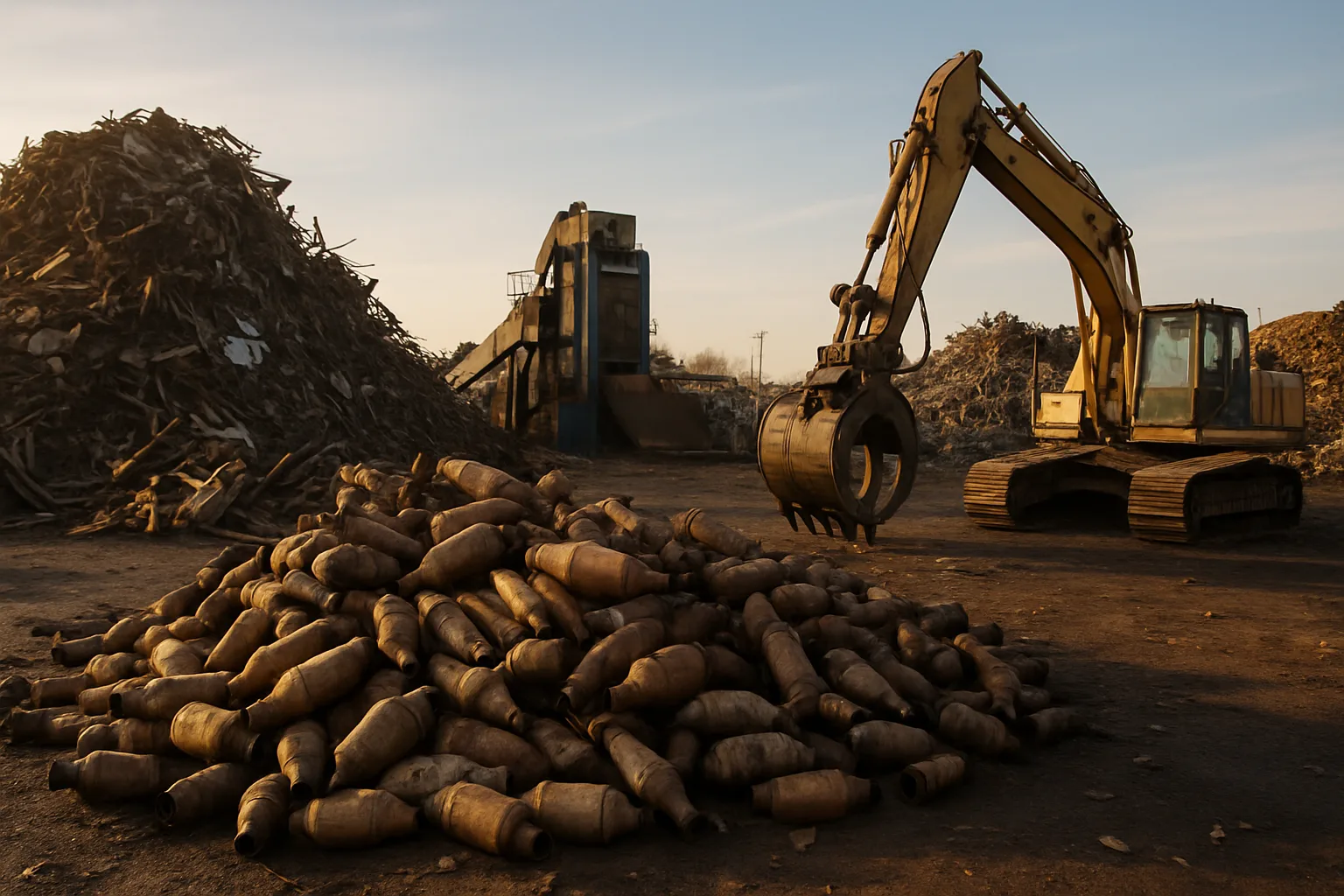
Why Your Phone Photos Directly Affect Your Cat Converter Quote
Most sellers leave money on the table before they ever talk to a buyer. Not because their catalytic converter isn't valuable — but because a blurry, poorly lit photo makes it impossible for a buyer to identify what they're looking at. When a buyer can't confirm the part, they quote low to protect themselves. That's just how it works.
If you're trying to get accurate cat converter prices in Kamloops, the photos you submit are doing the heavy lifting. A clear, properly documented converter tells a buyer: this seller knows what they have. It signals confidence. And confident sellers get better price discovery — because buyers can compete on a known quantity instead of guessing.
This guide walks you through exactly how to photograph your scrap catalytic converter so you get a quote that reflects your converter's actual catalytic converter scrap value — not someone's best guess at a worst-case scenario.
What Buyers Actually Look For in a Converter Photo
Before you grab your phone, understand what the person reviewing your quote actually needs to see. Catalytic converters are valued based on their precious metal content — primarily platinum, palladium, and rhodium. Every converter model has a different loading of these metals, and buyers identify the model from visible markings on the unit itself.
Here's what a buyer is trying to confirm from your photos:
- The OEM or serial number — stamped or engraved on the body of the converter, sometimes on a ceramic substrate end cap
- The substrate type — ceramic (honeycomb visible through the end) or metallic foil
- Physical condition — whether the converter has been gutted, rattles (indicating broken substrate), shows heat damage, or has been cut or modified
- The shell markings — manufacturer codes, heat shields, and any aftermarket identifiers
- Both pipe ends — to confirm the unit is intact and hasn't been tampered with
Miss any one of these and the buyer has to make assumptions. Assumptions cost you money. Platforms like SMASH make it easy to find the best price for your scrap in Canada precisely because the documentation process forces sellers to submit complete information — which gives multiple vetted buyers the confidence to bid aggressively rather than conservatively.
Step-by-Step: How to Photograph Your Catalytic Converter for a Quote
You don't need professional photography equipment. A modern smartphone camera is more than capable. What you need is good light, a clean surface, and a system. Follow these steps every time.
- Clean the unit before you shoot. Wipe off loose soot, dirt, and road grime with a rag. You don't need it spotless — you need the markings legible. A dirty converter with an unreadable serial number gets quoted as an unknown, which is never in your favour.
- Find a flat, neutral surface. Set the converter on concrete, plywood, or a workbench. Avoid shooting on gravel or grass — the converter gets lost in the background and the photo reads as unprofessional.
- Shoot in natural daylight. Overcast light is ideal — no harsh shadows, no blown-out reflections off the metal. If you're shooting indoors, position near a large open garage door. Avoid using your phone's flash directly on the unit — it washes out the stamped numbers.
- Take a full-body shot first. Get the whole converter in frame from a 45-degree angle. This establishes the overall condition and type — foil-body, standard direct-fit, diesel brick, or aftermarket universal.
- Shoot both pipe ends straight-on. One photo per end. Hold the camera at the opening so the buyer can see the substrate face directly. This confirms it hasn't been cored out — a critical detail that affects catalytic converter scrap value significantly.
- Close-up on the serial number. This is the most important shot. Get within 6–8 inches, tap to focus, and make sure the stamped or printed code is sharp enough to read on a screen. Take two or three attempts if needed. If the number is worn, photograph it at an angle with the light raking across the surface — this makes stamped text visible even when it's faded.
- Photograph any damage clearly. Dents, cracks, evidence of overheating, or a cut pipe? Document it honestly. Buyers find these things anyway during inspection. Showing it upfront builds trust and avoids a revised (lower) offer after the fact.
- If you have multiple units, photograph them separately. Never pile converters together for a single shot. Each unit needs its own documentation. A stack of five converters photographed as a group gives a buyer almost nothing useful to work with.
The Serial Number Shot: Getting It Right Every Time
Buyers identify converter models — and therefore their platinum, palladium, and rhodium content — from the serial or OEM number. In Kamloops and across British Columbia, yards and buyers see thousands of converters move through the market. The ones that get competitive quotes are the ones with readable numbers. The ones without readable numbers get bottom-of-market pricing, or no quote at all.
Serial numbers appear in different places depending on the converter type:
- OEM direct-fit converters — usually stamped on the body of the shell near the mid-section
- Foil-body converters — often printed on a label that may be partially burned off; photograph whatever remains
- Diesel catalysts (DPFs) — typically laser-etched or cast into the end cap
- Pre-cats / small cats — look on the inlet pipe flange or the small body section itself
If the number is genuinely unreadable after cleaning and angled lighting, note the vehicle make, model, year, and engine size when you submit. That context helps. It won't replace the serial number, but it narrows the identification significantly. This is where VIN lookup tools — available through platforms that handle scrap documentation properly — add real value. You can read Canadian catalytic converter pricing guides that break down how vehicle data affects converter value if you want to go deeper on this.
How Good Photos Affect the Quote You Receive
Here's the direct connection between photo quality and offer price. When a buyer reviews a submission, they're managing risk. An unidentifiable converter carries high risk — the buyer might pay too much for a low-yield unit, or miss out on a high-yield one they underbid. To manage that risk, they discount.
A fully documented converter with clear serial numbers, both pipe ends, and visible substrate condition removes most of that risk. The buyer can look up the exact model, confirm the precious metal loading in the database, and price it accordingly. That's how competition actually functions — and competition between buyers is what drives price discovery on platforms like SMASH.
If you're trying to understand how much your catalytic converter is worth as scrap, the honest answer is: it depends on what a buyer can confirm. Give them everything they need to confirm it. If you're in Kamloops and want to see what your converter is actually worth right now, you can check current Canadian catalytic converter prices and submit your documentation for a real quote.
The scrap metal prices today that matter for your converter are the live platinum, palladium, and rhodium spot prices — and those move daily. A complete photo package submitted today gets priced on today's market. A vague submission that requires back-and-forth might get priced on a worse day's data, or not at all.
What to Do After You Have Your Photos
Once you've got a solid photo set — typically six to eight images per converter — you're ready to submit. Before you do, run through this quick checklist:
- Can you read the serial number clearly on your own screen?
- Are both pipe ends visible and unobstructed?
- Is the overall condition of the shell clear?
- Have you documented any damage honestly?
- If you have multiple units, does each have its own separate photo set?
If yes across the board, you're ready. Submit to a platform that puts your converter in front of multiple vetted buyers — not just one local contact who has no incentive to sharpen their pencil. More buyers, more competition, better price discovery. That's not theory — that's how markets work.
For sellers in Kamloops, connecting with Kamloops scrap metal services that understand local logistics and buyer networks makes the whole process faster. You don't need to figure out shipping to Vancouver or Calgary on your own — that infrastructure already exists for you.
If you want to get the best catalytic converter price in Canada, the documentation process is where it starts. The photo is your first impression. Make it count. Prices fluctuate with precious metal markets — always verify current rates before finalizing any sale.
Disclaimer: Catalytic converter scrap values fluctuate based on live platinum, palladium, and rhodium spot prices. The information in this article reflects general market practices as of July 2026. Always confirm current rates before completing a transaction.
Frequently Asked Questions
Q: How many photos do I need to submit for an accurate cat converter price quote in Kamloops?
For most converters, six to eight photos cover everything a buyer needs: one full-body overview, both pipe ends straight-on, a close-up of the serial number, and any visible damage. If you're submitting multiple units, each one needs its own complete set. Submitting more documentation is almost always better than less.
Q: What if the serial number on my catalytic converter is worn off or damaged?
Try photographing the stamped area with light raking across the surface at a sharp angle — this technique makes worn impressions visible that won't show up under direct lighting. If it's genuinely unreadable, include the vehicle year, make, model, and engine displacement when you submit. It's not a perfect substitute, but it helps buyers narrow the identification and give you a more accurate quote.
Q: Does the condition of my catalytic converter affect its scrap value in British Columbia?
Yes — significantly. A converter with an intact substrate is worth more than one that has been rattled apart internally or cored out. Physical damage to the shell affects value less than substrate condition. Be honest about what you have and photograph any damage clearly. Buyers verify condition anyway, and accurate upfront documentation leads to firm offers rather than revised ones.
Q: How much is my old catalytic converter worth as scrap?
Catalytic converter scrap value varies widely depending on the vehicle it came from, the converter model, and the current spot prices for platinum, palladium, and rhodium — all three of which fluctuate daily. A small pre-cat from a compact car is worth far less than a large direct-fit from a diesel truck or a high-load unit from an SUV. The only way to get an accurate number is to submit your documentation with a clear serial number to a platform with multiple active buyers.
Q: Can I get a quote for multiple cat converters at once from Kamloops?
Yes, and it's common for auto shops and collectors to submit batches. Make sure each unit is photographed separately with its own serial number documented. Buyers price each converter individually based on its specific precious metal loading — a batch quote that lumps everything together typically results in average pricing, which underpays your high-value units and overpays your low-value ones. Separate documentation protects you.
Ready to turn your photos into a real number? Get the best Canadian price for your catalytic converter by submitting your documentation at best-catalytic-converter-price.ca — and let vetted buyers compete for your load instead of leaving it to one call and a gut feeling.
Stay current on scrap metal market movements and catalytic converter pricing trends by following SMASH on LinkedIn — practical updates for sellers and buyers across North America, without the noise.