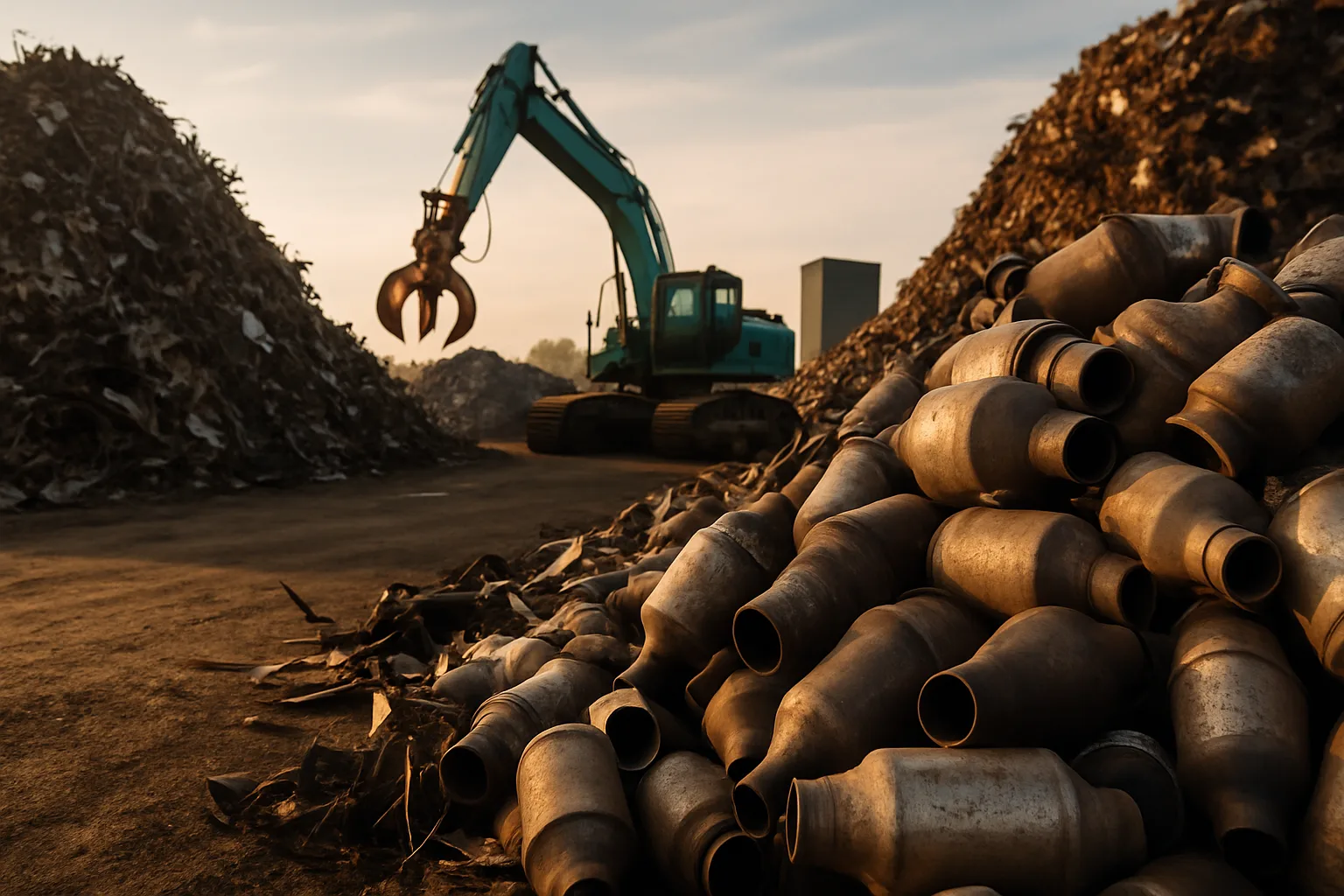
Why Auto Shops in Montreal Are Leaving Money on the Table With Their Scrap Cats
Most auto shops treat scrap catalytic converters like an afterthought. They pile up in the corner, get sold to whoever calls first, and nobody really knows if the price was fair. If your shop in Montreal pulls even a handful of cats per week, that approach is costing you real money. Understanding OEM catalytic converter value — and how to consistently capture it — is one of the most overlooked revenue levers in the trade.
This guide is for shops that are serious about doing better. Whether you're running a busy repair bay in the East End or managing a multi-location operation across Quebec, the principles are the same: document well, sell smart, and get your cats in front of more than one buyer.
What Determines OEM Catalytic Converter Value in 2026
Not all cats are worth the same. The spread between a low-value aftermarket unit and a high-value OEM converter can be dramatic — sometimes hundreds of dollars on a single piece. Three precious metals drive that spread: platinum, palladium, and rhodium. The concentration of each inside the ceramic substrate determines the assay value, and OEM units generally carry higher loadings than their aftermarket counterparts.
Here's what actually moves the number on any given cat:
- PGM (platinum group metal) content — the dominant price driver. Rhodium in particular has historically been the most volatile of the three.
- Vehicle make, model, and year — certain platforms (Toyota, Honda, some diesel trucks) are known for higher-grade substrates.
- OEM vs. aftermarket — OEM units from the factory typically command a premium. Aftermarket replacements often have significantly lower PGM loadings.
- Condition of the substrate — a blown-out or rattling cat loses value fast. Document condition before pricing.
- Current spot prices for platinum, palladium, and rhodium — these fluctuate daily. What a cat was worth in March may not be what it's worth today.
If you're relying on a single buyer's word for what your cats are worth, you're essentially letting them set the market. That's not a market — that's a negotiation you're losing before it starts. To get the best catalytic converter price in Canada, you need visibility into what multiple buyers are actually willing to pay.
Scrap Metal Inventory Management for High-Volume Shops
Here's where most shops fall apart on bulk cat sales: poor documentation. A buyer looks at an unsorted pile of cats with no photos, no VINs, no condition notes, and immediately discounts their offer. They're pricing in uncertainty. Give them certainty — and the price goes up.
Good scrap metal inventory management for catalytic converters isn't complicated. It just requires discipline at the point of removal. Here's a practical system that works:
- Tag at removal. The moment a cat comes off a vehicle, attach a tag with the year, make, model, and engine size. This is the VIN-linked data that tells a buyer what substrate they're buying.
- Photograph both ends and the body. Show the inlet, the outlet, and the shell condition. Cracked shells and blown substrates affect value — disclose it upfront instead of getting hit with a deduction later.
- Separate OEM from aftermarket. Sort your inventory before you try to sell it. Mixing high-value OEMs with low-grade aftermarket units in the same lot invites buyers to average down their offer.
- Track by serial or part number where visible. Some OEM cats have identifiable codes that experienced buyers recognize on sight. That transparency builds trust and supports higher bids.
- Log every unit in a running spreadsheet or dedicated tool. Volume adds up fast. A shop pulling ten cats a week accumulates over 500 units a year — that's a meaningful inventory position if managed correctly.
Platforms like SMASH are built for exactly this kind of documented, organized inventory. When you upload a lot with proper photos, VIN data, and condition notes, you're giving vetted buyers the confidence to bid aggressively. Sloppy inventory gets discounted. Clean inventory gets competed over.
The Problem With Selling Cats to One Buyer — and How Auctions Fix It
The old way goes like this: a buyer calls, you give them a count, they quote you a price, you say yes or no. Maybe you call a second buyer to check the number. Either way, you're not really running a competitive process — you're running a guessing game with limited information.
The SMASH scrap metal auction model flips that dynamic. Instead of you chasing buyers, vetted buyers compete for your inventory. That competition is what drives price discovery. It doesn't guarantee a specific outcome, but more buyers bidding on documented inventory tends to reveal what the market is actually willing to pay — not just what one buyer wants to pay.
For Montreal shops, this matters more than you might think. Quebec has its own concentration of recyclers and dealers, but the buyers willing to pay top dollar for high-value OEM cats aren't always local. A competitive auction format opens your lot to qualified buyers across North America, not just whoever happens to be within driving distance. Canada's B2B scrap recycling marketplace connects you with that wider pool without the cold calls.
There's no subscription fee with SMASH. You don't pay to list and hope for the best — the model only works when sellers win. That alignment matters when you're deciding where to move your bulk inventory.
Using Data to Know What Your Cats Are Actually Worth
If you've ever typed something like how much is my catalytic converter worth calculator free into a search bar, you already understand the problem: the information is scattered, delayed, and often based on spot prices that don't reflect real buyer behaviour. A calculator gives you a ballpark. A competitive auction tells you what buyers will actually pay today.
That said, benchmarking matters. Before you list anything, you should have a working sense of current value by category — OEM diesel cats, OEM gasoline cats, large foreign cats, small foreign cats, domestic cats. Each category has a different PGM profile and a different price range. Knowing the rough hierarchy helps you spot a lowball offer immediately.
To check current Canadian catalytic converter prices and understand how market conditions in 2026 are affecting scrap cat values, use every resource available — price guides, buyer conversations, and platforms that show you real transaction data. Don't rely on any single source. And remember: catalytic converter prices today can shift meaningfully from week to week depending on rhodium and palladium movements. Always verify before you commit a large lot.
Disclaimer: Catalytic converter prices fluctuate based on daily precious metal spot rates and market conditions. Always verify current rates before selling.
Practical Tips for Montreal Auto Shops Selling Cats in Bulk
If you're running a shop in Montreal and ready to move bulk inventory more strategically, here's what actually works in practice. These aren't abstract best practices — they're operational habits that consistently produce better outcomes.
- Build your lot before you sell. A lot of 30–50 well-documented cats attracts more buyer interest than selling five units at a time. Volume creates leverage.
- Don't sell in a down market if you can wait. PGM prices move. If rhodium has dropped sharply in the past week, holding your inventory for 10–14 days might make a meaningful difference on a large lot.
- Separate your A-grade OEM units. The highest-value cats in your pile — Toyota Prius, late-model Honda, certain diesel platforms — deserve their own lot. Don't blend them with low-grade units.
- Document damage honestly. A cracked substrate disclosed upfront gets a lower bid but closes cleanly. An undisclosed defect gets you a chargeback and a burned relationship with a buyer you'd want back.
- Know your Quebec GST/HST obligations. Scrap metal transactions have tax implications in Quebec. Make sure your invoicing reflects proper GST/QST handling — a platform with auto-invoicing built in reduces that administrative friction significantly.
- Use local context but don't limit yourself. Searching for catalytic converter buyers near me within 20 mi is a starting point, not an endpoint. The best buyer for your inventory might be in another province or another state. Cast the wider net.
For more detail on pricing strategies and how to position your inventory effectively, read Canadian catalytic converter pricing guides that break down the market by converter type, vehicle platform, and region.
Getting Montreal Shops Connected to the Right Buyers
You've got the inventory. You know it has value. The only question left is whether you're selling it into the right market. A single local buyer with no competition sets the price. A vetted pool of buyers competing in a structured auction reveals the price. That distinction — between what one buyer offers and what the market will actually bear — can be significant on a high-grade OEM lot.
SMASH helps shops across Quebec move from reactive selling to strategic selling. The platform handles the documentation workflow, the buyer vetting, the auction format, and the invoicing — so you're spending less time chasing buyers and more time running your shop. If you've been stacking cats and wondering whether you're getting fair value, this is the process change worth making.
For shops in and around the city, Montreal scrap metal services are available through our network to help you get started with a free quote and understand what your current inventory is worth in today's market.
Stop guessing at your OEM catalytic converter value. Get your inventory documented, get it in front of multiple buyers, and let competition do the work. When you're ready to move your next bulk lot, get the best Canadian price for your catalytic converter — start with a free quote at best-catalytic-converter-price.ca.
Frequently Asked Questions
Q: How do I know if my catalytic converter is OEM or aftermarket?
OEM converters are installed by the vehicle manufacturer and typically carry a part number stamped on the body or end cap that matches the original equipment spec. Aftermarket units often have generic or third-party branding. When in doubt, cross-reference the part number with the vehicle's VIN — OEM units generally command higher scrap value due to higher PGM loadings.
Q: What is the best way to sell bulk catalytic converters from a Montreal auto shop?
Sort your inventory by type (OEM vs. aftermarket, domestic vs. foreign), photograph each unit, and document vehicle data at removal. Then use a competitive platform like SMASH to put your documented lot in front of multiple vetted buyers. Selling to a single local buyer without competition rarely produces the best outcome on bulk lots.
Q: How much does catalytic converter value change day to day in Canada?
It can change significantly. OEM catalytic converter value is tied directly to platinum, palladium, and rhodium spot prices, which fluctuate on global commodity markets daily. Rhodium in particular has historically been the most volatile of the three. Always check current spot rates before committing a large lot to a buyer.
Q: Are there GST and QST implications for selling scrap catalytic converters in Quebec?
Yes. Scrap metal sales in Quebec are subject to GST and QST depending on the transaction structure and the parties involved. Auto shops should ensure their invoicing reflects proper tax handling. Platforms with built-in auto-invoicing can reduce the administrative burden and help ensure compliance.
Q: Is it worth holding catalytic converters to wait for a better market, or should I sell immediately?
It depends on your volume, storage situation, and current PGM price trends. If palladium or rhodium prices have dropped sharply, a short holding period may make sense if you have the space and can monitor the market. However, for most auto shops, the bigger gain comes from selling documented inventory competitively rather than trying to time the commodity market precisely.
Stay current on scrap metal market trends and catalytic converter pricing in Canada — follow SMASH on LinkedIn for industry updates, pricing insights, and practical tips for yards and shops across North America.