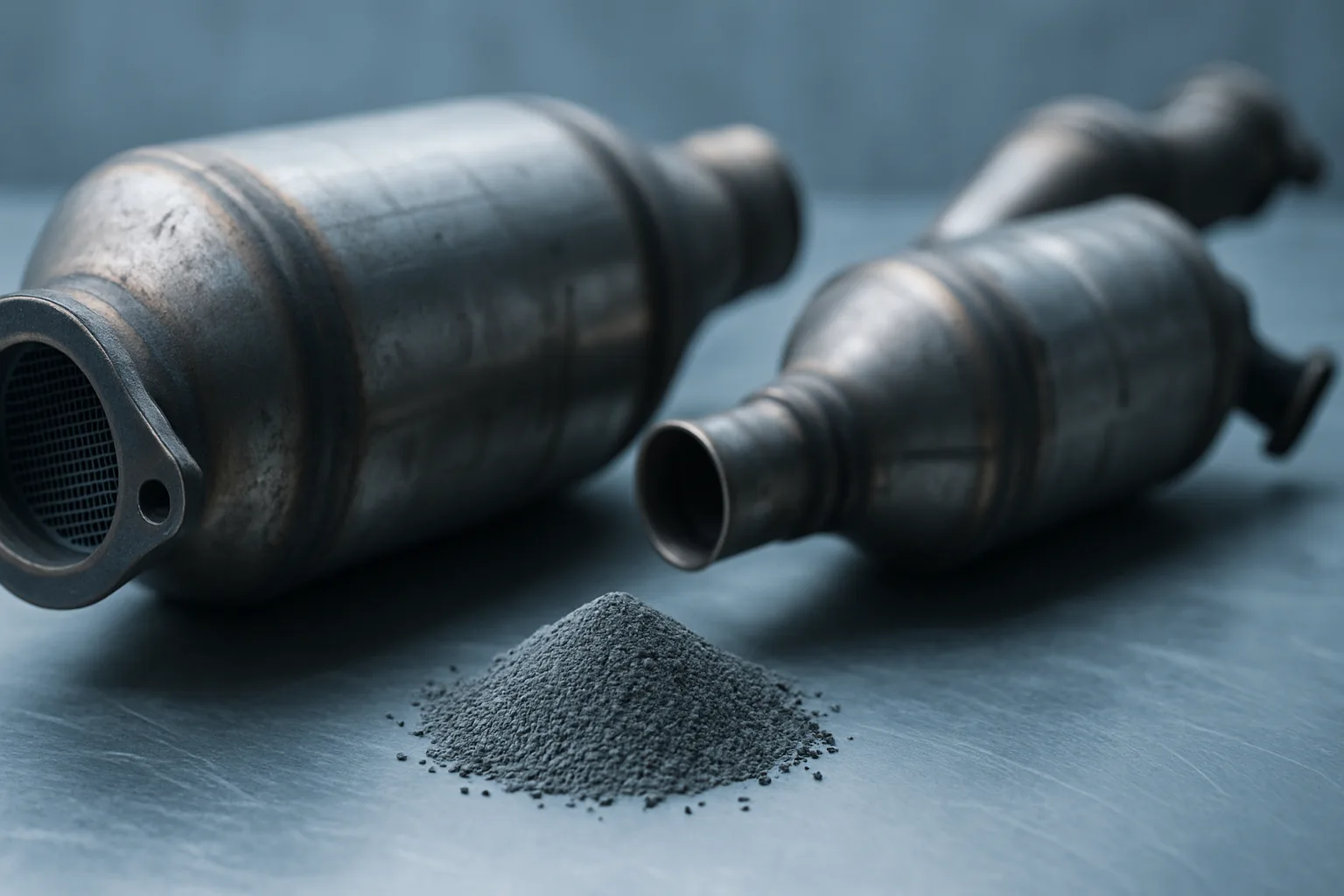
Hybrid Catalytic Converters Are Worth More — Here's Why the Rhodium Price Today Makes Them Even More Valuable
Most scrap sellers assume a catalytic converter is a catalytic converter. Pull it off, weigh it, get paid. But if you've been sitting on a hybrid cat and treating it like a standard unit, you may have left serious money on the table. The rhodium price today — still among the most expensive precious metals on the planet — is one of the biggest reasons hybrid catalytic converters command a premium in the scrap market.
Hybrid vehicles run differently than conventional gas-powered cars. That difference in how the engine operates directly affects the precious metal loading inside the converter. More precise emissions control requirements mean more platinum, palladium, and rhodium packed into each unit. For anyone in Sydney, Nova Scotia looking to sell a hybrid cat, understanding this distinction is the difference between a fair payout and a low-ball offer.
Before we get into the comparison, a quick note: catalytic converter prices fluctuate constantly based on live precious metal spot prices. Always check current Canadian catalytic converter prices before you sell — what was accurate last month may not reflect today's market.
How Hybrid Engines Create Higher OEM Catalytic Converter Value
In a standard internal combustion engine, the catalytic converter works continuously as long as the car is running. In a hybrid, the gas engine shuts off and restarts frequently — sometimes dozens of times per trip. Every cold start is an emissions event. The converter has to reach operating temperature quickly and handle irregular exhaust cycles without letting unburned hydrocarbons, carbon monoxide, or nitrogen oxides slip through.
To meet those stricter performance demands, hybrid OEM catalytic converters are engineered with higher precious metal loadings. Manufacturers use more rhodium specifically because of its unmatched ability to reduce nitrogen oxide emissions — and that function becomes critical in a start-stop combustion cycle. The result is a converter that, when it hits the scrap market, carries significantly more recoverable precious metal content than a standard unit from a comparable non-hybrid vehicle.
This is what drives OEM catalytic converter value for hybrids. It's not the brand name or the vehicle price tag — it's the actual grams of platinum, palladium, and rhodium inside the substrate. Hybrid converters tend to score higher on all three metals, with rhodium often being the most impactful on final payout given its spot price.
Why the Rhodium Price Today Matters More Than You Think
Rhodium is the wild card in catalytic converter pricing. Platinum and palladium get more media attention, but rhodium has historically traded at multiples above both — and it remains the highest-value metal per gram found inside a cat. When the rhodium price today is elevated, hybrid converter payouts move significantly. When it softens, the spread between hybrid and standard converters narrows — but rarely disappears entirely.
What makes this relevant for sellers is that the scrap value of your converter isn't a fixed number. It's a derivative of live spot prices for three different metals, all moving independently. A hybrid cat from a Toyota Prius or Ford Escape Hybrid contains a different ratio of those metals than a conventional unit from the same manufacturer. Buyers who specialize in catalytic converter recycling price that difference precisely — which is why selling to a general scrap buyer who quotes a flat rate per unit often leaves money behind.
Platforms like SMASH Recycling — where verified buyers bid on your metal bring competition into that equation. Instead of accepting whatever a single buyer quotes, you get multiple vetted buyers pricing your load based on actual metal content and current spot values. That's how sellers in Nova Scotia can access the same competitive market as yards in Toronto or Calgary.
Hybrid vs. Conventional: A Direct Comparison by Precious Metal Loading
To understand why hybrid cats are worth more, it helps to break down what you're actually comparing. Keep in mind these are general ranges based on typical industry data — always verify with a current catalytic converter price list by serial number before selling, since exact loadings vary significantly by vehicle, model year, and manufacturer.
- Rhodium: Hybrid converters typically contain noticeably higher rhodium loadings than their conventional counterparts in the same vehicle class. Given that rhodium trades at an extreme premium relative to other PGMs (platinum group metals), even small differences in grams translate to large price swings.
- Palladium: Both hybrid and conventional gasoline converters use palladium as a primary oxidation catalyst. Hybrids tend to use more, but the gap is smaller than with rhodium.
- Platinum: More common in diesel converters, but present in hybrids as well. Loadings vary by manufacturer and emissions target.
- Substrate size and density: Hybrid converters often use a denser substrate (higher cell-per-inch count) to maximize surface area and catalyst contact. More substrate area means more precious metal coating — and more value per unit.
- Close-coupled positioning: Many hybrid cats are positioned closer to the engine to heat up faster during cold starts. This placement means the substrate takes more thermal stress, but it also means manufacturers load it more aggressively to ensure performance.
The bottom line: a hybrid catalytic converter from a mid-size SUV can be worth substantially more than a standard converter from an equivalent non-hybrid vehicle. Serial number identification is the most reliable way to confirm exactly what you have before you sell.
How to Sell Catalytic Converters Online and Get Accurate Pricing in Nova Scotia
If you're in Sydney or anywhere in Nova Scotia, the local scrap market has historically been thinner than in major urban centres. Fewer buyers means less competition, and less competition means lower offers. That's the straightforward reality. But selling catalytic converters online changes that dynamic entirely.
When you list through a platform like SMASH, your hybrid converter isn't priced by whoever happens to answer the phone at a local yard. It's priced by verified buyers across Canada who specialize in precious metal recovery and understand exactly what a Prius converter or an Escape Hybrid cat is worth at today's PGM spot prices. That's a fundamentally different transaction — and for high-value hybrid units, the difference in your payout can be substantial.
Here's what the process looks like for sellers in Nova Scotia:
- Identify what you have. Use the serial number stamped on the converter body to look up the specific unit. A catalytic converter price list by serial number will show you the general value tier and precious metal profile.
- Document the condition. Photo documentation matters. A clean, undamaged hybrid cat with an intact substrate will attract better bids than one that's been dropped or rattled loose. Buyers want to see what they're bidding on.
- Get it in front of multiple buyers. This is the step most sellers skip. One call to one buyer is not price discovery — it's a guess. SMASH puts your load in front of vetted buyers who are actively competing for quality hybrid converters.
- Understand the payout structure. Catalytic converter recycling involves assay and refining — the final value is based on actual recovered precious metals. Make sure your buyer is transparent about how they calculate your return.
To get the best catalytic converter price in Canada, you need both accurate identification and genuine market competition. One without the other leaves you guessing.
Common Hybrid Models With High Scrap Catalytic Converter Value in Canada
Not every hybrid converter is created equal. Some of the most commonly traded high-value hybrid cats in the Canadian market come from vehicles that were popular over the past decade and are now cycling into the recycling stream in volume. If you've got any of these on your lot or in your garage in Sydney or surrounding Nova Scotia communities, pay close attention before you sell.
- Toyota Prius (all generations): The benchmark hybrid cat. Well-documented, widely traded, and consistently among the higher-value units in the market due to precious metal loading and OEM standards.
- Toyota Camry Hybrid and Highlander Hybrid: Larger displacement means more converter substrate. These often carry strong PGM content, particularly in the main converter unit.
- Ford Escape Hybrid and Fusion Hybrid: North American production hybrids that circulate heavily in the Canadian scrap market. Value varies significantly by year and configuration.
- Honda CR-V Hybrid and Accord Hybrid: Newer Honda hybrids use high-efficiency converters with strong palladium and rhodium profiles.
- Lexus hybrid vehicles (RX, ES, NX): Premium OEM converters with high precious metal loadings. These often rank among the top-tier units for catalytic converter scrap price in Canada.
- Chevrolet Volt and Silverado Hybrid: Less volume in the market but notable for converter specifications that exceed standard ICE-only models.
If you're unsure what you have, don't guess — and don't sell based on a flat-rate quote. Use the serial number, look up the unit, and bring it to market properly. To read Canadian catalytic converter pricing guides that break down specific vehicle types and metal content, start with solid research before you commit to a price.
Don't Undersell Your Hybrid Cat — What SMASH Does Differently
The single biggest mistake sellers make with hybrid converters is treating them like commodity scrap. They're not. A hybrid cat is a precision-engineered emissions device loaded with metals that trade on global commodity markets. If you sell it to the first buyer who makes an offer without knowing what the rhodium price today actually means for your specific unit, you're negotiating blind.
SMASH approaches catalytic converter sales the way they should be handled — with documentation, competition, and transparency. Serial number tracking, photo documentation, vetted buyers, and an auction format that lets the market determine your price rather than a single buyer's margin target. No subscription fees. The platform only benefits when you get a better result.
For sellers in Sydney, Nova Scotia, and across the province, that access to a national buyer pool is the practical difference between a local yard's take-it-or-leave-it offer and a competitive bid that reflects what your hybrid converter is actually worth on today's market.
If you're holding hybrid cats and haven't gotten a proper quote, now is the right time. Precious metal markets move fast, and a high-value converter sitting in a bin isn't earning anything. Get the best Canadian price for your catalytic converter — get a free quote at best-catalytic-converter-price.ca and find out what your hybrid units are actually worth.
Frequently Asked Questions
Q: Why is the rhodium price today so important for hybrid catalytic converter values?
Rhodium is one of the rarest and most valuable platinum group metals — and hybrid converters tend to contain higher concentrations of it than conventional units. Because rhodium trades at a significant premium over platinum and palladium, even small fluctuations in the rhodium spot price have an outsized effect on your converter's scrap value. Always check live PGM prices before agreeing to a sale.
Q: How do I know if my hybrid catalytic converter is worth more than a standard one?
The most reliable method is serial number identification. The serial number stamped on the converter body corresponds to a specific unit with a documented precious metal profile. A catalytic converter price list by serial number will show you the value tier and approximate PGM content so you can compare bids with actual data instead of guesswork.
Q: Can I sell my catalytic converter online if I'm in Sydney, Nova Scotia?
Yes — and online selling is often the best option for sellers in Sydney and other parts of Nova Scotia, where the local buyer pool is limited. Platforms like SMASH connect you with vetted buyers across Canada who compete for your converter, which typically produces a better outcome than a single local quote. Proper documentation (photos, serial number, condition notes) helps attract stronger bids.
Q: What's the difference between OEM catalytic converter value and aftermarket value?
OEM (original equipment manufacturer) converters are built to strict emissions standards and contain measurable, consistent loadings of platinum, palladium, and rhodium. Aftermarket converters use far lower precious metal content to hit a lower price point. In the scrap market, OEM converters — especially from hybrid vehicles — are significantly more valuable than aftermarket replacements, which are often worth a fraction of the price.
Q: How often do catalytic converter scrap prices change in Canada?
Scrap prices for catalytic converters move with live precious metal spot markets, which trade continuously. Prices can shift meaningfully within a single week based on global PGM supply and demand. This is why it's important to get a current quote rather than relying on prices you heard about last month — and why selling through a competitive platform rather than a single buyer gives you the best chance of capturing today's market value.
Follow SMASH on LinkedIn for ongoing scrap metal market updates, PGM price insights, and catalytic converter industry news across Canada.