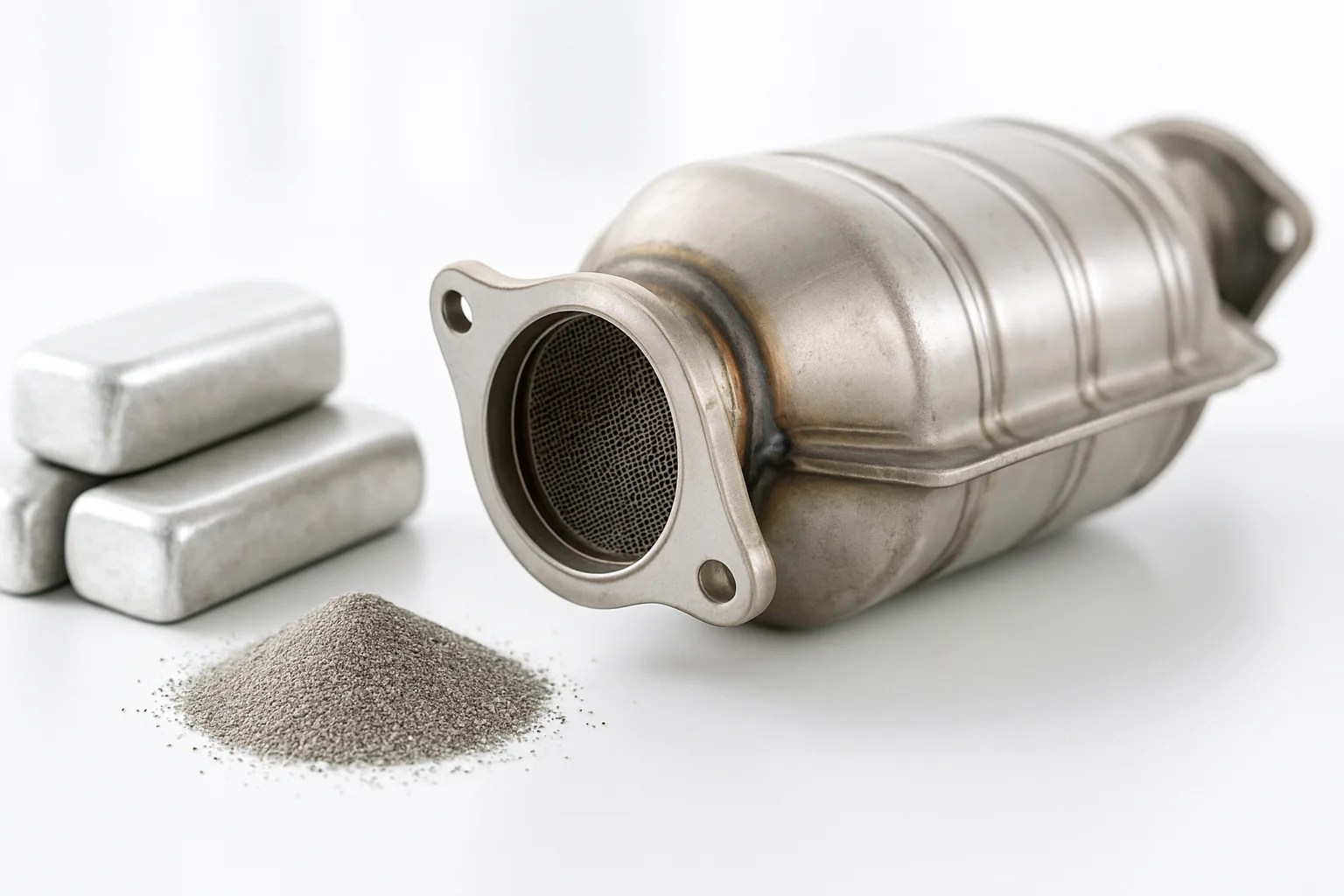
Most scrap sellers assume a catalytic converter is a catalytic converter. Grab it off the car, toss it in a pile, sell it by the lot. But hybrid vehicle cats are a different animal — and if you're treating them the same as a standard gas engine cat, you're likely leaving serious money on the table.
The OEM catalytic converter value on a hybrid unit often runs significantly higher than its conventional counterpart. The reason comes down to chemistry, engine design, and how hybrid systems actually work. This guide breaks down exactly why hybrid cats carry more precious metal content, what that means for catalytic converter prices today in Canada, and how sellers in Surrey and across British Columbia can get the best return when it's time to sell.
How Hybrid Engines Change the Catalytic Converter Equation
In a standard gas-powered vehicle, the engine runs continuously. Exhaust flows through the catalytic converter at a relatively consistent rate, and the converter operates within a predictable temperature range. The catalyst — a honeycomb substrate coated in platinum, palladium, and rhodium — converts harmful emissions into less toxic gases through a chemical reaction that requires heat.
Hybrid vehicles don't work that way. The internal combustion engine shuts off and restarts constantly as the system switches between gasoline power and electric drive. Every time the engine fires back up, it runs cold for a short burst before reaching operating temperature. Cold starts are the enemy of emissions performance — the catalyst needs heat to work, and without it, unburned hydrocarbons pass straight through.
To compensate, hybrid OEM catalytic converters are engineered with a higher precious metal loading. More platinum, more palladium, and often more rhodium per square inch of substrate surface. The goal is faster light-off — the temperature threshold where the catalyst becomes active. Higher precious metal density means the converter starts working sooner, even during those cold engine restarts. The emissions compliance requirement forces the chemistry. The chemistry means more metal. More metal means higher scrap value.
Platinum, Palladium, and Rhodium: What's Actually Inside a Hybrid Cat
The three core precious metals inside any catalytic converter are platinum (Pt), palladium (Pd), and rhodium (Rh). Each plays a distinct role in the emission conversion process. Platinum and palladium handle oxidation reactions — converting carbon monoxide and hydrocarbons into carbon dioxide and water. Rhodium handles reduction — converting nitrogen oxides back into nitrogen gas.
In a conventional gasoline cat, precious metal loading varies by manufacturer and engine size, but hybrid cats from major OEMs — Toyota, Honda, Ford, Hyundai, Kia — tend to run heavier. Some hybrid units contain two or even three separate catalyst stages, each requiring its own precious metal washcoat. The cumulative loading can be substantially higher than a single-stage conventional unit from the same vehicle class.
Rhodium deserves special attention. It's the rarest of the three, and its spot price has historically been the most volatile. When you're evaluating the true cat converter value of a hybrid unit, rhodium content often drives the premium. A hybrid cat with elevated rhodium loading in a tight rhodium market can be worth multiples of a standard converter from a similar-sized engine. The metals market shifts constantly — that's why checking current Canadian catalytic converter prices before you sell matters more than most people realize.
OEM Catalytic Converter Value: Why Brand and Model Still Drive the Number
Not every hybrid cat is created equal. The OEM catalytic converter value depends heavily on the vehicle it came from. Toyota Prius cats — particularly earlier generation units — have long been targeted for theft precisely because of their known precious metal content and the volume of Prius vehicles on the road. But other hybrid platforms carry significant value too, and the numbers shift with spot prices for platinum, palladium, and rhodium.
Here's what factors determine the value of a hybrid cat at the point of sale:
- Vehicle make and model — OEM specs vary significantly between manufacturers
- Engine displacement and emission standard — larger engines and newer emission tiers often mean more loading
- Number of catalyst stages — some hybrids run pre-cats, main cats, and underbody cats separately
- Condition of the substrate — cracked, melted, or severely poisoned substrates reduce recoverable metal
- Current spot prices for Pt, Pd, and Rh — the metals market moves daily
- Serial number and OEM part number — processors use these to identify known high-value units
This is where having a reliable Canadian catalytic converter pricing guide becomes a real advantage. Walking into a sale blind — without knowing what model you have or what the metals are trading at — puts you at the mercy of whoever's making the offer. That's the old way of doing this. There's a better approach.
Scrap Metal Inventory Management for High-Value Hybrid Cats
If you're an auto recycler, scrap collector, or shop in Surrey running any volume of hybrid units through your operation, scrap metal inventory management stops being optional and starts being a competitive advantage. Hybrid cats are high-value, high-theft-risk items. Treating them like generic scrap — untracked, undocumented, thrown in a barrel — creates real problems when it's time to sell and impossible problems if something goes missing.
Proper documentation for hybrid cats should include:
- VIN from the donor vehicle (links the cat to a verifiable source vehicle)
- OEM part number or serial number from the converter itself
- Photo documentation — both ends of the unit, the substrate visible through the inlet
- Condition notes — any visible damage, cracking, or contamination
- Date of removal and source yard or location
This level of documentation doesn't just protect you legally — it makes your inventory more attractive to serious buyers. A processor evaluating a lot of hybrid cats wants confidence in what they're buying. Documented, serialized, photo-verified units close faster and at better prices. Platforms like SMASH are built around exactly this kind of documented inventory workflow, with VIN lookup and serial tracking baked into the process. That's the SMASH way — transparency that creates competition, not a single buyer taking your word for it.
How Sellers in Surrey Are Getting Better Prices for Hybrid Cats
Surrey is one of the most active auto recycling markets in British Columbia. The density of dealerships, independent shops, and private collectors in the Lower Mainland means there's consistent volume of hybrid vehicles moving through the scrap pipeline. That's an opportunity — but only if you're selling through a process that creates real price competition.
The old approach: pull the cat, call one buyer, take whatever number they give you. If you don't know the spot price for rhodium today, you're negotiating blind. The buyer knows. You don't. That's not a fair transaction — it's a one-sided guess dressed up as a quote.
Surrey scrap metal services through a competitive platform like SMASH change that dynamic. Instead of one phone call to one buyer, your documented inventory goes in front of vetted buyers who compete against each other. More buyers means better price discovery. Competition can help reveal the market. And for hybrid cats — where the value spread between a low-ball offer and a fair market offer can be substantial — that competition matters enormously.
If you want to get the best catalytic converter price in Canada, you need a process that creates competition, not one that eliminates it. To find the best price for your scrap in Canada, start with documented inventory and a platform built for competitive selling.
Disclaimer: Catalytic converter prices fluctuate daily based on precious metal spot prices. Always check current rates before committing to a sale. The values discussed here reflect general market dynamics and should not be taken as guaranteed pricing.
Frequently Asked Questions
Q: Why do hybrid catalytic converters have a higher OEM catalytic converter value than standard gas cars?
Hybrid engines start and stop frequently, creating cold-start conditions that require faster catalyst activation. OEM engineers compensate by using higher precious metal loading — more platinum, palladium, and rhodium per unit — which directly increases the scrap value of the converter when it reaches end of life.
Q: What are catalytic converter prices today for hybrid units in Canada?
Prices vary significantly by vehicle make, model, and current spot prices for platinum, palladium, and rhodium — all of which move daily. Rather than relying on outdated price lists, check current rates through a reputable Canadian pricing platform. Competitive auction formats through SMASH can also help surface the real market rate rather than a single buyer's estimate.
Q: Are hybrid catalytic converters harder to sell in Surrey than standard units?
Not harder — but they do require more care in identification and documentation. Buyers and processors want to know exactly what they're getting before they commit to a price. Hybrid units with verified VINs, OEM part numbers, and photo documentation consistently attract more serious bids. Surrey's active recycling market means there's real buyer interest — you just need the right selling process to reach them.
Q: Does a cracked or damaged hybrid catalytic converter still have scrap value?
Yes, but the value is reduced. Damaged substrates — cracked, melted, or severely contaminated — yield less recoverable precious metal during processing. A physically intact hybrid cat with a clean substrate will always command a better price than a damaged unit from the same vehicle. Document the condition honestly and let competitive bidding determine the fair market number.
Q: How does SMASH help with selling scrap catalytic converters in British Columbia?
SMASH is a vetted buyer auction platform — no subscription fees, no single-buyer take-it-or-leave-it offers. You document your inventory (VIN, serial numbers, photos), and vetted buyers compete for your loads. For high-value items like hybrid catalytic converters in British Columbia, that competition can make a meaningful difference in what you actually walk away with. SMASH only wins when you win.
If you're sitting on hybrid cats from your yard, shop, or collection route, the market is there — but you need to meet it with documented inventory and real buyer competition. Take a few minutes to get the best catalytic converter price in Canada with a free quote at best-catalytic-converter-price.ca. Know what you have. Know what it's worth. Then sell it right.
Stay sharp on scrap metal market moves — follow SMASH on LinkedIn for industry updates, precious metal trends, and catalytic converter market insights across Canada.