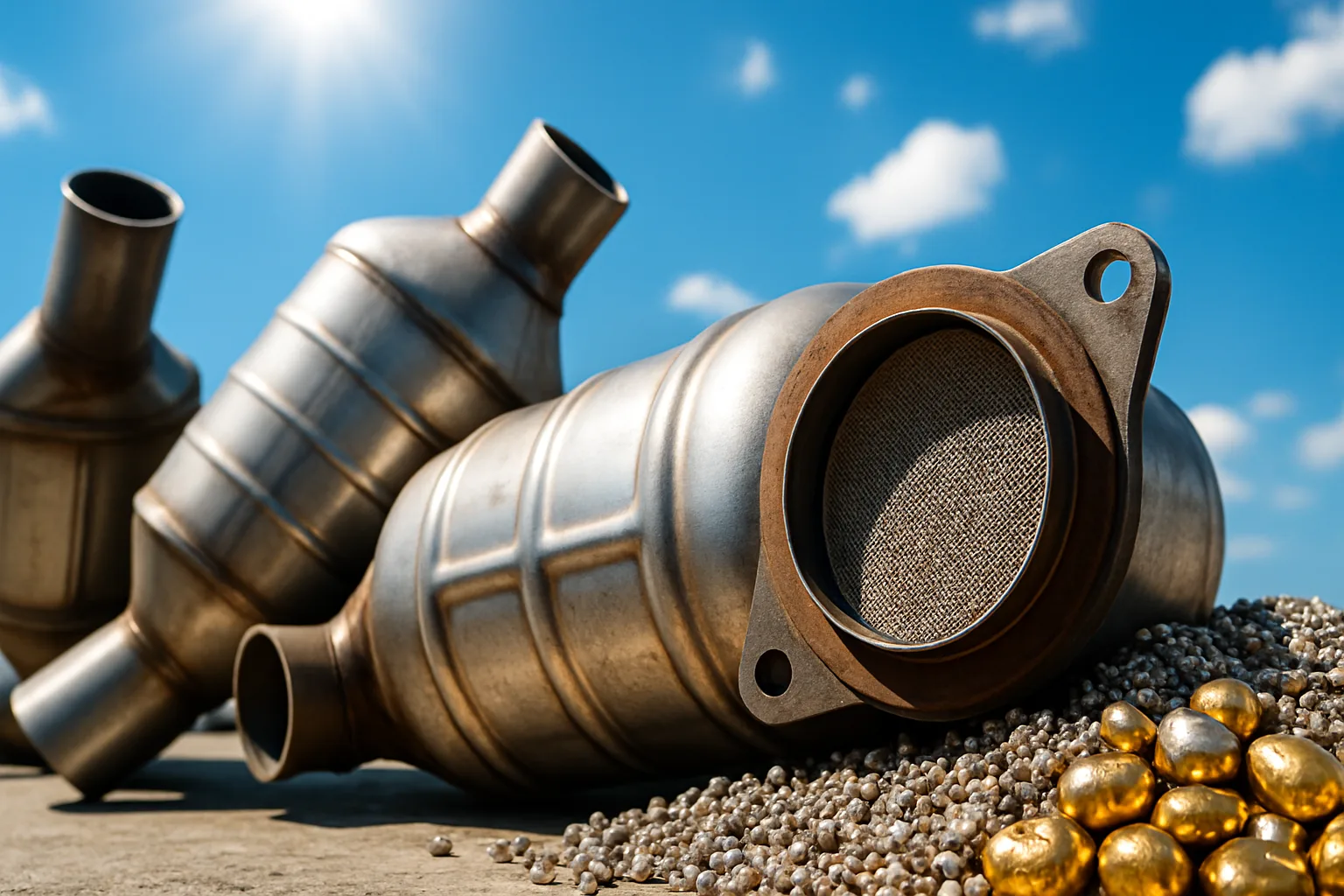
Why Emissions Rules Are Pushing Catalytic Converter Scrap Value Higher in 2026
Most people selling a scrap cat converter are thinking about one thing: what's it worth today? But the answer to that question is being written in regulatory offices, not just on metal exchanges. Emissions standards across North America and globally are tightening — and that's directly moving the needle on cat converter prices in St. John's and across Canada. If you're sitting on a pile of cats, or you pull one converter a week out of shop vehicles, this context matters to your bottom line.
Platinum group metals — platinum, palladium, and rhodium — are what make a catalytic converter work. They're also what make it valuable as scrap. And right now, the forces shaping demand for those metals are bigger than any single mine or market. Regulations are the engine. Understanding how they work helps you time your sales and choose your buyers more wisely.
What Emissions Regulations Actually Do to Platinum Group Metal Demand
Internal combustion engines produce a toxic cocktail of exhaust gases — carbon monoxide, nitrogen oxides, hydrocarbons. A catalytic converter's job is to convert those gases into less harmful compounds before they exit the tailpipe. Platinum, palladium, and rhodium are the catalysts that make those chemical reactions happen. No substitute material does the job as efficiently at scale — at least not yet.
When governments tighten emissions standards, automakers have to load more PGM content into each converter to meet the stricter thresholds. That's not a theory — it's engineering. Stricter limits on NOx and particulate matter mean more catalyst surface area, which typically means more PGM loading per unit. The result: each converter coming off a newer vehicle carries more recoverable metal than the equivalent unit from a decade ago.
Here's why that matters for the scrap side:
- Higher PGM loading in new vehicles means future scrap converters will carry more value per unit.
- Increased industrial demand for PGMs tightens supply from mining — which supports scrap metal prices today.
- Regulatory pressure in emerging markets (India, Brazil, Southeast Asia) is expanding the global consumer base for PGMs, reducing available supply for North American buyers.
- Recycled PGMs become a more critical supply source when mined supply tightens — giving scrap a strategic role in the supply chain.
This is what's behind the long-term floor under catalytic converter scrap value. It's not hype. It's supply and demand shaped by policy.
The 2026 Regulatory Landscape Driving PGM Demand Right Now
In 2026, emissions regulations are more aggressive than at any point in the past two decades. The U.S. EPA's light-duty vehicle emissions rules — phased in through the mid-2020s — have pushed automakers to engineer cleaner exhaust systems. Canada's federal emissions standards, aligned closely with U.S. thresholds, apply directly to vehicles on the road in Newfoundland and Labrador and every other province.
Euro 7 standards, which took effect in Europe, have ripple effects globally. Vehicle platforms are often shared across markets, meaning that a stricter European standard pushes PGM loading upward on global production lines — including vehicles sold in Canada. Even if you never think about European policy, it's affecting the converter in the car you're scrapping today.
Heavy-duty vehicles — trucks, buses, commercial equipment — face their own tightening standards. These vehicles carry significantly larger converters with higher PGM content. If your shop services fleet vehicles or heavy equipment, those cats at the back of your shelf may be worth more than you think. It's worth getting an accurate assessment rather than guessing based on size alone.
To check current Canadian catalytic converter prices and understand how today's market reflects these regulatory pressures, don't rely on a single quote from a single buyer. The spread between buyers can be significant.
How This Affects Cat Converter Prices in St. John's Specifically
St. John's operates within the same Canadian regulatory framework as every other province, which means the same emissions rules that apply in Toronto or Calgary apply here. Vehicles in Newfoundland and Labrador go through the same regulatory transitions, carry the same converters, and generate the same scrap value when they're retired.
What's different about selling from St. John's is geography. The island creates logistical constraints that can — if you're not careful — limit your buyer pool. A smaller local buyer pool means less competition for your loads, which can mean lower offers. That's the core problem for anyone trying to sell catalytic converters near me in a market as geographically isolated as St. John's.
The solution isn't to accept less. It's to reach more buyers. Online auction platforms built for the scrap industry — like SMASH, where you can compare scrap metal bids from Canadian buyers — connect St. John's sellers with vetted buyers across the country. Geography stops being a disadvantage when your cat is visible to a national market, not just whoever answers the phone locally.
Local yards in St. John's can be a starting point for pricing, but they shouldn't be your only data point. The catalytic converter scrap value you're offered locally may not reflect what competitive buyers across Canada would pay for the same material.
Platinum, Palladium, and Rhodium: What Each Metal Contributes to Your Cat's Value
Not all catalytic converters are worth the same — and the reason comes down to which PGMs are inside and how much. Understanding the basics helps you have a more informed conversation with buyers and avoid leaving money on the table.
Platinum has historically been the foundational PGM in catalytic converters, particularly in diesel vehicles. Diesel cats tend to carry more platinum loading relative to other PGMs. If you're pulling converters from diesel trucks or commercial vehicles in Newfoundland and Labrador, platinum content is a key value driver.
Palladium became the dominant PGM in gasoline vehicle converters through the 2010s and 2020s, largely due to tightening emissions standards for petrol engines. Palladium prices have been highly volatile in recent years — at various points, palladium has commanded the highest per-ounce price of the three. A standard gasoline passenger car converter is typically a palladium-heavy unit.
Rhodium is the smallest component by volume but often the highest value per ounce. Rhodium is critical for reducing nitrogen oxide emissions — one of the primary targets of modern emissions regulations. As NOx standards tighten, rhodium demand remains firm. Even small amounts of rhodium in a converter can represent significant value.
The ratio of these three metals in your converter depends on the make, model, year, and engine type. This is why VIN lookup tools and serial number tracking — features built into platforms like SMASH — matter so much. They allow buyers to accurately assess what's in the converter, which supports better pricing for sellers.
To read Canadian catalytic converter pricing guides that break down how these metals affect your payout, you'll find real context for the numbers you're seeing in the market.
How to Maximize Your Sell Catalytic Converter Price in a Competitive Market
Understanding the regulatory backdrop is useful. But what actually moves the needle on what you get paid is how you approach the sale. Here's what makes the difference between a mediocre payout and a strong one:
- Document your inventory properly. Photo documentation, serial numbers, and vehicle sourcing information give buyers confidence. A well-documented load commands better offers than a pile of unmarked cats.
- Get multiple bids. Never accept the first offer as the market rate. Competition is the mechanism that reveals true value. One buyer's quote is not the market — it's one opinion.
- Know what you have before you sell. Understand whether you're holding diesel cats, gasoline cats, or a mix. Large truck converters and certain OEM units can carry significantly higher value.
- Use an auction format when your volume justifies it. When buyers compete for your load, price discovery happens in your favour. That's the difference between calling one buyer and letting the market set the price.
- Time your sale with awareness. PGM markets move. If you have flexibility on timing, watching PGM price trends can inform when you go to market. Not every seller has this luxury — but awareness doesn't cost anything.
SMASH is built around exactly this model: vetted buyers, competitive bidding, documented inventory, and transparent outcomes. For sellers in St. John's trying to get the best catalytic converter price in Canada, connecting with a national buyer pool through a structured auction process addresses the core geography problem directly.
Emissions regulations aren't going anywhere. If anything, they'll tighten further through the late 2020s as governments chase net-zero targets. That means PGM demand from new vehicle production will remain strong — and recycled PGMs from scrap converters will continue to play a critical supply role. The scrap cat you sell today is feeding a supply chain that global industry depends on. You should be paid accordingly.
Disclaimer: Catalytic converter prices fluctuate with PGM spot prices and market conditions. Always check current rates before selling.
Frequently Asked Questions
Q: Do emissions regulations actually affect what I get paid for a scrap catalytic converter in St. John's?
Yes — indirectly but meaningfully. Stricter emissions rules require higher PGM loading in new converters, which increases industrial demand for platinum, palladium, and rhodium. That sustained demand supports the spot prices that determine your scrap cat's value. Regulatory pressure globally keeps a floor under PGM prices, which directly affects your payout in St. John's and across Canada.
Q: Why does my cat converter scrap value vary so much between buyers?
Different buyers have different processing relationships, different margins, and different levels of competition for your material. A buyer with no competition locally has little incentive to offer top dollar. Getting multiple bids — through a platform like SMASH or by contacting several buyers — is the fastest way to close that gap and find the real market value of your load.
Q: Is it worth selling catalytic converters from St. John's to buyers outside Newfoundland?
Absolutely. Shipping costs exist, but the price difference between a competitive national bid and a local single-buyer quote can more than offset logistics. Online platforms built for scrap — like SMASH — handle the buyer vetting and bidding process, making it practical to access national competition without managing it yourself.
Q: Which type of catalytic converter is worth the most as scrap in Canada?
Large diesel truck converters and certain luxury or high-performance OEM units tend to carry the highest PGM content — and therefore the highest scrap value. However, every converter is different. Serial number lookup and proper documentation give you accurate value data rather than guesswork based on size or appearance alone.
Q: How do I know if I'm getting a fair sell catalytic converter price in the current market?
The best indicator is competition. A single quote tells you what one buyer is willing to pay — not what the market will bear. Current PGM spot prices (platinum, palladium, rhodium) are publicly available and provide a rough benchmark. For a more precise answer specific to your converters, platforms like SMASH give you structured bids from vetted buyers, which is the most reliable way to verify you're not leaving money behind.
If you're holding scrap cats in St. John's or anywhere in Newfoundland and Labrador, don't settle for the first number you hear. The market is more competitive than your local options might suggest — you just need to reach it. Get the best Canadian price for your catalytic converter and get a free quote at best-catalytic-converter-price.ca.
Stay current on PGM markets and scrap metal pricing trends by following SMASH on LinkedIn — practical industry updates, no filler.