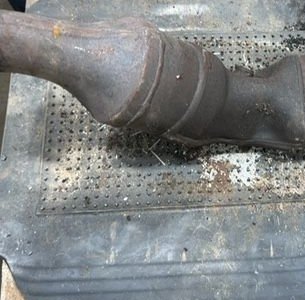
Why Emissions Rules Keep Driving Up the Value of Your Scrap Catalytic Converter
Most people think about emissions regulations as a problem for automakers. Here's the part they miss: those same rules are a major reason your scrap catalytic converter holds real value in 2026. Tightening emissions standards across North America, Europe, and beyond have kept global demand for platinum group metals — platinum, palladium, and rhodium — stubbornly high. If you're sitting on a pile of spent cats in Lethbridge, that regulatory pressure is working in your favour. But only if you sell smart.
This week's roundup breaks down why emissions policy matters to your scrap returns, how PGM demand plays out in real time, and what that means for anyone looking for a catalytic converter buyer in Lethbridge right now.
The Regulatory Engine Behind PGM Demand
Catalytic converters exist for one reason: to reduce harmful exhaust emissions before they exit the tailpipe. Inside every cat is a ceramic or metallic substrate coated with platinum, palladium, and rhodium — the metals that make the chemistry work. Strip out those metals, and you have raw material that refiners and manufacturers need desperately.
In 2026, emissions standards globally are not getting looser. Euro 7 standards rolled out across the European Union have pushed automakers to load more PGMs into new converter designs. China continues tightening its own equivalent regulations. In North America, the U.S. EPA and Transport Canada maintain strict tailpipe limits that keep conventional ICE vehicles dependent on high-performing catalytic converters. More regulatory pressure means more PGMs per vehicle, which means higher metal concentrations in the cats you're recycling today.
This matters to the secondary market — the scrap side — because:
- Higher PGM loadings in newer-generation converters translate to better scrap value per unit
- Sustained industrial demand from refiners keeps buyer competition active
- Supply chain pressure from primary mining means recycled PGMs fill a real gap
- Price floors are held up by consistent end-user demand, not speculation alone
The bottom line: every time a government body tightens an emissions threshold, it indirectly supports the scrap value of every catalytic converter sitting in your yard.
Platinum, Palladium, and Rhodium — What's Moving the Market This Week
PGM prices are never static. Platinum, palladium, and rhodium trade on global commodity markets, and they respond to everything from mining output in South Africa and Zimbabwe to auto production forecasts in Asia. For sellers focused on catalytic converter recycling in Lethbridge, the key is understanding that your scrap cat's value is directly tied to these metal spot prices — and they move.
As of this week, the PGM market continues to reflect a tug-of-war between two forces. On one side, the accelerating adoption of battery electric vehicles reduces long-term ICE production projections, which puts some downward pressure on palladium and rhodium demand forecasts. On the other side, the sheer volume of ICE vehicles already on the road — and the regulatory requirement that those vehicles stay compliant — keeps near-term recycling demand healthy.
Rhodium remains one of the most volatile metals in the PGM complex. It's produced in tiny quantities relative to demand, used almost exclusively in catalytic converters, and has no practical substitute at scale. Even modest supply disruptions out of South Africa — which produces the majority of the world's rhodium — can move prices significantly. That volatility cuts both ways, but for a seller with a quality load of cats, a rhodium spike can meaningfully change your return.
Platinum tells a slightly different story. Hydrogen fuel cell technology — another clean energy pathway — uses platinum as a core component, adding a new demand vector beyond conventional autocatalysts. This dual-use dynamic has kept platinum interest elevated even as EV adoption grows. For scrap metal recycling in Canada, this broader demand base adds some stability to the platinum-heavy converter types.
Disclaimer: PGM prices fluctuate daily based on global market conditions. Always check current Canadian catalytic converter prices before finalizing any sale.
What This Means If You're Selling Cats in Lethbridge, Alberta
Lethbridge sits in the heart of Alberta's agriculture and energy sector. That means plenty of heavy-duty trucks, fleet vehicles, and work equipment cycling through the local economy — and a steady supply of spent catalytic converters hitting the secondary market. If you're an auto shop, a fleet operator, or a private seller in Lethbridge, you're well-positioned to take advantage of sustained PGM demand. The question is whether you're getting paid what the market actually supports.
That's where most sellers leave money behind. The old way — calling one local buyer, accepting whatever number they quote, and hoping it's fair — doesn't give you any market signal. You don't know if that number reflects rhodium's current spot. You don't know if there are three other buyers in Alberta who'd pay more for your specific cat types. You're guessing.
A better approach is to document what you have, understand your converter types, and put them in front of multiple vetted buyers simultaneously. Platforms like the SMASH Recycling auction platform connect sellers with competitive buyers who are actively bidding, which is how you find out what the market will actually pay — not what one buyer decides to tell you. To learn more about how this works for local sellers, check the Lethbridge scrap metal services page for regional details.
For anyone in Alberta doing this regularly — auto recyclers, collision shops, scrap collectors — the cumulative difference between one-buyer pricing and competitive pricing adds up fast over a year's worth of loads.
How to Prepare a Cat Load for Maximum Value
Emissions regulations drive demand, but how you present your inventory determines how much of that demand works in your favour. Buyers — especially serious ones — pay more when they have confidence in what they're getting. That confidence comes from documentation.
Here's what separates a well-prepared load from a guesswork pile:
- Identify your converter types. OEM cats, aftermarket cats, and foreign cats all carry different PGM concentrations. Knowing which is which lets buyers price accurately instead of discounting for uncertainty.
- Use VIN lookup where possible. For converters pulled from specific vehicles, VIN data helps confirm the OEM spec and the expected PGM loading. SMASH's inventory tool includes VIN lookup to help sellers document their loads properly.
- Photograph everything. A clear photo of the serial number, the substrate condition, and the housing gives buyers what they need to bid without hedging.
- Track serial numbers. Serial number tracking protects you and gives buyers a clear chain of custody — which matters more in 2026 as regulatory scrutiny on scrap catalytic converter transactions increases across Canada.
- Sort by type before listing. Mixed loads get discounted. Sorted loads get priced. It takes extra time upfront, but it's worth it.
If you want to get the best catalytic converter price in Canada, the documentation step is not optional. It's the single biggest variable you control as a seller.
Why the Canadian Market Has Its Own Dynamics
A quick note for anyone watching international benchmarks: catalytic converter price lists from the UK or South Africa are useful for understanding global PGM trends, but they don't translate directly to Canadian scrap pricing. The Canadian market has its own buyer network, its own logistics costs, and its own tax treatment — GST/HST applies to scrap transactions, and that affects net returns in ways that overseas benchmarks don't capture.
Currency exchange also plays a role. PGMs price in USD globally, so CAD/USD fluctuations directly affect what Canadian sellers receive in dollar terms. When the Canadian dollar weakens relative to the U.S. dollar, Canadian sellers often see improved CAD-denominated returns on PGM-heavy loads — a dynamic that doesn't show up in a UK or South African price list.
This is why it's worth using Canadian-specific resources. The Canadian catalytic converter pricing guides on this site break down what's actually relevant to sellers in Canada — not just generic global figures that may or may not reflect your actual market. SMASH operates across North America and works with vetted buyers who understand the Canadian regulatory and pricing environment, which means sellers get bids that reflect real Canadian market conditions.
The Market Outlook: Regulations Aren't Going Away
It would take a dramatic, coordinated global policy reversal to reduce PGM demand in the near term. That's not happening. The ICE fleet on North American roads right now numbers in the hundreds of millions of vehicles. Every one of those vehicles has a catalytic converter. Every one of those converters will eventually become scrap. And regulators are not giving manufacturers permission to reduce emissions performance — if anything, compliance requirements are getting tighter.
That sustained regulatory backstop keeps recycled PGM demand structurally supported. It doesn't mean prices only go up — rhodium proved that volatility cuts in both directions. But it does mean the underlying demand for what's inside your spent cat isn't going away. Sellers who understand this, document their loads properly, and use competitive platforms to find buyers will consistently outperform sellers who treat cat recycling like a commodity pickup.
If you're in Lethbridge, Alberta and ready to find out what your load is actually worth in today's market, don't leave it to one phone call. Get it in front of multiple buyers, get real bids, and walk away knowing you got a fair shake. That's what SMASH is built for — and it's why sellers who've made the switch don't go back to the old way.
Ready to find out what your cats are worth? Get the best Canadian price for your catalytic converter — get a free quote at best-catalytic-converter-price.ca.
Frequently Asked Questions
Q: How do emissions regulations affect catalytic converter scrap value in Canada?
Stricter emissions standards require manufacturers to use higher concentrations of platinum, palladium, and rhodium in new catalytic converters. That increases PGM demand globally, which supports scrap values for spent converters entering the recycling market. Tighter rules generally mean better-loaded cats over time — and better-loaded cats return more at the scrap level.
Q: Where can I find a catalytic converter buyer in Lethbridge?
Local scrap yards and auto recyclers in Lethbridge will purchase spent cats, but a single local buyer gives you a single price with no competitive pressure. Platforms like SMASH connect sellers with multiple vetted buyers across Canada who bid competitively, which gives you a clearer picture of what your load is actually worth in the current market.
Q: How do I know if I'm getting a fair price for my scrap catalytic converters in Alberta?
Fair price discovery requires competition. If only one buyer sees your load, you have no way to benchmark that offer. Get your converters documented — with photos, serial numbers, and converter types identified — and put them in front of multiple buyers. That's how you find out what the market will pay, not just what one buyer decides to quote you.
Q: Does the type of vehicle affect the scrap value of a catalytic converter in Canada?
Absolutely. OEM converters from certain makes and models carry significantly higher PGM loadings than aftermarket or economy-grade units. Luxury vehicles, trucks with larger engines, and certain import makes often yield higher scrap returns. VIN lookup tools can help you confirm expected PGM content before you sell, so you're not guessing at your converter's value.
Q: Are catalytic converter prices in the UK or South Africa relevant to Canadian sellers?
They're useful for tracking global PGM trends, but they don't reflect Canadian market conditions directly. CAD/USD exchange rates, Canadian tax treatment, domestic buyer demand, and local logistics costs all affect what you actually receive as a Canadian seller. Use Canadian-specific pricing resources and connect with buyers who operate in the Canadian market for the most accurate picture.
Stay current on scrap metal market trends and industry updates — follow SMASH on LinkedIn for weekly insights, PGM market commentary, and catalytic converter pricing news.