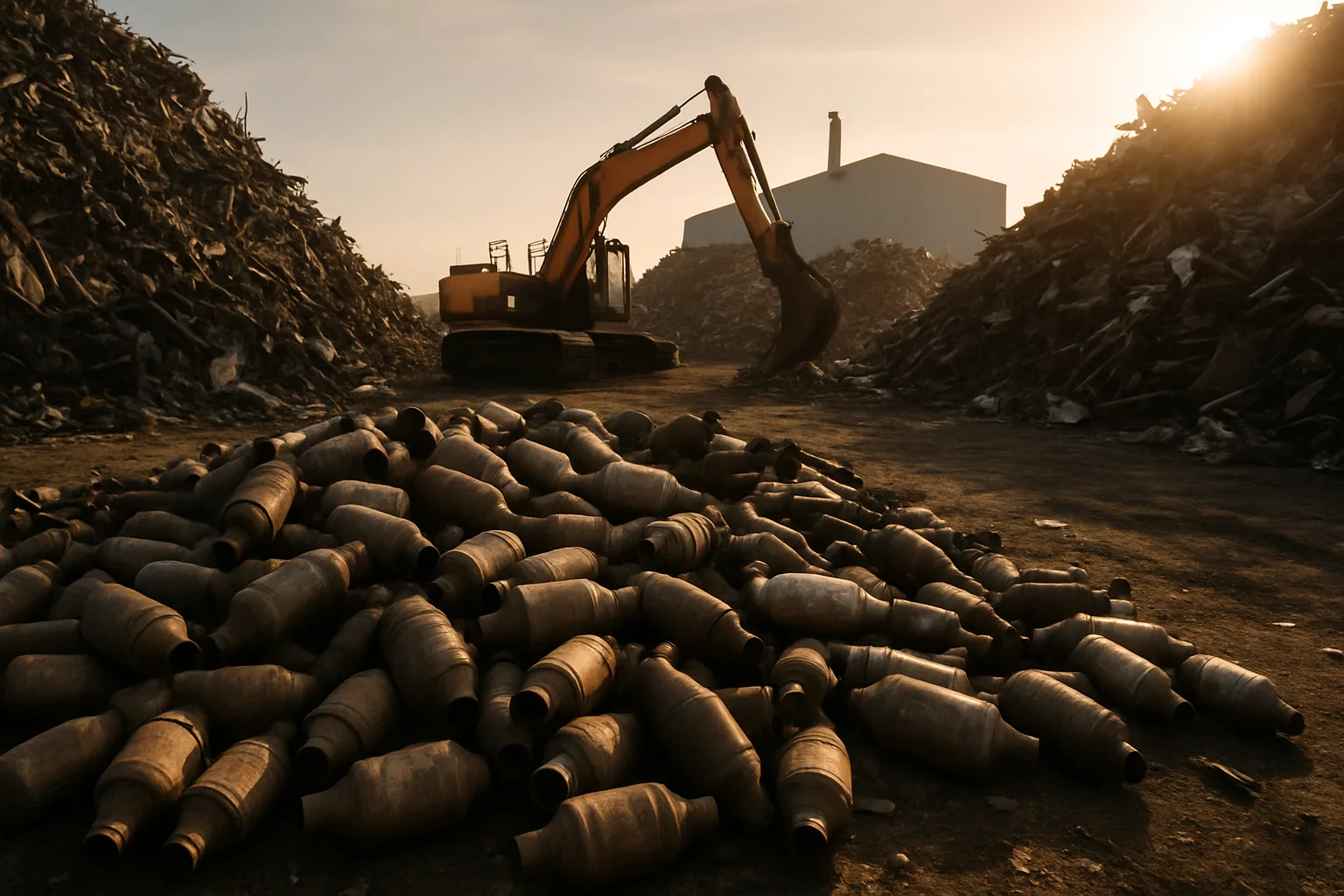
Someone just offered you $40 for a catalytic converter that's worth $400. It happens more than you think — and not just to first-timers. Experienced scrap collectors and auto shops in Lethbridge get lowballed, misled, or outright scammed every week in the catalytic converter buying market. Knowing the difference between a fair offer and a fast one is the most valuable thing you can take away from this article.
The scrap catalytic converter market runs on information asymmetry. Buyers know what platinum, palladium, and rhodium are worth. Most sellers don't. That gap is where the scams live. If you're serious about catalytic converter recycling in Lethbridge — whether you're cleaning out one old vehicle or moving a pallet of cats — you need to understand how this market works and where it gets exploited.
The Most Common Scams in the Catalytic Converter Buying Market
Not every bad deal is a scam. Some are just poor pricing. But the tactics below cross the line — they're designed to confuse sellers, suppress what you're paid, or move product fast before you realize what you had.
Here's what to watch for:
- The lowball with urgency: A buyer shows up or calls with a quick number and tells you the offer expires today. This is pressure, not market reality. Prices move, but not that fast. The urgency is manufactured to stop you from getting a second quote.
- The misidentification switch: Your converter gets identified as a lower-value unit than it actually is. Some buyers rely on you not knowing the difference between a domestic cat and an exotic one — or between a full unit and a gutted shell. They quote you on the wrong item, pay you for the wrong item, and flip it for the real value.
- Grade manipulation: Not all catalytic converters grade the same. High-grade, medium-grade, and low-grade cats have different PGM (platinum group metal) content. A buyer who consistently calls your cats "low grade" when they aren't is costing you money on every single transaction.
- The "processing fee" deduction: You agree on a price, then the buyer deducts a vague "testing" or "processing" fee before paying out. If this fee wasn't disclosed upfront and agreed to, it's a hidden discount on the price you were promised.
- Cash-only with no documentation: If someone insists on cash with no paperwork — no receipt, no packing list, no record of the transaction — that's a red flag. Legitimate buyers document their purchases. The lack of paper trail protects the buyer, not you.
- Fake assay results: In larger transactions, buyers sometimes reference assay data (lab testing of PGM content) that's either outdated, fabricated, or pulled from a different converter altogether. You have no way to verify it on the spot, and the numbers conveniently justify a lower payout.
These tactics aren't hypothetical. They're common enough that anyone selling catalytic converters in Alberta should treat them as baseline risk — not rare exceptions.
Why Catalytic Converter Recycling Attracts Predatory Buyers
The short answer: the margins are real, the metals are valuable, and most sellers don't have access to the same pricing data buyers do. Platinum, palladium, and rhodium are the three precious metals inside a catalytic converter's ceramic or metallic substrate. Their prices fluctuate daily on global commodity markets. A buyer who checks rhodium prices every morning and a seller who hasn't has a significant information advantage.
Catalytic converter recycling is also a fragmented market. There's no single public exchange where you can look up what your specific cat is worth today, the way you'd look up a stock price. Different converters from different vehicles carry wildly different PGM loads — a scrap catalytic converter price by model can range from under $50 to well over $500 for the same physical size unit. That variability makes it easy to misprice — accidentally or deliberately.
The get the best catalytic converter price in Canada challenge is real precisely because the market is opaque. That opacity is the environment predatory buyers depend on.
How to Protect Yourself When You Sell Catalytic Converters Online or Locally
The single best defence against a bad deal is competitive pricing. When multiple buyers compete for your load, the market tells you what it's actually worth. When you accept the first number from the one buyer who showed up, you're trusting that buyer's incentive to be honest — and their incentive runs in the opposite direction.
Here's a practical approach to protecting yourself:
- Identify before you quote. Know what you have before any buyer does. Serial numbers, VIN-linked data, and model identification can tell you roughly what category your converter falls into. Platforms that offer VIN lookup and serial tracking make this straightforward.
- Document everything. Photo documentation before any converter leaves your hands matters. If there's a dispute about what was sold — or what grade it was — photos and records are your only leverage. Buyers who discourage documentation should be treated with suspicion.
- Get multiple quotes. Whether you sell catalytic converters online or through local buyers, comparing offers is the only way to know if the first number was real. One quote isn't a market price — it's one buyer's opinion of what you'll accept.
- Ask about fees upfront. Before agreeing to any sale, ask directly: are there processing fees, assay deductions, or testing costs? Get the answer in writing if possible. Any fee that appears after the sale is an unauthorized change to the agreed price.
- Check the platform or buyer's track record. Who are you selling to? Vetted buyers with a history in the market are very different from anonymous cash buyers with no accountability. Established platforms that connect sellers with vetted buyers remove a significant layer of risk.
SMASH is built specifically on this model. Vetted buyers, documented inventory, transparent auction format — the whole point is to remove the information advantage that makes scams possible. When you sell your scrap metal on SMASH Recycling, you're selling into competition, not hoping one buyer is being straight with you.
Understanding Catalytic Converter Worth at the Scrap Yard vs. the Real Market
There's a real difference between what a local scrap yard offers and what your converter is worth in the broader market. Scrap yards are convenient — but convenience has a price. A yard that takes everything from appliances to radiators to catalytic converters is not a specialist. Their pricing on cats may reflect that.
The catalytic converter worth at a scrap yard is often a blended, simplified number. They're not necessarily running assays on individual units. They're buying volume with rough grade estimates. That works for them; it may not work for you.
Specialty converters — from diesel trucks, certain import vehicles, or hybrid platforms — can carry substantially higher PGM loads than standard units. If you're selling a load that includes any of these and the yard isn't distinguishing between them, you're leaving value behind. Knowing your scrap catalytic converter price by model before you walk in is the only way to know whether their offer reflects reality.
For sellers in Lethbridge scrap metal services, this is a practical concern. The local market has options, but not all of those options are pricing specialists. Reaching a national or North American pool of buyers through an auction platform gives you access to buyers who actually specialize in cats — and who compete with each other on price.
How to Sell Scrap Metal Online Safely and Get a Fair Price
Selling online adds a layer of complexity — you can't hand something to a buyer and get cash on the spot. But it also opens the market considerably. More buyers means better price discovery. That's not a slogan; it's how auctions work.
When you sell scrap metal online, the documentation requirements that might feel like extra work are actually your protection. Packing lists, photo documentation, serial tracking — these details give remote buyers the confidence to bid aggressively because they know exactly what they're getting. Incomplete or undocumented loads attract lower bids or no bids at all. The work you put into good documentation comes back as better offers.
SMASH handles auto-invoicing, buyer vetting, and documentation in a single workflow. There's no subscription fee — the platform only works when the seller gets paid. That structure keeps the incentives aligned. You can also read Canadian catalytic converter pricing guides to understand what to expect before you list anything.
For anyone in Lethbridge or elsewhere in Alberta looking to move catalytic converters — whether it's a single unit from a personal vehicle or a truckload from an auto dismantler — the safest approach is the one that puts multiple buyers in the room at the same time. Check current Canadian catalytic converter prices before you commit to any offer, and know that the first number you receive is a starting point, not a final answer.
The scrap converter market rewards sellers who know what they have and who they're selling to. If you want to skip the guesswork, get the best Canadian price for your catalytic converter — get a free quote at best-catalytic-converter-price.ca. It takes a few minutes and gives you a real benchmark before any money changes hands.
Frequently Asked Questions
Q: How do I know if I'm being scammed when selling a catalytic converter in Lethbridge?
The clearest warning signs are unsolicited urgency ("offer expires today"), buyers who won't provide documentation, and prices that can't be explained against current metal values. If a buyer won't tell you what grade they're assigning your converter or refuses to put anything in writing, that's a problem. Get at least one competing offer before accepting anything.
Q: What is the typical price range for a scrap catalytic converter in Alberta?
Prices vary significantly based on the vehicle make, model, and year — and on current platinum, palladium, and rhodium spot prices, which change daily. A standard domestic converter might bring far less than a high-load import or diesel unit. Rather than citing a fixed number, check a current pricing platform for real-time Canadian market values. Disclaimer: prices fluctuate — always verify current rates before selling.
Q: Is it safe to sell catalytic converters online in Canada?
Yes, provided you use a platform with vetted buyers and proper documentation requirements. Platforms that include photo documentation, serial tracking, and auto-invoicing protect both parties and make disputes easier to resolve. Avoid any buyer or platform that asks you to ship product before payment is confirmed or that discourages documentation.
Q: Why does the scrap yard offer less than what I see listed online for my catalytic converter?
Local scrap yards price for convenience and volume. They're not typically running individual assays on every cat, and their pricing reflects a broad estimate rather than the specific PGM load of your unit. Online auction platforms that connect you with specialist buyers can reveal a higher market value — especially for high-grade or unusual converter types.
Q: How do I identify my catalytic converter before getting a quote in Lethbridge?
Look for the serial number stamped on the converter housing — this is the most reliable identifier. If you have access to the vehicle's VIN, platforms with VIN lookup tools can cross-reference the original converter type. Photos of the unit, including the serial and both ends of the housing, help buyers grade and quote accurately from a distance.
Stay current on scrap metal market trends and catalytic converter pricing — follow SMASH on LinkedIn for industry updates and insights from across North America.
```