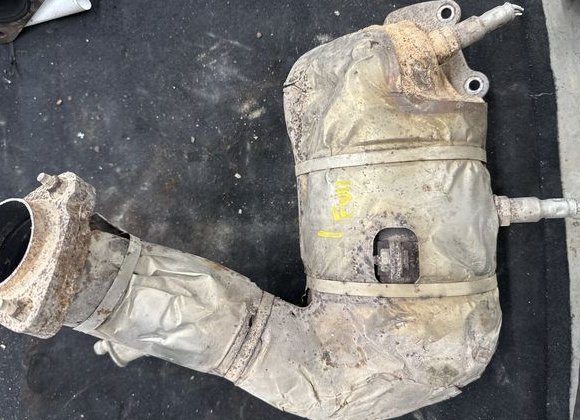
Most people selling a scrap catalytic converter have no idea what's inside it — or why one unit can be worth dramatically more than another. That gap in knowledge costs sellers real money. If you're holding a used cat and wondering what it's actually worth, the answer starts with three metals: platinum, palladium, and rhodium. Understanding how these metals drive catalytic converter scrap value puts you in a much better position to get the best catalytic converter price in Canada.
This isn't a guessing game. There's a real science to cat pricing — and once you understand it, you'll never accept a lowball offer again.
What's Actually Inside a Catalytic Converter?
A catalytic converter isn't just a metal can bolted to your exhaust. Inside, there's a ceramic or metallic honeycomb structure — called a substrate — coated with a wash of precious metals called platinum group metals (PGMs). These PGMs are the reason your cat has value long after the vehicle stops running.
The three PGMs that matter most are:
- Platinum (Pt) — Used across a wide range of catalysts, particularly in diesel applications. It handles oxidation reactions that convert harmful gases into safer compounds.
- Palladium (Pd) — Common in gasoline-powered vehicles. Palladium is highly effective at high-temperature catalytic reactions and has seen significant market demand in recent years.
- Rhodium (Rh) — The rarest of the three and often the most valuable by weight. Rhodium handles nitrogen oxide reduction. Even small amounts can represent serious dollar value.
The specific mix of these metals varies by vehicle make, model, engine type, and model year. That's why two cats that look identical on the outside can have very different scrap values. A cat from a late-model Honda Civic and a cat from a diesel pickup truck are not the same product — not even close.
How Platinum, Palladium, and Rhodium Prices Determine Your Payout
Every scrap cat price ultimately traces back to the spot price of the PGMs it contains. These spot prices are set on global commodity markets and fluctuate daily — sometimes hourly. When palladium spikes, the value of gasoline-engine cats goes up. When rhodium prices shift, high-rhodium cats like those from certain European vehicles become especially sought after.
Here's the chain that connects market prices to your payout:
- The cat is identified — by serial number, VIN lookup, or physical inspection. Different part numbers contain different PGM loadings.
- The PGM loading is referenced — processors and buyers reference databases that estimate the platinum, palladium, and rhodium content per unit.
- Spot prices are applied — current market prices for each metal are multiplied by the estimated yield.
- Processing costs are deducted — the refinery takes a cut for assaying and smelting. What's left is the return to the seller.
- The buyer's margin is applied — whoever is buying from you also needs to cover their costs and profit.
The key takeaway: when you call one buyer, you're accepting their interpretation of what your cat is worth on that day. You have no way of knowing if that number is fair. That's where competition changes everything. Platforms like SMASH — Canada's B2B scrap recycling marketplace — put multiple vetted buyers in front of your inventory, which gives the market a chance to tell you what your cats are actually worth.
Why Cat Values Vary So Much — Even for the Same Make and Model
Sellers in London, Ontario are often surprised to find that two cats from the same vehicle year don't fetch the same price. There are a few reasons for this.
Condition of the substrate matters. A cracked, rattled-out, or damaged substrate has lost PGM material. Processors will pay less — sometimes significantly less — because the actual recoverable metal is reduced. If you're pulling cats from wrecked vehicles or older yard inventory, inspect each unit individually. Don't assume they're all the same.
OEM vs. aftermarket is a big one. Original equipment manufacturer (OEM) cats have real PGM loadings. Aftermarket or "direct fit" replacement cats are often loaded with far less — sometimes just enough to meet emissions standards with cheaper alternatives. Selling an aftermarket cat as if it were OEM is a common mistake that leads to frustrated sellers when the offer comes back low.
Location and demand factors in too. Buyers operating in Ontario or across Canada may bid differently based on their current inventory needs, refinery relationships, and shipping logistics. That's another reason a single local quote doesn't reflect the full picture.
How to Look Up Your Catalytic Converter's Scrap Value in Canada
The most practical starting point is serial number identification. Most OEM cats have a part number or serial code stamped on the shell. That number connects to a database of known PGM loadings. If you're selling in volume — say you run an auto recycler or scrap yard in London — this process becomes part of standard intake.
A few things to look for when doing a used catalytic converter price lookup:
- Find the serial or part number stamped on the cat's body (usually on the top or end cap)
- Cross-reference it through a reputable buyer or recycling platform
- Check current spot prices for platinum, palladium, and rhodium — these directly affect what that serial number is worth today vs. last week
- Get multiple offers when possible — the first number isn't always the best number
For anyone in Ontario looking to sell catalytic converters Ontario-wide without settling for one local buyer's offer, connecting with a platform that aggregates demand across multiple buyers is the smarter approach. You can check current Canadian catalytic converter prices to get a clearer baseline before you commit to anything.
Platforms like SMASH make this transparent. Serial tracking, photo documentation, and vetted buyer networks mean your inventory gets priced based on what it actually contains — not what one buyer decides to offer on a slow afternoon. Want to go deeper on market timing and pricing strategy? Read Canadian catalytic converter pricing guides for more detail.
The Role of Market Timing When You Sell Scrap Metal Online
PGM prices don't stand still. Rhodium — which has historically been the most volatile of the three — can swing substantially over short periods. Palladium has had extended periods of high demand driven by global automotive production and emissions regulations. Even platinum, often the most stable, responds to industrial demand shifts and currency movements.
This means timing matters. Selling a load of cats when palladium prices are depressed locks in a lower return than waiting for a stronger window — assuming you have the storage space and cash flow to hold inventory. Most individual sellers can't afford to time the market precisely. But understanding the concept at least tells you to check current spot prices before accepting any offer.
When you sell scrap metal online through a competitive auction model, timing works in your favour in a different way. Multiple buyers bidding simultaneously means the market price — whatever it is that day — gets reflected in your offer. You're not guessing. You're not hoping. You're letting competition do the work. That's the difference between calling one buyer and listing on a platform where buyers compete for your inventory.
For those running London scrap metal services, this competitive model is especially relevant. London, Ontario has a real concentration of auto recyclers, collision shops, and general scrap yards — which means there's volume in the market and buyers who want access to it.
What Sellers in London and Across Ontario Should Know Before They Sell
If you're selling from London or anywhere in Ontario, a few practical points apply directly to you:
- Don't mix OEM and aftermarket cats in the same lot without flagging the difference. Aftermarket units drag down the average — or worse, lead to disputes after assay.
- Document what you have. Photos, serial numbers, vehicle source information — all of it helps buyers price accurately and confidently. Documented inventory consistently attracts stronger offers.
- Understand that the "palladium price today" you see quoted online is a global spot price. What you actually receive reflects that price minus processing, refining, and buyer margin. The goal is to minimize those deductions by working with efficient, transparent buyers.
- Volume matters. Selling 50 cats gets you better leverage than selling one at a time. If you accumulate inventory before going to market, you're in a stronger position.
And always remember: the price is only as good as the buyer's transparency. If a quote comes in with no explanation of how it was calculated, that's a red flag. A legitimate buyer can tell you what metal loadings they're working from and what spot prices they applied.
Disclaimer: Catalytic converter scrap prices fluctuate with global PGM spot markets. The information here reflects general market mechanics. Always check current rates before selling.
When you're ready to stop guessing and start getting real competitive offers for your cats, the next step is straightforward. Get the best Canadian price for your catalytic converter — get a free quote at best-catalytic-converter-price.ca and let the market show you what your inventory is actually worth.
Frequently Asked Questions
Q: What makes one catalytic converter worth more than another?
The PGM loading is the primary driver — specifically the amounts of platinum, palladium, and rhodium inside. Vehicle type, engine size, OEM vs. aftermarket construction, and the condition of the substrate all affect how much recoverable metal a cat contains. Two cats from the same model year can differ significantly if one is OEM and one is a replacement unit.
Q: How do I find out the scrap value of my catalytic converter in Canada?
Start by locating the serial or part number stamped on the cat's housing. That number can be cross-referenced through a reputable buyer or pricing platform to estimate PGM content. From there, current palladium, platinum, and rhodium spot prices are applied to calculate a baseline value. Getting multiple offers is the best way to confirm whether a quote is fair.
Q: Does the palladium price today directly affect what I get paid for my cat?
Yes — directly. Palladium is the primary PGM in most gasoline-engine catalytic converters, so when palladium spot prices rise, the scrap value of those cats rises with it. Buyers reprice constantly based on daily commodity markets, which is why the same cat can yield a different offer on different days.
Q: Can I sell catalytic converters in London, Ontario without going through a local yard?
Absolutely. Online platforms that connect sellers with vetted buyers across Canada — like SMASH — allow you to list inventory digitally and receive competitive offers without being limited to one local buyer's price. This is especially useful for sellers in London and across Ontario who want access to a broader buyer network.
Q: Is it worth holding onto cats to sell when prices are higher?
It can be, if you have the storage space and the cash flow to wait. PGM markets are volatile, and holding through a price dip to sell during a stronger window can improve your return. However, for most individual sellers or smaller operations, the administrative overhead of timing the market isn't practical — in that case, competitive bidding through an auction-style platform is a more reliable way to ensure you're getting the market rate on any given day.
Follow SMASH on LinkedIn for ongoing scrap metal market insights, PGM price updates, and catalytic converter industry news.