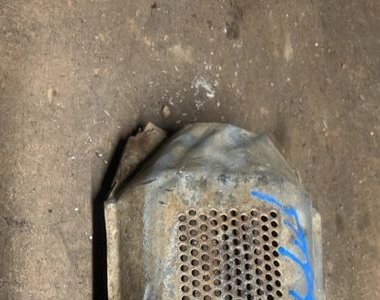
OEM vs. Aftermarket Catalytic Converters: Why the Scrap Value Gap Is Bigger Than You Think
Most sellers assume a catalytic converter is a catalytic converter. Pull it off, sell it, move on. But if you've ever gotten wildly different quotes on two cats that look almost identical, you've already discovered the core problem: OEM and aftermarket converters don't hold the same scrap value — not even close. Understanding why that gap exists is the difference between leaving money on the table and actually getting what your load is worth when you sell catalytic converters online.
This isn't abstract chemistry. It comes down to what's actually inside the honeycomb substrate, how much platinum, palladium, and rhodium was loaded at the factory, and whether a manufacturer was building to last or building to a price point. If you're in Brandon, Manitoba running an auto shop or collecting cats from a fleet operation, this knowledge directly affects your bottom line.
What's Actually Inside a Catalytic Converter — And Why It Matters for Price
The value in any catalytic converter sits in the platinum group metals (PGMs) — specifically platinum, palladium, and rhodium — embedded in the ceramic or metallic substrate. These metals drive the chemical reactions that convert exhaust gases into less harmful emissions. Without them, the converter doesn't function. And without understanding how much of each metal is loaded, you can't accurately estimate what the cat is worth at scrap.
OEM converters — original equipment manufacturer units installed at the factory — are engineered to meet specific OBD-II and emissions standards for the vehicle's full warranty period and beyond. That means they're loaded with a precise, often generous, quantity of PGMs. The manufacturer's reputation and regulatory compliance depend on those converters performing reliably for years. They use more metal. Full stop.
Key differences in PGM loading by converter type:
- OEM converters: Higher PGM loading, engineered to spec, designed for long service life
- OEM-equivalent aftermarket: Designed to meet emissions standards but may use marginally lower PGM quantities
- Low-grade aftermarket (direct-fit or universal): Significantly lower PGM content, often using cheaper substrate materials
- California-spec OEM: Typically higher PGM loading than federal-spec equivalents due to stricter CARB standards — higher scrap value follows
When you get the best catalytic converter price in Canada, the buyer is paying for what's inside — not what the part number says on the outside. An aftermarket cat that looks factory-installed can have a fraction of the recoverable metal.
How Dramatically Do OEM vs. Aftermarket Values Differ?
The word "dramatically" isn't an exaggeration. Depending on the vehicle make, model year, and which PGMs dominate the substrate, an OEM converter might return several times the scrap value of an aftermarket replacement. This isn't a marginal difference — it can represent a significant per-unit gap when you're processing volume.
The spread is widest on converters from vehicles with historically high PGM loading. Think late-model Toyota, Honda, and certain domestic trucks and SUVs. A genuine OEM cat from the right platform will command substantially more than the aftermarket replacement that was bolted on two years ago. High-volume collectors in Manitoba who run mixed loads without sorting by converter type often find themselves averaging down unnecessarily.
Why the spread exists in practice:
- Aftermarket manufacturers compete on price — lower PGM loading reduces cost
- Some aftermarket units use different substrate materials that process less efficiently
- OEM part numbers are catalogued in buyer databases — making identification and valuation faster and more accurate
- Aftermarket units often lack traceable part numbers, forcing buyers to estimate conservatively
- The platinum price today and the rhodium spot price apply to actual recoverable metal — less metal means less value regardless of market conditions
If you want to read Canadian catalytic converter pricing guides that break down value by vehicle type and platform, you'll see this pattern repeat across dozens of makes and models.
Why Identification Is the Most Important Step Before You Sell
Selling without proper identification is the single biggest pricing mistake in this market. Buyers price the unknown conservatively — it's not personal, it's risk management. If they can't confirm what's in the substrate, they discount. That discount comes out of your payment.
Proper identification means:
- Photograph the converter clearly — both ends, the body, and the serial or part number if visible
- Record the VIN of the vehicle it came from where possible — this confirms the OEM spec
- Note any aftermarket markings — brand logos, generic part numbers, or "direct fit" labels are red flags for lower value
- Separate OEM from aftermarket in your load — mixed loads get valued at the lower average
- Use a platform with serial tracking and photo documentation — this is where platforms like SMASH make a direct difference
SMASH's inventory tool lets sellers document each unit with photos and serial data before the load goes to auction. That documentation gives vetted buyers the confidence to bid accurately — and competitive bidding is what drives price discovery. Without it, you're guessing. With it, you're negotiating from a position of documented fact.
For shops and collectors in Brandon running regular volume, building this documentation habit pays for itself quickly. You stop averaging down on mixed loads and start separating value that was always there.
The B2B Scrap Metal Marketplace Advantage — Why Competition Changes Everything
The old way to sell catalytic converters was simple and expensive: call your local buyer, take whatever they offered, maybe call one other yard to check. Two data points isn't a market — it's a coin flip. If both buyers knew the OEM/aftermarket distinction better than you did, the information gap worked against you every time.
A B2B scrap metal marketplace built around competitive auctions changes the dynamic. When multiple vetted buyers compete on your documented load, the price discovery process works in your favour. A buyer who recognizes a high-value OEM substrate has to bid against other buyers who recognize the same thing. That competition narrows the gap between what the cat is actually worth and what you receive for it.
SMASH runs exactly this model. No subscription fees. No guessing. Vetted buyers, documented inventory, and an auction format that surfaces real market value. If you're processing volume in Manitoba — whether that's cores from an independent shop in Brandon or a bulk load from a fleet yard — this is the structure that gives you leverage you didn't have before.
You can explore this directly at smashrecycling.ca or check current Canadian catalytic converter prices before you list your next load.
What Sellers in Brandon and Manitoba Need to Know Right Now
The Canadian market for scrap catalytic converters in late 2026 remains active. PGM spot prices — particularly rhodium — have been volatile through the year, and that volatility cuts both ways. When rhodium runs up, high-quality OEM units from rhodium-heavy platforms gain value quickly. When it pulls back, lower-grade aftermarket units feel the correction hardest because there's less PGM buffer to absorb the move.
Manitoba sellers face a geography challenge that documentation helps solve. Brandon isn't a major urban hub with dozens of competing buyers on every block. That geographic reality makes it even more important to access a broader buyer pool rather than relying on whoever is local. Online platforms that connect you with catalytic converter buyers across Canada — not just your immediate region — create the competition that local-only selling can't.
Practical steps for Manitoba sellers right now:
- Sort every load by OEM versus aftermarket before valuation
- Photograph serial numbers and part markings on every unit
- Track the VIN source for high-value OEM units where possible
- Use online platforms to access buyers beyond your local market
- Understand that how much is my catalytic converter worth in Canada depends heavily on what type it is — not just what vehicle it came from
- Check current PGM spot prices before setting price expectations — platinum, palladium, and rhodium all move independently
The sellers who consistently get strong returns aren't necessarily the ones with the best loads. They're the ones who do the documentation work and put their loads in front of enough qualified buyers to let the market speak.
Don't Sell Until You Know What You Have
The OEM versus aftermarket value gap isn't a mystery or an industry secret — it's straightforward materials economics. More PGM in the substrate means more recoverable value. OEM converters generally have more. Aftermarket converters generally have less. Sort accordingly, document thoroughly, and sell through a platform that gives buyers the information they need to bid with confidence.
If you're moving volume from Brandon or anywhere else in Manitoba, the difference between a guessed price and a competed price on a quality OEM load can be substantial. That difference is yours to capture — or yours to give away by selling without preparation.
Ready to stop guessing? Get the best Canadian price for your catalytic converter — start with a free quote at best-catalytic-converter-price.ca and see what your documented load is actually worth on the open market.
Disclaimer: Catalytic converter prices fluctuate with PGM spot markets. Platinum, palladium, and rhodium prices change daily. Always check current rates before finalizing any sale.
Frequently Asked Questions
Q: How do I know if my catalytic converter is OEM or aftermarket?
Check the part number stamped or welded onto the converter body. OEM units typically carry the vehicle manufacturer's part number or a recognizable OEM supplier code. Aftermarket units often have generic part numbers, brand names like Walker or MagnaFlow stamped directly on the body, or no part number at all. When in doubt, cross-reference the VIN from the donor vehicle against OEM parts databases.
Q: Can I sell catalytic converters online from Brandon, Manitoba?
Yes. Online platforms let you document your load with photos and serial data, then access vetted buyers across Canada — not just local yards. This is particularly valuable in Brandon, where the local buyer pool is smaller than in major centres like Winnipeg or Calgary. More buyers competing on your load means better price discovery.
Q: How much is my catalytic converter worth in Canada right now?
Value depends on the converter type (OEM vs. aftermarket), the specific vehicle platform, and current PGM spot prices for platinum, palladium, and rhodium. There is no single answer — a high-value OEM unit from the right vehicle can be worth many times more than a low-grade aftermarket replacement. Document your unit and get a quote based on actual identification rather than estimates.
Q: Does the platinum price today directly affect what I'll get paid?
Yes, but it's one of three variables. Platinum, palladium, and rhodium all contribute to the converter's value, and they move independently. A drop in platinum might be partially offset by a strong rhodium price, or vice versa. The mix of PGMs in your specific converter — which depends on the vehicle platform and whether it's OEM or aftermarket — determines how sensitive your unit's value is to any single metal's price movement.
Q: Is there a B2B scrap metal marketplace that handles catalytic converter auctions in Canada?
SMASH operates an auction-based B2B scrap metal marketplace serving yards and sellers across North America, including Canada. The platform uses photo documentation, serial tracking, and vetted buyers to create competitive bidding on loads — including catalytic converters. No subscription fees. You can learn more at smashrecycling.ca.
Stay current on scrap metal market trends and PGM price movements — follow SMASH on LinkedIn at linkedin.com/company/scrap-metal-auction-sales-hub for regular industry updates.