Why the London Metal Exchange Determines What Your Scrap Converter Is Worth
Most people selling a scrap catalytic converter think the price is set by their local buyer. It isn't. The number on that quote sheet traces back to trading floors in London, New York, and Zurich — where platinum, palladium, and rhodium are bought and sold by the metric ton, around the clock. If you want to sell catalytic converters online and actually understand what you're getting, you need to understand what drives the price before it ever reaches your yard or shop.
This isn't abstract finance theory. It's the difference between selling at the right time and leaving money on the table. Whether you're running a shop in Coquitlam or collecting converters across British Columbia, global market forces set the floor and ceiling on what your cats are worth — every single day.
Platinum, Palladium, and Rhodium: The Three Metals That Drive Converter Value
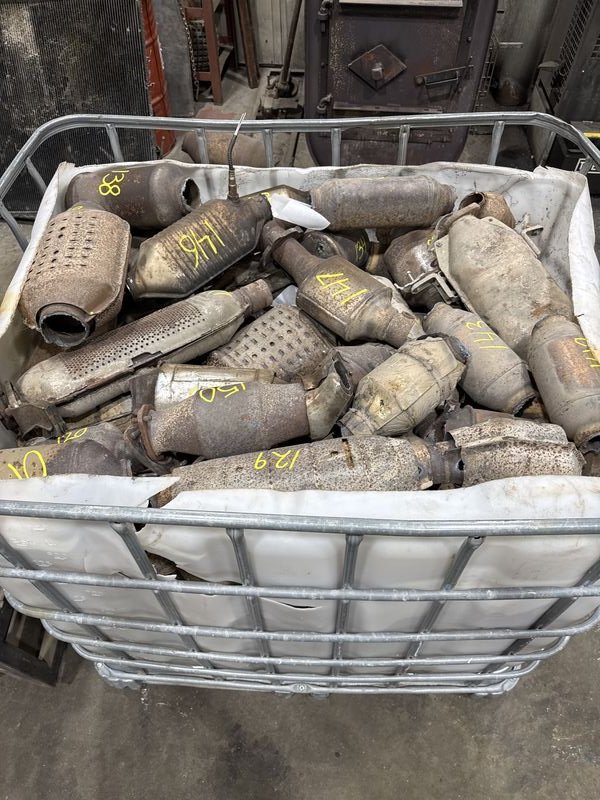
A catalytic converter isn't just a hunk of metal. Inside that shell is a ceramic or metallic substrate coated with a precise mixture of platinum group metals (PGMs): platinum, palladium, and rhodium. These three elements do the chemical heavy lifting — converting harmful exhaust gases into less toxic compounds. They're also extraordinarily rare, which is exactly why your scrap converter holds real value.
Each metal has its own price driver and its own market dynamic:
- Platinum: Historically the most recognized PGM, platinum is used heavily in diesel converters. Its price fluctuates based on South African mining output (the world's dominant source), hydrogen fuel cell demand, and jewellery markets. When South African labour disputes or power grid issues slow production, platinum prices move — sometimes sharply.
- Palladium: Dominant in gasoline-engine converters — which means it's in the majority of vehicles on North American roads. Palladium supply is highly concentrated in Russia and South Africa, making it vulnerable to geopolitical disruption. It has historically traded at significant premiums to platinum during periods of supply tightness.
- Rhodium: The smallest supply, the most volatile price. Rhodium can swing dramatically within a single quarter. Even a fraction of a gram per converter translates to meaningful dollars at the right market moment — or a painful drop when demand softens.
Understanding the platinum palladium rhodium breakdown in your specific converter type is the first step toward knowing whether you're selling at a good time or a bad one. Not all cats carry the same PGM loading, which is why serial numbers and make/model data matter so much when getting a quote.
How Global Events Move the Market — and Your Quote
In 2026, PGM markets remain sensitive to several macro forces that have nothing to do with Canadian roads or Canadian recycling facilities. Here's what's actually moving the needle:
Mining supply constraints. South Africa and Zimbabwe supply the majority of the world's platinum and rhodium. When electricity rationing hits South African smelters — a recurring issue — global supply tightens. Buyers downstream bid higher to secure inventory. That trickles into scrap converter prices within days, not weeks.
EV transition dynamics. The ongoing shift toward electric vehicles continues to reshape long-term PGM demand. EVs don't use catalytic converters, which puts some downward pressure on future palladium demand projections. At the same time, hybrid vehicles — which are surging in adoption — still use converters, often with higher PGM loadings than older internal combustion designs. The short-term picture for palladium demand remains more nuanced than the EV headlines suggest.
Currency and commodity cycles. PGMs are priced in USD on global markets. When the Canadian dollar weakens against USD, scrap converter values in CAD can hold steady or even improve even if the underlying PGM price in USD is flat. This is one reason why tracking the platinum price today in both USD and CAD gives you a more complete picture before you sell.
Industrial and automotive production rates. New vehicle production drives new converter demand, but it also correlates with the eventual scrap supply of end-of-life vehicles years later. When automotive manufacturers ramp production, refiners anticipate secondary supply growth. That affects how aggressively they bid for scrap material today.
For shops and collectors in Coquitlam looking to time their sales, following PGM spot prices and understanding the macro context isn't overkill — it's just smart business. You can get the best catalytic converter price in Canada when you understand what's driving the number behind your quote.
Why Scrap Metal Inventory Management Changes What You Earn
Here's something most casual sellers miss: how you hold and document your converter inventory directly affects the price you get. Buyers — especially the serious ones operating at volume — pay more for loads they can trust. That means documented grades, accurate serial numbers, clean photos, and organized staging.
Poor scrap metal inventory management costs you at the negotiation table. If a buyer can't verify what's in a load, they discount for risk. That discount comes out of your margin, not theirs.
Platforms like the SMASH Recycling auction platform are built around solving this exact problem. When your inventory is documented — serial numbers tracked, grades separated, photos attached — buyers can bid with confidence. And when buyers compete with confidence, price discovery actually works in your favour. That's the structural difference between a single phone call to one buyer and a documented load going to a competitive auction.
For anyone managing even a modest volume of converters in British Columbia, the investment in proper documentation pays back fast. It also protects you legally — documented inventory with photos and serial tracking creates a paper trail that matters in an increasingly regulated industry.
Here's a practical approach to inventory management that improves your position:
- Separate converters by grade (direct fit vs. aftermarket, domestic vs. foreign, pre-cat vs. main cat).
- Photograph every unit individually — multiple angles.
- Record the serial number or OEM part number where visible.
- Log the source vehicle's make, model, and year where known.
- Store by grade to simplify lot assembly when you're ready to sell.
You can read Canadian catalytic converter pricing guides that go deeper on documentation best practices and how buyer confidence translates to better quotes on your loads.
What Sellers in Coquitlam and Across British Columbia Need to Know About Timing
Timing a catalytic converter sale isn't about predicting the future — nobody does that reliably. It's about not selling blindly. There are two questions worth asking before you call a buyer or accept a quote:
Where are PGM prices right now, and which direction have they moved recently? A quick check of palladium and rhodium spot prices takes two minutes. If prices have dropped significantly in the past 30 days, you may want to hold if your business can absorb the wait. If prices have risen, sell into the strength — don't wait for a top that may not come.
Are you getting competitive quotes, or just one number from one buyer? This is where most sellers in Coquitlam — and across British Columbia — leave money behind. One buyer, one phone call, one price. That's not a market, that's a negotiation you're not prepared for. Competition between vetted buyers is the only reliable mechanism for price discovery. More buyers bidding on your documented load means the market, not one person's margin targets, sets your price.
SMASH is built for exactly this dynamic. Rather than cold-calling buyers and hoping for a fair number, you list your documented converter inventory and let vetted buyers compete. No subscription fees. The platform wins when you win.
For shops managing ongoing converter volume — whether it's a few dozen units a month or a few hundred — this approach compounds. Better documentation, more competitive buyers, clearer market pricing. It adds up fast.
How Canadian Sellers Fit Into a Global Market
It's easy to feel disconnected from London PGM trading when you're pulling converters in Coquitlam or staging loads in a British Columbia recycling yard. But the connection is direct and measurable. The refiner who eventually processes your converter is operating in that same global market. They pay scrap buyers based on recoverable PGM value. Scrap buyers pay you based on what they expect to receive from refiners. The chain is short, and global prices are at the top of it.
This is why checking current Canadian catalytic converter prices regularly — not just when you're ready to sell — builds your market instincts over time. You develop a sense of what's normal, what's high, and what's suspiciously low. That instinct protects you from bad deals.
Understanding global price mechanics also helps you evaluate the quotes you receive. If rhodium has dropped 20% in the past quarter, a lower quote makes sense. If palladium is near a 12-month high and your buyer's number hasn't moved, that's a question worth asking out loud.
The scrap converter market rewards sellers who show up prepared. Know your grades, document your inventory, understand the PGM market, and sell to buyers who compete — not buyers who just show up first. If you're ready to put that into practice, get the best Canadian price for your catalytic converter by requesting a free quote at best-catalytic-converter-price.ca.
Frequently Asked Questions
Q: How do global platinum and palladium prices affect what I get paid for scrap converters in Canada?
PGMs — platinum, palladium, and rhodium — are priced on global commodity markets in USD. Refiners and buyers calculate scrap converter values based on expected PGM recovery. When spot prices rise, scrap quotes typically follow. When prices fall, quotes drop accordingly. Tracking palladium and platinum prices before you sell gives you a meaningful baseline for evaluating any offer you receive.
Q: Is it worth it to sell catalytic converters online instead of through a local buyer?
Online platforms that connect you with multiple vetted buyers typically produce more competitive pricing than a single local call. When buyers compete for your documented load, you get price discovery rather than one buyer's preferred margin. Platforms like SMASH are designed for exactly this — documented inventory, competitive auction format, no subscription fees.
Q: How do I know what grade my catalytic converters are before I sell?
Grade is determined by converter type (direct fit vs. aftermarket), vehicle origin (domestic vs. foreign), and position in the exhaust system (pre-cat vs. main cat). Serial numbers and OEM part numbers help identify PGM loading by unit. A reputable buyer or platform will walk you through grade identification — and better documentation typically results in stronger offers.
Q: Are catalytic converter prices in Coquitlam different from prices elsewhere in Canada?
Converter scrap prices in Coquitlam and across British Columbia are ultimately driven by the same global PGM market. Local differences can exist based on buyer competition, logistics costs, and regional demand — which is exactly why accessing multiple buyers through an auction-format platform levels the playing field regardless of your location.
Q: How often do catalytic converter scrap prices change in Canada?
Prices can shift daily based on PGM spot market movements. During volatile periods — geopolitical events, supply disruptions, major currency swings — prices can move meaningfully within a single week. Checking current pricing regularly and selling into favorable market conditions, rather than selling out of convenience, is one of the simplest ways to improve your returns.
Disclaimer: Catalytic converter scrap prices fluctuate based on global PGM spot markets, currency exchange rates, and supply and demand conditions. All price references in this article are general in nature. Always check current market rates before selling.
Follow SMASH on LinkedIn for ongoing scrap metal market insights, PGM price updates, and industry news relevant to Canadian recyclers and converter sellers.