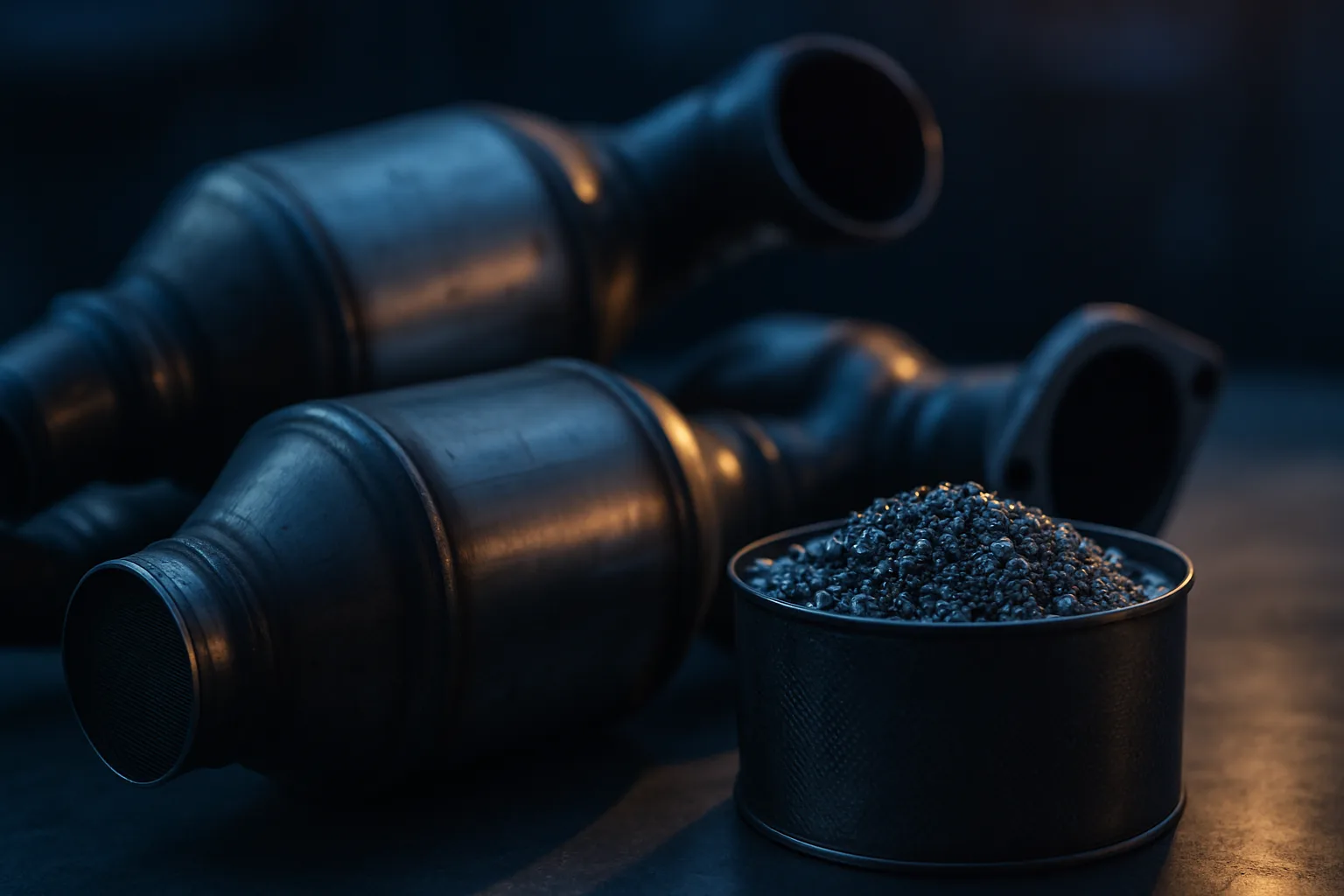
Catalytic converter theft in Canada jumped sharply in recent years — and it hasn't slowed down. For legitimate recyclers, auto shops, and scrap collectors trying to get fair OEM catalytic converter value, that's a serious problem. Stolen cats flood back channels, undercut honest sellers, and make buyers cautious across the board.
If you're in Sydney, Nova Scotia, trying to get a fair price for a converter you pulled off a vehicle you own, theft isn't just a news story. It's affecting what you get paid. Here's how the theft problem ripples through the legitimate recycling market — and what you can do to protect your return.
How Catalytic Converter Theft Distorts the Recycling Market
Theft creates a shadow supply chain. Stolen converters move fast — usually sold to unvetted buyers at low prices with no documentation. That speed and volume distorts the market in ways that hurt legitimate sellers.
When stolen inventory floods secondary buyers, it pushes informal price benchmarks down. Buyers who have absorbed stolen cats at low cost don't need to pay fair market rates for legitimate inventory. The result: honest sellers — auto shops, dismantlers, collectors — end up competing against a black market they can't see or trace. The pressure shows up in the offer you get when you call your local buyer.
- Buyer caution increases: Legitimate processors tighten documentation requirements after theft spikes, adding friction for honest sellers.
- Price benchmarks get muddied: When stolen cats move at below-market rates, it skews informal price references that some buyers use.
- Smaller yards absorb risk: Local recyclers in places like Sydney, Nova Scotia face scrutiny from regulators reacting to theft trends — adding compliance costs.
The converters themselves haven't changed. The platinum, palladium, and rhodium inside a genuine OEM catalytic converter still carry real value tied to global PGM markets. Theft doesn't change the metal. It changes the trust — and trust is what determines whether you get a competitive price or a low-ball offer.
OEM Catalytic Converter Value: Why Provenance Now Matters More Than Ever
Five years ago, most scrap buyers asked fewer questions. Today, processors — especially larger, vetted operations — want documentation. Vehicle identification. Photos. A clear chain of custody. This shift happened directly in response to the theft wave that hit North America hard.
For legitimate sellers, this is actually good news, even if it feels like a hassle. When you can document your converter — VIN, photos, proof of ownership — you separate yourself from the grey-market supply instantly. That documentation is leverage. It signals to serious buyers that your load is clean, and clean loads command better pricing.
OEM converters from known vehicles tend to carry higher value than aftermarket units, and the gap widens when you can prove what you have. A high-value OEM cat from a late-model truck or SUV — think Toyota, Honda, BMW — contains measurably more PGMs than a cheap aftermarket replacement. The difference can be significant. But that premium only materializes when the buyer trusts the inventory.
Want to understand where your converter sits on the value spectrum? check current Canadian catalytic converter prices to get a clearer picture before you approach any buyer.
The Documentation Advantage — and How Smart Sellers Use It
Serious buyers pay more for inventory they don't have to worry about. That's the entire logic of documentation as a pricing tool. Sellers who understand this aren't just protecting themselves legally — they're actively using provenance to extract better offers.
Here's what strong documentation looks like for catalytic converter sales:
- VIN or serial tracking: Links the converter to a specific vehicle with a clear ownership record.
- Photo documentation: Timestamped photos of the converter, the vehicle, and the removal process reduce buyer risk and increase confidence.
- Bill of lading or packing list: For larger loads — auto shops or collectors moving multiple units — proper paperwork is non-negotiable with serious processors.
- Proof of purchase or dismantling record: Auction receipts, insurance write-off documents, or dismantler licenses all add legitimacy.
Platforms like SMASH have built these documentation tools directly into the auction process. That's not an accident. When buyers on a B2B scrap metal marketplace can see documented inventory before bidding, they bid with more confidence — and confidence translates to higher offers. Thin documentation, on the other hand, is a discount trigger. The buyer assumes risk and prices accordingly.
If you're an auto shop in Sydney or a collector in Nova Scotia moving converters regularly, building a documentation habit pays off every single time you sell.
How Regulatory Pressure Is Reshaping Catalytic Converter Sales in Canada
Theft-driven regulation has changed the rules in multiple provinces. Across Canada, legislation targeting scrap metal sales now requires identification, detailed records, and in some cases, waiting periods before payment. These rules exist because of theft — but they affect every seller, stolen inventory or not.
Nova Scotia has seen increased attention on scrap metal transaction transparency, and that trend continues into 2026. For legitimate sellers, the key is getting ahead of requirements rather than reacting to them. Buyers who operate within regulated frameworks — who maintain proper records and work with vetted counterparties — are the buyers worth working with.
Unvetted, cash-only buyers who ask no questions are a liability. Not just legally, but commercially. If your converter ends up in a compliance investigation because the buyer two steps down the chain wasn't clean, your documentation is your protection. Choose your buyers the same way you choose your suppliers: based on verifiable credibility.
For guidance on navigating this space, read Canadian catalytic converter pricing guides that cover both market conditions and compliance context relevant to sellers in 2026.
Why Competitive Auctions Beat Single-Buyer Calls for Catalytic Converter Prices Today
Here's the core problem with the old way of selling scrap cats: one buyer, one offer, no context. You call your usual contact, they quote you a number, you take it or leave it — usually take it, because finding another buyer takes time you don't have. That's exactly the dynamic that a theft-flooded market exploits. When buyers know you have limited options, they have no pressure to offer fair value.
Competitive auction formats change the math entirely. When multiple vetted buyers see your documented inventory and bid against each other, the price reflects actual market demand — not one buyer's margin target. That's what a SMASH scrap metal auction is designed to do.
SMASH operates as a transparent B2B scrap metal marketplace where vetted buyers compete on documented loads. No subscription fees. No guessing. The platform only works when the seller gets a result — so the incentives are aligned. For sellers trying to understand catalytic converter prices today in a market complicated by theft and regulatory pressure, competition is the antidote to uncertainty.
Whether you're moving a single high-value OEM converter from a hybrid or a pallet of mixed cats from a dismantling operation, competition reveals what your inventory is actually worth. To get the best catalytic converter price in Canada, you need more than one buyer looking at your load. You need buyers competing for it.
For more on how SMASH connects Canadian sellers with vetted buyers, visit smashrecycling.ca.
Protecting Your Return: Practical Steps for Legitimate Sellers
The theft problem isn't going away overnight. But you can control how it affects your specific transactions. Here's what legitimate sellers — from solo collectors in Sydney to multi-bay shops across Nova Scotia — can do right now to protect their OEM catalytic converter value.
- Document every removal. Photos, VIN, date, vehicle source. Make it a habit, not an afterthought.
- Work only with vetted buyers. If a buyer doesn't ask any questions, that's a red flag, not a convenience.
- Understand PGM content before you sell. OEM converters from different makes and models vary dramatically in platinum, palladium, and rhodium content. Know roughly what you have before you get a quote.
- Use competitive platforms. A single offer from a single buyer is always a guess. Multiple bids from verified buyers is price discovery.
- Stay current on regulations. Canadian scrap metal rules in 2026 continue to evolve. Being compliant protects you legally and commercially.
- Track market trends. PGM prices move. Palladium and rhodium in particular have shown significant volatility. Selling into strength requires knowing when strength exists.
The sellers who consistently get strong prices aren't lucky — they're prepared. They treat documentation as a selling tool, choose platforms with competitive dynamics, and understand that market transparency works in their favour when their inventory is clean.
If you've been leaving money on the table by calling one buyer, accepting the first number, and moving on — that pattern is worth breaking. The legitimate recycling market rewards sellers who show up prepared. Start with knowing what you have, document it properly, and put it in front of multiple buyers. That's how you get the best catalytic converter price in Canada — even in a market complicated by theft.
Disclaimer: Catalytic converter prices fluctuate based on PGM spot prices, converter type, and market conditions. Always verify current rates before finalizing any sale.
Frequently Asked Questions
Q: Does catalytic converter theft affect what I get paid for my legitimate converter?
Yes — indirectly. Theft creates a grey-market supply that can muddy price benchmarks and make buyers more cautious. When you provide clear documentation of your converter's origin, you separate your inventory from stolen supply and strengthen your negotiating position.
Q: How do I prove my OEM catalytic converter value to a buyer?
Documentation is your proof. Link the converter to a specific vehicle via VIN, include timestamped photos, and provide any ownership or dismantling records you have. Platforms like SMASH build serial tracking and photo documentation into the process, which increases buyer confidence and supports better pricing.
Q: Are catalytic converter sales regulated in Nova Scotia in 2026?
Yes. Canadian provinces, including Nova Scotia, have tightened scrap metal transaction rules in response to theft. Sellers should expect to provide identification and documentation. Working with vetted, compliant buyers protects you legally and commercially.
Q: What makes an OEM catalytic converter worth more than an aftermarket one?
OEM converters typically contain higher concentrations of platinum, palladium, and rhodium than cheap aftermarket units. The PGM content is what drives recycling value. An OEM cat from a late-model Toyota or Honda hybrid, for example, can be worth significantly more than a generic replacement converter of similar size.
Q: Where can I get a fair price for my catalytic converter in Sydney, Nova Scotia?
Competitive, transparent platforms like SMASH connect legitimate sellers with vetted buyers across Canada. Rather than accepting a single offer from one local contact, you put documented inventory in front of multiple buyers who bid against each other. That competition is how price discovery actually works. Start by checking rates at best-catalytic-converter-price.ca.
Follow SMASH on LinkedIn for ongoing scrap metal market insights, PGM price updates, and catalytic converter industry news relevant to Canadian sellers.