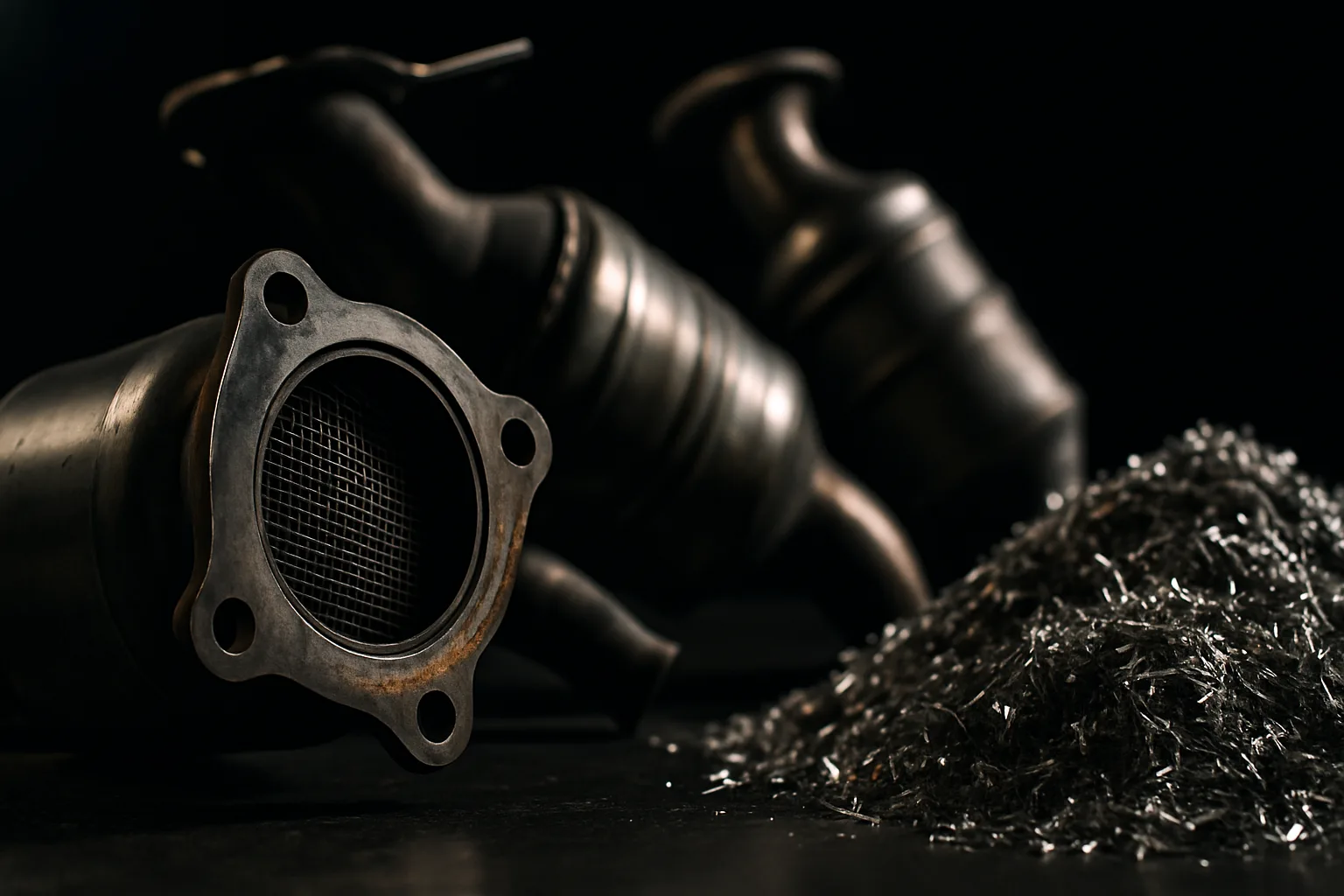
Rhodium trades at multiples of gold. Most people have never heard of it. And right now, it's sitting inside the catalytic converter rusting in your yard.
If you're in St. John's looking to sell a scrap catalytic converter, the rhodium price today is one of the most important numbers you need to understand — and most sellers have no idea it even exists. That's a costly blind spot. Catalytic converters contain three platinum-group metals (PGMs): platinum, palladium, and rhodium. Rhodium is the rarest of the three, the hardest to source, and often the most valuable per gram. Understanding why it matters could be the difference between leaving money on the table and actually getting what your cats are worth.
This guide breaks down what rhodium is, why it commands such a high market price, and how sellers across Newfoundland and Labrador can use that knowledge to make smarter decisions when it's time to sell.
What Makes Rhodium the Most Valuable Metal Inside a Catalytic Converter
Rhodium is a platinum-group metal, but it plays a very specific role inside a catalytic converter. It handles the reduction of nitrogen oxides (NOx) — the emissions that contribute to smog and fail environmental inspections. Platinum and palladium handle oxidation reactions (burning off carbon monoxide and unburned hydrocarbons). Rhodium handles the other side of that equation. Without it, modern three-way catalytic converters simply don't meet emissions standards.
That functional specificity drives demand. There is no cheap substitute for rhodium in this application. Automakers need it. They need it consistently. And the global supply is extremely tight — the majority of the world's rhodium comes from South Africa, with very limited secondary sources. When primary supply tightens, the recycling stream (meaning your scrap cats) becomes critically important to the supply chain. That's not a small thing. That's why the rhodium price today is tracked obsessively by smelters, refiners, and recyclers across North America.
How the Rhodium Price Today Affects OEM Catalytic Converter Value
Not all catalytic converters contain the same mix of PGMs. The ratio of platinum, palladium, and rhodium varies significantly by vehicle make, model, engine type, and year of manufacture. OEM catalytic converters — the original equipment units installed by the manufacturer — typically carry higher PGM loading than aftermarket replacements. That higher loading is precisely why OEM catalytic converter value runs substantially higher than aftermarket units at the scrap window.
Here's the practical breakdown of what affects the value of a cat:
- Rhodium content: Even small differences in rhodium loading (measured in grams per unit) create large price swings when the rhodium price today is elevated.
- Platinum and palladium loading: Both contribute meaningfully, but rhodium's price volatility often dominates the final payout calculation.
- Converter type: OEM units from larger displacement engines (trucks, SUVs, performance vehicles) typically carry more PGMs than small economy car converters.
- Converter condition: Melted substrates, cracked shells, or missing substrate material reduce recoverable PGM content — and your price.
- Vehicle model identification: Buyers who can verify the OEM unit (via VIN lookup or serial tracking) can price more accurately — and pay more confidently.
The takeaway: if you're sitting on OEM converters from fleet vehicles, pickups, or higher-end models, the rhodium content inside those units may be significantly higher than you'd expect. Accurate identification is everything. Guessing the price without knowing the unit is a coin flip.
Why Sellers in St. John's Need to Pay Attention to PGM Market Conditions
St. John's is a working city. Fleet operators, auto shops, salvage yards, and individual collectors all generate scrap catalytic converters. The local scrap market, like any regional market, doesn't always reflect what those cats are actually worth on the broader North American recycling market. That gap — between what a local buyer quotes and what the actual PGM content is worth — is where sellers lose money.
PGM prices fluctuate daily. Rhodium in particular has historically shown dramatic price swings. The rhodium price today could be meaningfully different from what it was three months ago. If you're selling based on a quote from a single buyer who hasn't updated their pricing in weeks, you're not selling at market — you're selling at their margin. Sellers in Newfoundland and Labrador face the same market dynamics as sellers in Toronto or Houston. The metals inside your converter are priced globally, not locally.
That's exactly why platforms like SMASH exist. Instead of one buyer, one phone call, and one take-it-or-leave-it offer, SMASH brings vetted buyers into a competitive auction format. Competition reveals the market. When multiple buyers are bidding on the same load of cats — with full photo documentation, accurate unit identification, and verified inventory — the price discovery process actually works. To get the best catalytic converter price in Canada, you need more than one buyer in the room.
How to Sell Catalytic Converters Online From Newfoundland and Labrador
The idea of selling locally feels simple. But "simple" and "best price" don't always go together. The good news is that geography no longer limits your options. You can sell catalytic converters online and access a much wider buyer pool without leaving your yard.
Here's how the process works when you use a platform built for scrap metal auctions:
- Document your inventory. Photograph each unit. Capture the serial number or OEM stamp if visible. Note the vehicle make, model, and year if you have it. More information means more buyer confidence — and higher bids.
- Use VIN lookup or serial tracking where available. Platforms like SMASH support this. Identifying the exact unit removes guesswork for buyers and supports stronger pricing.
- Submit your load to auction. Your documented inventory goes in front of vetted buyers across North America — not just whoever happens to be buying in your region this week.
- Let competition work. Multiple buyers bidding on the same load drives better price discovery than a single cold call ever will.
- Close and ship. Once the auction closes, auto-invoicing and BOL documentation handle the paperwork. You get paid.
For sellers in St. John's, this matters practically. Shipping cats to a refiner or processor is a real consideration — logistics, lead times, and freight costs factor in. But when you check current Canadian catalytic converter prices and understand what your load is actually worth, the math often still works in your favour. The spread between a local lowball and a properly competed auction price can easily cover freight. That's why more yard operators across Atlantic Canada are moving to online auction models.
What Platinum and Palladium Contribute Alongside Rhodium
Rhodium gets the headline, but platinum and palladium pull serious weight too. Understanding how all three PGMs contribute to your converter's value gives you a more complete picture — and makes you harder to lowball.
Platinum handles the oxidation of hydrocarbons and carbon monoxide. It's the most widely used PGM in diesel catalytic converters. Platinum has a deep, established recycling market and trades at a meaningful price per troy ounce. Diesel-heavy fleets — common in commercial and industrial operations — generate converters with significant platinum content.
Palladium dominates in gasoline engine converters. Over the past several years, palladium prices have been elevated relative to historical norms, driven by tightening emissions standards globally and strong automotive demand. A palladium-heavy converter from a late-model gasoline vehicle can carry real value.
Rhodium is present in smaller quantities by weight, but its per-gram price is dramatically higher than either platinum or palladium. This means even a fractional difference in rhodium content between two otherwise similar converters can produce a notable price difference. That's why unit identification matters so much — and why the rhodium price today is always worth knowing before you sell.
To read Canadian catalytic converter pricing guides that break down how each PGM affects your payout, you'll find practical breakdowns that help you understand exactly what drives value in your specific units.
Getting the Best Price for Scrap Catalytic Converters in St. John's
Selling cats in St. John's isn't complicated, but it does require doing it right. A few things that consistently separate sellers who get good prices from those who don't:
- Know what you have before you sell. Identify OEM units versus aftermarket. Understand which makes and models produce higher-value converters.
- Don't accept the first offer. A single buyer has no incentive to pay market. Competition does the work for you.
- Document everything. Photos, serial numbers, and vehicle information increase buyer confidence and support stronger bids.
- Watch PGM market conditions. The rhodium price today, palladium trends, and platinum movements all affect what your load fetches. Timing matters.
- Use platforms that bring buyers to you. SMASH connects sellers across North America with a vetted buyer network — no subscription fees, no guessing.
The old model — calling your one buyer, taking whatever they offer, hoping it's fair — is finished. Sellers across Newfoundland and Labrador have access to the same tools and the same buyer pool as anyone else on the continent. Use them.
When you're ready to move your load, find the best price for your scrap in Canada through an auction format that actually puts competition to work. No subscription. No guessing. Just market pricing driven by real buyers.
If you're holding scrap catalytic converters in St. John's — from your yard, your shop, or your collection — now is the time to understand what they're worth. Get a free quote and get the best catalytic converter price in Canada at best-catalytic-converter-price.ca. You've already done the hard part by holding the inventory. Don't leave the value behind.
Disclaimer: Catalytic converter prices fluctuate based on daily PGM spot prices, including rhodium, platinum, and palladium. The values referenced in this article reflect general market dynamics as of August 2026. Always check current rates before selling.
Frequently Asked Questions
Q: What is the rhodium price today and how does it affect my catalytic converter's value?
The rhodium price today fluctuates with global precious metals markets and can change significantly day to day. Since rhodium is one of the three platinum-group metals (PGMs) inside your catalytic converter — and typically the most expensive per gram — even small price movements can meaningfully affect what your unit is worth. Always check current PGM spot prices before you sell.
Q: How do I know if my catalytic converter has high rhodium content?
Rhodium content varies by vehicle make, model, engine size, and whether the converter is OEM or aftermarket. OEM converters from trucks, SUVs, and larger displacement engines typically carry higher PGM loading, including rhodium. VIN lookup and serial number tracking — tools available through platforms like SMASH — help identify the specific unit so buyers can price it accurately.
Q: Can I sell catalytic converters online if I'm in St. John's, Newfoundland and Labrador?
Yes. Online auction platforms like SMASH let sellers in St. John's access vetted buyers across North America without being limited to local buyers. You document your inventory with photos and unit details, submit it to auction, and let competitive bidding determine the price. Freight costs are a factor, but the price difference between a competed auction and a single local offer often more than covers shipping.
Q: What's the difference between OEM catalytic converter value and aftermarket converter value?
OEM converters are manufactured by or for the original vehicle maker and typically contain higher PGM loading than aftermarket replacements. This means OEM units generally command higher scrap prices. Aftermarket converters are designed to meet minimum emissions requirements at lower production cost, which usually means less platinum, palladium, and rhodium — and a lower payout at the scrap window.
Q: How does SMASH help sellers in Newfoundland and Labrador get better prices for their scrap catalytic converters?
SMASH is an auction platform that connects sellers with a vetted buyer network across North America. Instead of one buyer and one offer, your documented load goes to auction — creating competition that drives better price discovery. There are no subscription fees, and the platform handles invoicing and documentation. More buyers bidding on your cats means the market price, not one buyer's margin, determines what you get paid.
Follow SMASH on LinkedIn for ongoing scrap metal market updates, PGM price insights, and industry news that helps you sell smarter.
```