Before You Cut: What Every Montreal Seller Needs to Know About Safe Cat Removal
Most sellers focus on the price. Almost nobody thinks about the removal. That's a mistake — because a damaged catalytic converter is worth less, and a badly removed one can be worth nothing to a serious catalytic converter buyer Montreal recyclers actually trust. If you're pulling a cat off a vehicle to recycle it, the process matters as much as the part itself.
This guide covers safe removal from start to finish — tools, safety, what to preserve, what to avoid — so you walk away with a clean core and a strong offer. Whether you're an auto shop in Montreal clearing end-of-life inventory, a collector working through a pile of scrap vehicles, or an individual pulling a cat off a beater before sending it to the yard, this is the process worth knowing.
Why Safe Removal Directly Affects Your Catalytic Converter Price in Canada
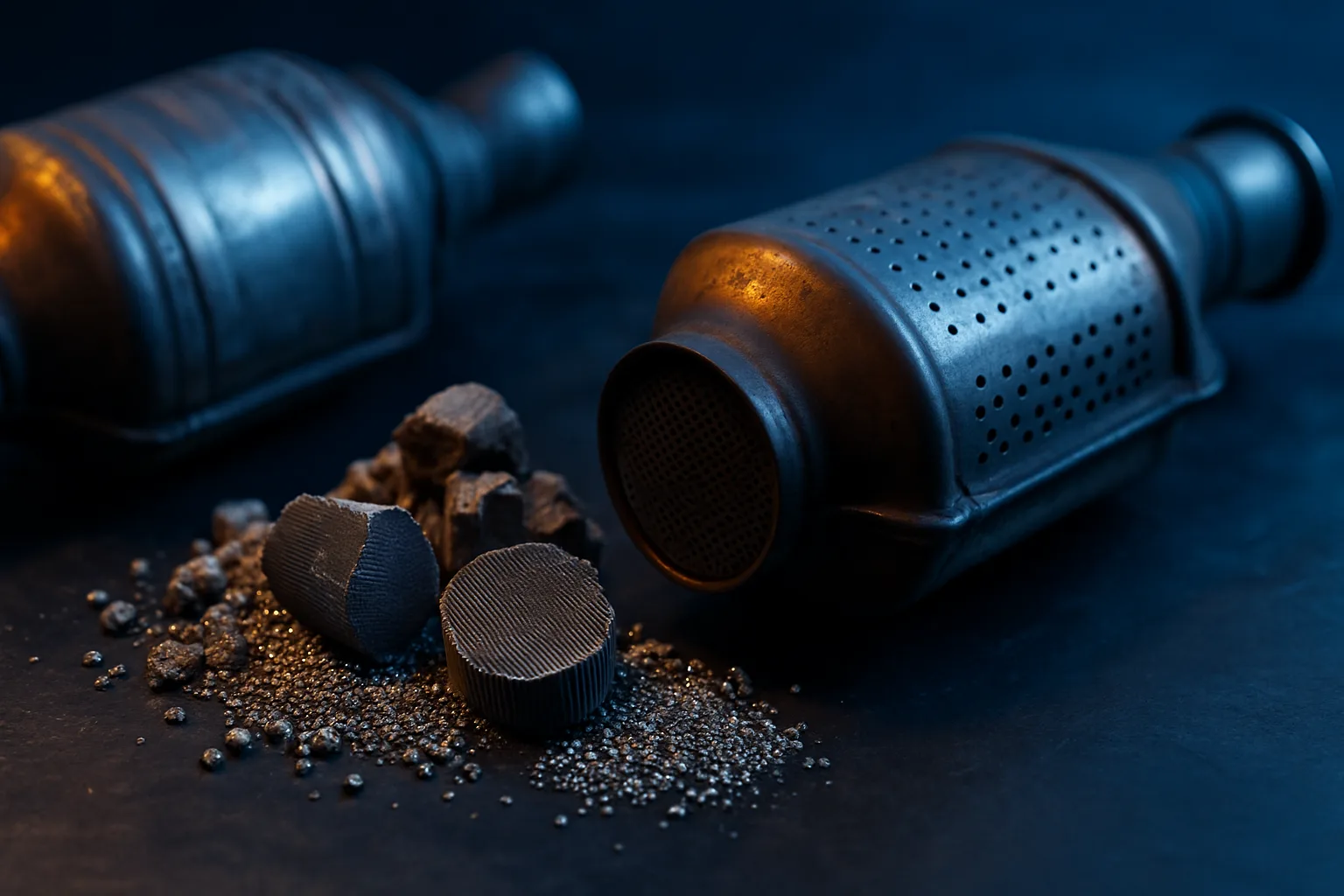
Catalytic converters hold value because of what's inside: platinum, palladium, and rhodium — the platinum group metals (PGMs) that get recovered during the recycling process. These metals are embedded in a ceramic or metalite substrate inside the converter housing. That substrate is fragile. Drop the cat hard enough, cut too close to the body, or let it overheat before removal, and you risk fracturing the substrate. Cracked or crushed substrate means less recoverable PGM material — and buyers price accordingly.
Buyers at legitimate facilities assay the converter to determine its actual PGM content. They're not guessing. A physically intact cat with undamaged substrate gives you the best possible read on value. A damaged one gives the buyer an excuse to grade it down — and they will. When you're trying to get the best catalytic converter price in Canada, the condition of the part on arrival is part of the equation.
There's also a documentation angle. More buyers — especially those operating through structured platforms — want photos, vehicle information, and a clean paper trail. Knowing how to remove and present your cats professionally puts you in a better position with serious recyclers who pay better because they operate with more confidence in what they're buying.
Tools You Need Before You Start
Don't improvise this. A proper removal takes under 30 minutes with the right setup. Rushing it with the wrong tools damages the flanges, strips bolts, and puts you in a bad spot physically and financially.
Here's what you need on hand:
- Floor jack and jack stands — Never work under a vehicle supported only by a jack. Use rated stands.
- Reciprocating saw or angle grinder with a cutoff wheel — For seized or rusted pipe connections where bolts won't budge.
- Breaker bar and impact wrench — Most flange bolts are corroded. You'll need torque.
- Penetrating oil (PB Blaster or equivalent) — Apply to all flange bolts and clamps at least 20–30 minutes before you start.
- Heat gun or propane torch — For stubborn bolts. Use carefully and away from fuel lines.
- Ear and eye protection, heat-resistant gloves — Non-negotiable.
- Collection tray — Some converters retain exhaust residue. Don't let it drain onto your floor.
If you're working in a commercial shop in Montreal or anywhere in Quebec, confirm your workspace is properly ventilated. Exhaust residue and cutting sparks are real hazards. Have a fire extinguisher within reach any time you're using a torch or grinder near a vehicle.
The Safe Removal Process: Step by Step
Follow this sequence. Don't skip steps to save time — you'll cost yourself money on the back end.
- Let the vehicle cool completely. Catalytic converters operate at extreme temperatures — up to 800°C or higher under load. Give the vehicle at least two hours after its last run before you touch the exhaust system. A hot cat isn't just a burn risk; working on hot metal increases the chance of damaging the substrate.
- Document the vehicle and part before removal. Take photos of the cat in place, record the VIN, and note the year, make, and model. Buyers and platforms like SMASH use this information for accurate identification and valuation. Serial tracking and photo documentation aren't bureaucracy — they're how you get paid fairly and fast.
- Spray penetrating oil on all connection points. Flange bolts, clamps, and hangers — soak them all. Come back in 20–30 minutes.
- Safely lift and support the vehicle. Jack the vehicle up and set it on rated stands. Confirm it's stable before you crawl under. Two points of contact minimum.
- Loosen flange bolts with breaker bar or impact. Work from the outside in. If bolts are seized, use heat carefully. Never apply heat near rubber components, brake lines, or fuel lines.
- If bolts are stripped or fused, cut the pipe. Cut clean and straight, leaving as much pipe attached to the cat body as possible. Buyers don't penalize you for cut pipes — they penalize you for damaged housings or crushed substrate.
- Remove the cat and handle it carefully. Don't drop it. Don't stack heavy items on top of it. The substrate inside is ceramic — treat it like something fragile because it is.
- Bag or wrap the cat for transport. A heavy-duty garbage bag or old cloth keeps loose debris contained and protects the housing during transport to your recycler or pickup.
If you're removing multiple cats — say, clearing a lot of end-of-life vehicles — set up a consistent staging area. Keep them organized by vehicle, label them if possible, and maintain your documentation for each one. Volume sellers who show up with organized inventory and paperwork consistently get better treatment from serious buyers. That's not an accident.
What Buyers Are Actually Looking For: PGMs and Condition
When a legitimate buyer quotes you on a cat, they're thinking about three things: what's inside, the condition, and whether they can verify what you're telling them. The platinum group metals — platinum, palladium, and rhodium — are the recoverable assets. Their concentrations vary significantly by vehicle make, model, engine type, and which catalyst generation the manufacturer used.
Rhodium is the rarest and historically most volatile of the three. Palladium is heavily used in gasoline engines. Platinum tends to appear more in diesel applications. The exact mix inside any given converter is why assaying matters — and why serious buyers don't just eyeball it. Recycling the platinum group metals is a precision process, and the value you receive reflects the precision with which the buyer can assess what you've brought them.
Intact substrate = maximum recoverable PGM. Fractured or crushed substrate = reduced yield = lower offer. That's the direct line between how carefully you removed the cat and what ends up in your account. When you check current Canadian catalytic converter prices, you'll see that price ranges can vary substantially even within the same cat type — condition is a real variable, not just a negotiating tactic.
For Montreal sellers and buyers across Quebec, Montreal scrap metal services are increasingly connected to national and North American buyer networks. That means more competition for your inventory — which is good for your price, as long as your cats arrive in shape to compete on quality.
How SMASH Connects Montreal Sellers to Competitive Buyers
Here's the old way: you pull a cat, call one buyer, take whatever they say, and hope it's fair. You have no reference point and no leverage. The buyer knows that.
SMASH changes that dynamic. Instead of one phone call to one buyer, your documented inventory goes to a network of vetted buyers who compete for it. More buyers bidding means better price discovery — you see what the market actually thinks your cats are worth, not just what one buyer wants to pay. No subscription fees. SMASH only wins when you win.
The platform's photo documentation, serial tracking, and inventory tools work directly with the removal process described above. Every photo you take before and during removal becomes useful documentation on the platform. Every piece of vehicle information you record maps to buyer expectations. Find the best price for your scrap in Canada by putting your inventory in front of buyers who are actually competing — not just quoting you in a vacuum.
For shops and collectors handling volume in Montreal or anywhere across Quebec, SMASH's auto-invoicing and structured auction format also reduce the administrative overhead of moving multiple loads. That matters when you've got a dozen cats to move and paperwork slows everything down.
Scrap Metal Prices Today: What's Moving the Market in 2026
PGM prices in 2026 continue to reflect global supply pressures and industrial demand, particularly from the automotive sector and emerging clean energy applications. Rhodium, palladium, and platinum all remain significant value drivers in scrap catalytic converters — but their individual prices fluctuate, sometimes sharply, based on mining output, currency movement, and industrial policy shifts in major economies.
The practical takeaway for sellers: the spread between a poorly documented, damaged cat and a clean, well-presented one tends to widen when markets are volatile. Buyers protect themselves by grading down anything that introduces uncertainty. Your best hedge against a soft market is a well-removed, well-documented converter that gives the buyer nothing to pick at.
To stay current, read Canadian catalytic converter pricing guides that track market movement and explain what's actually driving PGM values week to week. Understanding the market is part of getting paid fairly — you can't negotiate from ignorance.
Disclaimer: Catalytic converter prices fluctuate based on PGM spot prices, market conditions, and individual part specifications. Always check current rates before making selling decisions.
If you've pulled your cats correctly and you're ready to find out what they're worth, the next step is straightforward. Get your documentation together, reach out to a serious buyer network, and let competition do the work. Get the best Canadian price for your catalytic converter — get a free quote at best-catalytic-converter-price.ca.
---Frequently Asked Questions
Q: How do I find a reliable catalytic converter buyer in Montreal?
Look for buyers who request vehicle documentation, use assay-based pricing, and operate with transparent processes. Platforms like SMASH connect Montreal sellers with vetted buyers across North America, so you're not dependent on a single local offer. Documented inventory consistently attracts better bids from buyers who operate professionally.
Q: Does a cracked catalytic converter substrate reduce its scrap value?
Yes — significantly. The platinum group metals are recovered from the substrate material inside the housing. A fractured or crushed substrate yields less recoverable PGM, which buyers reflect directly in their offers. Safe, careful removal is the simplest way to protect the full value of your converter.
Q: What information do I need when selling a scrap catalytic converter in Quebec?
At minimum: vehicle year, make, model, and VIN. Photos of the cat in place and after removal are increasingly expected by serious buyers. Some Quebec municipalities and provincial regulations also require documentation of origin for catalytic converter sales — check local requirements before you sell.
Q: How long does catalytic converter recycling near me take to pay out in Montreal?
Turnaround varies by buyer and process. Local scrap yards may pay on the spot with flat-rate pricing. Buyers using assay-based pricing — which gives you a more accurate reflection of PGM value — typically take a few business days to process and quote. Structured platforms with auto-invoicing can compress that timeline considerably.
Q: Are scrap catalytic converter prices in Canada different from U.S. prices?
The underlying PGM spot prices are global, but Canadian pricing reflects CAD exchange rates, regional demand, and local buyer competition. The gap between what one local buyer offers and what competitive bidding can reveal is often substantial — especially for high-value cats from trucks, SUVs, or luxury vehicles where PGM loading is higher.
---Follow SMASH on LinkedIn for scrap metal market updates, PGM price insights, and industry news relevant to Canadian recyclers and sellers.