What the Palladium Price Today Means Before You Cut That Cat
Before you reach for an angle grinder, check the palladium price today. That single number can shift what your catalytic converter is worth by dozens — sometimes hundreds — of dollars. Too many people pull a cat off a vehicle without knowing what's inside it or what the market is doing right now. That's leaving real money on the table.
This guide covers how to safely remove a catalytic converter for recycling, what drives its value, and how to make sure you're getting paid fairly once it's off the vehicle. Whether you're an auto shop in Saint John clearing out a stack of cores, or a first-timer pulling one cat off a junked car, the process matters — and so does the timing.
Why Palladium, Platinum, and Rhodium Drive Scrap Catalytic Converter Prices
A catalytic converter isn't just a steel pipe with a honeycomb inside. It's a small vault of platinum group metals — primarily platinum, palladium, and rhodium. These metals are what buyers are actually paying for when they quote you a price on a cat. The steel shell is almost an afterthought.
Palladium is the dominant metal in most gasoline-engine converters. Platinum shows up more in diesel cats. Rhodium is found in smaller quantities but often carries the highest price per troy ounce of the three. When any one of these metals spikes or drops on the global market, the value of your scrap catalytic converter moves with it — sometimes within hours.
- Palladium: Primarily used in gasoline engine catalysts. Price fluctuates with auto production demand and mine supply, particularly from South Africa and Russia.
- Platinum: Common in diesel converters. Also used in industrial applications, which adds another layer of price volatility.
- Rhodium: The smallest volume but can be the most valuable per ounce. Even small swings in rhodium pricing ripple through cat values significantly.
If you want to get the best catalytic converter price in Canada, you need to know what these metals are trading at before you sell. A converter that's worth $80 in a slow market might fetch $140 or more when palladium spikes. Timing and information are your two biggest advantages.
How to Safely Remove a Catalytic Converter for Recycling
Safety first — this isn't just a slogan. A catalytic converter on a recently driven vehicle can hold heat for hours. It's also mounted in tight quarters under the vehicle, surrounded by exhaust components, fuel lines, and suspension parts. Rushing this job gets people hurt.
Follow this process and you'll get the cat off cleanly, protect yourself, and preserve the converter's condition — which matters for pricing, since damaged or cracked biscuits (the ceramic honeycomb inside) can reduce the value of what you're selling.
- Let the vehicle cool completely. Wait at least 2-3 hours after the engine was last run. Catalytic converters operate at extremely high temperatures. Burns from a hot cat are serious injuries.
- Lift and support safely. Use proper jack stands — never work under a vehicle supported only by a floor jack. On older vehicles with high clearance, you may be able to work without lifting at all, but most cars require raising.
- Spray the hardware with penetrating oil. Exhaust bolts and flanges rust badly, especially in New Brunswick where road salt is heavy from October through April. Apply penetrating oil and let it soak for 15-20 minutes minimum.
- Use the right tools. A reciprocating saw or angle grinder is often faster than fighting rusted bolts. Cut the pipe on either side of the converter — leave yourself a couple inches of pipe on each end if possible. This makes the unit easier to handle and doesn't reduce its recyclable value.
- Wear eye and respiratory protection. Old catalytic converter material can release fine particulate when disturbed. Safety glasses and a dust mask or respirator are non-negotiable.
- Handle with gloves. Even after cooling, edges from cut pipe are sharp. Heavy work gloves protect your hands during removal and transport.
- Don't rattle or drop the converter. A cracked ceramic substrate reduces recoverable PGM content. Handle it like what it is — a fragile item with real monetary value inside.
Once the converter is off, keep it in a sealed container or heavy-duty bag until you're ready to sell. Proper handling protects both the value and your workspace.
Scrap Catalytic Converter Prices in Saint John: What Affects Your Quote
If you're based in Saint John and trying to understand what your cats are worth, the honest answer is: it depends on several variables. No two catalytic converters are identical in PGM content, and pricing in the local market is tied to global commodity pricing that changes daily.
Buyers who offer you a flat price without looking up the converter type are either working off outdated price sheets or building in a large margin for themselves. Neither scenario benefits you. When you check current Canadian catalytic converter prices before selling, you go into the transaction knowing what a fair offer looks like.
Key factors that determine your converter's value in the Saint John market:
- Converter type and vehicle make: A large pickup truck cat holds far more PGM material than a compact sedan cat. Year, make, and model all affect the grade.
- Condition of the substrate: A rattled or cracked honeycomb means lower recoverable metal. Intact biscuits get better prices.
- Current palladium, platinum, and rhodium spot prices: Check these the morning you plan to sell. Markets open Sunday evening North American time.
- Volume: Auto shops or collectors moving 10+ units at once typically get better rates than someone selling a single cat.
- Whether you have documentation: Serial numbers, vehicle VINs, and clear photos help legitimate buyers move faster and pay more confidently.
For anyone managing multiple units — auto shops, wreckers, fleet maintenance operations in and around Saint John — Saint John scrap metal services through a structured platform makes the documentation and quoting process significantly cleaner than one-off phone calls.
Why Scrap Metal Inventory Management Changes What You Get Paid
This is the part most sellers skip. They pull the cat, toss it in a bin, make a call, and take whatever price they're offered. There's a better approach, and it starts with treating your inventory like inventory — not like junk.
Scrap metal inventory management for catalytic converters means tracking what you have: converter type, vehicle it came from, condition, and approximate grade. When you walk into a sale with that information documented, you're not guessing. Buyers aren't guessing either. And that clarity translates to faster, more accurate quotes.
Platforms like the SMASH Recycling auction platform are built for exactly this workflow. Instead of calling one buyer and hoping the price is fair, you document your inventory and let multiple vetted buyers compete. Competition reveals the market. One phone call hides it. For anyone in New Brunswick moving a regular volume of cats, this isn't a small difference — it's a structural advantage.
SMASH supports photo documentation, serial tracking, and VIN lookup — features that matter when a buyer needs to verify what they're bidding on before they commit. That verification builds confidence, and confidence produces better offers. Read Canadian catalytic converter pricing guides to understand how documentation affects what you're paid.
Finding a Reliable Catalytic Converter Price List in Canada
There's no single published "catalytic converter price list Canada" that covers every unit and stays current. Any list you find online is a starting point, not a final quote. The reason is simple: prices move with palladium, platinum, and rhodium spot rates, and those move every trading day.
What a good price list gives you is a benchmark. It helps you understand which converters are high-grade versus low-grade, which vehicle makes tend to produce valuable units, and what the general price spread looks like between grades. Use it as a floor for negotiation, not a ceiling.
Reputable Canadian recyclers and buyers will quote you based on current assay data and live PGM pricing. If a buyer is working off a laminated card from two seasons ago, find a different buyer. The platinum group metals recycling market in 2026 is too volatile for stale data to serve you well.
Whether you're researching prices for a one-time sale or building a system for ongoing scrap catalytic converter sales, the same principle applies: current market data plus documented inventory equals better outcomes. That's the combination that works.
Disclaimer: Catalytic converter prices fluctuate daily based on palladium, platinum, and rhodium spot rates. Always verify current pricing before selling. The information in this article reflects general market conditions as of September 2026 and is not a guaranteed quote.
Frequently Asked Questions
Q: What is the palladium price today and how does it affect my catalytic converter's value?
The palladium price today is a live commodity rate that changes throughout each trading session. Since palladium is the primary platinum group metal in most gasoline-engine catalytic converters, a higher palladium spot price directly increases what buyers will pay for your scrap cats. Check a live commodities site or ask your buyer to confirm the rate they're pricing against before you accept a quote.
Q: How do I find scrap catalytic converter prices in Saint John, New Brunswick?
Start by identifying the exact type and grade of converter you have — make, model, and year of the vehicle it came from. Then compare quotes from multiple buyers rather than accepting the first offer. Services that connect you to vetted buyers, like platforms built on auction-style competition, tend to produce better price discovery than a single cold call to a local yard.
Q: Is it legal to remove and sell a catalytic converter in Canada?
Yes, removing and selling a catalytic converter from a vehicle you own is legal in Canada. However, regulations around documentation and proof of ownership are tightening across multiple provinces as part of broader anti-theft enforcement. Keep records showing the vehicle origin of any converter you sell — this protects you and speeds up the transaction with legitimate buyers.
Q: What's the difference between a high-grade and low-grade catalytic converter?
High-grade converters contain higher concentrations of platinum, palladium, and rhodium. They typically come from larger engines, certain luxury or performance vehicles, and some late-model trucks and SUVs. Low-grade units come from smaller economy cars or vehicles where manufacturers used less PGM material. Knowing your grade before you sell prevents you from accepting a low-grade quote on a high-grade unit.
Q: How many catalytic converters do I need to sell before using an auction platform makes sense?
Even a handful of units — as few as three to five — can benefit from a competitive auction format. Auto shops and wreckers moving 10 or more units regularly will see the most significant difference compared to single-buyer transactions. The documentation process takes roughly the same effort regardless of volume, so the return on that effort scales up quickly as your inventory grows.
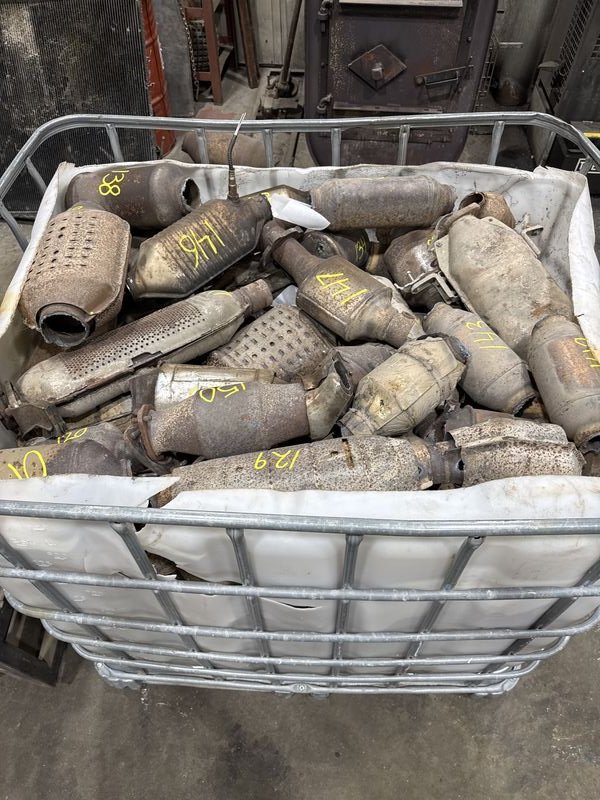
If you're ready to stop guessing and start getting paid based on real market data, the next step is straightforward. Document what you have, know what palladium is trading at today, and let competition work in your favour. Whether you're clearing one converter or an entire bin of cores, you can get the best catalytic converter price in Canada when you approach the sale with the right information and the right platform behind you.
Follow SMASH on LinkedIn for ongoing scrap metal market updates, PGM pricing insights, and practical guides for recyclers across North America.