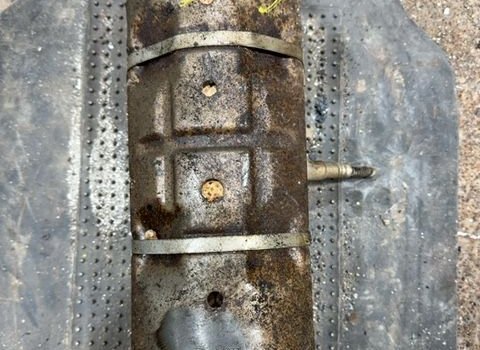
What's Actually Inside Your Catalytic Converter — And Why It's Worth More Than You Think
Most people know catalytic converters are valuable. Few know exactly why. If you're sitting on a pile of scrap cats and wondering why the platinum price today matters to your payout, this article breaks it down clearly. No fluff, no guesswork — just the metals, the market, and what it means for your bottom line in Canada right now.
The short version: three precious metals drive almost all of the value in a catalytic converter. Platinum, palladium, and rhodium. Together, they're called PGMs — platinum group metals. Understanding how they work, how much of each is in a typical cat, and how prices shift helps you stop leaving money on the table when you sell.
Platinum, Palladium, and Rhodium: The Three Metals That Drive Cat Converter Value
Every catalytic converter contains a ceramic or metallic substrate coated with a washcoat. That washcoat is where the PGMs live. These metals act as catalysts — they trigger chemical reactions that convert toxic exhaust gases like carbon monoxide, nitrogen oxides, and hydrocarbons into less harmful emissions. That chemistry is incredibly valuable, and so are the metals behind it.
Here's how the three metals break down:
- Platinum (Pt): The most recognized of the three. Platinum handles oxidation reactions and is most commonly found in diesel catalytic converters. It's also present in many gasoline cats. The platinum price today fluctuates based on global industrial demand, mining output from South Africa and Zimbabwe, and investment activity. As of late 2026, platinum trades at a significant premium over other industrial metals — and its presence in your cat directly affects your quote.
- Palladium (Pd): Dominant in modern gasoline engine catalytic converters. For most of the past decade, palladium has commanded higher prices than platinum, driven by tightening emissions standards worldwide and consistent demand from the auto sector. A single gasoline cat can contain anywhere from 2 to 7 grams of palladium, depending on the vehicle.
- Rhodium (Rh): The wildcard. Rhodium handles the reduction of nitrogen oxides — the hardest conversion reaction — and it's extraordinarily rare. Supply is tightly concentrated, mostly as a byproduct of platinum and palladium mining. When rhodium markets move, they move hard. It's not uncommon for rhodium to trade at multiples of platinum. Even tiny amounts in a cat can represent significant value.
Together, these three metals are why a used catalytic converter from a Honda Accord is worth more than a pile of clean copper. And it's why knowing the market — rather than just accepting the first offer — matters so much.
How Much PGM Is Actually in a Catalytic Converter?
This varies significantly by vehicle type, manufacturer, and model year. There's no single number that applies to every cat. But understanding the general ranges helps you set realistic expectations before you call a catalytic converter buyer in Scarborough or submit a quote request.
General PGM content ranges by vehicle category:
- Standard passenger gasoline vehicle: 2–7 grams of palladium, 1–3 grams of platinum, 0.5–2 grams of rhodium
- Diesel passenger vehicle: Higher platinum content (3–8 grams), lower palladium, minimal rhodium
- Diesel trucks and heavy equipment: Larger substrate, higher total PGM loading — these cats often command the best prices per unit
- Hybrid vehicles: Some hybrids have smaller cats due to reduced exhaust duty cycles, but others — particularly older hybrids — can carry higher PGM loads because the cat runs cold more often and needs more catalyst to compensate
- High-value cats (e.g., from foreign luxury vehicles and trucks): Can contain significantly higher PGM content and are actively sought by processors across Ontario
The exact assay values are determined through smelting and sampling at a licensed processor. No buyer — honest or otherwise — can give you a precise gram count just by looking at the outside of a converter. What they're really doing is estimating based on the vehicle type, serial number, and known averages. That's why documentation and buyer competition both matter.
Why the Platinum Price Today Affects Your Payout — And How to Track It
PGM prices are quoted per troy ounce on global commodities markets. The platinum price today directly feeds into what a processor is willing to pay a recycler for raw cats. When platinum, palladium, or rhodium spike, payouts to sellers follow — usually with a short lag as processors and middlemen adjust their buy lists.
Here's the problem: most individual sellers and even smaller yards don't have real-time access to PGM spot prices when they're negotiating a sale. A buyer who buys cats every day absolutely does. That information gap is where value leaks out of the transaction.
A few practical steps to protect yourself:
- Check PGM spot prices before you sell. Free data is available through commodity tracking sites. Know what platinum, palladium, and rhodium are trading at before you get a quote — it gives you a baseline.
- Use serial numbers and VIN lookups. Platforms like SMASH allow sellers to document their inventory properly, with serial tracking and photo documentation. This makes your lot more legible to buyers and supports better price discovery.
- Don't take the first offer. A single buyer, one phone call, one price — that's the old way. More buyers bidding on your cats reveals the actual market. You can get the best catalytic converter price in Canada when you create real competition around your inventory.
- Time your sale when possible. You don't need to be a commodities trader, but if rhodium just spiked 30%, holding a load for a few days while the market settles and processors update buy lists can make a real difference.
Want to stay current on where the market sits? You can check current Canadian catalytic converter prices before you decide when and where to sell.
Selling Catalytic Converters in Scarborough and Across Ontario: Know Your Options
If you're in Scarborough or anywhere across the Greater Toronto Area, you have more options than you might think. The concentration of auto salvage yards, scrap metal dealers, and specialty cat buyers in this part of Ontario is significant. That's an advantage — but only if you use it.
The typical selling path looks like this: a yard or collector accumulates cats, calls one or two local buyers, gets a quote, and sells. That process is fast, but it's not optimized. The buyer you called first isn't necessarily the one who would pay the most. They may be using a buy list that hasn't been updated in days. They may be long on certain grades. You have no way of knowing any of that from a single phone call.
A better approach runs the same cats through a competitive process. Platforms like SMASH are built for exactly this. You document your inventory — cats sorted by type, with photos, serial numbers where applicable — and multiple vetted buyers can bid. That's a catalytic converter auction model, and it's how professional recyclers in Scarborough and across Ontario are getting better price discovery on their loads without doing more legwork.
SMASH uses no subscription fees. You only pay when you sell. For catalytic converter buyers Ontario-wide, it creates a direct, transparent channel to move inventory at competitive prices. If you're a shop or collector sitting on a regular volume of cats, that model scales well.
To understand the full landscape before you sell, read Canadian catalytic converter pricing guides that cover everything from sorting grades to timing your sale around PGM market moves.
Common Mistakes That Cost You Money When Selling Scrap Catalytic Converters
Understanding PGM content is only half the equation. How you prepare and sell your cats determines whether that knowledge translates into a better payout. These are the most common mistakes that eat into your return.
- Selling unsorted loads: Mixing high-value cats with low-value ones and asking for a blended price almost always means the buyer defaults to a conservative average. Sort your load. Know what you have. High-grade diesel cats from trucks shouldn't be lumped in with worn-out undersized converters from economy cars.
- No documentation: A cat with a readable serial number and a clear photo gets a more confident bid than an unidentified unit. Buyers are pricing in uncertainty when they can't identify what they're looking at. Eliminate that uncertainty with proper documentation before you go to market.
- Selling too fast after a PGM dip: If palladium just dropped 15% in a week, buyers will adjust immediately. Sellers sometimes aren't even aware of the move. Checking spot prices before you sell takes five minutes and can meaningfully affect your decision.
- Using a single buyer without comparison: This is the biggest one. One quote is not a market. It's one data point. The difference between the first offer and the best offer on a load of 50 cats can be substantial. Use competition — that's what it's there for.
- Ignoring weight and grade: Buyers price on expected PGM yield. A heavy foil-type cat and a light ceramic cat from the same vehicle type aren't worth the same. Learn the grades. Or use a platform that helps you communicate them clearly to buyers who know the difference.
If you want to compare scrap metal bids from Canadian buyers, having your cats documented and sorted before you go to market gives you a real edge.
Frequently Asked Questions
Q: How does the platinum price today affect what I get paid for my catalytic converter in Canada?
Platinum is one of three precious metals — alongside palladium and rhodium — that processors extract from scrap catalytic converters. When the platinum price today rises, processors can afford to pay more for raw cats, and those higher buy prices typically flow through to sellers. The lag between a spot price move and an updated buy list from a local buyer can be a day or more, so checking live PGM prices before you negotiate is worth the two minutes it takes.
Q: Are there reliable catalytic converter buyers in Scarborough I can use right now?
Yes — Scarborough and the broader Greater Toronto Area have a strong concentration of scrap yards and specialty cat buyers. The more useful question is whether you're getting a competitive price from whoever you're using. A platform like SMASH connects sellers in Scarborough and across Ontario with vetted buyers through an auction format, which creates real price competition rather than a take-it-or-leave-it offer from one local contact.
Q: What's the difference between a catalytic converter auction and selling directly to a local buyer?
A direct sale is faster but gives you one price from one buyer. A catalytic converter auction puts your documented inventory in front of multiple vetted buyers who compete for it. More competition generally produces better price discovery — meaning you're more likely to see something close to actual market value rather than one buyer's margin-protected offer. SMASH operates on this model with no subscription fees for sellers.
Q: How much rhodium is in a typical catalytic converter, and why does it matter so much?
Most passenger vehicle cats contain less than 2 grams of rhodium — often well under a gram. But because rhodium is extraordinarily rare and trades at prices that can be multiples of platinum, even fractional gram amounts contribute meaningfully to a cat's value. Rhodium's price is volatile and supply-constrained, so it can swing your payout significantly depending on when you sell.
Q: Do catalytic converter prices in Canada follow the same market as other countries like Australia?
PGM spot prices are set globally, so the underlying metal values are consistent worldwide. What differs is the local processor network, currency exchange, freight costs, and the competition among buyers in a given market. Canadian sellers price in CAD and sell to processors operating under Canadian regulations — so while global PGM movements drive the base value, getting the best price means working with buyers who are active in the Canadian market specifically.
You've got more leverage than most sellers realize. The metals inside your cats are globally traded commodities with real, trackable prices. Sorting your load, documenting it properly, and putting it in front of competing buyers is how you capture that value instead of leaving it behind. If you're in Scarborough, anywhere in Ontario, or across Canada, the tools exist to do this right. Get a free quote at best-catalytic-converter-price.ca and find out what your cats are actually worth in today's market.
Precious metal prices fluctuate daily. All PGM-related valuations in this article are for general informational purposes only. Always verify current spot prices before selling.
Follow SMASH on LinkedIn for ongoing scrap metal market updates, PGM price trends, and industry insights that help you sell smarter.