What Actually Happens to Your Catalytic Converter After You Sell It?
Most people hand over their catalytic converter at a scrap yard and walk away with cash — but have no idea what happens next. That gap in knowledge costs sellers money. When you understand how assaying and smelting work, you understand why price quotes vary wildly and how to sell catalytic converters online for what they're actually worth.
The precious metals locked inside your cat — platinum, palladium, and rhodium — don't just appear on a price sheet by magic. They go through a precise industrial process before a buyer knows exactly what they bought. Here's how that process works, and why it matters to your bottom line in Moncton or anywhere else in Canada.
What's Inside a Catalytic Converter: Platinum, Palladium, and Rhodium
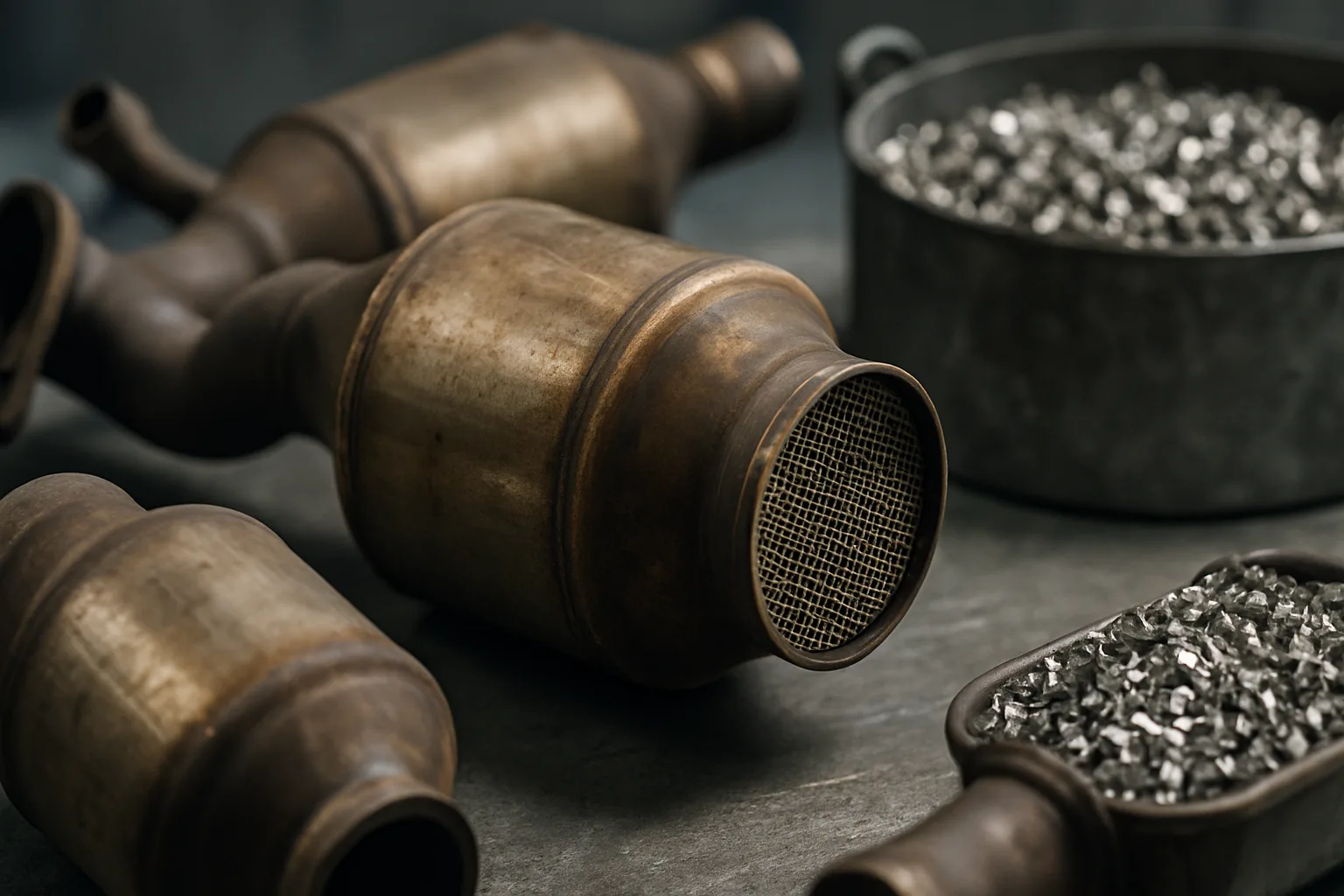
Your catalytic converter contains a ceramic or metalite honeycomb substrate coated with a wash layer of precious metals. Those metals — platinum (Pt), palladium (Pd), and rhodium (Rh) — are what drive almost all of the value. The steel shell around it matters too, but it's the PGMs (platinum group metals) that determine whether your cat is worth $40 or $400.
PGM loading varies significantly by vehicle make, model, year, and engine type. A small domestic inline-4 cat might carry a fraction of a gram of total PGMs. A large diesel truck or luxury vehicle cat can carry several grams. Some hybrids run cleaner burn cycles and carry higher PGM loads as a result. That's why any serious buyer needs to know exactly what's in the substrate — not guess.
- Platinum: Used in diesel and some gasoline converters. Prices fluctuate with industrial demand and mining output.
- Palladium: Dominant in gasoline catalysts. Has seen significant price swings over the past several years.
- Rhodium: Present in smaller quantities but often the highest-value metal per gram. Supply is extremely limited.
The platinum price today (along with palladium and rhodium spot prices) sets the ceiling on what any converter can fetch. But the real question is: how does a buyer confirm what's actually in your specific unit?
Assaying: How Buyers Verify What Your Cat Is Worth
Assaying is the process of measuring the actual precious metal content of a catalytic converter substrate. It's not an estimate. It's chemistry. And it's the step that separates serious buyers from guesswork operations.
Here's how a standard assay process works for catalytic converters:
- Decanning: The ceramic or metalite substrate is removed from the steel shell. The shell is weighed and set aside. Only the substrate goes to assay.
- Crushing and milling: The substrate is mechanically crushed into a fine powder. This ensures the sample is fully homogenous — no hot spots, no uneven distribution.
- Sampling: A representative sample is pulled from the milled lot. Sampling accuracy is critical. Larger lots are sampled multiple times and blended to reduce error.
- Acid digestion: The sample is dissolved in a strong acid solution (commonly aqua regia — a mix of nitric and hydrochloric acid) to bring the PGMs into solution.
- ICP-OES or fire assay analysis: The dissolved sample is analyzed using Inductively Coupled Plasma Optical Emission Spectrometry or fire assay techniques to quantify the exact concentration of platinum, palladium, and rhodium.
- Return settlement: The assay results are applied against the lot weight to calculate total recoverable PGMs. That figure, priced against spot metal rates, determines your payout.
This process typically takes days to weeks depending on the smelter's queue and lot size. Sellers who don't understand this often accept low upfront quotes rather than waiting for a proper settlement — and leave money on the table.
Smelting: Turning Substrate Into Recoverable Metal
Once the assay confirms PGM content, the full lot goes to smelting. This is where the actual metal recovery happens. The milled substrate powder is fed into a high-temperature smelting furnace along with a collector metal (typically copper or iron) that captures the PGMs as the ceramic matrix is destroyed.
The result is a metal alloy — called a matte or bullion — that contains concentrated PGMs along with the collector metal. This is then sent through refining to separate each individual metal into its pure form. The refined platinum, palladium, and rhodium are then sold into the commodity market.
Smelting and refining are capital-intensive operations. Most scrap yards — including operations in New Brunswick and across Atlantic Canada — don't run their own smelters. They aggregate material, process it into lots, and ship to a toll smelter or major refinery. That's a normal part of the supply chain, but it also means the final settlement price flows back through multiple hands.
Understanding this chain matters when you get the best catalytic converter price in Canada. Fewer intermediaries between you and the final buyer typically means better pricing.
Why Lot Size and Documentation Affect Your Price
Here's something most casual sellers don't know: assay accuracy improves with larger lots. A single catalytic converter is nearly impossible to assay with precision. The sample size is too small for representative analysis. Most smelters require a minimum lot — often measured in hundreds of pounds of substrate — before they'll run a proper assay.
This creates a real challenge for individuals or small shops selling one or two cats at a time. You're either selling to an aggregator who blends your material into their lot (and pays you their estimate, not assay-confirmed value), or you're holding material until you have enough volume for a proper submission.
Documentation helps. When buyers see:
- Clear photos of each unit
- VIN or serial data where available
- Accurate piece counts and weight
- Proper packing lists and BOLs
…they can price with more confidence. That confidence translates to better offers. Platforms that support scrap metal inventory management — photo documentation, serial tracking, organized lot data — give sellers real leverage. That's exactly where SMASH comes in. SMASH's inventory tools let you document your cats properly before you ever post them, so buyers are bidding on verified material, not an unknown.
Whether you're a collector in Moncton running a few cats a month or a larger operation processing regular loads, good documentation is one of the simplest ways to support better price discovery. If you want to read Canadian catalytic converter pricing guides that go deeper on documentation and valuation, there's solid reference material available.
How to Sell Catalytic Converters Online and Actually Get Market Value
The traditional approach — calling one local buyer, taking their number, done — cuts you off from market competition. One buyer means one price. They may be fair. They may not be. You have no way to know.
When you sell catalytic converters online through a competitive platform, you expose your material to multiple vetted buyers who are actively competing for inventory. That competition is what drives prices toward actual market value, not toward whatever a single buyer feels like offering that day.
Tools like a how much is my catalytic converter worth calculator free can give you a rough baseline — useful for knowing if an offer is in the ballpark — but they don't replace real bids from real buyers on your actual material. Spot prices for platinum, palladium, and rhodium shift daily. Demand from specific refiners varies. The only way to know your market price is to actually see what buyers will pay, competitively, right now.
SMASH facilitates exactly that. Get competitive bids for your scrap in Canada through an auction format where buyers compete on your documented lots — no subscription fees, no guessing. If you're in Moncton or anywhere across New Brunswick and Atlantic Canada, this access to a broader buyer network means your cats aren't just priced by whoever happens to be nearby.
For sellers researching local options, operations like Brown's Aluminum & Catalytic Converter Scrap Yard represent the traditional aggregator model. Those yards have their place in the supply chain. But understanding the full process — assay, smelting, refining, settlement — helps you ask better questions and evaluate offers with context. Check current Canadian catalytic converter prices before you commit to any offer.
What Moncton Sellers Should Know Before Their Next Sale
Atlantic Canada has a smaller secondary metal market than Ontario or British Columbia, which means local competition for your cats may be limited. That's not a reason to accept a low number — it's a reason to look beyond your immediate geography when you sell.
Online platforms and Moncton scrap metal services have made it practical for New Brunswick sellers to access national buyer networks without shipping material speculatively. You post your documented lot, buyers bid, you accept the best offer and arrange logistics from there. The market comes to you.
A few practical points for Moncton-area sellers:
- Know whether you're selling whole units or decanned substrate — buyers price these differently.
- Photograph each unit clearly, including any identifying marks or visible damage to the substrate.
- Don't mix converters from wildly different vehicle types in a lot without noting the breakdown — buyers price mixed lots conservatively.
- Watch platinum, palladium, and rhodium spot prices. Selling into a price spike versus a price trough can make a meaningful difference.
- Ask any buyer whether their quote is based on an assay return or an upfront estimate — those are very different transactions.
The scrap catalytic converter market rewards sellers who show up prepared. Document well, understand the process, and use competitive platforms. That's the formula.
Disclaimer: Catalytic converter prices fluctuate daily based on platinum, palladium, and rhodium spot rates. All pricing references in this article are general in nature. Always check current Canadian catalytic converter prices before making any selling decisions.
If you're ready to stop guessing what your cats are worth and start getting real market offers, the path forward is straightforward. Get the best Canadian price for your catalytic converter — get a free quote at best-catalytic-converter-price.ca and find out what your material is actually worth today.
Frequently Asked Questions
Q: How long does catalytic converter assaying take before I get paid?
Assay timelines depend on the smelter and lot size, but typically range from one to four weeks for a standard return settlement. Larger, well-documented lots often move faster because they're easier to process cleanly. Upfront estimate-based purchases happen immediately but may not reflect true assay value.
Q: Can I sell catalytic converters online from Moncton, New Brunswick?
Yes. Online platforms connect Moncton sellers with vetted buyers across Canada without requiring you to ship material speculatively. You document your lot, receive competitive bids, and arrange shipping after accepting an offer. SMASH is one platform that supports this process with inventory tools and an auction format.
Q: What's the difference between a whole-unit cat price and a decanned substrate price?
Whole units include the steel shell, which adds weight but dilutes the PGM concentration per pound. Decanned substrate — just the ceramic or metalite honeycomb — is denser in PGMs and typically priced higher per pound. Some buyers prefer whole units for easier handling; others pay a premium for decanned material.
Q: How do I know if the platinum price today affects what I should sell for?
Platinum, palladium, and rhodium spot prices directly set the ceiling on catalytic converter values. When spot prices are high, converter values rise. When they drop, payouts fall. Checking live spot prices before you sell — and comparing them to recent trends — helps you time your sale and evaluate whether a buyer's quote is in line with the market.
Q: Is a free catalytic converter worth calculator accurate enough to use for pricing?
A free calculator gives you a rough baseline using known PGM loadings for specific makes and models. It's useful for a sanity check but shouldn't replace competitive bids on your actual material. Real buyers price based on current spot rates, lot condition, and their specific refinery relationships — factors no calculator can fully account for.
Stay current on scrap metal market movements and catalytic converter pricing — follow SMASH on LinkedIn for industry updates and North American market insights.
```