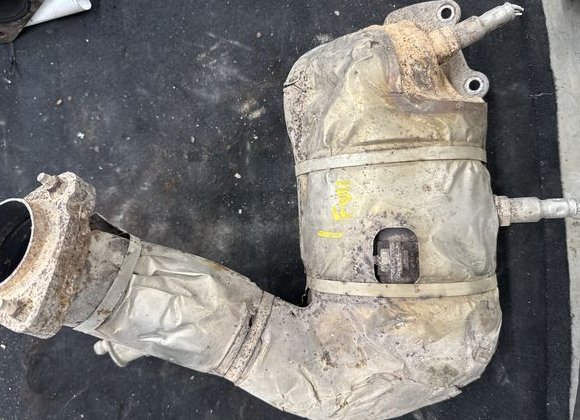
Most people assume gold is the most valuable metal inside a catalytic converter. They're wrong. Rhodium — a metal most drivers have never heard of — can trade at prices that dwarf gold, platinum, and palladium combined. If you're sitting on a pile of used cats in Burnaby or anywhere else in British Columbia, understanding why rhodium matters could change how much money you walk away with.
Catalytic converter recycling in Burnaby is more competitive than ever in 2026. Yards and online platforms are bidding hard for quality cats, and the PGM (platinum group metal) content — especially rhodium — is the primary driver of that value. This article breaks down why rhodium commands such extreme prices, how it compares to platinum and palladium, and what that means when you go to get the best catalytic converter price in Canada.
What Is Rhodium — and Why Is It So Rare?
Rhodium is a platinum group metal (PGM) that occurs almost exclusively as a byproduct of platinum and nickel mining. It doesn't have its own ore deposits. You can't just dig for rhodium — you find it alongside other metals, and even then, the concentrations are tiny. Global annual production typically measures in the low single-digit tonnes. For context, gold production runs into the thousands of tonnes per year.
That scarcity alone would make rhodium expensive. But the real price driver is industrial demand that keeps climbing while supply stays nearly flat. Automotive catalytic converters consume the overwhelming majority of the world's rhodium supply. There is no practical substitute at scale. When automotive production rises, rhodium demand rises with it — and the market feels that tension immediately.
- Extremely low annual supply: Rhodium is one of the rarest naturally occurring elements on Earth.
- No dedicated mines: Nearly all rhodium comes as a byproduct of South African platinum mining.
- Concentrated supply chain: A handful of mining operations account for the majority of global output.
- Long refining lead times: Processing rhodium from raw ore takes months, so supply can't respond quickly to price spikes.
Rhodium vs. Platinum vs. Palladium: How the Three PGMs Compare
Every catalytic converter contains a ceramic or metallic substrate coated with a wash of precious metals. The exact blend depends on the vehicle type, the engine, and the emission standards the manufacturer was targeting at the time of production. Gasoline engines typically lean heavier on palladium and rhodium. Diesel cats often carry more platinum. But across the board, rhodium is the rarest component — and that rarity is priced in.
Here's how the three metals differ in function and relative value:
- Platinum (Pt): Handles oxidation of carbon monoxide and hydrocarbons. Found in both gasoline and diesel converters. Historically the most recognized PGM, but rhodium surpasses it in price per troy ounce during supply-constrained markets.
- Palladium (Pd): Primarily used in gasoline converters. Excellent at converting hydrocarbons at lower temperatures. Palladium prices surged dramatically during the last decade as automakers shifted away from diesel globally.
- Rhodium (Rh): The critical component for NOx (nitrogen oxide) reduction — the "reduction" half of the three-way catalytic process. There is currently no commercially viable replacement for rhodium in this function. That makes it irreplaceable and, by extension, extremely valuable per gram recovered.
When you're selling used cats, you're essentially selling access to these three metals. Buyers price your load based on what they can recover at the refinery. Because rhodium content is so small in absolute terms — we're often talking fractions of a gram per converter — even small variations in rhodium price have a significant impact on a load's total value. That's why SMASH Recycling — where verified buyers bid on your metal — can surface meaningful price differences between buyers: different refiners have different recovery capabilities, and that shows up in bids.
Why Rhodium Prices Swing So Dramatically — and What That Means for Sellers in British Columbia
Rhodium is one of the most volatile commodity markets on Earth. It has seen price swings of hundreds or even thousands of dollars per troy ounce within a single year. Supply disruptions in South Africa — labor disputes, power shortages, regulatory shifts — can send prices sharply upward almost overnight. Demand softens when automotive production dips, and the price follows. Unlike gold or silver, there's no massive above-ground stockpile buffering the market.
For sellers in British Columbia, this volatility cuts both ways. Timing your sale during a rhodium price spike can meaningfully increase what you receive per cat. Selling into a soft market means lower returns. Most individual sellers don't have the luxury of holding inventory and timing the market — but having access to real competitive bids, rather than a single buyer's take-it-or-leave-it offer, at least ensures you're capturing the current market rate rather than leaving money behind.
This is exactly the problem that platforms like SMASH are designed to address. Instead of calling one buyer and guessing whether their number is fair, you get multiple vetted buyers competing for your load. More competition means better price discovery. That matters everywhere, but it matters especially when the metal driving value — rhodium — is this volatile and this hard to independently price-check.
If you want to stay informed on where values stand before you sell, read Canadian catalytic converter pricing guides to understand how PGM market shifts affect what you'll be offered on any given day.
Which Catalytic Converters Carry the Most Rhodium?
Not all cats are created equal. Rhodium content varies based on engine type, vehicle age, emission standards at time of manufacture, and the manufacturer's specific formulation. This is why experienced recyclers pay close attention to vehicle make, model, and year before quoting a price — and why you should too before you sell.
Generally speaking, converters with higher rhodium content tend to come from:
- High-displacement gasoline engines: Larger engines push more exhaust volume through the converter, requiring more catalyst loading to meet emissions standards.
- Vehicles built to strict emissions standards: Converters manufactured to meet tighter NOx limits carry more rhodium because the chemistry demands it.
- Late-model, higher-tier passenger vehicles: Automakers targeting premium emission compliance have historically used richer PGM loadings.
- OEM (original equipment manufacturer) converters: Aftermarket replacement cats often contain less PGM than the original — sometimes dramatically less. An aftermarket cat on a vehicle doesn't mean the load is worthless, but it changes the calculus significantly.
- Certain Japanese and European makes: Some models from specific manufacturers are well-known in the recycling industry for above-average precious metal content, though this varies considerably by model year.
If you're running an auto shop or collecting cats in the Burnaby area, documenting your converters with photos, serial numbers, and vehicle source information will help buyers assess rhodium content more accurately — and bid more confidently. SMASH's inventory tool and serial tracking features exist precisely for this reason: better documentation creates better bids.
How to Actually Sell Catalytic Converters Online and Get Fair Value for Rhodium Content
Here's where theory meets practice. Understanding that rhodium is valuable is one thing. Getting paid fairly for it when you sell catalytic converters online is another. The single biggest mistake sellers make is accepting the first offer they receive without knowing whether it reflects current PGM pricing. In a market this volatile, that's a real cost.
The process for getting competitive value when you sell catalytic converters in British Columbia — or anywhere in Canada — comes down to a few practical steps:
- Identify and document what you have. Photograph every cat. Record serial numbers or part numbers where visible. Note the vehicle make, model, and year if known. This information directly affects the bid.
- Understand that aftermarket vs. OEM matters. Separate your converters by type if you can. Aftermarket cats will be bid differently than OEM units from the same vehicle.
- Use a competitive platform, not a single buyer. Calling one yard and accepting their number is the old way. Getting multiple vetted buyers to compete for your load is how you surface real market value for rhodium-bearing cats.
- Time your sale with awareness of PGM markets. You don't need to be a commodities trader, but knowing whether rhodium has trended up or down recently helps you decide whether to sell now or hold briefly.
- Check current market rates before committing. Prices shift. Always check current Canadian catalytic converter prices before you finalize a deal.
Whether you're an individual selling a single converter after a repair, an auto shop in Burnaby clearing out a month's worth of removed cats, or a collector moving a larger load — the approach is the same. Competition reveals value. Documentation supports higher bids. And using a platform built for this space beats cold-calling buyers who have every incentive to lowball you.
Disclaimer: Catalytic converter prices fluctuate daily based on PGM market movements. All price-related decisions should be based on current market rates at time of sale, not historical figures.
Frequently Asked Questions
Q: How much rhodium is actually in a typical catalytic converter?
The amount varies by vehicle, but most gasoline catalytic converters contain a very small quantity of rhodium — often measured in fractions of a gram. Even so, because rhodium trades at extremely high prices per troy ounce, even that small quantity contributes meaningfully to a converter's scrap value. High-loading converters from larger or higher-emission vehicles carry more.
Q: Where can I sell catalytic converters in Burnaby, British Columbia?
You have several options: local scrap yards, metal recyclers, and online platforms that connect you with vetted buyers across Canada. Online platforms often generate more competitive offers because multiple buyers are bidding simultaneously rather than a single yard setting the price. For Burnaby sellers, this is worth exploring before defaulting to the nearest local yard.
Q: Does it matter if my catalytic converter is aftermarket or OEM?
Yes — significantly. OEM converters manufactured to factory specifications typically carry higher PGM loadings, including more rhodium, than aftermarket replacements. A buyer assessing your load will distinguish between the two, and the pricing reflects that difference. Knowing what you have helps you understand the offer you receive.
Q: How do I know if I'm getting a fair price when I sell catalytic converters online?
The best way is to get multiple bids. A single offer with no competing quotes gives you no way to assess fairness. Platforms that connect you with multiple vetted buyers solve this problem directly — the bids themselves reveal what the market is willing to pay. Check current PGM price trends before you sell so you have a baseline sense of market conditions.
Q: Are catalytic converter prices in Canada different from U.S. prices?
The underlying PGM metals trade on global markets, so the base value is similar. Canadian sellers do transact in CAD, and exchange rate fluctuations affect the CAD equivalent of PGM spot prices. GST/HST handling, provincial regulations, and local market competition also vary. Using a platform that operates in the Canadian market and quotes in CAD removes confusion about currency conversion.
If you're holding cats and want to know what they're actually worth in today's market, don't guess — and don't settle for a single number from a single buyer. The rhodium inside those converters is genuinely valuable, and you deserve a price that reflects it. When you're ready to move your load, get the best catalytic converter price in Canada with a free quote at best-catalytic-converter-price.ca.
Stay sharp on PGM markets and scrap metal industry news by following SMASH on LinkedIn — regular updates on market conditions, pricing trends, and how to get more from every load you sell.