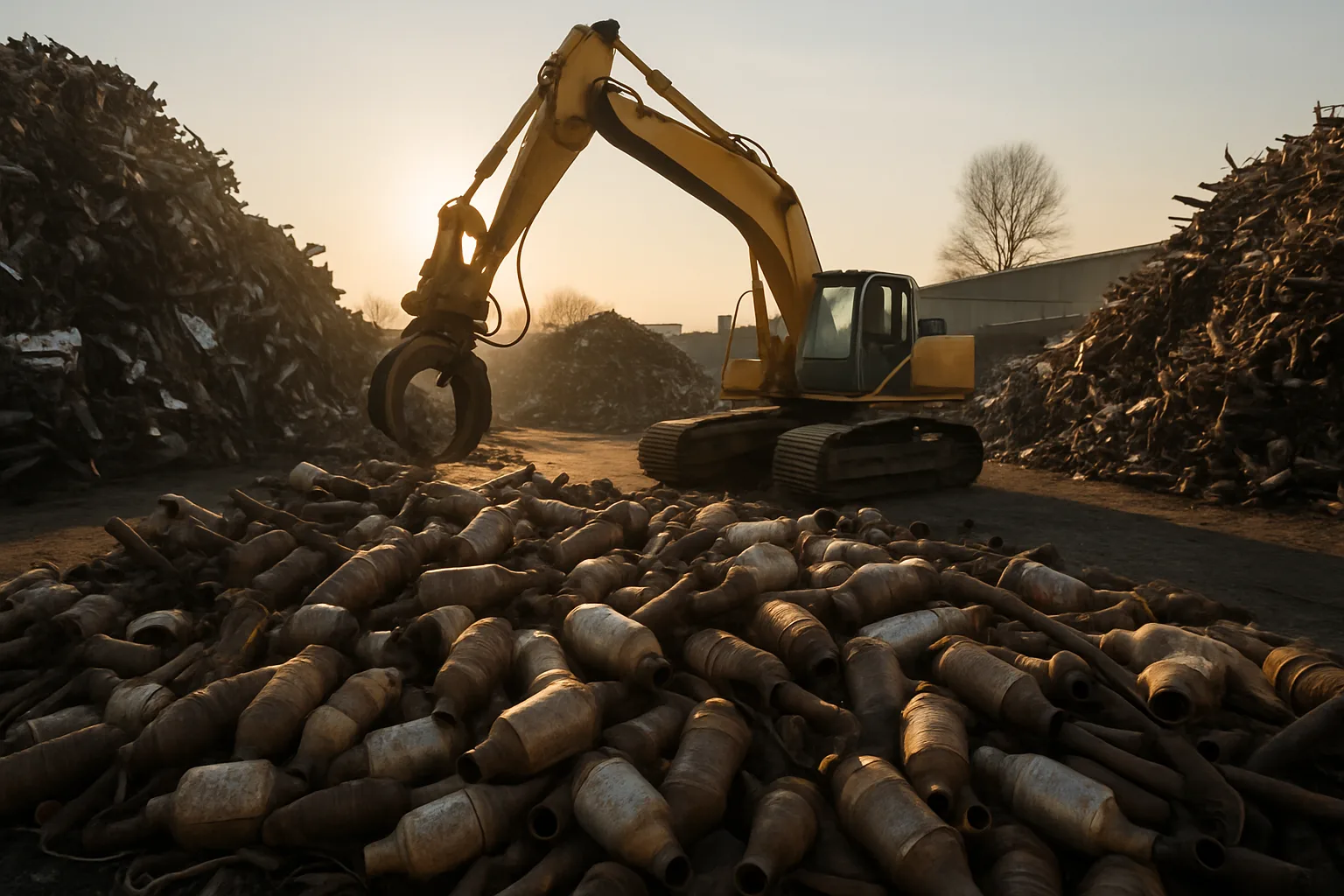
Most people selling a scrap catalytic converter have no idea what it's actually worth. That gap between what you know and what the buyer knows is exactly where scams live. In the Canadian catalytic converter market — including busy hubs like Kitchener — sellers walk away with a fraction of fair market value every single day, not because buyers are breaking laws, but because the system was built to favour the buyer. This article breaks down the most common tactics used against sellers, how to spot them before they cost you money, and how tools like SMASH are changing the equation when it comes to catalytic converter prices today.
Whether you're an auto shop clearing out a parts bin, a collector with a truckload of cats, or someone pulling a single converter off a beater in their driveway — this is for you.
---The Information Gap Is the Scam
Before getting into specific tactics, understand the root cause. Catalytic converters contain platinum group metals (PGMs) — platinum, palladium, and rhodium. These are commodities traded on global markets. Their prices shift daily. Most sellers don't track PGM spot prices. Most buyers do. That asymmetry is the foundation of every pricing scam in this market.
When a buyer offers you a flat rate "by eye" on your converter, they're not guessing. They know the assay data on that unit. They may have run the serial number or VIN. They know what the refinery will pay. You don't. So they quote you something that sounds okay — and pocket the difference. That's not illegal. But it's also not giving you the best catalytic converter price in Kitchener or anywhere else in Ontario.
The fix starts with knowing your converter's value before you talk to any buyer. That means understanding the make, model, year, and serial number on your unit — and using platforms built to bring actual competition to the sale.
---The Most Common Catalytic Converter Buying Scams in Canada
These aren't edge cases. If you've sold more than a handful of cats, you've probably encountered at least one of these. Here's what to watch for.
1. The "Street Value" Quote
A buyer gives you a number with zero documentation. No serial number lookup. No photo. No assay reference. Just a dollar figure pulled from the air — or rather, pulled from their margin target. This is the most common tactic and the hardest to fight without comparable data. If a buyer won't explain how they arrived at their price, that's your first red flag.
2. Bait-and-Switch After the Load Arrives
You negotiate a price per unit or per pound. You haul the load in. Now the buyer is "re-grading" your material and the price drops. Suddenly half your cats are "low-grade" or "empty shells." Without proper photo documentation and a pre-agreed, itemized inventory, you have no leverage. You either accept the lower number or haul it back — and most people don't haul it back.
3. The Single-Buyer Trap
This one isn't malicious — it's structural. You call one buyer because they're nearby or you've sold to them before. They quote you a price. You have nothing to compare it to. You take it. The problem isn't that the buyer is dishonest; it's that you have no competitive pressure working in your favour. Getting the best catalytic converter price in Canada almost always comes down to how many buyers are competing for your load — not how loyal you are to one relationship.
4. Holding Fees and "Storage" Charges
Some buyers — especially smaller operations — will hold your material and delay settlement, claiming they're waiting on assay results. Weeks go by. If PGM prices drop in that window, they pay you the lower rate. If they rise, you still get the original quote. The buyer benefits from market movement either way. Get your settlement timeline in writing before you hand over a single converter.
5. Fake "Spot + Spread" Calculations
A buyer tells you they're paying "spot minus X percent" — sounds transparent, right? Except they're using their own internal spot price, not the published London Bullion Market Association (LBMA) or market reference rate for platinum, palladium, and rhodium. The math looks legitimate. The inputs are skewed. Always ask which price source they're referencing and on which date.
6. Unvetted "Buyers" Who Disappear
In the online space — Facebook groups, kijiji, and informal catalytic converter buyers near me open now searches — you'll find buyers who pay fast but vanish if there's a dispute. No paper trail, no recourse. For individual sellers, this is a real risk. Working through a structured platform with vetted buyers removes this risk almost entirely.
---What Good Documentation Actually Looks Like
The single most powerful thing you can do before selling a cat is document what you have. Thoroughly. This isn't bureaucracy — it's leverage. A buyer who knows you have photos, serial numbers, and an itemized list is much less likely to try a re-grade or a lowball on arrival.
Here's what solid documentation looks like for a catalytic converter load:
- Serial number or OEM number per unit — either stamped on the converter or referenced by VIN
- Clear photos of each unit — both ends, substrate visible if possible
- Vehicle make, model, and year if known
- Condition notes — intact substrate, honeycomb damage, welded vs. bolt-on
- Count and estimated weight of the load
- Date collected — relevant if you're tracking PGM price windows
Platforms like SMASH build this documentation step into the selling process. Every load listed on SMASH goes through inventory documentation — photos, serial tracking, and unit-level detail — before it hits buyers. That documentation is what creates genuine price competition. Buyers bid with confidence when they know exactly what they're getting. You benefit because competition drives the price up, not down. You can read Canadian catalytic converter pricing guides to better understand what details matter most before you list.
---How the Auction Model Protects Sellers — Including in Kitchener
The traditional model is one seller, one buyer, one price, no competition. That's the model scams are built on. The auction model flips it: one seller, multiple vetted buyers, transparent bidding, market-driven price discovery.
When your load of cats goes to auction through SMASH, you're not hoping one buyer is having a generous day. You're letting the market tell you what your load is actually worth. Multiple buyers — all vetted, all active in the Canadian scrap space — compete for your material. The price that comes back reflects real demand, not one buyer's margin target.
For sellers in Kitchener and across Ontario, this matters because the local buyer pool is limited. You might have two or three realistic options driving distance away. An auction platform expands that to a national pool of active buyers. More buyers means better price discovery. That's not a marketing claim — it's how competitive markets work.
SMASH also handles auto-invoicing and settlement documentation, so there's no ambiguity about what was agreed, when, and at what price. The bait-and-switch doesn't work when the terms are locked before the load moves. If you're looking for Kitchener scrap metal services that go beyond the single-buyer guessing game, this is the model that protects you.
---Red Flags to Watch for When Choosing Catalytic Converter Buyers in Ontario
Not every buyer is running a scam — but every seller should know how to screen buyers before committing to a deal. These red flags apply whether you're selling one converter or a pallet of fifty.
- No price transparency — they can't or won't explain how they arrived at your quote
- No written agreement — verbal deals only, nothing documented before you hand over material
- Pressure to decide immediately — legitimate buyers don't need you to skip due diligence
- No physical address or business registration — especially relevant for online buyers
- Settlement delays with no clear timeline — standard settlement in Canadian scrap is typically within a few business days of assay confirmation
- Re-grading material on arrival without a documented process — if they change the price after you've delivered, ask for the re-grade criteria in writing
- No reference to PGM spot prices — if a buyer quotes you without referencing platinum, palladium, or rhodium values, they're not being transparent
Ontario has active scrap regulations through the Waste Diversion and Resource Recovery frameworks, and legitimate buyers operate within those structures. If a buyer can't show you they're operating above board, move on. There are vetted buyers ready to compete for your load on platforms designed for exactly this. Find the best price for your scrap in Canada through a process that's built on transparency, not guesswork.
---What Catalytic Converter Prices Today Actually Reflect
Understanding what drives catalytic converter prices today helps you spot when you're being quoted below market. The value of a scrap catalytic converter comes down to three variables: the type and quantity of PGMs in the substrate, the current spot prices for platinum, palladium, and rhodium, and the refining and processing costs the buyer will incur.
Rhodium is typically the highest-value metal per troy ounce, though it's also the most volatile. Palladium and platinum move based on automotive demand, mining supply, and broader commodity markets. A converter that was worth a certain amount in early 2026 may be worth more or less today depending on those underlying markets. This is why a static "standard price" from a buyer who never references spot rates should make you uncomfortable.
The best way to protect yourself is to check current Canadian catalytic converter prices before you engage with any buyer. Know the landscape. Then let competition do the rest.
Disclaimer: Catalytic converter prices fluctuate with PGM spot markets. Always verify current rates before accepting any offer. The values referenced in this article reflect general market dynamics as of mid-2026 and may not reflect current pricing at time of reading.
---Frequently Asked Questions
Q: How do I know if I'm getting a fair catalytic converter price today in Kitchener?
The best way is to get multiple quotes before committing to any single buyer. Document your converters with serial numbers and photos, then compare offers. Platforms like SMASH let vetted buyers compete for your load, which gives you a market-driven price rather than one buyer's margin. If a buyer can't explain how they calculated your quote, that's a sign to look elsewhere.
Q: What makes a catalytic converter buyer legitimate in Ontario?
Legitimate buyers have a physical address, provide written purchase agreements, reference PGM spot prices in their quotes, and settle payment within a clear and agreed timeline. In Ontario, reputable buyers also operate within provincial scrap dealer regulations. If a buyer pressures you to decide quickly or won't put terms in writing, walk away.
Q: Is the bait-and-switch tactic legal in Canada?
Re-grading material after delivery can be legitimate if there's a documented process agreed to upfront — for example, an assay-based final settlement. What's problematic is when a buyer verbally agrees to a price and then arbitrarily lowers it on arrival with no basis. Protecting yourself means getting the pricing methodology in writing before your load moves.
Q: How does a catalytic converter auction work with SMASH?
You document your load — photos, serial numbers, unit count — and list it through SMASH. Vetted buyers across Canada then bid competitively. You see real offers from multiple buyers, settle with the winning bid, and get auto-invoicing to close the deal clean. There are no subscription fees on the seller side. SMASH only wins when you win.
Q: How much is my catalytic converter worth as scrap in Canada?
It depends on the make, model, year, and condition of the converter, plus the current spot prices for platinum, palladium, and rhodium. A domestic unit from a common North American vehicle will typically yield differently than a converter from a European or hybrid vehicle. Document your unit and get a quote through a competitive platform to find out what the market will actually pay you today.
---The scrap catalytic converter market rewards sellers who show up prepared — documented, informed, and connected to more than one buyer. If you're in Kitchener, Ontario, or anywhere across Canada, you don't have to take whatever the closest buyer offers. Get the best Canadian price for your catalytic converter by starting with a free quote at best-catalytic-converter-price.ca — and let real competition work in your favour for once.
Stay sharp on PGM markets and scrap pricing trends by following SMASH on LinkedIn — industry updates, market insights, and no fluff.