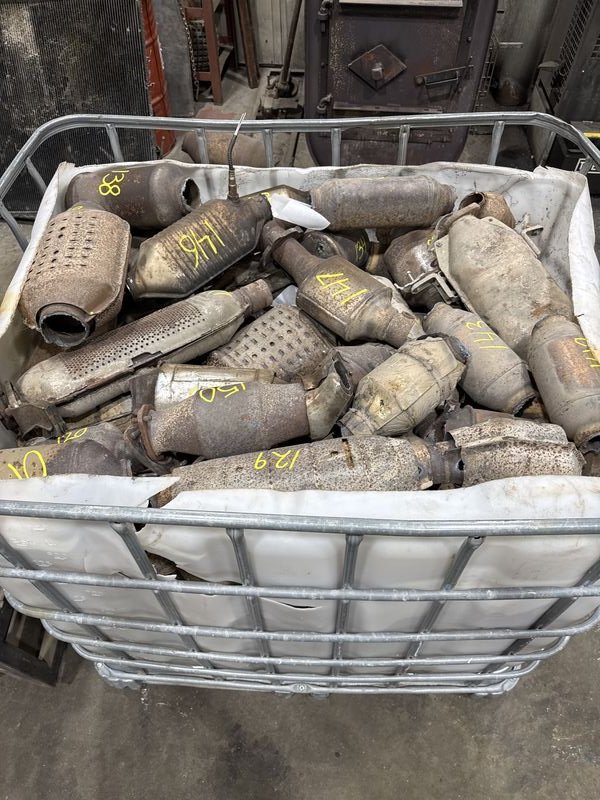
Most people selling a scrap catalytic converter have no idea they're leaving money on the table. Not because buyers are dishonest — but because grading tiers exist, and if you don't understand them, you can't negotiate. This guide breaks down how catalytic converter grading works, what moves your converter into a higher pricing tier, and how sellers in Thunder Bay and across Ontario can use that knowledge to get a better return.
Whether you're clearing out a few cats from your shop or selling a mixed load, understanding the grading system is the difference between accepting a low offer and knowing when to push back. Let's get into it.
What Catalytic Converter Grading Actually Means
Every catalytic converter gets assigned a grade before it's priced. That grade reflects one thing: the estimated precious metal content inside. Specifically, the concentrations of platinum (Pt), palladium (Pd), and rhodium (Rh) locked in the ceramic or metallic substrate. These three metals are what recyclers actually want. The steel shell is just packaging.
Grading is done through a combination of visual inspection, serial number lookup, and — at the refinery level — actual assay testing. The challenge for sellers is that most of the time, you're quoted a grade before assay. That means the buyer is making an educated estimate, and the grade they assign directly determines your payout. Knowing what factors push a converter into a higher tier gives you leverage in that conversation.
The general tier structure looks like this:
- Premium or High-Grade: High platinum group metal (PGM) content. OEM converters from late-model vehicles, certain European brands, or trucks. These command top-of-market pricing.
- Mid-Grade: Moderate PGM content. Common domestic vehicle converters, standard fitment cats. The bulk of what most yards and shops process.
- Low-Grade or Bead: Lower PGM concentration. Often older, smaller, or aftermarket converters. Still recyclable — just worth less per unit.
- Foreign/Exotic: A catch-all for converters that don't fit standard North American databases. Can range widely in value. Often requires more research to price accurately.
- Foil or Metallic Substrate: Different internal construction than ceramic. Typically higher in palladium. Priced differently than standard ceramic cats.
- DPF (Diesel Particulate Filter): Not the same as a catalytic converter but often lumped together. Contains platinum. Priced on its own scale.
Understanding which tier your converter falls into — before you call a buyer — is one of the most practical things you can do to get the best catalytic converter price in Canada.
What Moves a Converter Into a Higher Pricing Tier
Grade isn't random. There are real factors that determine where a converter lands. The substrate condition matters enormously. A cracked, rattling, or blown-out substrate has lost precious metal — literally. When the ceramic honeycomb inside breaks apart, PGMs escape. A converter with a damaged substrate will drop in grade and in price, regardless of what it looked like on the outside.
Vehicle make, model, and year are also major signals. Late-model trucks and SUVs — particularly full-size pickups common across Ontario — often carry large-format converters with substantial PGM loads. European vehicles frequently run higher precious metal concentrations to meet tighter emissions standards. If you're processing cats from a specific vehicle type, it's worth knowing what the market says about that platform.
Here's what directly impacts your grade:
- Substrate integrity: Intact ceramic or metallic substrate = full metal recovery. Damaged = lower grade.
- Vehicle origin: North American, European, and Asian vehicles load converters differently. European cats often grade higher.
- Model year: Stricter emissions regulations over the past decade pushed manufacturers to use more PGMs. Newer often means higher grade.
- Size and weight: Larger converters generally carry more substrate and more metal. Physical size matters.
- OEM vs. aftermarket: Original equipment converters almost always grade higher than aftermarket replacements. Aftermarket cats use less PGM by design.
- Serial number presence: An intact serial number lets buyers identify the exact converter in their database. Unknown or missing serials often result in conservative (lower) grade assignments.
If you're in Thunder Bay processing a mix of vehicles — fleet trucks, older domestics, newer imports — you're almost certainly sitting on a spread of grades. Knowing which is which lets you present your inventory more accurately and negotiate with confidence.
How Pricing Tiers Connect to Platinum, Palladium, and Rhodium Markets
Catalytic converter prices don't move in a straight line. They track the spot markets for platinum, palladium, and rhodium — three metals that trade independently and can swing significantly over short periods. When rhodium spiked in the early 2020s, high-grade converters that were priced at a certain level suddenly became dramatically more valuable. When it corrected, those same converters came back down.
In October 2026, PGM markets remain active but volatile. Palladium has been navigating ongoing demand shifts tied to hybrid and EV production trends, while platinum continues to see interest from both automotive recyclers and industrial buyers. Rhodium — always the wildcard — can move pricing on premium-grade cats more than any other factor.
What this means practically: the grade assigned to your converter determines how much of that market movement flows through to your payout. A high-grade converter in a rising rhodium market? Your return climbs with the metal. A low-grade cat in that same market? You barely feel it. Getting the grade right — and choosing buyers who price transparently against current spot — is the most direct path to a fair return. Always check current Canadian catalytic converter prices before you lock in a deal.
Disclaimer: Precious metal spot prices fluctuate daily. Catalytic converter values change with the market. Always verify current rates before selling.
How to Sell Catalytic Converters Online and Get Graded Fairly
Selling a catalytic converter online has gotten significantly more organized over the past few years. Platforms now let you document your inventory with photos, serial numbers, and vehicle data — then get competitive bids from vetted buyers rather than accepting a single number from whoever picks up the phone. That competitive pressure is what drives accurate grading. When multiple buyers compete for your load, they have less room to low-ball the grade.
This is exactly where SMASH comes in. SMASH is a scrap metal auction platform that connects sellers — yards, shops, and collectors — with vetted buyers across North America. You document your catalytic converters (photos, serials, condition notes), list them through the platform, and buyers compete. No subscription fees. SMASH only earns when the sale closes. That alignment matters: they have no incentive to steer you toward a low offer.
For sellers looking to sell catalytic converters online, the documentation step is critical. A well-documented converter — clear photo of the serial number, photo of the substrate end showing no damage, vehicle make and model noted — grades better and attracts more confident bids. Buyers discount for uncertainty. Remove the uncertainty and you typically see better offers. Visit smashrecycling.ca to understand how the auction process works and what documentation supports the strongest bids.
You can also read Canadian catalytic converter pricing guides to understand what buyers look for when they evaluate a load.
What Thunder Bay and Ontario Sellers Need to Know in 2026
Catalytic converter recycling regulations in Ontario have continued to evolve. Dealers and recyclers are required to maintain records of purchases — including seller identification and vehicle information — to address the persistent issue of converter theft. If you're a legitimate seller (a shop, a yard, or an individual selling from a vehicle you own), these requirements are manageable. But they do mean you need to show up with documentation.
In Thunder Bay, sellers working with regional scrap yards or direct buyers should expect to provide:
- Government-issued ID
- Proof of vehicle ownership (if selling from a specific vehicle)
- Vehicle identification details or VIN where applicable
The regulatory environment in Ontario actually works in favor of documented sellers. When you can prove legitimate ownership and provide vehicle records, you're a lower-risk transaction for the buyer. That typically translates to faster processing and fewer questions about grade. Sellers using platforms like SMASH benefit from built-in documentation workflows — VIN lookup, serial tracking, photo documentation — that satisfy these requirements automatically.
Local Thunder Bay scrap metal services operate within Ontario's regulatory framework, and understanding what documentation you need upfront saves time and avoids surprises at the point of sale.
Whether you're selling a single converter from a personal vehicle or moving a pallet of mixed cats from a busy shop, Ontario's regulatory requirements are the floor. Your ability to document and present your inventory accurately is what determines whether you get floor price — or something better.
Getting the Best Price for Scrap Catalytic Converters: Practical Steps
Let's be direct. Understanding grades is useful knowledge — but it only pays off if you act on it. Here's a practical approach for sellers across Ontario, including Thunder Bay, who want to move from knowing to doing:
- Identify before you sell. Use a serial number lookup (SMASH's platform includes this) to find out what grade databases assign to your specific converters before you accept any offer.
- Document everything. Clear photos. Intact serials. Vehicle info. Substrate condition. This package gives buyers confidence and removes the discount they apply to uncertain loads.
- Get multiple bids. A single buyer quote is not a market price. It's one data point. Competitive bidding through an auction platform reveals what the market actually pays for your specific inventory.
- Track spot prices. Platinum, palladium, and rhodium move. If you're not in a rush to sell, understanding market direction helps you time your listing.
- Know your grades before the conversation. When you understand the tier system, you can push back on a low-grade assignment with specifics — not just instinct.
- Use platforms built for this. SMASH connects sellers to vetted buyers, handles documentation, and creates transparent auction conditions. That's the infrastructure that supports better outcomes.
If you want to sell scrap metal online or specifically sell catalytic converters in Ontario, the market exists. You just need to approach it with the same information your buyers already have.
The scrap industry rewards sellers who do their homework. Grading isn't a mystery — it's a system. Once you understand how it works, you stop accepting the first number you're handed and start negotiating from an informed position. If you're ready to find out what your cats are actually worth, get a free quote at best-catalytic-converter-price.ca and let the market tell you the real number.
Frequently Asked Questions
Q: How do I find out what grade my catalytic converter is before selling it?
The most reliable method is a serial number lookup using a reputable converter database. The serial or part number is typically stamped or welded onto the converter's shell. Platforms like SMASH include VIN and serial tracking tools that can help identify your specific unit. If the serial is missing or damaged, a buyer will typically default to a conservative grade — which is why protecting that serial number matters.
Q: Why do aftermarket catalytic converters pay less than OEM converters?
Aftermarket converters are manufactured to meet minimum emissions standards at the lowest production cost. That means they use significantly less platinum, palladium, and rhodium than original equipment converters. Since recyclers pay based on recoverable precious metal content, aftermarket cats consistently fall into lower pricing tiers. Selling a load of aftermarket cats alongside OEM units without disclosing the mix can also create grading disputes — always separate them.
Q: Is catalytic converter recycling in Thunder Bay regulated differently than in other Ontario cities?
No — Ontario's regulations on catalytic converter purchases apply province-wide. Buyers across Ontario, including in Thunder Bay, are required to collect seller identification and maintain purchase records. The specific municipal requirements around precious metal dealer licensing may vary, but provincial-level documentation rules are consistent. Check with your local municipality if you operate as a commercial buyer or dealer.
Q: Can I sell catalytic converters online from Thunder Bay, or do I need to sell locally?
You can absolutely sell online. Platforms designed for scrap metal auctions allow you to document your inventory digitally and receive competitive bids from buyers across North America without leaving Thunder Bay. Shipping logistics for bulk loads are typically arranged through the buyer after the sale closes. For single converters or small quantities, check with the platform about minimum load requirements or local pickup options.
Q: How much does a blown-out or rattling catalytic converter affect the price?
Significantly. A rattling converter means the ceramic substrate has cracked or broken apart internally. When that happens, precious metal — the platinum, palladium, and rhodium bonded to the substrate — is lost and unrecoverable. Buyers will assign a lower grade to account for the reduced metal yield. In some cases, a severely damaged converter may grade as a "low" or "bead" unit regardless of what vehicle it came from. Handle converters carefully before sale to preserve the substrate and protect your return.
Follow SMASH on LinkedIn for ongoing scrap metal market updates, pricing trends, and industry insights: linkedin.com/company/scrap-metal-auction-sales-hub.