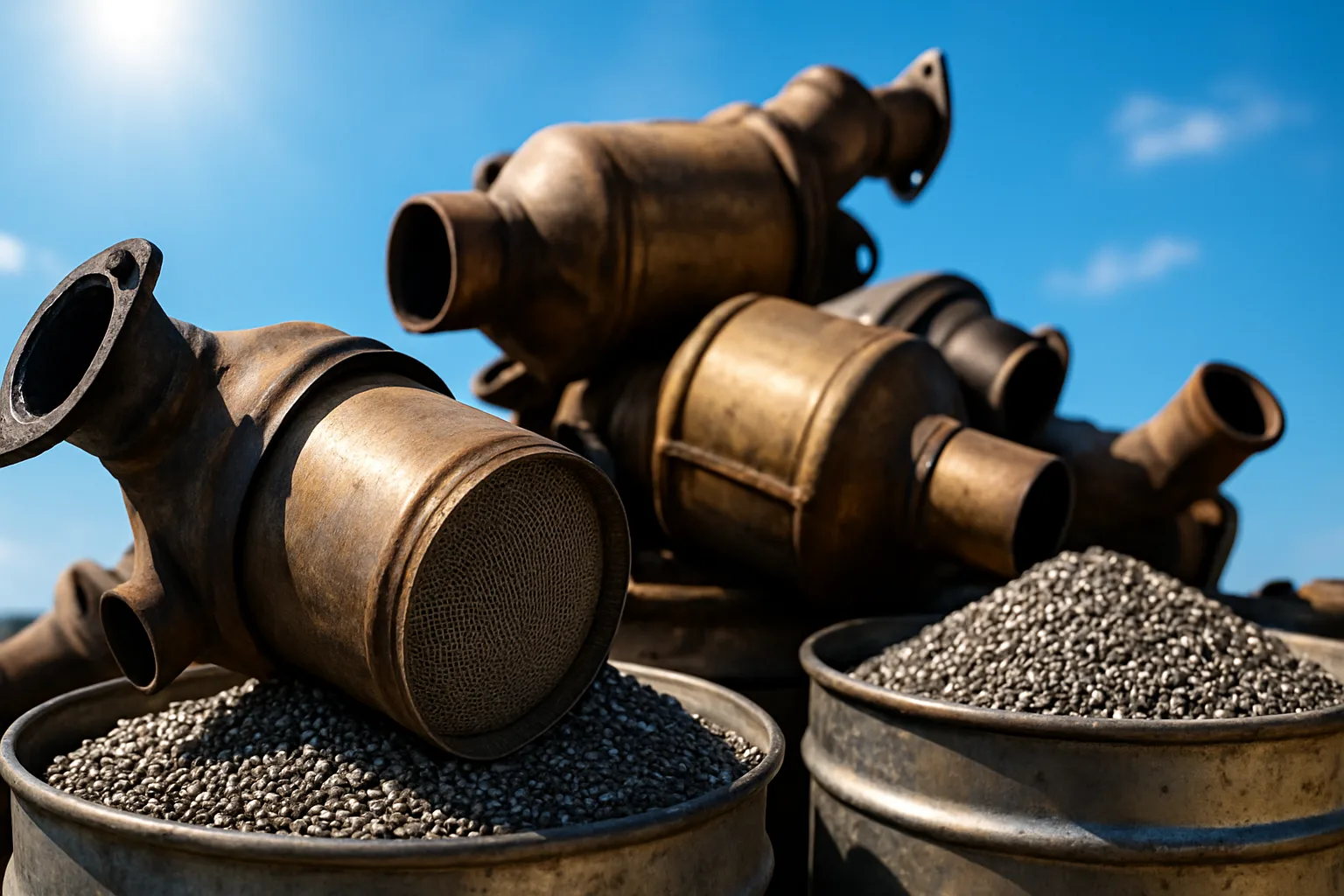
What's Actually Inside Your Catalytic Converter — And Why It's Worth Real Money
Most people treat a catalytic converter like a piece of exhaust pipe. Bolt it on, forget it exists, replace it when the check engine light comes on. But crack one open and you'll find a ceramic honeycomb coated in three of the most valuable metals on Earth: platinum, palladium, and rhodium. That's why a single cat can be worth anywhere from a modest amount to several hundred dollars — and why understanding the platinum price today (and its counterparts) is the difference between getting a fair deal and leaving money on the table.
If you're in Thunder Bay or anywhere across Ontario, this guide breaks down exactly how catalytic converter prices are determined — so you walk into any transaction with your eyes open.
The Three Metals Driving Catalytic Converter Value
Catalytic converters work by converting toxic exhaust gases into less harmful compounds. That chemical reaction requires a catalyst — specifically, platinum group metals (PGMs). There are three of them, and each one trades independently on global commodity markets.
- Platinum (Pt): Used heavily in diesel catalytic converters. Platinum is priced in USD per troy ounce on global markets and fluctuates daily based on mining output (primarily from South Africa and Russia), industrial demand, and investor sentiment. Checking the platinum price today before you sell is non-negotiable.
- Palladium (Pd): Dominant in gasoline-powered vehicles. Palladium has historically commanded higher prices per ounce than platinum and is even more sensitive to automotive production trends. When car manufacturers ramp up production, palladium demand spikes.
- Rhodium (Rh): The wildcard. Rhodium is rarer than both platinum and palladium and can swing dramatically — sometimes trading at multiples of gold's price, other times retreating sharply. Its concentration in a converter is smaller, but its value per gram can be significant. A single percentage-point shift in rhodium pricing can noticeably change what your cat is worth.
The exact mix of these three metals inside your converter depends entirely on the vehicle make, model, engine type, and model year. A domestic half-ton truck's converter has a very different PGM profile than a Japanese economy car or a European diesel. That's why two converters sitting on the same shelf can have completely different scrap values — and why a serious catalytic converter buyer will want to assay or identify the specific unit rather than guess.
How Buyers Calculate What Your Cat Is Worth
Understanding the pricing formula helps you evaluate any offer you receive. Here's how a legitimate buyer typically arrives at a number:
- Identify the converter. Buyers cross-reference the OEM part number, serial number, or physical characteristics against a database to determine the converter's approximate PGM content. VIN lookup tools can also help narrow down the vehicle source.
- Pull the spot price. The buyer checks the current market rate for platinum, palladium, and rhodium — usually in USD per troy ounce. These prices move every trading day. The platinum price today is not the same as last week's price.
- Calculate assay value. Estimated PGM content (in grams) multiplied by the current spot price gives a gross assay value. This is the theoretical maximum value of the metals inside.
- Apply a recovery rate and margin. Smelters and refiners don't recover 100% of the PGMs in a converter — there are processing losses. Buyers factor in refining costs, their own margin, and logistics. The offer you receive is a percentage of the total assay value.
- Adjust for condition and volume. Cracked substrates, damaged shells, or hollowed-out converters (unfortunately common due to theft) reduce value. Larger volumes — a yard selling 50 cats at once versus an individual selling one — often command better terms.
This is exactly why shopping a single offer is a mistake. If one buyer is quoting you at 60% of assay value and another is at 75%, you've just left a significant amount of money on the table. In Thunder Bay, where the scrap market can be less liquid than in larger southern Ontario cities, this gap can be even more pronounced. Competitive bidding is the only reliable way to find the real market.
Why the Spot Price Alone Doesn't Tell the Full Story
A lot of sellers make the mistake of checking the platinum price today, seeing a decent number, and assuming their converter is worth a fixed amount. The spot price is the starting point — not the finish line. What matters is how much of that metal is actually in your specific converter and what percentage of its value a buyer is willing to pay you.
Rhodium is a perfect example of this problem. When rhodium prices surge, a converter with meaningful rhodium content becomes dramatically more valuable almost overnight. But if a buyer is using outdated price data or a stale database, you could easily be under-quoted on the rhodium component while the platinum and palladium calculations look reasonable. No single part of the pricing formula can be ignored.
This is why platforms like the SMASH Recycling auction platform exist. When multiple vetted buyers compete on the same load, pricing inefficiencies tend to get corrected fast. A buyer who wants to win the auction has to sharpen their pencil on every line of the calculation — including rhodium. That kind of competition produces better price discovery than a single cold call ever will.
What Sellers in Thunder Bay and Ontario Need to Know Right Now
Selling scrap catalytic converters in Ontario comes with both opportunity and responsibility. The province has tightened regulations around the sale of used catalytic converters in recent years, requiring sellers to provide identification and documentation of vehicle source in many cases. This is designed to curb converter theft — a real and persistent problem across the province. As a legitimate seller, this paperwork protects you and makes buyers more confident in what they're buying.
For sellers in Thunder Bay and the surrounding region, a few practical realities apply:
- Local buyer competition may be thinner than in the GTA or other major urban centres. Fewer local options means you're at a disadvantage if you rely solely on whoever answers the phone first.
- Online auction platforms have changed the game. You no longer need a buyer within driving distance to access competitive pricing. Digital documentation — photos, weight, part numbers — can be submitted and bid on remotely.
- Shipping logistics matter, but they're manageable. Converters are relatively compact and shippable. Many buyers offer prepaid shipping on qualifying volumes, which shifts that cost off your side of the ledger.
If you're an auto shop, a dismantler, or an individual collector accumulating cats in the Thunder Bay area, you can get the best catalytic converter price in Canada by using a platform that brings multiple buyers to you — rather than going to one buyer at a time. SMASH connects yards and sellers across North America with vetted buyers who bid competitively on documented inventory. That's a different experience than a single quoted price from a single local contact. For local options, you can also explore Thunder Bay scrap metal services to find resources specific to your area.
How to Document Your Converters for the Best Offer
Buyers pay more when they know exactly what they're buying. Uncertainty gets priced into the offer as a discount. The more clearly you can identify and document your converters, the stronger the bids you'll receive. Here's what good documentation looks like:
- Photos: Clear images of the converter body, any stampings or part numbers, the inlet and outlet pipes, and the substrate (if visible). Photograph any damage honestly — it builds trust and prevents disputes.
- Part numbers and serial tracking: If you have the OEM part number or can identify the vehicle application, include it. SMASH's inventory tool supports serial tracking, which makes this straightforward even for large volumes.
- Weight: Gross weight of the unit matters. Some converters have been gutted — a scale weight combined with photos helps buyers identify legitimate units from compromised ones.
- Vehicle source (where applicable): Make, model, year, and engine size give buyers the context they need to cross-reference PGM content databases accurately.
Well-documented inventory isn't just good practice — it's a competitive advantage. A buyer presented with clear, verifiable information can bid with confidence. That confidence shows up in the offer price. To check current Canadian catalytic converter prices and see what your documented load might be worth, it pays to use a platform that supports that kind of structured submission process.
Using Auction to Find the Real Market Price
The traditional way to sell a catalytic converter is simple: call a buyer, get a price, take it or leave it. That model works great for the buyer. Not so great for you. A single quote is not a market — it's one person's opinion of what they can get away with paying.
A catalytic converter auction flips that dynamic. Multiple vetted buyers see the same documented load, they compete against each other, and the price discovery happens in real time. You don't need to know the right buyer. You don't need to negotiate. The market does that work for you.
SMASH runs exactly this kind of competitive auction process for scrap metal sellers across North America. No subscription fees. No guessing. Sellers submit documented inventory, buyers bid, and the price reflects actual market demand — not a single buyer's margin target. For anyone serious about selling catalytic converters, it's worth understanding how much that competition is worth. Read Canadian catalytic converter pricing guides to understand how the market works and how to position your load for the best outcome.
If you're holding cats right now — whether you're a one-time seller or running a steady volume through a shop or yard in Ontario — don't settle for the first number someone throws at you. The platinum price today is moving. Palladium is moving. Rhodium is moving. The buyer who called you yesterday quoted you based on yesterday's math and today's market appetite. Get more than one bid. Use a platform built for this. Get the best Canadian price for your catalytic converter — visit best-catalytic-converter-price.ca for a free quote and see what your cats are actually worth in a competitive market.
Disclaimer: Catalytic converter prices fluctuate daily based on platinum, palladium, and rhodium spot prices. Always check current rates before selling.
Frequently Asked Questions
Q: How does the platinum price today affect what I get for my catalytic converter?
Platinum is one of three key metals inside a catalytic converter, and its daily spot price directly influences the gross assay value of your unit. When platinum prices rise, buyers can pay more — but only if they're passing that value along competitively. Always check the current platinum spot price and use a platform with multiple buyers to ensure you're capturing that value.
Q: Where can I find a catalytic converter buyer in Thunder Bay?
Local scrap yards in Thunder Bay may purchase catalytic converters, but local competition can be limited. Online auction platforms like SMASH let you access vetted buyers across North America without being restricted to whoever's closest. Better competition typically means a better offer, regardless of your location.
Q: What documentation do I need to sell a catalytic converter in Ontario?
Ontario regulations generally require sellers to provide government-issued identification and, in many cases, documentation of the vehicle source for the converter. Requirements can vary by buyer and municipality, so confirm with your specific buyer before completing a transaction. Proper documentation also helps buyers price your unit more accurately, which can improve your offer.
Q: Why do two catalytic converters look the same but have different values?
The PGM content — the mix of platinum, palladium, and rhodium — varies significantly by vehicle make, model, engine type, and year. Two converters that look physically similar could have very different internal compositions, leading to very different scrap values. This is why identifying the specific converter (via part number or vehicle application) matters so much.
Q: Is a catalytic converter auction a better way to sell than calling a single buyer?
In most cases, yes. A single buyer quote gives you one data point — it's their number, not the market's number. A catalytic converter auction brings multiple vetted buyers to the same load, which creates real competition and better price discovery. Platforms like SMASH are built specifically for this, with no subscription fees and a process designed to work in the seller's interest.
---Follow SMASH on LinkedIn for industry updates, scrap metal market insights, and pricing trends that affect what your catalytic converters are worth.