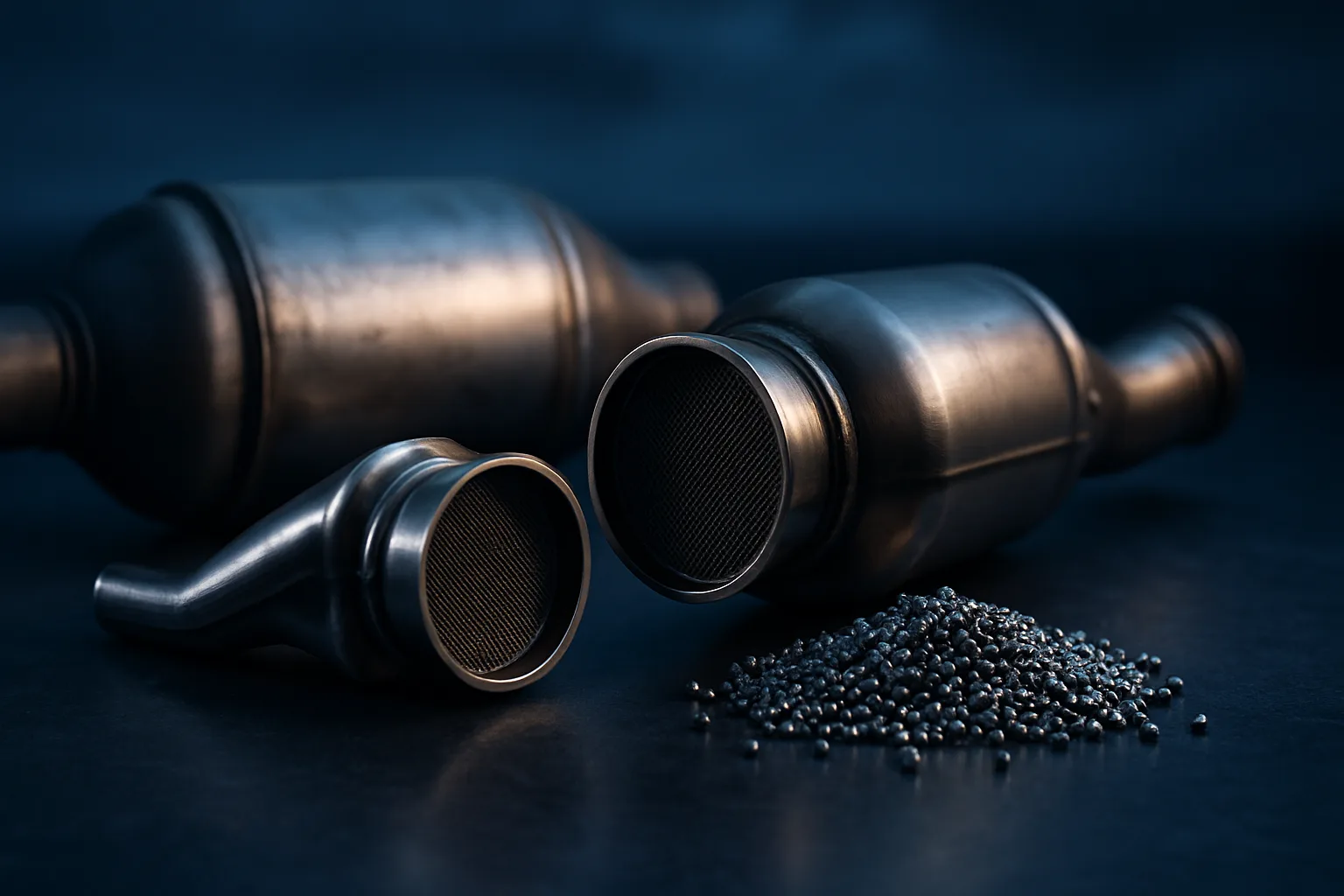
Most people selling a scrap catalytic converter think a cat is a cat. Hand it over, get paid, done. But if you've ever compared two payouts for what looked like similar converters and walked away confused, there's a reason for that — and it has everything to do with whether the unit is OEM or aftermarket.
Understanding this distinction is one of the fastest ways to stop leaving money on the table. For anyone doing catalytic converter recycling in Victoria — whether you're an auto shop clearing inventory, a collector working a route, or someone pulling a converter off a vehicle — this is the knowledge that separates a fair deal from a bad one.
What Makes an OEM Catalytic Converter Different?
OEM stands for Original Equipment Manufacturer. These are the converters installed by the automaker — Toyota, Honda, Ford, GM — when the vehicle rolls off the assembly line. They're built to meet strict emissions standards, which means they contain a precise and relatively generous loading of platinum group metals (PGMs): platinum, palladium, and rhodium.
These three metals are the reason a catalytic converter has value at all. The ceramic or metalite substrate inside is coated with a washcoat that holds the PGMs. When exhaust gases pass through, the metals trigger chemical reactions that convert harmful compounds into less harmful ones. The better the converter needs to perform — and OEM converters are engineered to last the life of the vehicle — the more PGM loading it typically carries.
That loading translates directly into recycling value. A genuine OEM converter from a late-model pickup truck or a luxury vehicle can carry meaningfully more recoverable metal than a cheap replacement unit. Rhodium alone, when present in useful quantities, can make the difference between a mid-range payout and a high-value one. Palladium has remained a critical component for gasoline engine converters, and platinum continues to dominate diesel applications.
Why Aftermarket Converters Pay Out Less — Often Much Less
Aftermarket converters are replacement units made by third-party manufacturers. They're designed to be affordable, pass emissions tests, and get a vehicle back on the road quickly. What they are not designed to do is maximize PGM content. That would defeat their purpose entirely — the whole selling point is a lower price point than OEM.
The result is a converter with significantly reduced precious metal loading. Some aftermarket units contain only a fraction of the PGMs found in their OEM counterparts. A few low-end aftermarket converters contain so little recoverable metal that processors may group them into "low-grade" categories, which pay substantially less per unit.
This is why two physically similar converters — same size, same general appearance — can have wildly different values at the recycling stage. The external shell tells you almost nothing. What matters is what's inside, and more specifically, what was loaded onto that substrate during manufacturing. If you're in Victoria and you've received a mixed payout on a batch of converters, this is likely the reason.
How Recyclers Determine Catalytic Converter Value in Canada
Scrap recyclers and processors don't just weigh converters and guess. The valuation process for a scrap catalytic converter in Canada follows a fairly consistent methodology, though the tools and transparency vary widely between buyers.
Here's how value is typically determined:
- Serial number or part number identification: Most OEM converters carry a stamped serial number. Processors cross-reference this against assay databases that track known PGM content per unit. This is the most reliable valuation method.
- Visual identification and photo matching: For units without clear serials, processors use visual databases — shape, inlet/outlet configuration, substrate type — to estimate value. This is where photo documentation becomes important.
- Foil vs. ceramic substrate: Metalite (foil) substrates are common in newer OEM converters, especially on European and Japanese vehicles. They often carry different PGM profiles than older ceramic units. Both can have strong value — the key is knowing which you have.
- Live PGM market pricing: Converter values move with the platinum, palladium, and rhodium spot markets. A converter worth a certain amount today may be worth more or less next week. Rhodium in particular is notorious for dramatic price swings.
- Weight and volume of the substrate: Even with a known serial, the physical condition of the substrate matters. Damaged, hollowed-out, or overheated converters lose recoverable metal.
This is why selling blind — one buyer, one phone call, no documentation — is a risky approach. A single buyer has no competitive pressure to offer you the best available price. Platforms like SMASH change that dynamic entirely by bringing vetted buyers into a competitive auction format, where your documented inventory gets seen by multiple parties at once.
Serial Numbers and Why They Matter for Catalytic Converter Recycling in Victoria
If there's one practical takeaway from understanding OEM vs. aftermarket values, it's this: document your serial numbers before you sell anything.
OEM converters have serial numbers for a reason. They link back to the original vehicle application, the manufacturing batch, and — critically for recyclers — the known PGM assay data. When you present a converter with a clear, legible serial, a reputable buyer can look up its expected content and price accordingly. When you present a converter without identification, you're asking the buyer to make an estimate — and estimates tend to favour the buyer, not you.
For shops doing Victoria scrap metal services, this means building a habit around inventory documentation. Photograph each unit. Record the serial. Note the vehicle it came from if you have that information. This takes minutes per unit and can meaningfully affect your payout, especially on high-value OEM converters from late-model vehicles or luxury makes.
SMASH supports this workflow directly. The platform includes serial tracking, photo documentation, and VIN lookup tools — exactly the kind of infrastructure that turns a loose pile of cats into a documented, sellable inventory. When buyers can see what they're bidding on, they bid with more confidence, and that's better for you. More buyers, better price discovery. That's the SMASH model.
Selling Catalytic Converters Online in British Columbia — What to Know Before You List
If you're looking to sell catalytic converters online from British Columbia, the process is more accessible than it was a few years ago — but it still requires some preparation to get a fair return.
A few things to keep in mind before you list:
- Know what you have. OEM or aftermarket? This single distinction can change your expected payout significantly. If you're unsure, use the serial number to research or ask the platform you're selling through.
- Don't sell in bulk without sorting. Mixing high-value OEM units with low-grade aftermarket converters in one lot can drag your average down. Separating them allows buyers to bid appropriately on each category.
- Watch the PGM markets. Platinum, palladium, and rhodium prices fluctuate. Timing isn't everything, but selling into a rising market is better than selling into a declining one. Check current rates before finalizing a deal.
- Use a platform with vetted buyers. In British Columbia's scrap market, not every buyer offers the same terms, speed of payment, or transparency. Platforms that vet their buyers and handle documentation reduce your risk considerably.
- Understand the packing list requirements. Serious buyers will want a packing list or BOL for any meaningful volume. Have that documentation ready.
The goal when you sell catalytic converters online isn't just to find any buyer — it's to find the right buyer at the right price. That requires competition, and competition requires visibility. A single cold call to a local yard doesn't give you that.
Getting the Best Catalytic Converter Price in Canada — The Competitive Difference
Here's the honest truth about catalytic converter prices in Canada: most sellers don't get the best available price because they never put their inventory in front of more than one buyer. One buyer, one offer, take it or leave it. That's not a market — that's a transaction that benefits whoever has more information, and that's rarely the seller.
Auction-based platforms flip that dynamic. When multiple vetted buyers compete for your documented inventory, the price naturally moves toward fair market value. That's not a guarantee — some loads sell quickly, some take time, and market conditions always play a role — but competition reveals the market in a way that a single phone call never can.
For anyone in Victoria or across British Columbia doing regular volume — shops, collectors, dismantlers — the difference between one buyer and five buyers on a high-value OEM lot can be significant. Building a process around documentation, identification, and competitive selling isn't complicated. It's just a better way to work.
If you're ready to stop guessing and start getting real offers on your cats, get the best catalytic converter price in Canada through a platform built for exactly this. And when you want to understand where the market sits before you sell, read Canadian catalytic converter pricing guides to stay informed on PGM trends and valuation basics.
The right time to sell is when you're prepared. Know your inventory, document it well, and put it in front of buyers who compete. If you want to find the best price for your scrap in Canada, that's the approach that consistently gets results.
Whether you have a single OEM converter or a full pallet of mixed cats, take a few minutes to check current Canadian catalytic converter prices and see what your inventory is actually worth. No subscription, no guesswork — just competitive buyers and full transparency.
Disclaimer: Catalytic converter prices fluctuate with live platinum, palladium, and rhodium markets. All values are subject to change. Always verify current rates before finalizing any sale.
Frequently Asked Questions
Q: How much less is an aftermarket catalytic converter worth compared to OEM?
It depends on the specific units, but aftermarket converters routinely pay out at a fraction of equivalent OEM units — sometimes 30–70% less, depending on the PGM loading. Low-grade aftermarket units may be grouped into the lowest pricing tier by processors. Always identify your units before selling.
Q: Can I sell catalytic converters online from Victoria, British Columbia?
Yes. Platforms like SMASH allow sellers in Victoria and across British Columbia to list documented catalytic converter inventory for competitive bidding from vetted buyers. You don't need to be in a major metro area to access a real market — you just need documented inventory and an internet connection.
Q: How do I find the serial number on my catalytic converter?
Most OEM converters have a serial or part number stamped directly on the shell, near the inlet or outlet flanges. On some units it may be partially obscured by rust or heat discolouration — a wire brush can help reveal it. Aftermarket converters may carry a manufacturer's part number, but these don't always cross-reference to assay data the way OEM serials do.
Q: Why do catalytic converter prices change so frequently?
Converter values are tied directly to platinum, palladium, and rhodium spot prices, which trade daily on global commodity markets. Rhodium in particular has shown extreme volatility over the past several years. A converter's payout can shift meaningfully week-to-week based purely on metal market movement, independent of the converter itself.
Q: Is catalytic converter recycling legal in Victoria, BC?
Yes — selling scrap catalytic converters is legal in British Columbia when conducted through legitimate, licensed buyers and with proper documentation. Regulations around scrap metal sales, including record-keeping requirements, apply to dealers and in some cases to sellers as well. Always use reputable, vetted platforms and keep documentation of your transactions.
Follow SMASH on LinkedIn for industry updates, PGM market insights, and scrap metal pricing news across North America.