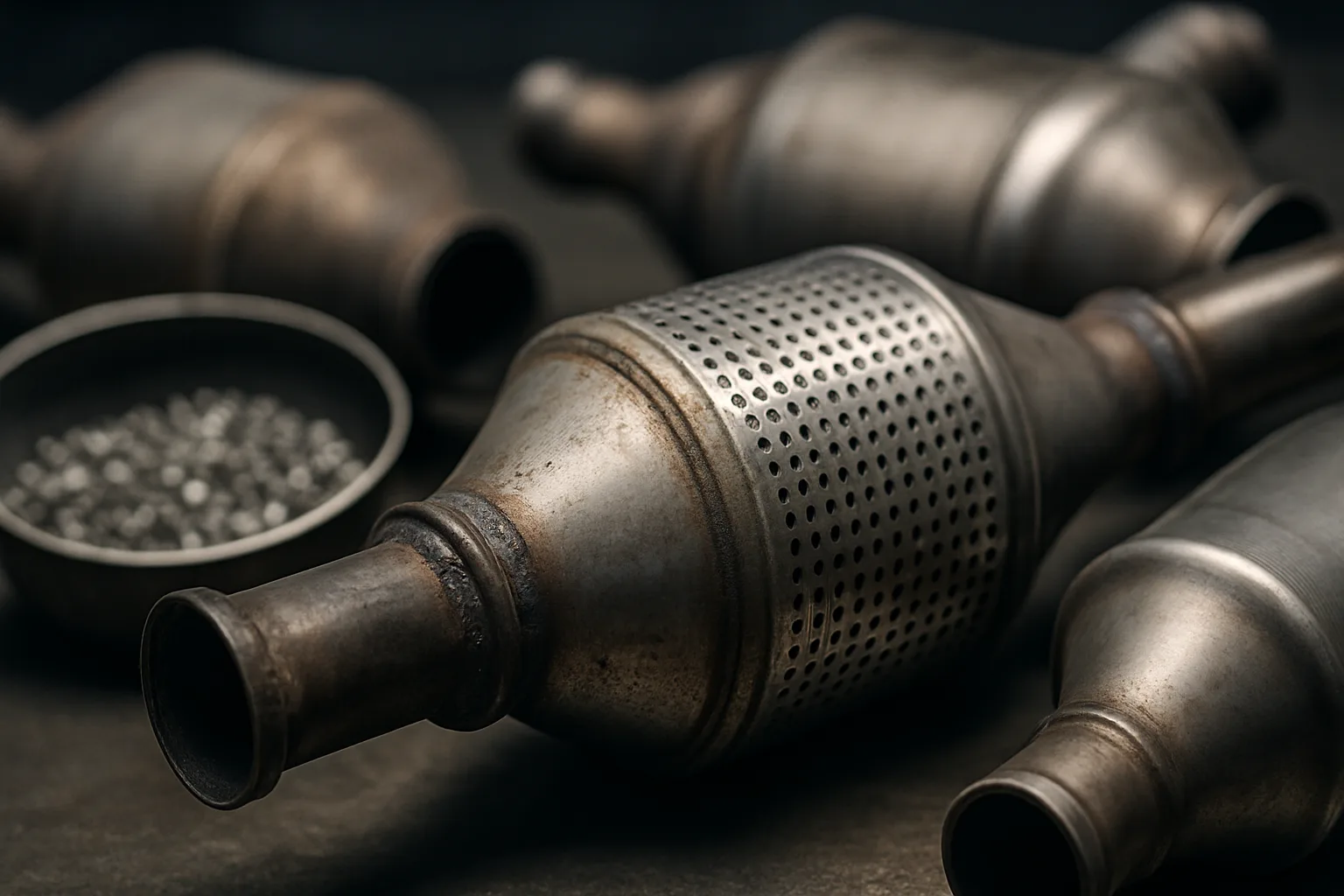
Most people toss a spent catalytic converter in a scrap bin without a second thought. But inside that battered steel shell sits a cocktail of platinum, palladium, and rhodium — three of the rarest metals on earth — and how you dispose of it matters more than you might think. Getting top cat converter prices in Barrie isn't just about your wallet. It's about making sure those metals actually get recovered, refined, and put back to work instead of ending up mishandled or wasted.
Catalytic converter recycling sits at the intersection of environmental responsibility and real market value. When you sell through the right channels, you get paid fairly and the metals get processed properly. When you don't, you risk both — a bad price and a bad outcome for the material. This guide covers both sides of that equation for sellers in Barrie, Ontario, and across Canada.
Why Catalytic Converters Deserve More Than a Dumpster
A catalytic converter's job is to scrub toxic exhaust gases — carbon monoxide, nitrogen oxides, unburned hydrocarbons — before they exit your tailpipe. It does this using a ceramic honeycomb substrate coated with platinum group metals (PGMs): platinum, palladium, and rhodium. These metals act as catalysts, triggering chemical reactions that neutralize harmful emissions. Without them, modern combustion engines would be dramatically dirtier.
When a converter reaches end of life, those PGMs don't disappear. They're still embedded in the substrate, still functional at a chemical level, and still extractable through smelting and refining. Mining new platinum, palladium, or rhodium is energy-intensive, environmentally disruptive, and geographically concentrated — the majority of the world's supply comes from mines in South Africa and Russia. Every converter that goes through a legitimate recycling chain reduces the pressure on those primary mining operations.
- Platinum: Used across the converter substrate, also critical for fuel cells and industrial catalysts
- Palladium: Increasingly dominant in gasoline engine converters — prices have been volatile and historically high
- Rhodium: Present in smaller quantities but commands the highest per-gram value of the three; essential for NOx reduction
- Ceramic substrate: The honeycomb carrier itself can be recovered and recycled separately
- Steel shell: The outer casing contributes to ferrous scrap value
The environmental argument for proper recycling is straightforward: recovering these metals through secondary processing requires a fraction of the energy and ecological impact of primary mining. Responsible recycling reduces carbon emissions, limits habitat disruption, and keeps hazardous processing waste out of unregulated markets. That's a meaningful contribution — and it starts with selling your converter to the right buyer.
The Problem With Informal and Unverified Cat Converter Buyers
Not every buyer who offers you cash for a cat converter is set up to process it responsibly. The catalytic converter secondary market has a shadow side — converters that get sold informally, exported without proper documentation, or processed in facilities that don't meet environmental standards. The PGMs still get extracted, but the process can generate toxic byproducts, and the chain of custody becomes impossible to verify.
For sellers in Barrie and across Ontario, this matters for two reasons. First, there's a regulatory dimension: provincial and federal rules around scrap metal transactions, including documentation requirements, exist in part to prevent theft and diversion of valuable materials. Second, there's the value question. Informal buyers who can't document their processing capabilities often quote lower prices because they're working with less transparency — and they pass that opacity back to you in the form of a worse offer.
The contrast with a legitimate, competitive sales channel is stark. When your converter goes through a vetted buyer on a platform like the SMASH Recycling auction platform, there's a documented chain of custody, buyers who can demonstrate their assay and processing capabilities, and competitive bidding that reflects actual market conditions. That's better for you and better for the material.
How Cat Converter Scrap Value Is Calculated — And Why It Varies
If you've ever tried to look up catalytic converter scrap value and come back more confused than when you started, you're not alone. Pricing is genuinely complex, and it's driven by factors that change daily. Understanding them helps you recognize a fair offer — and walk away from a bad one.
The primary driver is the PGM content of your specific converter, which varies by:
- Vehicle make, model, and year: A Honda Civic converter contains different PGM loadings than a Ford F-150 or a Toyota Tundra
- Converter type: Standard, large, small, foreign (import), DPF (diesel particulate filter), or foil-type converters all carry different values
- Condition: Intact substrate vs. damaged, cracked, or rattling "de-canned" units affects recoverable content
- Market prices: Platinum, palladium, and rhodium trade on global commodity markets and fluctuate with industrial demand, currency moves, and supply chain conditions
PGM spot prices directly set the ceiling on what processors can pay. When palladium or rhodium prices spike, converter values follow. When they dip, so does your payout. This is why checking scrap metal prices today matters — not just once, but close to when you actually plan to sell. Prices from three months ago may look nothing like today's market.
For sellers wondering about converter databases or visual price guides — sometimes searched as "catalytic converter price list with pictures" — these tools do exist and can help you identify your specific unit. But they're only as accurate as their underlying PGM price assumptions, which date quickly. Use them for identification and ballpark context, not as a firm quote.
Finding a Legitimate Catalytic Converter Scrap Yard Near You in Barrie
Barrie sits in Simcoe County, at the southern tip of Georgian Bay, and it's a working city with active auto dismantling, repair, and recycling operations. If you're searching for a catalytic converter scrap yard near me from Barrie or the surrounding area — Innisfil, Angus, Orillia, Collingwood — you have options. But not all scrap yards are created equal when it comes to catalytic converters specifically.
General scrap yards that buy ferrous and non-ferrous metals by the pound may not have the capability to accurately assess converter PGM content. They'll often quote a flat rate based on converter type — a rough approximation that may not reflect actual value. Specialized converters buyers and processors, by contrast, use assay data, serial number databases, and current PGM spot prices to make offers that track the real market more closely.
When evaluating any buyer, ask these questions:
- Do you identify converters by make, model, and serial number?
- Can you show me how your offer tracks current PGM spot prices?
- Do you issue documentation (receipt, transaction record) for the sale?
- Are you licensed to purchase scrap metal in Ontario?
If you want to go beyond local and get your converter in front of multiple verified buyers at once, platforms like SMASH bring that competition to you. Instead of calling one yard and accepting one number, you get market-driven price discovery. For Barrie scrap metal services, that kind of access to a wider buyer network can make a real difference on larger volumes, specialty units, or high-value converters.
Volume Sellers: Auto Shops, Dismantlers, and Collectors in Ontario
If you're an auto shop or dismantling operation in Barrie or elsewhere in Ontario, the calculus on catalytic converter recycling is different from the individual seller offloading a single unit. You're accumulating volume over time — potentially dozens or hundreds of converters a year — and the pricing, documentation, and logistics requirements scale with that volume.
Volume sellers have more leverage in negotiation, but they also have more to lose from a bad buyer relationship. A flat-rate buyer who underpays you by $20 per unit across 200 units per year is costing you $4,000 annually. That's not a rounding error. It's a reason to actively shop your converters and document their content.
Proper inventory documentation — photos, serial numbers, converter type identification — gives buyers more confidence and can support higher offers. Platforms that support photo documentation and VIN-linked inventory management make this process systematic rather than ad hoc. Get the best catalytic converter price in Canada by treating your converter inventory like the commodity it is: documented, identified, and offered competitively to multiple buyers.
From an environmental standpoint, volume sellers also have the greatest opportunity to ensure their material goes through responsible processing chains. The more converters you move through verified buyers, the more PGMs that get properly recovered — and the stronger your operation's sustainability story becomes, which increasingly matters to customers and regulators alike.
Getting Paid Fairly While Doing the Right Thing
The good news is that responsible recycling and maximum value aren't in conflict. In the catalytic converter market, they actually reinforce each other. Buyers who invest in proper assay capability, transparent pricing, and compliant operations tend to pay better — because they can extract more value from the material and they're competing on quality, not opacity.
When you read Canadian catalytic converter pricing guides, you'll see that the advice consistently points in one direction: know what you have, document it properly, and sell it competitively. That's it. There's no shortcut that beats those three steps.
For sellers in Barrie and across Ontario, the practical path is clear. Identify your converters. Check current market conditions. And get your material in front of buyers who are competing for it — not the single yard down the road that knows you have no alternative. Check current Canadian catalytic converter prices before you sell, and make sure you're working with buyers who can explain how they arrived at their number.
If you're ready to stop guessing and start getting market-rate value for your cats, get the best Canadian price for your catalytic converter — get a free quote at best-catalytic-converter-price.ca. It costs nothing to find out what your material is actually worth.
Frequently Asked Questions
Q: What affects cat converter prices in Barrie specifically?
The same factors that affect converter prices anywhere in Canada apply in Barrie: PGM spot prices (platinum, palladium, rhodium), converter type and condition, and the make and model of the vehicle it came from. Local demand and the number of buyers you have access to also play a role — more competition among buyers generally produces better price discovery. Barrie's proximity to larger Ontario markets means access to multiple buyer channels if you use the right platforms.
Q: How do I know if I'm getting a fair catalytic converter scrap value?
A fair offer should be tied to current PGM spot prices and the identified type of your converter — not a flat rate applied to everything regardless of content. Ask the buyer to explain how they calculated the number. If they can't, that's a signal to get a second opinion. Using a platform that puts your converter in front of multiple vetted buyers is the most reliable way to confirm market value.
Q: Is it legal to sell a catalytic converter in Ontario?
Yes, selling a catalytic converter you legitimately own is legal in Ontario. However, Ontario's Towing and Storage Safety and Enforcement Act and broader scrap metal regulations require dealers to collect seller identification and transaction records. Make sure any buyer you work with is licensed and issues proper documentation — this protects you and ensures the material stays in a compliant chain of custody.
Q: Why do catalytic converter prices change so frequently?
Converter prices track the commodity markets for platinum, palladium, and rhodium, which trade globally and respond to industrial demand, currency fluctuations, mining output, and geopolitical events. These metals can move significantly in short periods. Always check current conditions close to your planned sale date rather than relying on prices you saw weeks or months ago.
Q: Can I sell a single catalytic converter, or do I need a large volume?
You can absolutely sell a single converter. Individual sellers — someone pulling a cat off a scrapped vehicle — sell one unit all the time. Volume sellers like auto shops may have additional leverage in negotiation, but a single high-value converter (from a pickup truck, SUV, or certain import vehicles) can be worth a meaningful amount on its own. Identify it properly and get more than one offer before committing.
Disclaimer: Catalytic converter scrap values fluctuate with global PGM commodity markets. Prices referenced in this article reflect general market dynamics as of August 2026 and may not reflect current rates. Always verify current pricing before selling.
Follow SMASH on LinkedIn for ongoing scrap metal market insights, PGM price updates, and industry news relevant to recyclers and sellers across North America.