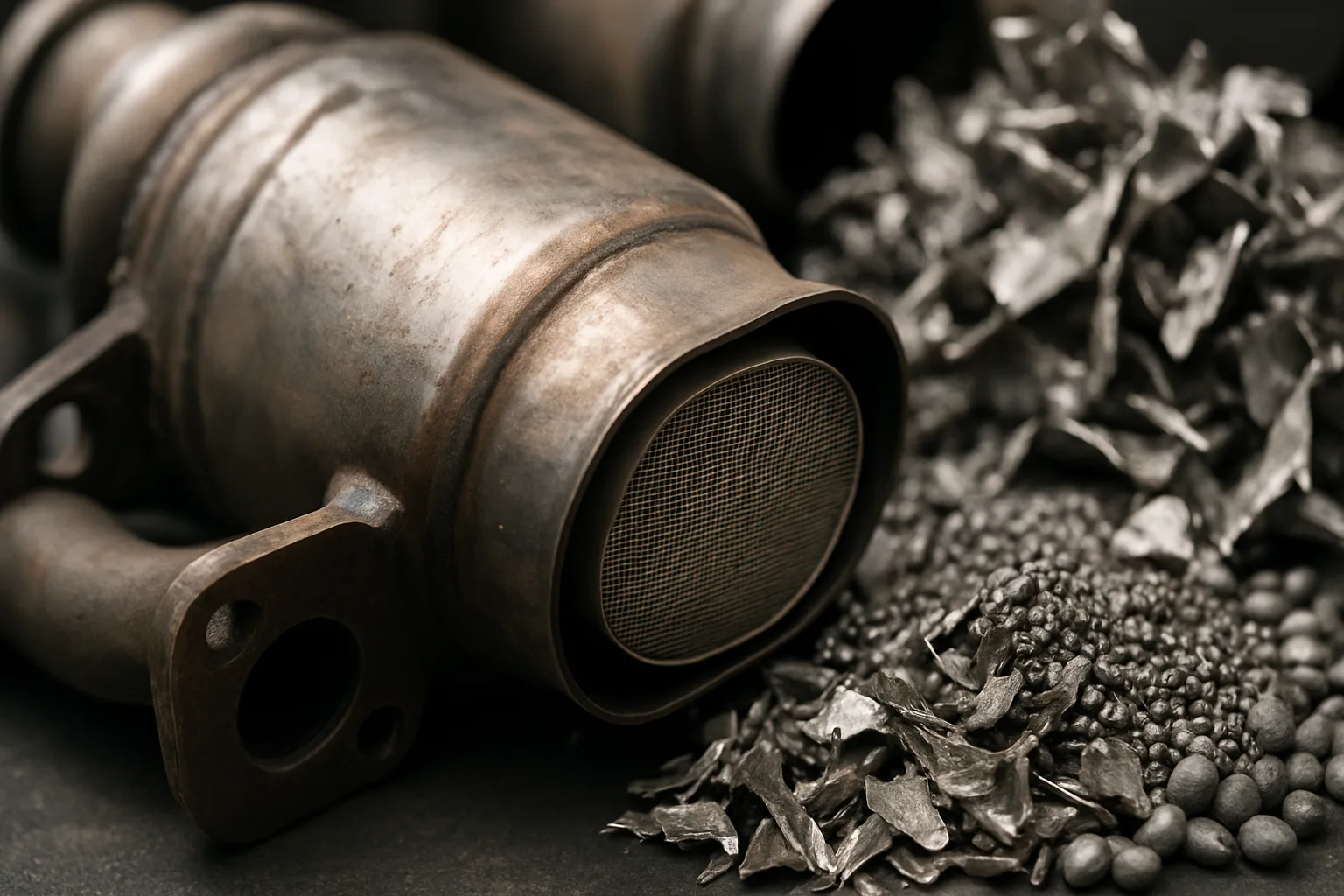
What's Inside Your Catalytic Converter — And Why It Determines Your Payout
Most people selling a scrap catalytic converter have no idea what it's actually worth. They accept whatever a single buyer quotes them, shake hands, and drive away leaving money on the table. Understanding catalytic converter prices today starts with one thing: knowing what grade you're selling and why that grade moves the number up or down.
Catalytic converters contain platinum group metals — platinum, palladium, and rhodium. These aren't trace amounts. A single converter can hold anywhere from two to seven grams of PGMs depending on the make, model, and year of the vehicle. At current market rates, that's a meaningful spread. The grade of your cat determines how much of those metals are recoverable, and that's what buyers are actually bidding on.
The Grading Tiers: What They Mean for Catalytic Converter Prices Today
The scrap catalytic converter market runs on a tiered grading system. It's not official in the sense that one body sets the rules — but the industry has converged on categories that most serious buyers and processors use. If you're selling cats in volume, you need to understand these tiers before you quote a single unit.
Here's how the tiers generally break down:
- High-Grade (Premium): These are the cats that fetch the top dollar. Think large-body converters off trucks, SUVs, and luxury vehicles — units with dense ceramic substrate and high PGM loading. Common examples include units from Toyota Prius, Ford F-250 diesels, and certain Lexus models. These command the highest per-unit payouts.
- Mid-Grade (Standard): The bulk of the market sits here. Passenger car cats from Hondas, Fords, Chevys — your typical scrap yard volume units. PGM content is lower but still recoverable. Pricing is consistent and predictable when you understand the baseline.
- Low-Grade (Economy/Domestic): Older units, smaller substrate volume, or vehicles with lower original emission standards. These still have recoverable metals but the payout per unit is noticeably lower. You want to know you're in this tier before you walk into a negotiation expecting premium money.
- Foreign (Aftermarket/Bead-Type): Aftermarket cats and units with bead substrate instead of ceramic honeycomb. These are worth significantly less — sometimes a fraction of an OEM unit. Some buyers won't touch them. Know what you have before you sell.
- Cracked, Gutted, or Damaged: Converters with broken substrate, missing ceramic, or evidence of tampering sell at scrap-steel value, not PGM value. The metals aren't recoverable in quantity. These should be separated from clean inventory before listing.
Grading isn't always straightforward. Identical-looking converters from the same vehicle can fall into different tiers depending on the model year and whether it was an OEM replacement. This is exactly where documentation, serial tracking, and photo evidence start to pay off when you get the best catalytic converter price in Canada.
How Platinum, Palladium, and Rhodium Drive the Price Spread
The three metals inside a catalytic converter don't move together. Platinum, palladium, and rhodium each have their own market dynamics — mining supply chains, industrial demand from auto manufacturers, and speculative pressure from commodity traders. When rhodium spikes, some mid-grade cats suddenly look a lot more interesting to buyers. When palladium drops, the premium on high-PGM units narrows.
This is why catalytic converter prices today can look very different from what you were paid six months ago — even for the same make and model of unit. The metal content doesn't change, but the value of that metal absolutely does. Following the spot prices for platinum, palladium, and rhodium gives you a real-time read on where the market is heading.
A few things worth knowing about PGM market behavior in 2026:
- Rhodium remains the most volatile of the three. Small shifts in supply out of South Africa can swing prices significantly.
- The accelerating EV transition is putting long-term pressure on palladium demand — catalytic converters aren't used in electric drivetrains. But the transition is slow, and the ICE vehicle parc globally still generates massive demand for scrap cats.
- Platinum is seeing renewed industrial interest beyond autocatalysts, which adds a floor of support to pricing.
- None of this means prices go in one direction. They move. Check current rates before you sell.
If you want to check current Canadian catalytic converter prices, don't rely on a single buyer's quote to tell you where the market is. That quote reflects their margin, not the market.
Why Single-Buyer Quotes Hide the Real Value of Your Cats
Here's the problem most sellers run into. You call one buyer — maybe a local yard in Dartmouth or a regional processor — they give you a number, and you either take it or walk away. That buyer's quote is built to protect their margin. It has nothing to do with what a competitive market would actually pay you for the same units.
This is the old way. One call, one number, no leverage. It works fine for the buyer. It costs the seller real money.
Competition changes this. When multiple vetted buyers can see your documented inventory and bid against each other, you get price discovery — the actual market value of what you're holding. A catalytic converter auction format forces buyers to sharpen their pencils. They know they're not the only offer on the table.
Platforms like SMASH are built specifically for this. Instead of making cold calls and hoping you reached a buyer having a good day, you document your inventory — with photos, serial numbers, and descriptions — and let vetted buyers compete. The process is transparent. The pricing reflects demand, not one buyer's mood. For sellers in Dartmouth and across Nova Scotia shipping cats to refiners, that difference can add up quickly when you're moving volume.
You can also get competitive bids for your scrap in Canada through SMASH's auction platform, which handles documentation, buyer vetting, and invoicing without a subscription fee.
Grading Your Own Inventory Before You Sell
You don't need a chemistry degree to do a first-pass grade on your cats. You need a process. Consistent documentation before you sell protects you from getting low-balled on units that belong in a higher tier.
Here's a practical workflow for grading your inventory:
- Photograph every unit. Top, bottom, and both end faces of the substrate. Buyers want to see the honeycomb density. A clear photo adds confidence and sometimes moves units into a higher tier.
- Record the serial number or part number. Most OEM converters have a stamped or welded number. This is your fastest path to accurate identification. SMASH's platform includes serial tracking built into the listing process.
- Note the vehicle source if you know it. Year, make, and model help buyers cross-reference PGM content estimates. If you pulled it yourself, write it down. If it came in with a vehicle at your yard, log it when the car arrives.
- Separate by condition. Clean honeycomb, cracked substrate, and gutted shells should never be mixed in the same lot. Mixing grades destroys your average payout per unit.
- Flag aftermarket units separately. Beaded or aftermarket cats don't belong in the same lot as OEM units. List them separately with honest descriptions.
This process takes time on the front end. It pays back when buyers compete on well-documented inventory. For anyone selling cats regularly — from a shop in Dartmouth, a collection route in Nova Scotia, or a larger operation further west — consistent grading is the habit that separates informed sellers from the ones getting whatever buyers feel like offering.
To go deeper on the selling process, read Canadian catalytic converter pricing guides that walk through what buyers actually look for and how to position your inventory.
What to Expect from the Market Right Now
As of August 2026, the catalytic converter scrap market is active. Demand from refiners and processors continues to outpace the growth in EV adoption — the installed base of ICE vehicles across North America still generates a steady supply of end-of-life cats. That's good news for sellers with clean, graded inventory to move.
Price volatility remains a reality. If you're holding a significant number of high-grade units waiting for a better market, understand that timing the PGM market is genuinely difficult. Most experienced sellers move inventory consistently rather than speculating on price direction. The goal is to get a fair, competitive price — and that requires competition among buyers, not a single quote and a handshake.
For sellers across Canada — whether you're running a shop in Dartmouth, a yard in Nova Scotia, or processing volume from Edmonton — the fundamentals are the same. Know your grade. Document your inventory. Sell into competition. SMASH makes that process practical for sellers who are serious about getting paid what their cats are actually worth.
Ready to find out what your inventory is actually worth? Get the best catalytic converter price in Canada — submit your inventory and let vetted buyers compete for it.
Frequently Asked Questions
Q: How do I know what grade my catalytic converter is?
Start with the serial or part number stamped on the unit, then cross-reference it with a buyer or pricing database. Vehicle source — year, make, model — is your next best indicator. High-grade cats typically come from larger, newer, or luxury vehicles with more demanding emission standards. When in doubt, photograph the substrate face and get multiple opinions before you accept a quote.
Q: What are catalytic converter prices today in Canada?
Prices vary by grade, current PGM spot prices, and buyer demand. High-grade OEM units consistently command the highest payouts, while aftermarket and damaged cats return much less. Because the market moves with platinum, palladium, and rhodium prices, it's important to check current rates rather than relying on numbers from months ago. Always get competing quotes before you sell.
Q: Where can I sell catalytic converters in Dartmouth, Nova Scotia?
Local scrap yards in Dartmouth will buy cats, but a single local quote may not reflect the full market value of your inventory — especially if you're holding premium or mid-grade units. Platforms like SMASH connect sellers across Nova Scotia with vetted buyers who compete for your inventory, which can lead to better price discovery than a single cold call.
Q: Does a catalytic converter auction actually get me more money?
A competitive auction format creates price discovery — it reveals what the market is willing to pay, not just what one buyer wants to offer. When multiple vetted buyers bid on documented inventory, the price reflects real demand. That's different from a single quote, which reflects one buyer's margin target. Competition doesn't guarantee a specific outcome, but it gives you better information and more leverage.
Q: Why does my cat look the same as another but get a lower price?
Two converters from the same vehicle model can have different PGM loadings depending on the model year, trim level, or whether the unit is OEM versus aftermarket. Engine displacement, emissions standard, and even the manufacturing year of the converter all affect metal content. This is why accurate documentation — photos, serial numbers, vehicle source — matters when you're trying to get graded correctly and paid accordingly.
Follow SMASH on LinkedIn for ongoing scrap metal market updates, PGM price movement, and practical insights for yards and collectors across North America.
Disclaimer: Catalytic converter prices fluctuate with PGM spot markets and buyer demand. All pricing references in this article are general in nature. Check current rates before selling your inventory.