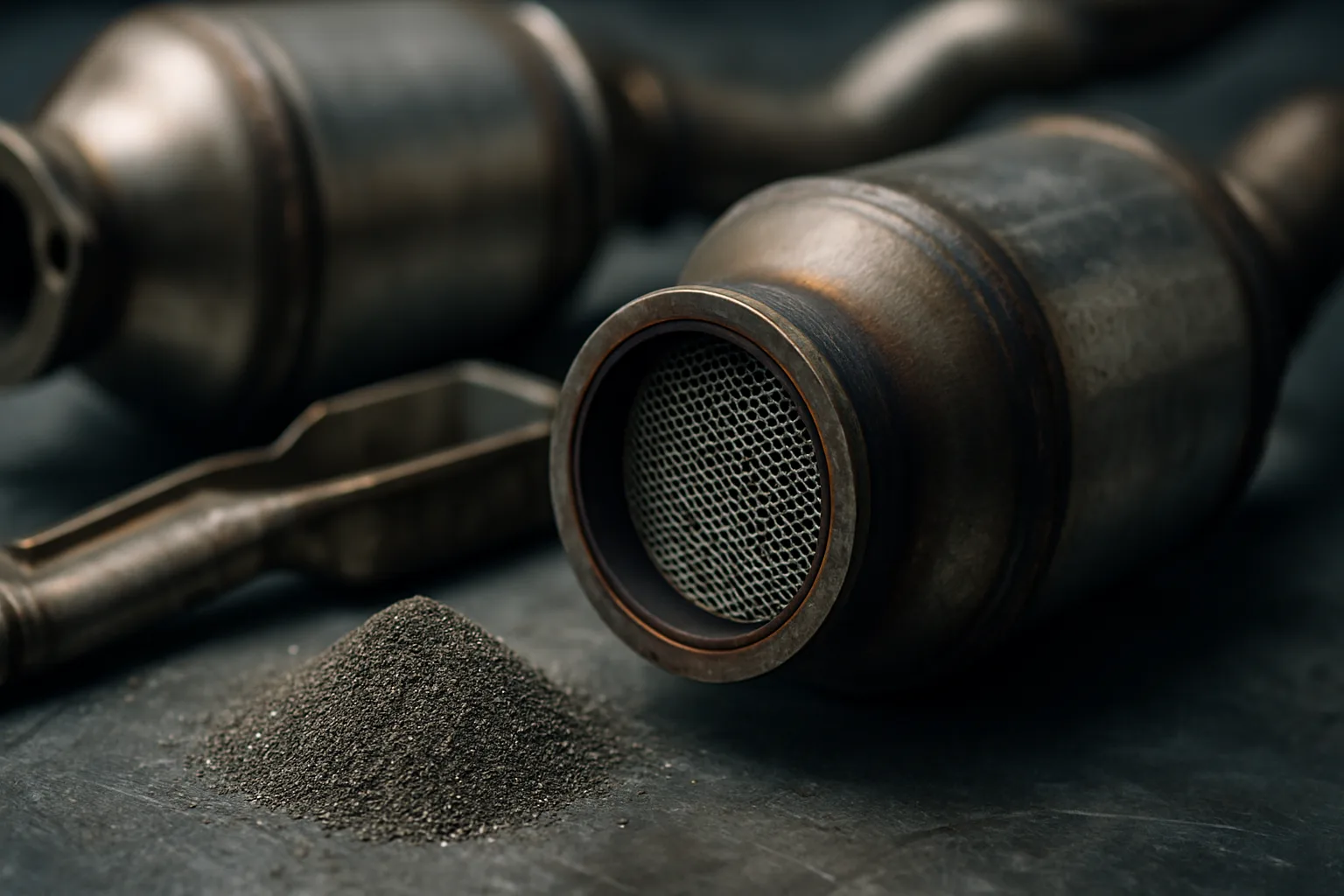
If you've ever been offered a suspiciously low number for a catalytic converter you knew was worth more — you weren't imagining it. Scams in the scrap catalytic converter market are real, they're widespread, and they cost Canadian sellers serious money every year. Whether you're an auto shop clearing out old stock, a collector in Winnipeg sitting on a pile of cats, or someone selling a single unit off a junker, knowing the red flags before you sell is the difference between a fair deal and getting robbed in plain sight.
This guide breaks down the most common scams targeting Canadian sellers, how buyers use confusion around OEM catalytic converter value to lowball you, and what you can do to protect yourself — including how platforms like SMASH are changing the game.
Why the Catalytic Converter Market Attracts Scammers
Cats are valuable because of what's inside them: platinum, palladium, and rhodium — precious metals that power catalytic reactions and command serious prices on the global market. The problem is that those prices fluctuate daily, the metals aren't visible to the naked eye, and most sellers have no reliable way to verify what a buyer is telling them about current market rates.
That information gap is exactly what bad-faith buyers exploit. They count on you not knowing your unit's OEM catalytic converter value, not understanding how platinum group metals (PGMs) are priced, and not having access to a reference like a verified scrap catalytic converter price list. The less you know, the more they profit.
In Manitoba and across Canada, this problem is compounded by the fact that the market is largely relationship-based and opaque. A lot of sellers still rely on a single buyer — one phone call, one quote, take it or leave it. That structure benefits the buyer, not you.
The Most Common Catalytic Converter Buying Scams in Canada
These aren't hypothetical. These are tactics sellers encounter regularly, from small-town Manitoba yards to busy Winnipeg auto shops.
1. The Lowball Price Lock
A buyer quotes you a price — often verbally, with no documentation — and pressures you to commit immediately. "This price is only good today." Sound familiar? This tactic exploits urgency to prevent you from shopping around. Catalytic converter prices today can vary significantly between buyers. A legitimate buyer doesn't need you to decide in 10 minutes.
2. The Grade Downgrade
You bring in a high-grade OEM converter. The buyer examines it, then tells you it's a lower-grade or aftermarket unit — even if it isn't. Without a reference point, you can't challenge them. Some buyers do this systematically, calling OEM units "aftermarket" to pay a fraction of the actual value. This is one of the most effective scams precisely because it sounds technical and authoritative.
3. The Fake Price List
Some buyers hand you a laminated price list and present it as the market standard. It isn't. There's no single official catalytic converter price list in Canada. Any buyer showing you a proprietary list as if it's industry gospel is using it as a negotiation tool — not a transparency tool. Be especially skeptical of lists without dates, without PGM price references, or that don't match current platinum, palladium, and rhodium spot prices.
4. The Weight-Only Offer
Instead of valuing your cats based on PGM content — which is the correct method for OEM units — a buyer offers you a flat per-pound or per-kilogram rate. This can work out fine for low-grade or aftermarket converters, but for high-PGM OEM units, you're almost certainly leaving money on the table. Weight-based offers erase the distinction between a high-value OEM unit and a cheap aftermarket replacement.
5. The International Price Confusion Tactic
You may have come across references to a scrap catalytic converter price list from South Africa or catalytic converter price lists from India while researching values online. Some buyers deliberately introduce this confusion — referencing offshore pricing structures to make Canadian prices seem lower than they are. Prices in different countries reflect completely different market conditions, currency values, refinery relationships, and regulatory environments. Canadian sellers should benchmark against Canadian market rates, period.
6. The Phantom Deductions
You agree on a price per unit. Then the invoice comes back with deductions for "assay fees," "processing charges," "moisture adjustments," or other vague line items that weren't discussed upfront. Legitimate buyers are transparent about fees before you commit — not after you've already loaded the truck.
How to Verify OEM Catalytic Converter Value Before You Sell
The single most powerful thing you can do is get informed before any conversation with a buyer. Here's a practical approach for Canadian sellers.
- Identify your unit correctly. OEM (original equipment manufacturer) converters — the ones that came on the vehicle from the factory — generally contain significantly more PGMs than aftermarket replacements. Learn to identify the difference, or use a service that does it for you.
- Check current PGM spot prices. Platinum, palladium, and rhodium prices are publicly available and update daily. Know where these metals are trading before any buyer quotes you a number.
- Use a verified reference or platform. Rather than relying on a single buyer's verbal quote, use a resource that provides current, verified Canadian pricing. You can check current Canadian catalytic converter prices before you commit to any offer.
- Document what you have. Photo documentation, serial numbers, and unit counts matter. Documented inventory gives buyers more confidence — and gives you leverage if a buyer tries to dispute what you brought in.
- Get multiple quotes. This is non-negotiable. One quote is not a market. Multiple quotes reveal the market.
For Winnipeg sellers especially, the local market can feel small. You may feel like you only have one or two real options. That's the exact problem that a B2B scrap metal marketplace like SMASH is designed to solve — by connecting you with vetted buyers competing for your load, not a single contact who knows they're your only call.
What a Legitimate Catalytic Converter Buyer Looks Like
Not every buyer is running a scam. But knowing the signs of a legitimate operation helps you filter fast. A trustworthy buyer will:
- Provide written quotes, not just verbal offers
- Be transparent about how they're calculating value (PGM content, not just weight)
- Disclose any fees or deductions before you agree to the transaction
- Not pressure you to decide immediately
- Welcome documentation — BOLs, packing lists, photo records
- Have a verifiable track record or be part of a vetted network
If a buyer pushes back on any of these — if transparency makes them uncomfortable — that tells you something important. Legitimate operations don't fear documentation.
How SMASH Helps Canadian Sellers Get a Fair Price
The old model — one buyer, one phone call, no competition — was never designed to benefit sellers. It was designed for convenience, and that convenience came at your expense.
SMASH flips that dynamic. As a SMASH scrap metal auction platform, it connects sellers with vetted buyers who compete for your inventory. Competition is the most reliable mechanism for price discovery. When multiple buyers are bidding on your load of OEM cats, you're not guessing what the market will pay — you're seeing it in real time.
SMASH also supports proper documentation — photo records, serial tracking, inventory tools — which is exactly what protects you from grade-downgrade and phantom-deduction scams. When your inventory is properly documented before it changes hands, there's no room for a buyer to claim your OEM unit was aftermarket.
There are no subscription fees. SMASH only wins when you win. For Winnipeg sellers tired of feeling like the market is working against them, that's a fundamentally different relationship with a buyer network. You can find the best price for your scrap in Canada through a platform built on competition and transparency, not relationships that benefit one side.
Want to understand how the broader Canadian market works before you sell? Read Canadian catalytic converter pricing guides that break down PGM pricing, grading, and what drives value in the current market.
Selling Catalytic Converters in Winnipeg: Local Context Matters
The Winnipeg market for scrap cats has its own dynamics. Manitoba's automotive sector, cold-weather driving conditions, and proximity to both U.S. and Canadian refinery networks all affect how converters are priced and moved. Local sellers sometimes assume they need to work within a small circle of regional contacts. That's not true anymore.
With digital platforms and auction-based selling, a Winnipeg yard or shop can access a national buyer network without leaving the province. The Winnipeg scrap metal services available through best-catalytic-converter-price.ca are built specifically to connect Manitoba sellers with competitive, vetted buyers — so geography is no longer a reason to accept the first number someone quotes you.
Whether you're clearing a single high-value OEM unit or moving a larger lot, the process is the same: document, verify, and compete. If you want to get the best catalytic converter price in Canada, competition and transparency are the tools that get you there.
Prices for platinum, palladium, and rhodium shift constantly. Always verify current rates before finalizing any sale — the numbers that applied last month may not reflect what the market is paying today.
Don't settle for the first offer. Get a free quote at best-catalytic-converter-price.ca and find out what your converters are actually worth in the current Canadian market.
Frequently Asked Questions
Q: How do I know if my catalytic converter is OEM or aftermarket?
OEM converters are installed by the vehicle manufacturer at the factory and generally contain higher concentrations of platinum, palladium, and rhodium than aftermarket replacements. You can usually identify them by the vehicle make, model, year, and the converter's serial number or part marking. A reputable buyer or platform can help you verify the grade before pricing.
Q: Why do catalytic converter prices vary so much between buyers in Winnipeg?
Buyers set their own margins, have different refinery relationships, and access the PGM market at different rates. Without competition, there's no pressure to offer you the best price. Getting multiple quotes — or using an auction platform like SMASH — is the most reliable way to see where the market actually sits for your specific units.
Q: Are online catalytic converter price lists from other countries (like South Africa or India) useful for Canadian sellers?
Not directly. Pricing in other countries reflects entirely different market conditions, currency exchange rates, refinery costs, and local regulations. Canadian sellers should use Canadian market references and current PGM spot prices as their benchmark — not offshore price lists.
Q: What's the difference between weight-based and PGM-based pricing for catalytic converters?
Weight-based pricing pays you per pound or kilogram regardless of what's inside the unit. PGM-based pricing values the converter based on its actual platinum, palladium, and rhodium content — which is the correct method for OEM units and typically results in a higher payout for high-grade converters. If a buyer is only offering weight-based rates on OEM units, ask why.
Q: How does SMASH protect sellers from lowball offers?
SMASH uses an auction format where vetted buyers compete for your inventory. Competition is the most effective protection against lowball pricing — it removes the information asymmetry that single-buyer relationships depend on. Combined with documentation tools like photo records and serial tracking, SMASH gives sellers both price transparency and inventory protection.
Follow SMASH on LinkedIn for ongoing industry updates, PGM market insights, and scrap metal pricing news across Canada.
```