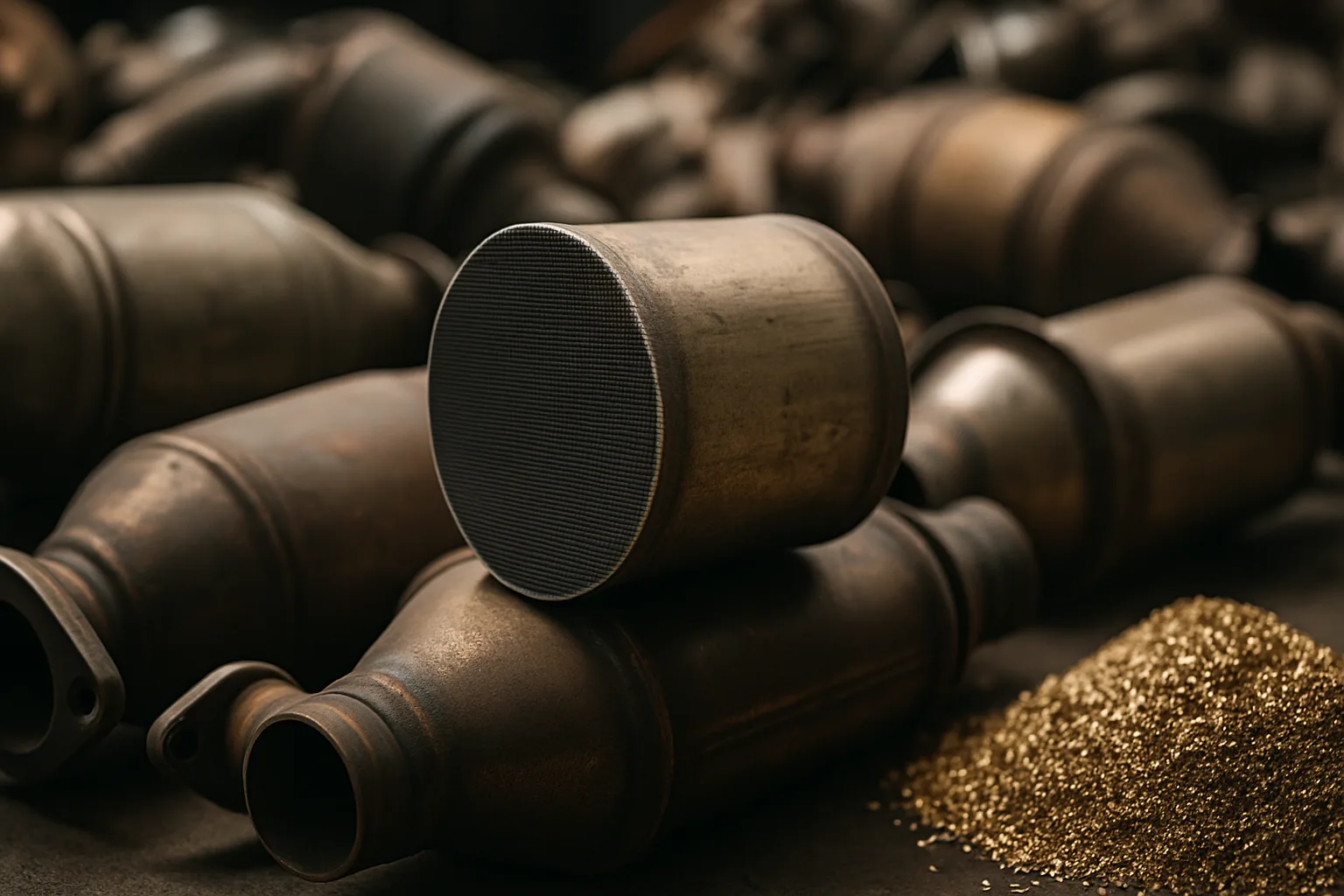
Stricter Emissions Standards Are Quietly Driving Up the Value of Your Scrap Catalytic Converter
Most people selling a scrap catalytic converter are thinking about one thing: what's it worth today? But if you want to understand why that number moves — and why it's been moving — you need to look at what's happening in emissions regulation. The global push for cleaner air isn't slowing down. And every new standard that governments tighten puts more pressure on the supply of platinum, palladium, and rhodium. That pressure flows directly into the price of your converter.
If you're in Prince George or anywhere across British Columbia trying to get the best catalytic converter price Prince George sellers can access right now, understanding this regulatory backdrop helps you sell smarter — not just faster.
How Emissions Regulations Create Demand for Platinum Group Metals
Catalytic converters exist because of emissions law. Full stop. Without regulations requiring vehicles to scrub harmful exhaust gases before they hit the atmosphere, there would be no market for platinum group metals (PGMs) in automotive applications. As those regulations get stricter, converters need to work harder — and that means more PGM loading per unit, or more sophisticated PGM formulations.
In 2026, that pressure is coming from multiple directions at once:
- Euro 7 implementation — The European Union's Euro 7 standard, phased in over 2025 and 2026, sets tighter limits on nitrogen oxides (NOx), particulate matter, and other pollutants for new internal combustion engine (ICE) vehicles. Meeting these limits requires more precise and often more PGM-intensive catalytic systems.
- China 6b enforcement — China's China 6b standard, one of the strictest ICE emission regimes globally, is now fully enforced across most vehicle categories. China's auto market is enormous. The PGM demand that standard creates is enormous too.
- North American Tier 3 / LEV III standards — U.S. and Canadian light-duty vehicle standards have continued to tighten, requiring manufacturers to further optimize converter chemistry and durability.
- Non-road and heavy-duty regulations — Trucks, buses, construction equipment, and marine engines face their own tightening standards, each requiring converter technology that leans on PGMs.
The result? Global demand for platinum, palladium, and rhodium from the automotive sector remains structurally elevated — even as EV adoption grows. Internal combustion vehicles aren't disappearing overnight, and hybrid vehicles still use catalytic converters. The regulatory floor under PGM demand is higher than it's ever been.
What Rhodium Price Today Has to Do With Your Scrap Converter
Rhodium is the metal most people outside the industry have never heard of, but it's often the highest-value component in a catalytic converter. Rhodium handles the reduction of nitrogen oxides — the emissions that Euro 7 and China 6b specifically target. As those standards tighten, converter formulations increasingly rely on rhodium to do the heavy lifting. That creates sustained demand for a metal that is extraordinarily rare and difficult to mine.
Checking the rhodium price today before you sell isn't optional — it's essential. Rhodium prices can swing dramatically over short periods. A converter that assays at a certain rhodium concentration is worth materially different amounts depending on the spot price at the time of sale. The same is true for palladium and platinum, though rhodium tends to show the highest volatility.
This is exactly why selling your scrap converter to the first buyer who quotes you a number is a mistake. You have no way to verify whether that quote reflects current PGM spot prices or last month's prices. You need competition. You need transparency. That's what platforms like smashrecycling.ca are built to provide — multiple vetted buyers seeing your lot and bidding against each other, with pricing anchored to real market data.
Why British Columbia Scrap Yards Are Paying Attention in 2026
British Columbia has its own emissions inspection requirements, and the province's vehicle population is substantial. Prince George sits at a geographic crossroads — a hub for forestry, mining, and transportation industries that run significant fleets of diesel and gasoline-powered equipment. Those fleets generate a steady supply of end-of-life catalytic converters, and the converters coming off heavy-duty trucks and industrial equipment often carry higher PGM loadings than standard passenger car units.
The practical reality for anyone doing scrap metal recycling Canada-wide, or specifically in northern British Columbia, is this: the converters you're sitting on are worth more when you understand what's inside them and when you sell them through a process that creates actual price competition.
If you're working with a shop or fleet in Prince George and accumulating cats between sales, proper documentation matters too. Serial numbers, vehicle make and model, and photos of each unit help buyers assess value before they bid — and that confidence translates into better offers. Platforms like SMASH support photo documentation and inventory tracking specifically because documented lots sell better. More buyer confidence means better price discovery.
For Prince George scrap metal services that actually reflect current PGM market conditions, you need a selling process built around competition — not a single phone call to a single buyer who controls the information.
The Gap Between the Old Way and What Competitive Auctions Actually Do
Here's the problem with calling one scrap yard near you and taking their number: they know the PGM spot prices. You probably don't. That information gap is how margin gets extracted from sellers who don't know what their material is actually worth.
The old way of selling scrap catalytic converters in Canada looks like this:
- You call a catalytic converter scrap yard near me — whoever pops up first in search.
- They quote you a price. You have no reference point to evaluate it.
- You take the offer or you don't. Either way, you never know what you left on the table.
The SMASH way works differently. You document your inventory — cats logged with photos, VIN lookups, serial tracking where applicable. That lot goes to vetted buyers who compete for it in an auction format. You see the bids. Competition can help reveal the market. You're not guessing anymore.
This matters even more in 2026 because PGM prices are being pulled by forces most individual sellers can't easily track — regulatory timelines in Europe, production data out of South Africa's platinum mines, palladium supply constraints from geopolitical pressures on Russian supply chains. When rhodium or palladium moves significantly in a week, you want buyers bidding against each other based on that week's prices — not last month's.
If you want to sell catalytic converter Canada-wide through a process that actually reflects current market conditions, the auction model is how you get there. Get the best catalytic converter price in Canada by putting your material in front of buyers who have to compete for it.
What Happens to PGM Demand as EVs Grow — And Why It Still Matters
The obvious question: if electric vehicles are taking over, doesn't PGM demand eventually collapse? The answer is more complicated than the headline suggests, and it matters for anyone thinking about cat converter value over the next several years.
Battery EVs don't use catalytic converters. That's true. But the transition is uneven and slower than early projections suggested. In 2026, ICE and hybrid vehicles still represent the overwhelming majority of new vehicle sales globally — and hybrids, which are growing fast precisely because of charging infrastructure gaps, still require full catalytic converter systems. Some hybrid converter configurations actually carry higher PGM loadings than pure ICE equivalents because of the specific thermal cycling demands of stop-start hybrid operation.
Meanwhile, the existing fleet — hundreds of millions of ICE vehicles already on the road — will continue generating end-of-life converters for the next 15 to 20 years. That's a long tail of scrap supply and, critically, a long window of sustained demand from the recycling sector. Secondary PGM supply (from scrap) is increasingly important to manufacturers who face tightening primary supply. That gives scrap converters real strategic value, not just commodity value.
The smart play for anyone holding scrap cats — whether you're an auto shop in Prince George, a dismantler in the Lower Mainland, or a collector anywhere across British Columbia — is to treat those units as the PGM-bearing assets they are. Document them. Understand what's in them. Sell them through a process that creates competition. Read Canadian catalytic converter pricing guides to stay current on what's driving market values.
How to Position Yourself to Get the Best Price in This Market
Regulations are tightening. PGM demand is structurally supported. The recycling market for scrap catalytic converters is more sophisticated than it was five years ago. Here's what that means for your selling strategy in practical terms:
- Don't sell blind. Know at minimum the vehicle make, model, and year your converters came from. Different converters carry dramatically different PGM content.
- Document everything. Photos of each unit, serial numbers where visible, and accurate counts help buyers price your lot with confidence — and confident buyers bid higher.
- Watch the metals. Check rhodium, palladium, and platinum spot prices before you sell. Timing matters more than most sellers realize.
- Use competition. One buyer, one quote is never the best outcome. An auction format with multiple vetted buyers is how price discovery actually works.
- Use the right platform. SMASH connects sellers with vetted buyers across North America, uses auto-invoicing, and handles the transaction infrastructure so you're not chasing paperwork.
No subscription fees. SMASH only wins when you win. That alignment matters when you're trying to get a fair price in a market driven by global regulatory forces you can't control.
If you're ready to stop guessing and start selling based on actual market competition, check current Canadian catalytic converter prices and get a free quote. The regulations driving PGM demand aren't going anywhere — make sure your selling process is keeping up.
Frequently Asked Questions
Q: Why do emissions regulations affect catalytic converter scrap prices in Canada?
Stricter emissions standards require manufacturers to use more platinum, palladium, and rhodium in catalytic converters. Higher PGM demand from new vehicle production tightens the supply of these metals overall, which supports scrap converter values. When regulations tighten globally, the downstream effect reaches scrap yards and sellers in Prince George just as much as anywhere else.
Q: How do I find the best catalytic converter price in Prince George?
The best approach is to document your converters — photos, make, model, and year — and put them in front of multiple vetted buyers through a competitive auction process. A single quote from a single local buyer rarely reflects current PGM spot prices. Platforms like SMASH create the competition needed for real price discovery. You can also get the best catalytic converter price in Canada by starting with a free quote.
Q: Does the rhodium price today actually change what my scrap converter is worth?
Yes, significantly. Rhodium is often the highest-value PGM in a catalytic converter, and its price can shift materially week to week. Selling when rhodium is elevated versus depressed can mean a meaningful difference in what you receive. Always check current spot prices before agreeing to any offer.
Q: Are catalytic converters from trucks and industrial equipment worth more than passenger car units?
Often, yes. Heavy-duty diesel converters and those from large trucks and industrial equipment can carry higher PGM loadings depending on the emissions standard the engine was designed to meet. In a region like Prince George with significant forestry and mining fleets, this is worth knowing before you sell.
Q: Will EV growth eventually eliminate the scrap catalytic converter market in Canada?
Not for many years. The existing fleet of ICE and hybrid vehicles will continue generating end-of-life catalytic converters for the next 15 to 20 years. Hybrid vehicles, which are growing in popularity, still require full converter systems. The scrap PGM recycling market remains viable well into the foreseeable future.
Stay current on scrap metal market trends and PGM pricing by following SMASH on LinkedIn — practical industry updates for yards, collectors, and buyers across North America.
Disclaimer: Catalytic converter prices fluctuate based on PGM spot markets. The information in this article reflects general market conditions as of August 2026. Always verify current rates before selling.