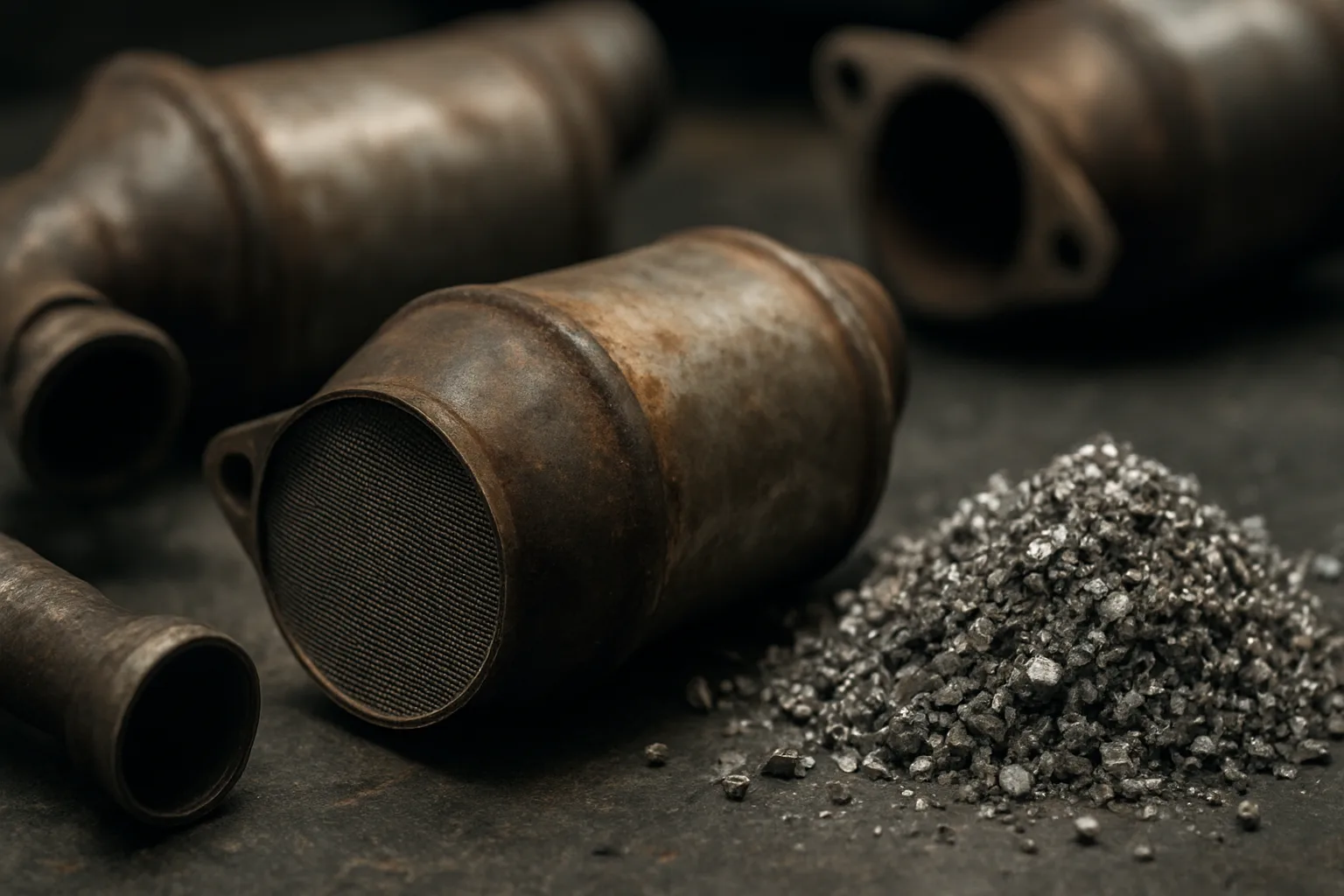
Hybrid Catalytic Converters Are Worth More — Here's Why Scarborough Sellers Leave Money on the Table
Most people assume a catalytic converter is a catalytic converter. Strip it off, sell it, move on. But if you're pulling a cat off a hybrid vehicle and treating it like a standard gas engine unit, you're almost certainly underselling it. Hybrid cats contain significantly higher concentrations of platinum, palladium, and rhodium — the three precious metals that drive cat converter prices in Scarborough and across the rest of Canada. The difference in scrap value between a hybrid cat and a conventional one can be substantial.
This article breaks down exactly why hybrid converters carry more precious metal content, which vehicles carry the most valuable units, and how to make sure you're not walking away from a sale with less than you're owed. Whether you're an auto shop pulling cats regularly or an individual with one unit to sell, this information is worth knowing before you accept any offer.
Why Hybrid Vehicles Produce Catalytic Converters With Higher Precious Metal Loads
The core job of a catalytic converter is to reduce harmful exhaust emissions — specifically hydrocarbons, carbon monoxide, and nitrogen oxides. To do that, the converter uses a washcoat loaded with platinum group metals (PGMs): platinum, palladium, and rhodium. These metals act as catalysts, triggering chemical reactions that convert toxic gases into less harmful compounds before they exit the exhaust.
Here's where hybrids get interesting. In a hybrid vehicle, the internal combustion engine shuts off frequently — at stops, during low-speed driving, or when the electric motor takes over entirely. Every time the engine restarts from cold or near-cold, the catalytic converter has to reach operating temperature again quickly to do its job. Cold-start emissions are one of the biggest pollution challenges in modern engine design. To compensate, hybrid manufacturers load their catalytic converters with a higher concentration of PGMs so the converter activates faster and more efficiently during those repeated cold-start cycles.
The result? A hybrid cat that has done its job well over 150,000 kilometres still retains more recoverable precious metal content than many standard converters — simply because of how it was engineered in the first place. That engineering decision has a direct impact on catalytic converter scrap value at the end of the vehicle's life.
Platinum, Palladium, and Rhodium: The Three Metals Driving Cat Converter Value in Canada
To understand why hybrid cats command higher scrap prices, you need to understand what you're actually selling. The value of any catalytic converter comes down to three metals:
- Platinum (Pt): Used primarily in diesel and older gasoline converters, platinum is a dense, stable metal that handles high-temperature oxidation reactions. It's also found in many hybrid units alongside palladium.
- Palladium (Pd): The dominant PGM in modern gasoline and hybrid converters. Palladium prices have seen significant volatility over the past several years and remain a major driver of cat converter value across North America.
- Rhodium (Rh): The rarest and often most valuable of the three. Rhodium handles the reduction of nitrogen oxides — the most difficult emissions to neutralize — and is used in small but critical quantities in virtually every modern converter. Hybrid cats often use slightly elevated rhodium loadings to manage NOx during frequent engine cycling.
Precious metal markets fluctuate constantly. Rhodium in particular has seen dramatic price swings over the past decade. This is exactly why locking in the best price requires real-time market awareness — not a stale price list or a buyer who quotes flat rates regardless of current PGM spot prices. If you want to get the best catalytic converter price in Canada, you need a pricing process that reflects what these metals are actually worth today.
Disclaimer: All precious metal prices fluctuate based on global commodity markets. Always check current rates before selling. Do not rely on any static price list as a current reference.
Which Hybrid Vehicles Carry the Most Valuable Catalytic Converters
Not all hybrid cats are equal. The amount of precious metal loading varies by manufacturer, model year, engine size, and emissions standards the vehicle was built to meet. That said, certain vehicles have developed a strong reputation among scrap buyers for carrying high-value converters. Here's a general breakdown of categories worth knowing:
High-Value Hybrid Categories
- Toyota and Lexus hybrids (Prius, Highlander Hybrid, RX450h, ES300h): These are among the most widely recycled hybrid cats in Canada. Toyota's hybrid system engineering is well-documented, and their converters are consistently sought after by buyers who process high volumes. Scarborough and the broader Greater Toronto Area see a high volume of these vehicles, which means local demand for these specific units is real.
- Honda hybrids (Accord Hybrid, CR-V Hybrid): Honda's more recent hybrid platforms use converters with meaningful PGM content. Older Honda hybrid units from the early Insight era tend to be lower value.
- Ford hybrids (Escape Hybrid, Fusion Hybrid, F-150 Hybrid): American hybrid platforms, particularly larger-engine units, can carry significant converter mass and PGM loading. The F-150 Hybrid in particular has attracted buyer attention due to its engine displacement and dual converter setup on some trims.
- GM hybrids (Chevy Tahoe, GMC Yukon two-mode hybrid): These larger SUV-based hybrid systems use substantial converter assemblies. Less common than Toyota units, but worth knowing if you encounter them.
- Luxury hybrids (BMW, Mercedes-Benz, Volvo): European luxury hybrids are engineered to strict emissions standards. Their converters often carry higher PGM loads to meet those standards. These units are less common in the Canadian scrap stream but command attention when they appear.
If you're in Scarborough and regularly pulling cats from vehicles at auction or through shop work, building familiarity with these categories pays off. The difference between knowing you have a Prius cat versus an unknown generic unit can mean a meaningfully different price when you check current Canadian catalytic converter prices before you sell.
How Hybrid Cat Converter Scrap Value Gets Calculated — and Where Sellers Get Shortchanged
Here's the honest reality of how most informal cat sales happen in Canada: a buyer offers a flat number, the seller accepts it because they don't know better, and the buyer captures the margin the seller should have kept. This is especially common with hybrid units, where the value gap between what a buyer offers and what the unit is actually worth can be significant.
Legitimate scrap buyers calculate value by assaying the converter — determining the actual PGM content — and then applying current precious metal spot prices. The math involves converter weight, substrate type (ceramic versus metallic), estimated PGM loading per unit, and a processing fee. The problem for sellers is that this process is opaque unless you're dealing with a buyer who explains their methodology.
This is where scrap metal recycling in Canada can go wrong fast. A single buyer with a take-it-or-leave-it offer gives you zero leverage. You have no way of knowing if that offer reflects the market or the buyer's margin target. Competition changes that dynamic entirely. When multiple vetted buyers bid on your inventory — whether you're selling one cat or a pallet — the price discovery process works the way it's supposed to.
Platforms like SMASH are built specifically for this kind of transaction. SMASH connects sellers with vetted buyers through a competitive auction format, so you're not relying on one phone call and a gut feeling. For yards and shops in Ontario processing hybrid cats regularly, that difference in process can add up fast. You can learn more through smashrecycling.ca and see how the platform works for sellers moving cat inventory.
What Scarborough Sellers Should Do Before Accepting Any Offer on a Hybrid Cat
If you're in Scarborough or anywhere in Ontario with a hybrid catalytic converter to sell, a few practical steps will protect your return:
- Identify the unit before you sell. Take clear photos of the converter, note the vehicle it came from (year, make, model, engine size), and check if there's a serial number or part number visible on the substrate or shell. This information directly affects what a knowledgeable buyer will offer.
- Don't accept the first offer. This is the single biggest mistake sellers make. One offer is not a market price — it's one buyer's position. Get multiple quotes before committing.
- Check current PGM spot prices. Palladium and rhodium prices move. A price quote from three weeks ago may not reflect where the market is today. Timing matters.
- Ask how the buyer calculates value. A legitimate buyer should be able to explain their assay process, their current PGM pricing reference, and their processing deductions. If they won't explain it, that tells you something.
- Use a platform that creates competition. SMASH's auction model is designed to let the market set the price, not a single buyer's margin target. For anyone moving more than one unit, this process is worth understanding.
If you want to read Canadian catalytic converter pricing guides that break down value by vehicle type and market conditions, that's exactly the kind of reference material that helps sellers walk into any transaction better prepared.
Frequently Asked Questions
Q: Are hybrid catalytic converters really worth more than regular ones?
Generally, yes. Hybrid converters are engineered with higher concentrations of platinum, palladium, and rhodium to handle frequent cold-start cycles efficiently. This higher PGM loading translates to higher scrap value, though exact values depend on the specific vehicle and current precious metal market prices. Always get a current quote rather than relying on a fixed price list.
Q: Where can I sell a catalytic converter in Scarborough, Ontario?
Scarborough has access to local scrap buyers and metal recyclers, but selling locally to the first buyer you find often means leaving money on the table. Using a platform that connects you with multiple vetted buyers — like SMASH — gives you competitive price discovery rather than a single take-it-or-leave-it offer. Visit best-catalytic-converter-price.ca to start the process.
Q: What is the most valuable catalytic converter to scrap in Canada?
Certain luxury and high-performance vehicles carry converters with very high PGM content, but Toyota Prius and Lexus hybrid units are among the most consistently sought-after in the Canadian scrap market due to their volume and known precious metal content. Rhodium-heavy units from any manufacturer tend to command attention when rhodium spot prices are elevated.
Q: How do I find catalytic converter buyers near me in Scarborough?
Local scrap yards are one option, but proximity doesn't always mean the best price. Many sellers in the Greater Toronto Area — including Scarborough — are finding that online platforms connecting them with multiple buyers produce better results than walking a converter into the nearest yard. Compare offers before you commit.
Q: Do catalytic converter prices in Canada follow the same market as the UK or US?
Global PGM spot prices are the common foundation — platinum, palladium, and rhodium trade on international commodity markets that affect converter values in Canada, the UK, and the US alike. However, local processing fees, currency exchange rates, and regional demand mean Canadian prices can differ from a catalytic converter price list in the UK or from US quotes. Always get Canadian-specific pricing for scrap in Canada.
Hybrid cats are some of the most undervalued units in the Canadian scrap stream — not because buyers don't know what they're worth, but because many sellers don't. If you've got a hybrid converter sitting in your shop or yard in Ontario, now is the time to price it properly. Get the best Canadian price for your catalytic converter — get a free quote at best-catalytic-converter-price.ca and make sure you're capturing the full value of what you're selling.
Stay current on scrap metal market trends and PGM pricing by following SMASH on LinkedIn — it's where industry updates and market insights land first.