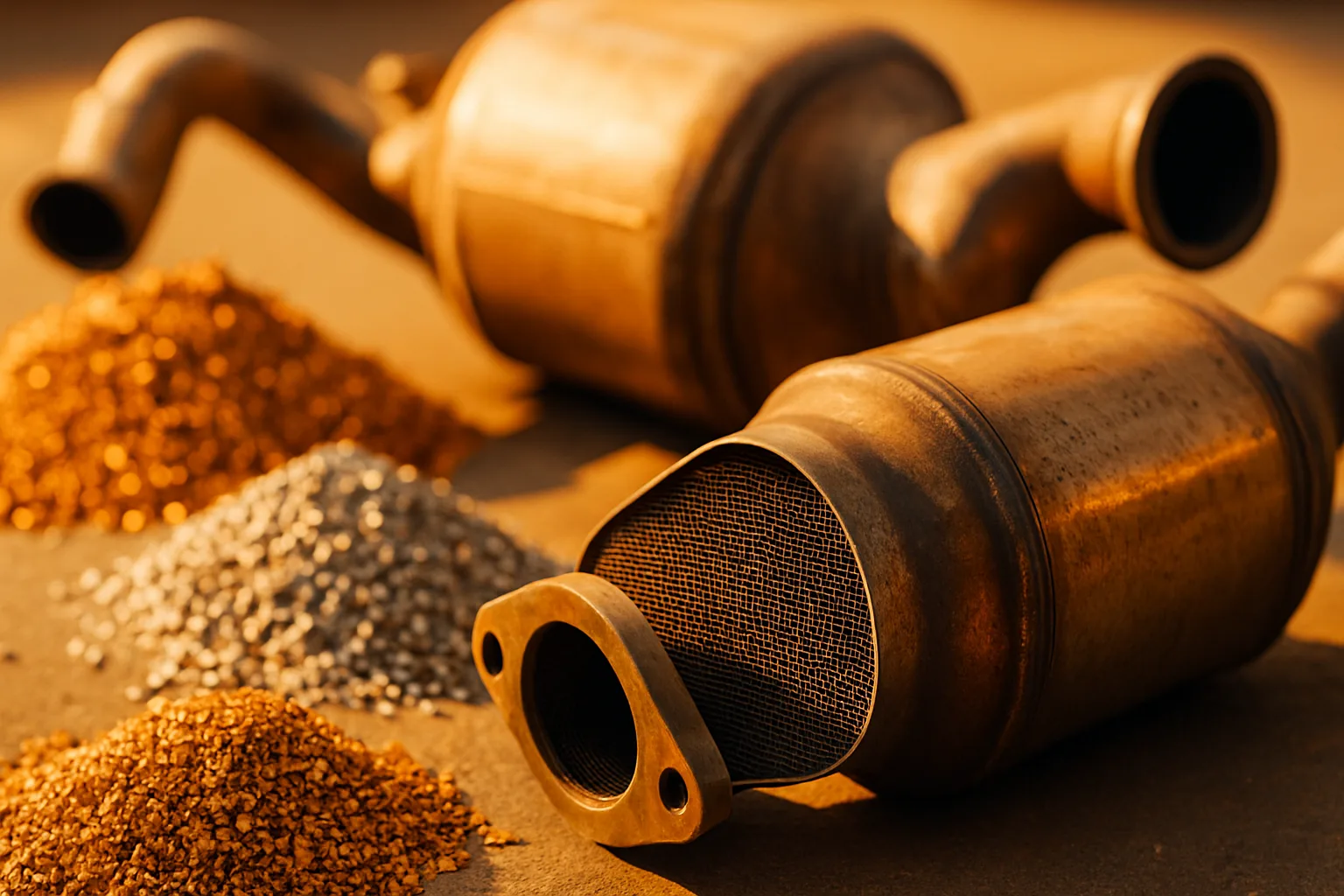
Someone in Corner Brook walks into a scrap yard with three catalytic converters off a late-model Toyota and a Dodge pickup. The buyer glances at them, lowballs the price, and the seller — not knowing any better — walks away with a fraction of what those cats were actually worth. This isn't bad luck. It's a pattern. And it happens every day across Newfoundland and Labrador, Vancouver, and every city in between.
The catalytic converter recycling market is worth serious money. The platinum, palladium, and rhodium locked inside those units command real prices on global commodity markets. But the information gap between what buyers know and what sellers know is enormous — and that gap gets exploited constantly. If you're trying to get the best catalytic converter price in Canada, you need to understand how the scams work before you walk into any transaction.
This article breaks down the most common tactics used to undervalue your cats, how to recognize them, and how to protect yourself — whether you're an individual seller in Corner Brook or a high-volume auto shop moving dozens of units a month.
---The Most Common Catalytic Converter Buying Scams
These aren't elaborate cons. Most of them work because sellers don't have enough information to push back. Knowledge is your only real defense.
1. The Eyeball Appraisal
A buyer glances at your converter for three seconds and quotes a number. No serial number lookup. No photo documentation. No reference to current platinum group metal (PGM) market prices. That number came from somewhere — but it wasn't a transparent pricing process. It came from maximizing their margin on your lack of data.
Every serious buyer in this market uses serial number databases and assay data to value converters. If someone is pricing your unit purely by sight, they're either guessing or they already know the number they want to pay you — and it isn't fair market value.
2. The "Aftermarket" Label Trick
Some buyers will look at your converter, call it an aftermarket or "low-grade" unit, and quote you a fraction of OEM pricing. Sometimes that's accurate. Often it isn't. Aftermarket converters do contain less PGM content than OEM units, but the spread between a legitimate aftermarket quote and what some buyers claim is "aftermarket" can be substantial. Misclassifying an OEM unit as aftermarket is one of the oldest moves in the book.
3. Rushed Transactions with No Documentation
Pressure to close fast is a red flag. "I can give you cash right now, but this price is only good today." That urgency exists to prevent you from shopping the unit elsewhere. Any legitimate buyer will let you verify their offer. If they won't, that tells you something important about the offer itself.
4. No Weight Verification
Some converters are priced partially by weight. If a buyer weighs your load on their own scale — a scale you haven't verified — and you have no independent reference point, you're trusting a number you can't check. In high-volume transactions, even small discrepancies in weight can represent significant money.
5. The "Market Is Soft Right Now" Move
PGM prices fluctuate. Rhodium, palladium, and platinum move with global commodity markets. But "the market is soft right now" is also one of the most reliable phrases buyers use to justify a low offer regardless of what the market is actually doing. If a buyer tells you this, ask them to show you current spot prices. Most won't bother, because that transparency doesn't serve them.
---Why Sellers in Newfoundland and Labrador Are Especially Vulnerable
Geographic isolation matters in this market. Corner Brook and much of Newfoundland and Labrador operate with fewer local buyers than major urban centers. When you have one or two realistic options for who to sell to locally, you lose the most important lever in any price negotiation: competition.
A seller in a larger market can walk across the street if one buyer lowballs them. A seller in a smaller market often can't. That geographic reality gets baked into the offers you receive — not because local buyers are necessarily dishonest, but because they know you have fewer alternatives. This is exactly why the ability to sell catalytic converters online has changed the game for sellers in regions like this.
Online platforms that connect Canadian sellers to a vetted national buyer network break that geographic disadvantage. When you can reach buyers in Toronto, Calgary, and Vancouver from Corner Brook, your local market stops being your only market. That's not theoretical — it's a structural shift in your negotiating position.
You can read Canadian catalytic converter pricing guides to better understand how regional factors affect your pricing — and how to work around them.
---How to Protect Yourself: What Legitimate Transactions Look Like
If you know what a clean, transparent transaction looks like, you can spot the deviations quickly. Here's the baseline for any legitimate cat recycling deal:
- Serial number or VIN-based lookup: Every converter has identifying information. Serious buyers use it to cross-reference assay databases and determine accurate PGM content estimates.
- Photo documentation: Both sides of the converter, any identifying markings, and condition documentation. This protects both the buyer and the seller.
- Written offer with clear pricing basis: What grade is the unit? What PGM content is being assumed? What current market reference are they using?
- No high-pressure closing tactics: A legitimate buyer doesn't need you to decide in the next ten minutes.
- Verifiable scale weights: If weight factors into pricing, the weighing process should be transparent and verifiable.
- Clear payment terms: When do you get paid? How? Any buyer who is vague about this is a risk.
If any of these elements are missing, that's not a minor inconvenience — it's a structural problem with the transaction that typically benefits the buyer at your expense.
---How SMASH Eliminates the Information Gap When You Sell Catalytic Converters Online
The core problem in this market isn't that bad buyers exist. It's that sellers have no reliable way to know if an offer is good or not. The SMASH Recycling auction platform addresses that directly by putting documented inventory in front of multiple vetted buyers simultaneously.
When multiple buyers compete on the same documented load, you get real price discovery — not one buyer's opinion of what your cats are worth. That competition is what reveals the actual market. Without it, you're guessing. And guessing almost always goes in the buyer's favor.
SMASH uses photo documentation, serial tracking, and structured auction formats to bring transparency to a market that historically had very little. No subscription fees. No guessing. When you sell catalytic converters online through a competitive platform, the information asymmetry that scammers rely on disappears.
For sellers trying to check current Canadian catalytic converter prices before committing to any transaction, understanding what competitive pricing looks like is the first step toward protecting yourself.
---Red Flags Checklist: Walk Away If You See These
Keep this list in your back pocket. These are the behaviors that signal a problematic transaction — whether you're in Corner Brook, Vancouver, or anywhere else in Canada:
- No serial number or database lookup performed before quoting
- Offer is cash-only with no documentation or receipt
- Buyer refuses to explain how they arrived at the number
- Strong pressure to close immediately
- Converter classified as "aftermarket" without showing you the basis for that determination
- No written record of the transaction
- Buyer discourages you from getting a second opinion
- Vague or noncommittal answers about payment timeline
None of these individually is conclusive proof of fraud. But when you see two or three of them in the same transaction, that's your signal to slow down and get another opinion before you commit.
---What to Do Before Your Next Catalytic Converter Sale
You don't need to become a PGM commodity trader to protect yourself. You need a few basic steps that any seller can take before the transaction happens.
Step 1: Document your units. Photograph both ends of each converter, note any serial numbers, and record the vehicle make and model the unit came off. This takes five minutes and gives you something to reference if a buyer's description doesn't match your unit.
Step 2: Check current market context. You don't need exact spot prices, but knowing whether palladium and rhodium are trending up or down gives you a basic reference point when a buyer claims "the market is soft."
Step 3: Get more than one offer. This is the single most effective protection against being lowballed. One offer is a monologue. Two or more offers is a conversation — and competition drives prices toward fair market value.
Step 4: Use a transparent platform. Platforms like SMASH put documented inventory in front of multiple vetted buyers, which means you're not relying on a single buyer's assessment or goodwill. That structural competition is how you avoid having your cats valued by someone who benefits from undervaluing them.
Whether you're clearing a handful of units from a small shop or moving volume regularly, the approach is the same: document, compare, compete. That's how you stop leaving money on the table and start getting what your converters are actually worth.
If you're ready to stop guessing and start getting fair market value, get the best catalytic converter price in Canada with a free quote — it costs you nothing to find out what your cats are worth in a competitive market.
Disclaimer: Catalytic converter prices fluctuate based on platinum, palladium, and rhodium spot prices on global commodity markets. Always verify current rates before finalizing any sale.
---Frequently Asked Questions
Q: How do I know if I'm being scammed when selling catalytic converters in Corner Brook?
The clearest sign is a buyer who offers you a price without looking up serial numbers or referencing current PGM market data. In Corner Brook, where buyer options are more limited than in major cities, it's especially important to get multiple offers — including from online platforms — before accepting any single quote. If a buyer pressures you to close fast or refuses to document the transaction, walk away.
Q: Can I sell catalytic converters online from Newfoundland and Labrador?
Yes. Online platforms that connect Canadian sellers to vetted national buyers have made it possible to sell catalytic converters online from anywhere in Newfoundland and Labrador, including Corner Brook. You document your units with photos and serial numbers, submit them through the platform, and receive competitive offers from multiple buyers — eliminating the geographic disadvantage of being in a smaller market.
Q: What's the difference between OEM and aftermarket catalytic converters in terms of value?
OEM (original equipment manufacturer) converters generally contain significantly more platinum group metals than aftermarket replacements, which means they command higher prices. The gap varies by vehicle and unit, but it can be substantial. Be cautious of any buyer who classifies your unit as aftermarket without showing you the specific basis for that determination — it's one of the most common ways sellers get underpaid.
Q: How do platforms like SMASH protect sellers from lowball offers?
SMASH uses documented inventory — photos, serial tracking, and structured auction formats — to present your converters to multiple vetted buyers simultaneously. That competition creates real price discovery rather than a single buyer's assessment. No subscription fees means you're not paying to access the market; SMASH only benefits when you get a good result.
Q: What information should I have ready before selling my catalytic converter?
At minimum: photos of both ends of each unit, any visible serial numbers, and the make, model, and year of the vehicle it came from. This documentation helps buyers accurately assess PGM content and builds confidence in the transaction. It also protects you if a buyer's classification of your unit doesn't match what you're looking at.
---Stay ahead of market shifts and scrap metal industry news — follow SMASH on LinkedIn for catalytic converter pricing updates and insights from across the Canadian recycling market.