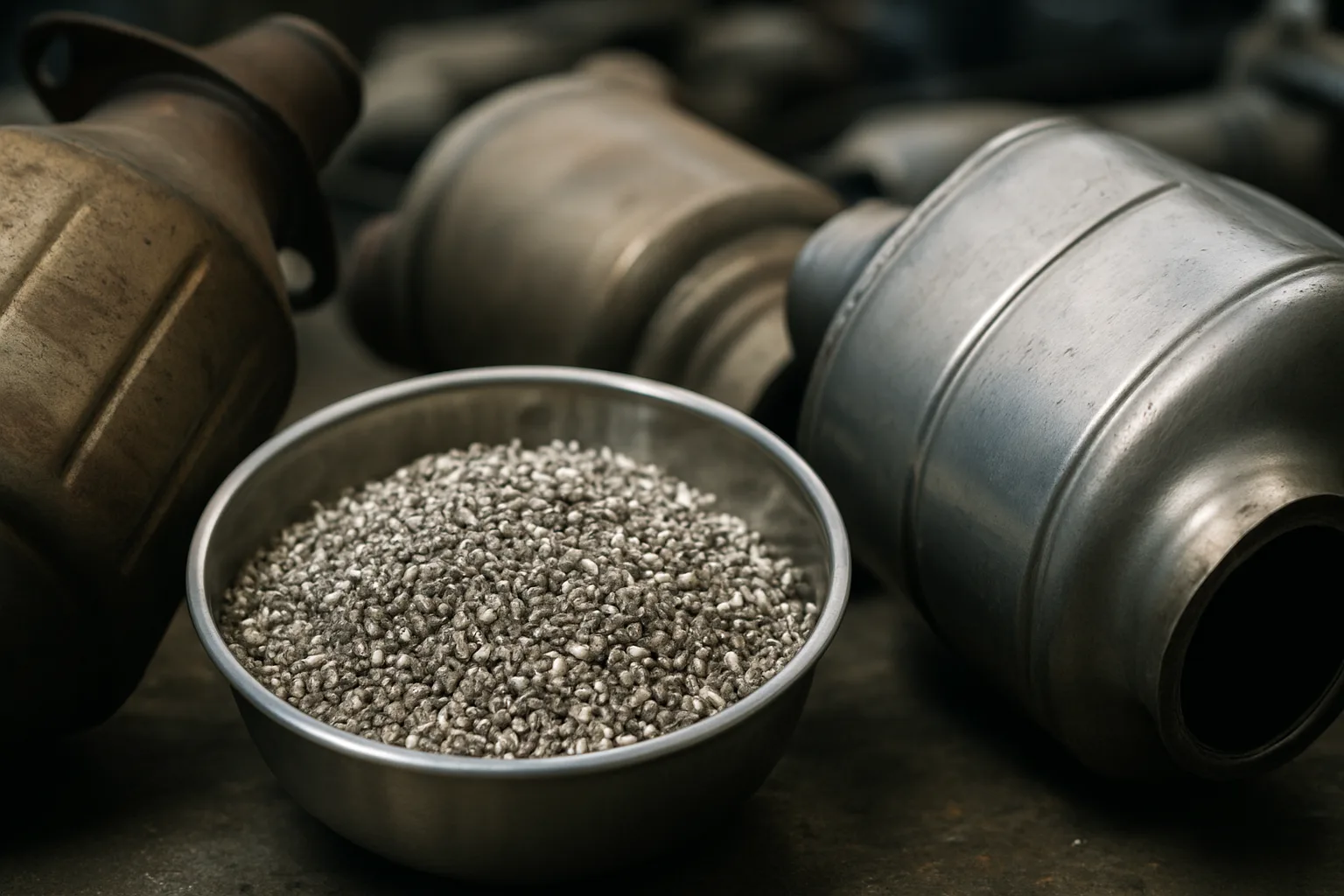
Catalytic converter theft across Canada has quietly become one of the most disruptive forces in the legitimate recycling market. If you're an honest seller in Charlottetown trying to get a fair price for your scrap cats, you're competing against a black market that's dragged down transparency, spooked buyers, and made price discovery harder for everyone. This isn't a minor nuisance. It's a structural problem that affects scrap catalytic converter prices Charlottetown sellers depend on — and it's worth understanding exactly how.
The good news: legitimate sellers who document their inventory and use competitive platforms are better positioned than ever to separate themselves from the noise. Here's how theft warped the market, and how yards and individual sellers in Prince Edward Island are pushing back.
---What Catalytic Converter Theft Actually Does to the Recycling Market
When a converter gets stolen off a vehicle overnight and shows up at a scrap yard the next morning, it doesn't disappear from the supply chain — it just enters it dirty. That creates a ripple effect across every layer of the legitimate recycling market. Buyers grow suspicious of undocumented loads. Processors tighten their intake requirements. Prices offered to honest sellers drop because buyers are pricing in the risk of dealing with unknown-origin material.
In small markets like Charlottetown and across Prince Edward Island, this problem is amplified. Fewer buyers means less competition. Less competition means less price discovery. When theft-related scrutiny pushes even one or two active buyers to tighten their policies or exit the market entirely, sellers with completely legitimate inventory feel the squeeze immediately.
- Buyer risk appetite shrinks. Processors who handle stolen material face serious legal exposure. To protect themselves, they raise the documentation bar — which slows down legitimate sales.
- Insurance and compliance costs rise. Yards absorbing stolen material (knowingly or not) face audits, fines, and insurance hikes. Those costs get passed somewhere.
- Honest sellers get lumped in with bad actors. Without a clean paper trail, your legitimate load gets treated with the same skepticism as stolen material.
The platinum, palladium, and rhodium inside a catalytic converter don't care how the unit was acquired. But the buyers processing those metals absolutely do — and the stolen supply problem has made them significantly more cautious.
---Why Small Markets Like Charlottetown Feel This Pressure First
Major urban centres have enough buyer volume that market competition absorbs some of the disruption. Charlottetown doesn't have that buffer. When the regional cat converter market tightens, sellers in smaller communities often end up with one or two viable buyers — and those buyers know it. That's a pricing environment built for lowball offers, not fair market value.
The theft problem makes this worse in a specific way: buyers in smaller markets tend to over-apply blanket caution. A single bad-actor incident in the region can cause a buyer to tighten documentation requirements on every load, including yours. You're now proving innocence before you can even negotiate price. If you want to get the best catalytic converter price in Canada, you need to get ahead of that documentation requirement — not react to it after the offer comes in low.
Sellers in Charlottetown who've built clean inventory habits — VIN-documented converters, photo records, organized packing lists — report a meaningfully smoother sales experience than those who show up with an unsorted load and no paperwork. That gap has widened since theft-related scrutiny intensified.
---How Legitimate Sellers Are Protecting Their Cat Converter Value
The response from honest sellers across Canada has been practical and straightforward: build a paper trail that makes your inventory unambiguous. This isn't bureaucratic box-ticking. It's the difference between a buyer who confidently bids fair market value and a buyer who hedges with a low offer because they're uncertain about what they're looking at.
Here's what legitimate sellers — from auto shops to independent collectors — are doing to protect their catalytic converter scrap price Canada-wide:
- VIN-linking every converter. Attaching a converter to a specific vehicle gives it provenance. A buyer sees documented origin, not a mystery unit.
- Photo documentation at removal. A clear photo of the converter on the vehicle before removal, matched with a date stamp, is basic but effective.
- Serial number tracking. Many converters carry manufacturer serials. Logging these before sale adds another layer of legitimacy.
- Organized packing lists. When your load ships with a clean packing list that matches your photos and serials, processors treat it differently than an anonymous pile.
- Using platforms that require documentation. This is the structural shift that matters most — choosing to sell through channels that enforce these standards protects you and signals your credibility to buyers.
Platforms like SMASH have built documentation directly into the selling workflow. You're not doing extra work — you're completing the process in a way that makes your load more attractive to vetted buyers. That's price discovery working in your favour, not against you.
---The Scrap Metal Auction Platform Advantage for Cat Converter Sellers
The old way of selling cats — one phone call, one buyer, one offer you either take or don't — was already a bad deal before theft-related market distortion made it worse. Now it's genuinely broken for sellers trying to capture real market value on platinum, palladium, and rhodium content.
A scrap metal auction platform changes the dynamic completely. Instead of one buyer making an offer based on their own margin calculation, multiple vetted buyers compete for your load. That competition is what creates actual price discovery. The market tells you what your converters are worth — not a single buyer with no incentive to be generous.
SMASH operates exactly this way. Sellers list their inventory — documented, organized, photo-verified — and qualified buyers bid. There are no subscription fees. SMASH only earns when the seller does. For catalytic converter buyers Prince Edward Island sellers want to reach, this model expands access beyond whatever single local relationship existed before.
The documentation that protects you from theft-related scrutiny also makes your load more competitive in an auction environment. Better information means more confident bids. More confident bids mean better outcomes. You can check current Canadian catalytic converter prices to understand what your converters should realistically be worth before you list — so you're not walking into a bid blind.
---What the Theft Problem Means for Cat Converter Prices in 2026
Catalytic converter theft in Canada hasn't disappeared in 2026 — it's evolved. Organized theft rings have become more sophisticated, and regulatory responses have created a patchwork of provincial documentation requirements that vary significantly from one market to the next. For sellers in Charlottetown, the practical reality is that documentation standards have risen, and the penalty for showing up without proper paperwork is a lower offer or no deal at all.
The precious metals inside converters — platinum, palladium, and rhodium — continue to drive real value in scrap cats. That value hasn't evaporated. What's changed is the friction between extraction and fair compensation. Theft created that friction. Documentation and competitive selling through platforms like SMASH reduce it.
If you want to read Canadian catalytic converter pricing guides that break down what specific converter types are currently worth, that's the right starting point before you list or negotiate. Walking in with market knowledge puts you in a different conversation than walking in cold.
For those comparing local options — including operations like Brown's Aluminum & Catalytic Converter Scrap Yard — it's worth knowing that expanded buyer access through competitive auction platforms often surfaces pricing that local single-buyer relationships don't. Not because local yards are dishonest, but because competition reveals value that any single buyer has no structural reason to volunteer.
---Turning Market Disruption Into a Competitive Advantage
The sellers who've adapted best to the theft-disrupted cat converter market are the ones who treated documentation as a feature, not a burden. They built clean intake processes. They started tracking VINs. They stopped relying on a single local buyer relationship and started using platforms that could reach multiple vetted buyers at once. And they found that their documented, organized inventory sold faster and at better prices than undocumented loads — even in a market spooked by theft.
That's the real case study here. Theft made the market harder for honest sellers. The sellers who responded by getting sharper — better documentation, better platforms, better price knowledge — came out ahead. If you're in Charlottetown or anywhere across Prince Edward Island dealing with converters legitimately, the path forward is the same: clean paperwork, competitive selling, and buyers who can actually see what your inventory is worth.
Get competitive bids for your scrap in Canada through a platform built for exactly this market — vetted buyers, auction competition, no subscription fees. When you're ready to get a fair number on your cats, start by getting a free quote at best-catalytic-converter-price.ca. The market has real value to offer. Make sure you're capturing it.
---Frequently Asked Questions
Q: How does catalytic converter theft affect scrap catalytic converter prices in Charlottetown?
Theft creates buyer skepticism and tighter documentation requirements in the regional market. In smaller markets like Charlottetown, fewer active buyers means less competition and less price transparency — which often translates to lower offers for sellers who can't prove clean inventory origin. Documenting your converters and selling through competitive platforms helps offset this pressure.
Q: What documentation do I need to sell scrap catalytic converters legitimately in Prince Edward Island?
Requirements vary, but at minimum most legitimate buyers want proof of vehicle origin (VIN), photo documentation, and a clear packing list. Some processors require a bill of sale or proof of ownership for the source vehicle. Building these habits protects you from being caught in theft-related scrutiny and often results in stronger bids.
Q: Are cat converter prices in Charlottetown different from prices in other Canadian cities?
The underlying precious metal values — platinum, palladium, rhodium — are globally benchmarked, so base value doesn't change by city. What differs is local buyer competition and regional market access. Smaller markets with fewer buyers tend to see less competitive offers. Using a platform that connects you to buyers across Canada helps level that playing field.
Q: How does a scrap metal auction platform help me get a better price for my catalytic converters?
Instead of accepting one offer from one buyer, an auction platform lets multiple vetted buyers compete for your load. That competition creates real price discovery — the market tells you what your converters are worth, rather than a single buyer with no incentive to be generous. SMASH operates on exactly this model, with no subscription fees for sellers.
Q: Will catalytic converter theft regulations in Canada affect how I sell my legitimate scrap cats in 2026?
Yes, in practical terms. Increased regulatory scrutiny means buyers are more careful about undocumented inventory. Sellers with clean paperwork — VIN records, photos, packing lists — face less friction and typically see stronger offers. Staying ahead of documentation requirements protects both your legal standing and your ability to negotiate on price.
---Disclaimer: Catalytic converter scrap prices fluctuate based on platinum, palladium, and rhodium market values. Always check current rates before selling. Prices referenced in this article reflect general market context as of August 2026 and are not guaranteed offers.
Follow SMASH on LinkedIn for ongoing scrap metal market insights, pricing updates, and industry news that keeps you ahead of the curve.