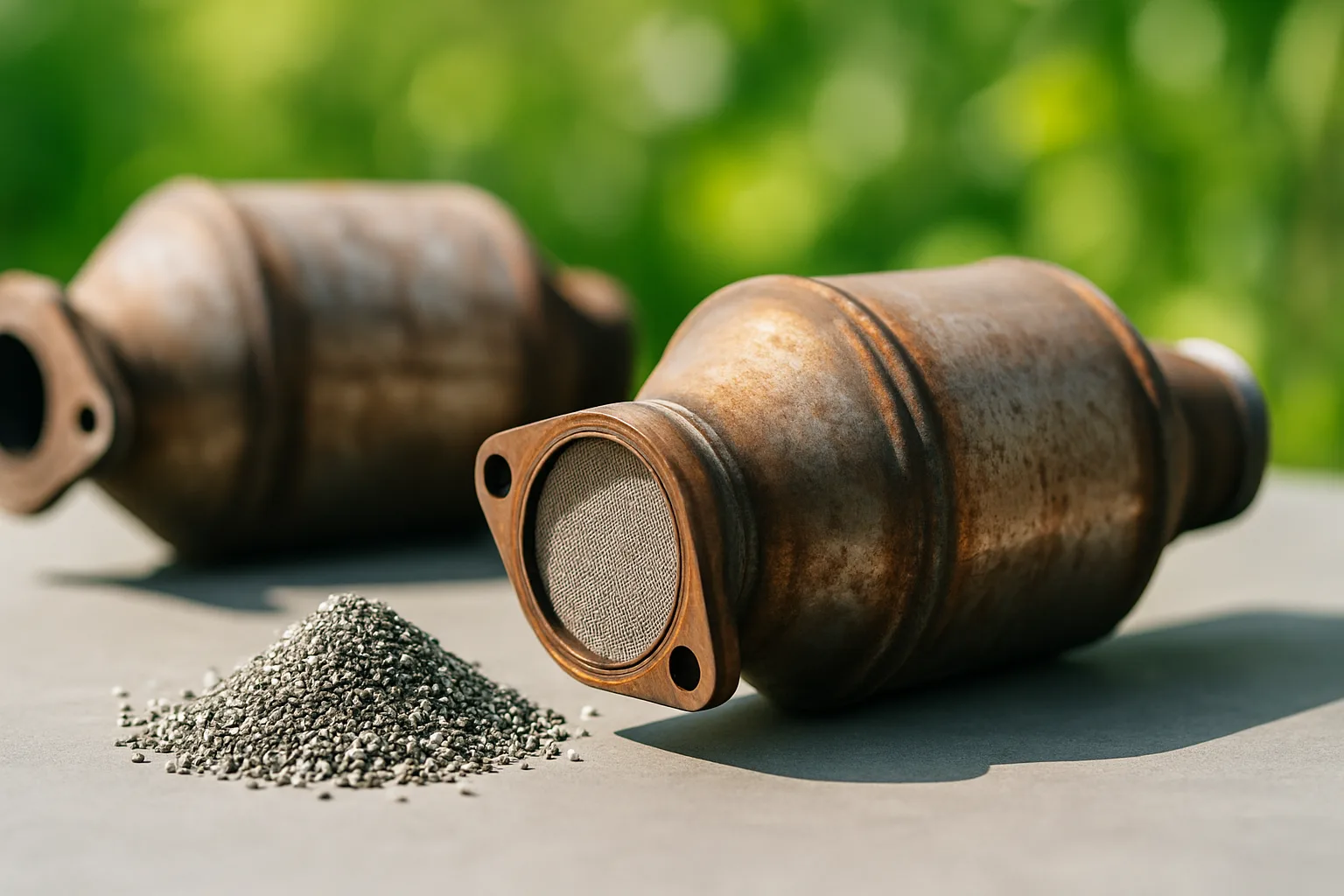
Most people selling scrap catalytic converters treat them all the same. That's a mistake that costs money. A diesel catalytic converter — whether it's a DPF, a DOC, or a combination unit — is a fundamentally different piece of equipment than a gasoline cat, and the scrap value reflects that. If you're in Scarborough trying to move a stack of diesel units off your lot, understanding what's actually inside them changes how you price, sort, and sell.
This guide breaks down the real differences between diesel and gasoline catalytic converters, what those differences mean for cat converter prices Scarborough sellers are seeing in 2026, and how to make sure you're not leaving money on the table when you sell.
Diesel vs. Gasoline Catalytic Converters: What's Actually Inside
Gasoline catalytic converters are built around a honeycomb substrate — typically cordierite or ceramic — coated with platinum, palladium, and rhodium. These three platinum group metals (PGMs) are the reason scrap cats hold serious value. The chemical reactions they drive convert harmful exhaust gases (hydrocarbons, carbon monoxide, nitrogen oxides) into less harmful outputs. A three-way catalytic converter on a gasoline engine handles all three reactions in one unit.
Diesel systems are more complex. A diesel exhaust aftertreatment system typically includes two or more components working together:
- DOC (Diesel Oxidation Catalyst): This handles hydrocarbons and carbon monoxide, similar in function to a gasoline cat. It contains platinum and palladium — but generally lower rhodium loading than gasoline units.
- DPF (Diesel Particulate Filter): This captures soot and particulate matter. It's a filter, not a traditional catalyst in the chemical sense. DPFs do contain some platinum coating, but the primary value here is the substrate material and the PGM wash coat — not the same concentration you'd find in a gasoline converter.
- SCR (Selective Catalytic Reduction): Used on newer trucks and heavy equipment, SCR units reduce NOx emissions using urea injection. These may contain vanadium or zeolite-based catalysts rather than PGMs — which significantly affects scrap value.
Understanding which component you have determines its catalytic converter scrap value. A DOC from a heavy diesel truck can carry meaningful PGM content. A standalone DPF — especially a clogged, oil-contaminated one — may be worth considerably less. Sorting these correctly before you sell is essential.
Why Cat Converter Prices Scarborough Sellers See Vary Between Diesel and Gas Units
The PGM content is the single biggest driver of scrap value in any catalytic converter. Gasoline converters — particularly from late-model passenger vehicles and light trucks — tend to carry higher ratios of all three key metals: platinum, palladium, and rhodium. Rhodium is one of the most valuable metals on earth by weight, and gasoline three-way converters are loaded with it relative to diesel units.
Diesel DOCs carry platinum and palladium but typically less rhodium. DPFs carry lower overall PGM loading — they're engineered to trap particles, not to support intense chemical reactions over millions of cycles the same way gasoline cats are. This means the cat converter scrap value on diesel units often runs lower per unit than comparable gasoline converters, though large diesel units from heavy equipment or transport trucks can still hold significant value because of their sheer size and substrate volume.
In Scarborough and across Ontario, buyers pricing diesel units are looking at:
- Component type (DOC vs. DPF vs. SCR)
- Condition (clogged, cracked, oil-contaminated units are worth less)
- Vehicle or equipment origin (heavy truck DOCs vs. light commercial DOCs)
- Current platinum and palladium spot prices
- Whether the substrate is intact
Selling without knowing this information is guesswork. Platforms like SMASH help connect sellers with vetted buyers who assess diesel units accurately — so you're not getting a lowball offer from someone who lumped your DOC in with a generic DPF pile.
The Problem With Selling Diesel Cats Through a Single Buyer
Here's the old way: you call one buyer, they quote a number, you take it or you don't. For gasoline cats, that approach already costs you. For diesel units, it's worse — because there's more complexity and more room for a buyer to undervalue what they're buying.
A DOC from a Kenworth or a Peterbilt is a different animal than a DPF from a light-duty diesel pickup. If a buyer is pricing them identically, someone is getting a bad deal. And in most single-buyer transactions in the scrap metal recycling Canada market, it's the seller who loses.
The answer is competition. When multiple vetted buyers bid on your load — knowing exactly what they're bidding on because you've documented the units accurately — you get real market price discovery. More buyers means more competition. More competition means better prices. That's not a pitch; that's how markets work.
SMASH runs a competitive auction format built for exactly this. You document your inventory — unit type, photos, VIN lookups where applicable, serial tracking — and buyers compete. You see the bids. You pick the best one. To get the best catalytic converter price in Canada, that kind of transparent process isn't a luxury — it's the only approach that makes sense.
How to Prepare Diesel Catalytic Converters for Sale in Scarborough
Preparation matters. Buyers pay more when they have confidence in what they're buying. That means documentation, sorting, and condition assessment before you list anything.
Here's what to do before you sell diesel cats:
- Sort by type. Keep DOCs, DPFs, and SCR units separate. Never mix them in a single lot unless you want buyers to price to the lowest common denominator.
- Photograph everything. Top, bottom, end caps, substrate condition. Cracks, melting, heavy soot deposits — document it. Buyers will ask anyway. Doing it upfront speeds the process and builds trust.
- Record the source vehicle where possible. Heavy truck DOCs command different prices than light-duty diesel DOCs. If you have vehicle data, use it.
- Check substrate integrity. A cracked or shattered substrate loses significant value. Buyers know this, and they'll price it in. Know what you have before you negotiate.
- Don't strip the end caps unless the buyer requests it. Some processors want full units; others want cores only. Know your buyer's preference before you start cutting.
Yards in Scarborough and across Ontario that take the time to sort and document their diesel units consistently report faster transactions and cleaner offers. The preparation signals professionalism. Buyers respond to that.
Platinum Group Metals Recycling: What Diesel Units Contribute to the Market
Diesel aftertreatment systems contribute differently to the platinum group metals recycling supply chain than gasoline cats. The global refining market processes billions of dollars in PGMs recovered from catalytic converters every year. Diesel units — particularly DOCs from heavy commercial equipment — add meaningful platinum and palladium to that supply.
In 2026, platinum and palladium markets continue to reflect both mine supply pressures and secondary recovery from recycled automotive components. Recycled PGMs from catalytic converters represent a critical piece of the supply chain — which is why professional buyers pay attention to what they're buying. A large diesel DOC from a Class 8 truck may contain several grams of platinum and palladium. At current spot prices, that adds up.
If you want to read Canadian catalytic converter pricing guides that break down how PGM spot prices affect scrap cat values, the resources are there. The key point: diesel units aren't worthless, but they require the right buyer — one who specializes in diesel aftertreatment and prices accurately based on actual metal content, not guesswork.
Platforms like SMASH connect you with buyers who understand the difference between a DOC and a DPF, and price accordingly. That's how you avoid selling a valuable heavy-truck DOC at a DPF rate.
Getting the Best Price for Diesel Cats in Scarborough: The Practical Path Forward
If you're an auto shop, fleet operator, or scrap collector in Scarborough sitting on diesel catalytic converters, the process is straightforward — but only if you approach it right.
First, identify what you have. Use the DOC/DPF/SCR breakdown above. If you're not sure, photograph the unit and get a qualified assessment before selling. Second, document everything — photos, source vehicle data, condition notes. Third, don't call one buyer. Get multiple offers.
The cat converter prices Scarborough sellers are able to achieve in 2026 reflect a more competitive market than five years ago — more buyers, more transparency, and better access to pricing data. The sellers capturing that upside are the ones who treat their inventory like inventory: sorted, documented, and sold through a competitive process.
To check current Canadian catalytic converter prices and understand what your diesel units are worth today, don't rely on a single quote from a single buyer. Get the market working for you. If you want to find the best price for your scrap in Canada, SMASH gives you the auction format, the vetted buyers, and the transparent process to make that happen — with no subscription fees and no guessing.
Getting a free quote at best-catalytic-converter-price.ca takes minutes. If you're in Scarborough and you're serious about selling diesel cats at fair market value, that's where to start.
Disclaimer: Catalytic converter prices fluctuate based on platinum, palladium, and rhodium spot prices, unit condition, and market demand. Always check current rates before selling.
Frequently Asked Questions
Q: Are diesel catalytic converters worth less than gasoline converters in Scarborough?
Generally, yes — but it depends on the specific unit. DPFs typically contain lower PGM concentrations than gasoline three-way converters. However, large diesel DOCs from heavy trucks can carry significant platinum and palladium value. Sorting your diesel units correctly before selling is critical to getting fair cat converter prices in Scarborough.
Q: Can I sell a clogged or damaged DPF for scrap in Ontario?
Yes, you can sell a clogged or damaged DPF — but condition directly affects price. A heavily soot-loaded or cracked unit will be worth less than a clean one. Be upfront about the condition and document it with photos. Buyers who know what they're getting typically offer faster and more accurate pricing.
Q: How do I know if my diesel unit is a DOC or a DPF?
A DOC (Diesel Oxidation Catalyst) looks similar to a traditional gasoline catalytic converter — it has a honeycomb catalyst substrate and is designed for chemical reactions. A DPF (Diesel Particulate Filter) is a filter designed to trap soot — it often feels heavier when loaded with particulate and has a different internal structure. If you're unsure, photograph it and consult a buyer who specializes in diesel aftertreatment units.
Q: What platinum group metals are found in diesel catalytic converters?
Diesel DOCs primarily contain platinum and palladium. DPFs contain some platinum wash coat but at lower concentrations. SCR units may contain vanadium or zeolite-based catalysts rather than traditional PGMs, which significantly reduces their scrap value compared to DOCs. Understanding which metals are present — and in what quantity — is what drives the accurate pricing of diesel scrap cats.
Q: Where can I get the best price for scrap catalytic converters in Scarborough?
The best prices come from competitive processes — multiple vetted buyers bidding on documented inventory, not a single cold call. Platforms like SMASH give Scarborough sellers access to a competitive auction format with no subscription fees. Start by getting a free quote at best-catalytic-converter-price.ca to understand your unit's value before you sell.
Follow SMASH on LinkedIn for ongoing scrap metal market insights, PGM price updates, and practical recycling industry news across Canada.
```