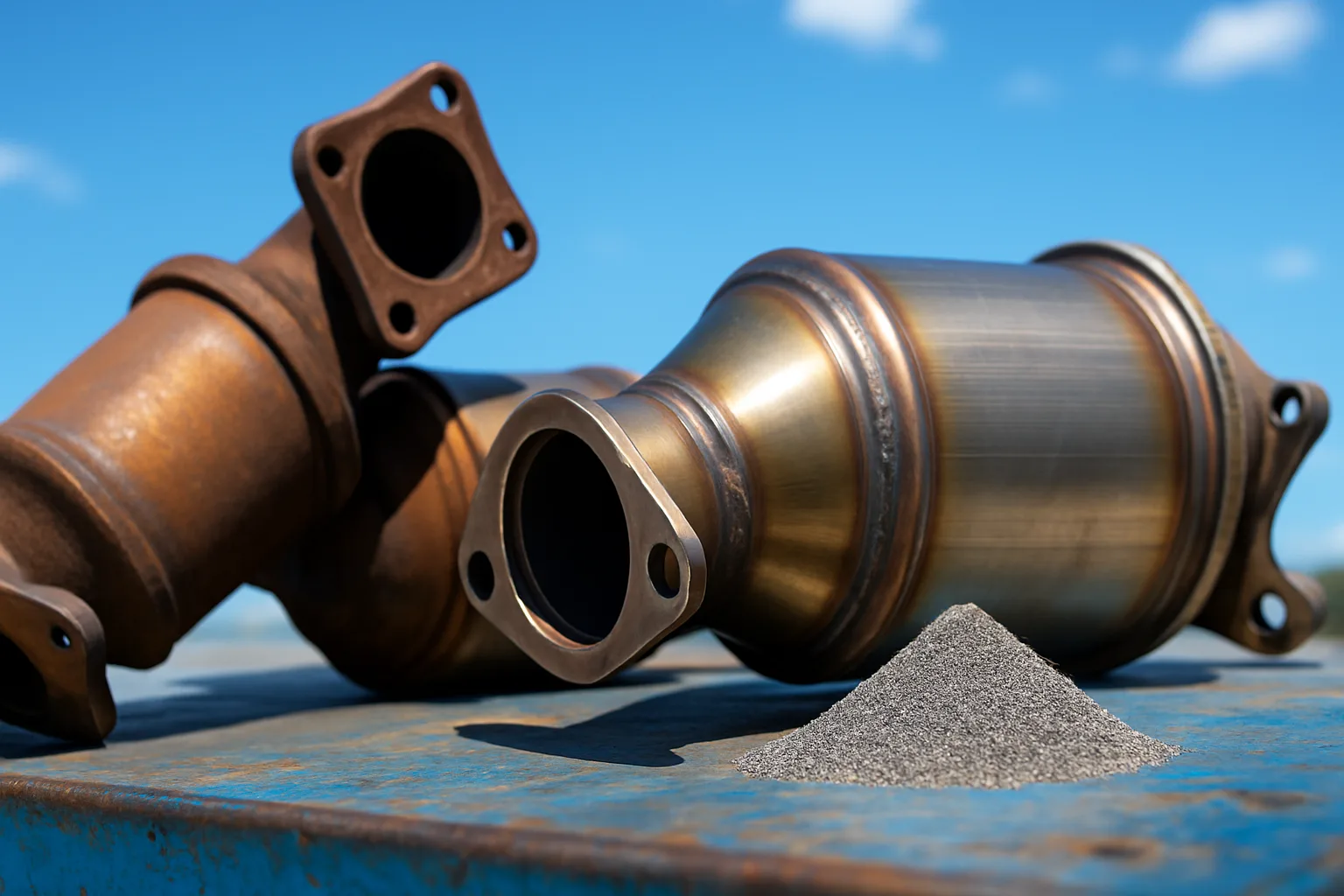
Diesel vs. Gasoline Catalytic Converters: What's Actually Inside and What It Means for Your Scrap Value
Most people selling a scrap catalytic converter assume they're all built the same. They're not. The difference between a diesel and a gasoline converter isn't just technical — it directly affects what a buyer will pay you. If you're sitting on a diesel DPF or DOC and comparing it to a standard gasoline cat, you need to understand what's inside each one before you accept any offer. Especially in a market like Vancouver, where fleet operators and auto shops move a lot of both types.
This breakdown explains the real differences, why they matter to buyers, and how to make sure you're not leaving money behind when you go to sell. Whether you're an individual with one converter or a shop clearing out a pile, knowing your product is the first step to getting the best catalytic converter price in Canada.
What's Actually Inside a Gasoline Catalytic Converter
A standard gasoline catalytic converter contains a ceramic or metallic substrate — a honeycomb-shaped core — coated with a washcoat that holds the precious metals. Those metals do the real work. The three primary elements are platinum (Pt), palladium (Pd), and rhodium (Rh). Each one targets different exhaust compounds. Platinum and palladium oxidize hydrocarbons and carbon monoxide. Rhodium reduces nitrogen oxides.
This is why gasoline cats are often called three-way converters. They handle three types of harmful emissions simultaneously. The precious metal loading in gasoline converters varies significantly by make and model — a Toyota Prius cat carries a very different PGM profile than a Ford F-150's. That variance is exactly why serial number identification matters so much when you're pricing a load. Buyers aren't guessing; they're pulling spec data tied to the exact unit you have.
- Platinum: Primary oxidation catalyst, found in most gasoline and diesel converters
- Palladium: Works alongside platinum in gasoline converters; often dominant in modern three-way cats
- Rhodium: Small amounts, but high value — critical for NOx reduction, mostly in gasoline cats
- Substrate type: Usually ceramic cordierite in gasoline converters; metallic substrates in some performance applications
Rhodium is where a lot of the value sits in gasoline converters. It's rare, its price is volatile, and it's not found in meaningful quantities in most diesel aftertreatment systems. That's a key distinction we'll get into below.
How Diesel DPFs and DOCs Are Built Differently
Diesel exhaust systems are more complex than gasoline setups. They often use a two-stage approach: a Diesel Oxidation Catalyst (DOC) followed by a Diesel Particulate Filter (DPF). Some systems also include a Selective Catalytic Reduction (SCR) unit for NOx control. Each component does a different job — and each has a different precious metal profile.
The DOC works similarly to a gasoline oxidation catalyst. It uses platinum and sometimes palladium to convert carbon monoxide and unburned hydrocarbons into less harmful compounds. The precious metal loading in a DOC is real, but it tends to be lower per unit than a loaded gasoline three-way cat. The DPF, on the other hand, is primarily a mechanical filter. Its job is to trap soot particles from diesel combustion. Most DPFs contain little to no precious metals — the value in a DPF comes from the substrate material and sometimes a small platinum catalyst coating used to help burn off trapped soot during regeneration cycles.
Here's the summary comparison that matters when you're thinking about scrap value:
- Gasoline three-way cat: Contains platinum, palladium, AND rhodium — typically higher overall PGM value per unit
- Diesel DOC: Contains platinum (and sometimes palladium), but usually no rhodium — moderate value depending on loading
- Diesel DPF: Minimal precious metals in most units — value is largely in the ceramic or silicon carbide substrate, not PGMs
- Diesel SCR: Uses a urea-based chemical reaction rather than precious metals — generally low scrap PGM value
This is why you'll often see gasoline cats fetch higher prices at auction than a diesel DPF of similar size. It's not about age or condition — it's about what's actually inside.
Why Serial Numbers and Identification Matter for Both Types
Whether you have a gasoline cat or a diesel DOC, the serial number is your best tool for getting an accurate price. Buyers and processors use serial numbers to look up the exact make, model, and year the converter came from — and from that, they can reference assay databases that show the expected PGM loading for that specific unit.
A converter from a heavy-duty diesel truck might look massive and valuable, but if it's a DPF with minimal catalyst loading, it will be priced accordingly. Meanwhile, a smaller gasoline cat from a luxury SUV or hybrid could carry significantly more platinum, palladium, and rhodium per gram than that large diesel unit. Size is not value. Serial data is value. That's why knowing how much is my catalytic converter worth by serial number is one of the most searched questions in this space — and it's the right question to be asking.
When you bring converters to the SMASH Recycling auction platform, serial tracking and photo documentation are built into the process. Buyers bidding on your load can see exactly what they're getting. That transparency leads to stronger competition and better price discovery. You're not guessing, and neither are they.
How Scrap Catalytic Converter Prices Vancouver Sellers See Can Vary by Type
In a high-volume market like Vancouver, cat converter prices Vancouver reflect both global PGM spot prices and local supply-and-demand dynamics. Platinum, palladium, and rhodium are priced in USD on global commodity markets and fluctuate daily. Local buyers — whether you're dealing with a recycler in Burnaby, a processor on the North Shore, or a buyer operating across British Columbia — adjust their offers based on current spot prices and their processing pipeline.
What this means practically: a gasoline cat from a Honda Accord and a diesel DPF from a Kenworth are not interchangeable. Your recycler should be pricing them differently. If someone quotes you the same flat rate for both, that's a sign they're not working with real data — or they're working with it and just not sharing it with you. Either way, you're not getting a fair deal.
Platforms built around competitive bidding change this dynamic. When multiple catalytic converter buyers British Columbia are actively competing on a documented load, the pricing reflects actual market conditions rather than a single buyer's margin preference. That's the core argument for using an auction model over a cold call to one recycler. If you want to check current Canadian catalytic converter prices before you sell, knowing your converter type is the first step.
For sellers in the Vancouver area specifically, Vancouver scrap metal services are accessible and active — but the spread between offers can be wide. The only way to know you're at the top of the market is to expose your inventory to competition.
Practical Tips: Selling Diesel and Gasoline Converters for Maximum Value
Whether you're an auto shop clearing out a quarter's worth of cores or a collector with a mixed load, a few practical steps will help you sell smarter:
- Sort by type first. Keep gasoline cats separate from diesel DOCs and DPFs. Mixed loads can complicate pricing and sometimes result in the whole batch being valued at the lower end.
- Photograph the serial numbers. Before anything moves, document every unit. This enables accurate identification and protects you if there's ever a dispute about what was in the load.
- Understand what you have before you call anyone. A quick serial lookup can tell you whether you're holding a high-value rhodium-bearing gasoline cat or a low-PGM diesel DPF. That knowledge is leverage.
- Don't accept the first offer. The first offer is rarely the market offer. It's one buyer's opening position.
- Use an auction model when the volume justifies it. A catalytic converter auction format puts your inventory in front of multiple vetted buyers simultaneously. More competition typically means better price discovery.
- Ask about de-canning services. Some buyers pay more for de-canned substrate. Others prefer whole units. Know which buyers want what before you prep the load.
For more guidance on navigating converter pricing in Canada, read Canadian catalytic converter pricing guides that break down the variables affecting what your cores are actually worth.
Getting the Best Price in Vancouver Means Knowing What You're Selling
The scrap converter market in Vancouver and across British Columbia moves fast. PGM prices shift. Buyer demand fluctuates. What a DOC was worth six months ago may not be what it's worth today. The sellers who consistently come out ahead aren't necessarily the ones with the most inventory — they're the ones who understand their product, document it properly, and put it in front of competitive buyers.
SMASH is built for exactly this. Vetted buyers, documented inventory, auction-format competition, and no subscription fees. You don't pay to list — SMASH only wins when you win. If you want to get the best catalytic converter price in Canada, the process starts with knowing whether you're holding a high-PGM gasoline cat or a soot-filter DPF — and then letting real market competition tell you what it's worth.
Disclaimer: Catalytic converter prices fluctuate daily based on platinum, palladium, and rhodium spot prices. Always check current rates before selling. Nothing in this article constitutes a price guarantee.
Frequently Asked Questions
Q: Are diesel DPFs worth less than gasoline catalytic converters as scrap?
Generally, yes — most diesel DPFs contain minimal precious metals and are valued more for their substrate material than their PGM content. Diesel DOCs sit in the middle, containing platinum but typically no rhodium. Gasoline three-way converters usually carry the highest PGM value because they contain platinum, palladium, and rhodium together.
Q: How do I find out what my catalytic converter is worth by serial number in Vancouver?
The serial number stamped or welded onto the converter housing ties back to the vehicle it came from. Buyers and processors use assay databases to look up expected precious metal loading by serial number. In Vancouver, working with a buyer who uses serial-based pricing — rather than flat-rate guessing — is the fastest way to get an accurate quote.
Q: What are the current cat converter prices in Vancouver?
Cat converter prices in Vancouver change daily based on global platinum, palladium, and rhodium spot prices quoted in USD. Rather than publishing figures that may be outdated within hours, we recommend checking current market rates directly through a verified buyer or a platform like SMASH before committing to a sale.
Q: Where can I find catalytic converter buyers near me open now in Vancouver?
Several scrap metal recyclers and processors in the Greater Vancouver area buy catalytic converters. For the best results, don't limit yourself to walk-in buyers — an online auction platform like SMASH puts your inventory in front of vetted buyers across British Columbia and beyond, often resulting in stronger competition than a single local offer.
Q: Does it matter if I have a mixed load of diesel and gasoline converters when selling?
It does matter. Sorting your load by converter type lets buyers price accurately rather than averaging everything down. A mixed load of high-value gasoline cats and low-PGM diesel DPFs may be priced conservatively across the board. Sorting takes an hour — it can be worth a meaningful difference in what you're offered.
Ready to find out what your converters are actually worth? Get the best Canadian price for your catalytic converter and get a free quote at best-catalytic-converter-price.ca. Stop accepting the first number someone throws at you — let competition do the work.
Stay current on scrap metal market movements and PGM pricing shifts — follow SMASH on LinkedIn for industry updates and catalytic converter market insights.