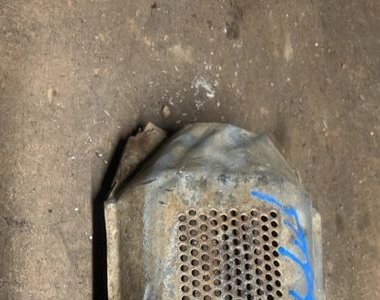
Foil vs. Bead Catalytic Converters: What's the Difference and What Are They Worth?
Most people selling scrap catalytic converters think they all pay the same. They don't. The internal structure of your cat — whether it's foil or bead — directly affects its OEM catalytic converter value and what a buyer will actually offer you. Getting this wrong means leaving money on the table before you've even made a call.
If you're in Laval, running a shop, collecting cores, or just sitting on a pile of old cats, understanding these two converter types is one of the fastest ways to quote smarter and sell better. Let's break it down.
What Is a Foil-Style Catalytic Converter?
A foil-style catalytic converter uses a metallic substrate — thin corrugated metal foil — wound into a honeycomb structure inside the converter shell. That substrate is coated with a washcoat containing platinum group metals (PGMs): platinum, palladium, and rhodium. The foil itself is typically a high-temperature alloy like FeCrAl (iron-chromium-aluminum).
Foil converters are common in high-performance and European vehicles. They handle heat and exhaust flow differently than ceramic types, which is why manufacturers choose them for specific applications. From a recycling standpoint, foil converters require a different processing approach — they can't simply be crushed and assayed the same way ceramic honeycomb units are.
Key characteristics of foil-style cats:
- Metallic substrate, not ceramic
- Often lighter than ceramic equivalents
- Higher heat tolerance
- Common in European OEM fitments and performance applications
- Require specialized de-canning and processing
Because of that specialized processing requirement, not every buyer handles foil converters the same way. Some buyers discount them heavily due to processing costs. Others pay competitively if they have the right refinery relationships. That gap between buyers is exactly why competition matters when you're selling.
What Is a Bead-Style Catalytic Converter?
Bead-style catalytic converters use small ceramic or alumina beads as the substrate instead of a honeycomb structure. The PGMs — again, platinum, palladium, and rhodium — are coated onto these beads, which sit loose inside the converter housing. Early North American vehicles, particularly from the 1970s and 1980s, used bead-style designs extensively.
You'll still find bead cats on older trucks, industrial equipment, and some off-road machinery. They're less common today in passenger vehicles, but they do show up in scrap yards and recycling operations, especially when processing older fleet vehicles or estate lots.
What makes bead cats interesting from a value perspective:
- The loose bead structure makes PGM recovery relatively straightforward
- Beads can pour out if the housing is damaged — don't lose them
- PGM loading can vary significantly depending on the vehicle and era
- Some bead cats carry surprising value; others are low-grade
- Identification matters — year, make, model, and application affect pricing
One common mistake: assuming bead cats are automatically worth less because they're old. That's not always true. Some older bead converters were loaded with higher PGM concentrations relative to their size than more modern ceramic honeycomb units. The metal content is what matters, not the age of the part.
How OEM Catalytic Converter Value Is Determined for Foil and Bead Types
Whether you're holding a foil unit pulled from a European sedan or a bead cat off a 1980s pickup, the same fundamental factors drive OEM catalytic converter value. Buyers and refiners care about one thing above everything else: how much platinum, palladium, and rhodium is recoverable from your converter.
The valuation process works like this:
- Identification — The converter is identified by serial number, OEM part number, or physical specs. SMASH uses serial tracking to match converters to known data.
- Substrate assessment — Foil and bead types are sorted separately because they process differently at the refinery level.
- PGM spot pricing — Current platinum, palladium, and rhodium prices on commodity markets directly affect the payout. These prices move daily.
- Refinery yield estimates — Not all PGMs in a converter are recoverable at 100%. Buyers factor in expected recovery rates.
- Processing costs — De-canning, crushing, sampling, and refining all cost money. Buyers price that into their offers.
For foil cats specifically, processing costs can be higher, which sometimes compresses buyer margins and shows up as a lower offer. But a buyer with better refinery access might still pay more than a local yard that doesn't process foil regularly. That's why a single phone call to one buyer is a bad strategy — you have no idea where you sit relative to the actual market.
If you want to understand current market positioning before you sell, check current Canadian catalytic converter prices so you go into any negotiation with real context, not guesses.
Catalytic Converter Prices Today: What to Expect for Foil and Bead Units
We won't invent numbers here — catalytic converter prices today move with PGM spot prices, and those can shift week to week based on mining supply, industrial demand, and broader commodity markets. What we can tell you is how the two types typically compare relative to each other.
Foil converters generally:
- Pay based on the actual metallic substrate weight and PGM coating density
- Can command strong prices when PGM loading is confirmed and processing is efficient
- May be discounted by buyers who don't specialize in metallic substrate processing
- Are worth identifying precisely before selling — a serial number lookup changes everything
Bead converters generally:
- Are valued by bead weight and PGM concentration per unit of substrate
- Can be under-valued by buyers unfamiliar with older OEM applications
- Require careful handling — spilled beads are lost PGMs
- Often benefit from lot-based selling if you have volume
Disclaimer: Catalytic converter prices fluctuate daily based on platinum, palladium, and rhodium commodity markets. Always verify current pricing before selling. The information here is educational and does not represent a price quote.
If you're in the Quebec market — including Laval and surrounding areas — you're operating in an active recycling region with real buyer competition. That competition is an asset. Use it. Platforms like SMASH are built to put that competition to work for sellers instead of letting a single buyer set the price by default.
Why Proper Documentation and Inventory Management Affects Your Payout
Here's something most individual sellers and even some smaller shops overlook: how you document your cats directly affects what buyers will pay. This isn't just administrative housekeeping — it's money.
A buyer offering on a photographed, serialized, identified converter has more confidence than one looking at a blurry photo of an unlabeled unit. That confidence shows up in the offer. When buyers are uncertain about what they're bidding on, they discount for risk. That risk discount comes out of your pocket.
Scrap metal inventory management for catalytic converters means:
- Photographing each unit clearly — multiple angles, visible serial numbers
- Recording the OEM part number or serial where visible
- Noting the vehicle application (year, make, model) where known
- Separating foil, bead, and ceramic honeycomb types into distinct lots
- Logging condition — intact housing, damaged substrate, missing end caps
SMASH builds this documentation process directly into the platform. Photo documentation, serial tracking, and VIN lookup are part of how inventory is listed — not an afterthought. When buyers on the SMASH platform bid, they're bidding on documented inventory. That's not just cleaner recordkeeping — it's better price discovery.
If you're managing a shop in Laval or running a collection route through Quebec, taking 10 minutes to document a lot properly before you list it can meaningfully affect what comes back. To understand the full picture of how documentation and auction format work together, read Canadian catalytic converter pricing guides for more context on building a smarter selling process.
How SMASH Helps Sellers in Laval and Across Quebec Get Better Price Discovery
The old way of selling scrap cats in Quebec was simple and brutal: you called one buyer, they named a price, and you either took it or spent an afternoon making more calls with no guarantee of a better number. You had no way to know if that first offer was fair, low, or embarrassingly below market.
SMASH changes that structure. Instead of one phone call to one buyer, your documented inventory goes in front of vetted buyers who compete for it. Competition reveals the market. When multiple qualified buyers see the same lot and bid against each other, the price that emerges reflects actual demand — not one buyer's preferred margin.
For foil and bead converters specifically, this matters more than it does for common ceramic honeycomb units. These converter types are more specialized, which means buyer knowledge and refinery access vary more widely. The buyer who underpays for a foil unit isn't necessarily crooked — they just may not have the processing infrastructure to pay more. A different buyer in the same auction might have exactly the right refinery relationship and bid significantly higher.
No subscription fees. SMASH only earns when sellers earn. That alignment is deliberate.
To see how buyers across Canada compete on scrap catalytic converter lots, compare scrap metal bids from Canadian buyers and understand what real market competition looks like for your inventory.
Whether you're sorting a mixed lot in Laval, managing cores at a shop in the greater Montreal area, or collecting converters across Quebec, the approach is the same: document well, understand what you have, and let buyers compete. If you want to get the best catalytic converter price in Canada, that's the process that actually works.
When you're ready to sell, don't guess at what your foil or bead converters are worth — get a real quote. Visit best-catalytic-converter-price.ca and find out what your inventory is actually worth in today's market.
Frequently Asked Questions
Q: Are foil catalytic converters worth more than ceramic honeycomb converters?
Not automatically. Foil converters can carry strong OEM catalytic converter value depending on PGM loading and the buyer's ability to process metallic substrates efficiently. Some foil units pay very well; others are discounted by buyers who lack the right refinery access. Getting multiple bids is the only way to know where your specific units land.
Q: How do I identify whether my catalytic converter is foil or bead style?
Foil converters typically feel lighter for their size and come from European or performance vehicle applications. Bead cats are usually found on older North American vehicles from the 1970s and 1980s — if you shake the housing and hear loose material shifting, it's likely a bead unit. When in doubt, serial number lookup tools and buyer identification services can confirm the type before you sell.
Q: Where can I sell scrap catalytic converters in Laval, Quebec?
Laval has local scrap yards and recycling operations, but walking into one buyer means accepting whatever price they offer. Using a platform like SMASH puts your documented inventory in front of multiple vetted buyers across Canada, so you get market-driven pricing rather than a single yard's floor offer.
Q: Why do catalytic converter prices fluctuate so much?
Catalytic converter scrap metal prices are directly tied to platinum, palladium, and rhodium commodity prices on global markets. These PGMs respond to mining output, industrial demand (especially from automotive manufacturing), and broader economic conditions. Prices can shift meaningfully week to week, which is why checking current rates before selling always makes sense.
Q: Does proper documentation really affect what I get paid for my cats?
Yes, directly. Buyers discount for uncertainty. A well-photographed, serialized converter with known vehicle application gives buyers the confidence to bid competitively. Poor documentation forces buyers to price in risk — and that risk discount reduces your payout. Platforms like SMASH build documentation into the listing process specifically because it produces better price discovery for sellers.
Follow SMASH on LinkedIn for ongoing scrap metal market insights, pricing trends, and industry updates across North America.